When enthusiasts and prospective buyers ask, do they still make manual transmission cars in 2026, the short answer is yes—but the landscape has fundamentally shifted. Manuals are no longer the default, budget-friendly option for commuter vehicles. Instead, they have evolved into a highly curated, premium feature reserved for dedicated performance machines and enthusiast-focused models. According to recent industry data tracked by Car and Driver, manual take rates in the new car market hover below 2%, yet the vehicles that retain the third pedal command massive loyalty and resale premiums.
As automotive engineers continue to refine automatic and dual-clutch systems to achieve near-telepathic shift speeds, the manual vs automatic transmission comparison in 2026 is less about outright lap times and more about drivetrain engagement, mechanical feedback, and long-term serviceability. In this expert guide, we break down the engineering realities, parasitic losses, and maintenance best practices that separate modern manuals from their automatic counterparts.
The 2026 Manual Transmission Landscape: What Survived?
The culling of the manual transmission began in the late 2010s, accelerating as emissions regulations demanded the hyper-precise gear mapping that only computer-controlled automatics could provide. However, a core group of automakers recognized the manual gearbox as a vital brand differentiator. In 2026, the surviving manual-equipped vehicles generally fall into three categories:
- Pure Sports Cars: The Mazda MX-5 Miata (ND2) and Porsche 718 Cayman GT4 continue to utilize finely tuned 6-speed manuals. Porsche’s GT3 variants still offer a 6-speed derived from the 911 R, catering to purists who reject the 8-speed PDK.
- Hot Hatches & Sedans: The Honda Civic Type R (FL5) features one of the most advanced manual transaxles on the market, complete with a helical limited-slip differential and a dual-axis clutch setup to reduce inertia. The Subaru WRX (VB) and Toyota GR Corolla also keep the manual flame alive with rev-matching software and iMT (Intelligent Manual Transmission) logic.
- Off-Road & Utility: While rare, niche off-roaders and heavy-duty commercial fleets still spec manual transfer cases and gearboxes for absolute low-speed crawl control, though the traditional H-pattern is largely replaced by automated manuals in commercial sectors.
Drivetrain Efficiency: Parasitic Loss and Rotational Mass
A critical angle in the manual vs automatic transmission comparison is parasitic loss—the power consumed by the transmission itself before it reaches the wheels. Historically, manuals were the undisputed kings of efficiency. Today, the gap has narrowed, and in some cases, reversed.
Manual Gearbox Dynamics
A modern manual transmission, such as the legendary Tremec T56 Magnum-F, relies on constant-mesh helical gears and synchronizer rings. Because there is no torque converter or hydraulic pump dragging on the engine, parasitic loss is incredibly low—typically between 0.5% and 1.5% of engine output. The T56 Magnum-F is rated for 700 lb-ft of torque and requires exactly 9.5 pints of fluid (typically Dexron III ATF or specialized synchromesh fluids depending on the exact synchronizer material, such as carbon fiber or sintered bronze).
Automatic and DCT Dynamics
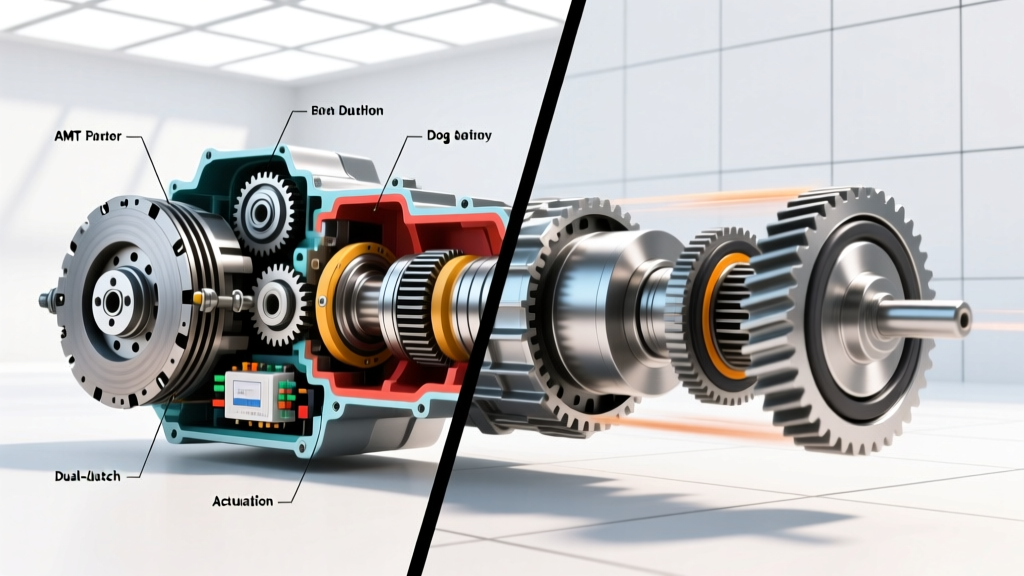
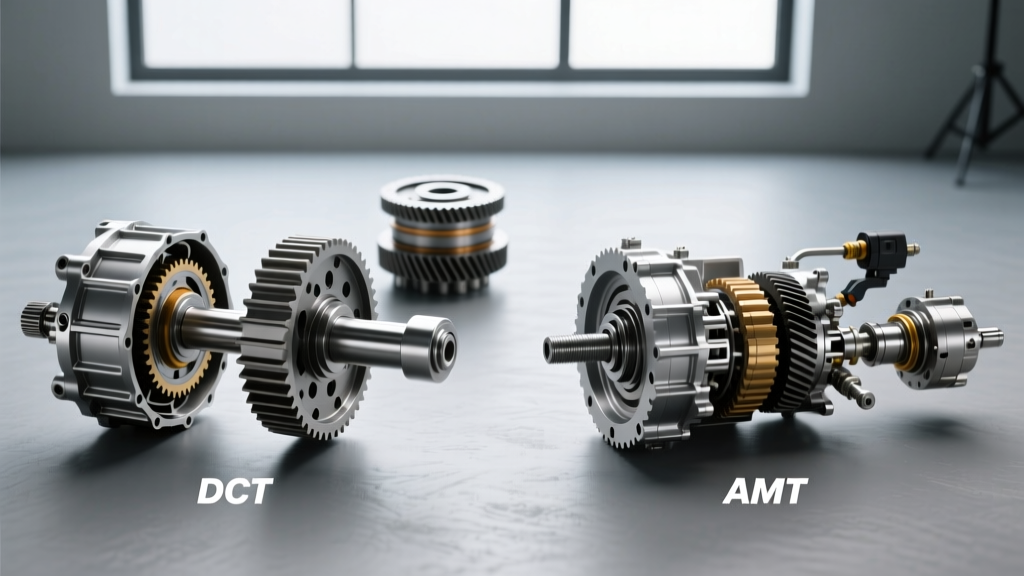
Modern torque-converter automatics, like the ZF 8HP70 or GM 10L80, utilize Lepelletier gearsets and aggressive torque converter lockup clutches. Once locked in higher gears, parasitic loss drops to roughly 2% to 3%. However, during spirited driving where the converter remains slightly unlocked to manage torque spikes, losses can exceed 5%. Dual-Clutch Transmissions (DCTs), like Porsche’s 8-speed PDK, operate more like automated manuals. They use wet clutches and require high-pressure hydraulic pumps, resulting in a steady parasitic draw of about 1.5% to 2.5%, but they shift in under 50 milliseconds, keeping the engine perfectly in its powerband.
Expert Comparison Table: 2026 Transmission Specifications
To understand the mechanical trade-offs, we must look at the hard engineering data. Below is a comparison of three benchmark transmissions representing the modern manual, automatic, and DCT paradigms.
| Specification | Tremec T56 Magnum-F (Manual) | ZF 8HP70 (Automatic) | Porsche 8-Speed PDK (DCT) |
|---|---|---|---|
| Type | 6-Speed Manual | 8-Speed Torque Converter | 7-Speed Dual Clutch |
| Max Torque Capacity | 700 lb-ft (949 Nm) | 516 lb-ft (700 Nm) | 590 lb-ft (800 Nm) |
| Fluid Capacity | 9.5 Pints (4.5 Liters) | ~9.2 Liters (ZF Lifeguard 8) | ~8.5 Liters (Pentosin FFL-3) |
| Parasitic Loss | 0.5% - 1.5% | 2.0% - 4.0% | 1.5% - 2.5% |
| Shift Time (Upshift) | 400 - 800ms (Human) | 200 - 400ms | < 50ms |
| Avg. Rebuild Cost (2026) | $2,500 - $3,800 | $4,500 - $7,000 | $9,000 - $14,000 |
Best Practices for Sourcing and Maintaining Manuals
If you are committing to a manual transmission vehicle in 2026, expert-level maintenance is non-negotiable. The aftermarket support for manuals remains robust, but improper service can destroy complex synchronizers and dual-mass flywheels (DMFs).
Fluid Selection and Synchronizer Wear
Never assume all manual transmissions take standard gear oil. Many modern manual gearboxes utilize carbon-fiber or advanced composite synchronizers that require specific friction modifiers found in dedicated Manual Transmission Fluids (MTF) or specific ATFs. For example, Honda’s Civic Type R requires genuine Honda MTF (P/N 08798-9031). Using a heavy 75W-90 GL-4 gear oil in these units will cause synchro slip, notchy cold shifts, and eventual gear grind. Always verify the OEM fluid specification and adhere to a 30,000-mile drain interval for track-driven vehicles.
Clutch and Flywheel Service Specs
When replacing a clutch assembly, resurfacing or replacing the flywheel is mandatory. For vehicles equipped with a Dual-Mass Flywheel (DMF), such as the Subaru WRX or Porsche 911, replacement is the only safe option, as DMFs cannot be reliably resurfaced due to their internal damping springs.
Expert Torque Specs & Tolerances:
- Flywheel Runout: Must be measured with a dial indicator. Maximum allowable runout is typically 0.002 inches (0.05mm). Anything greater will cause clutch chatter and premature throwout bearing failure.
- Flywheel Bolts: On a Porsche 992 GT3, the M10x1.25 flywheel bolts are torque-to-yield. The spec is 44 lb-ft plus an additional 90-degree turn. Always use new OEM bolts.
- Clutch Alignment: Never rely on the cheap plastic alignment tool included in a LuK RepSet or Sachs Performance clutch kit. Invest in a machined aluminum dummy input shaft specific to your transmission’s pilot bearing diameter to ensure perfect spline alignment, preventing binding during bellhousing mating.
The Financial Verdict: The Manual Premium
From an investment standpoint, the answer to "do they still make manual transmission cars" carries significant financial weight. Because automakers are actively phasing them out, the surviving examples are becoming modern classics. According to valuation analysts at Hagerty Media, the "manual premium" in the collector and enthusiast car market has continued to grow year over year.
In 2026, a manual-equipped Porsche 911 GT3 Touring or a low-mileage C7 Chevrolet Corvette Z06 with the 7-speed Tremec TR-3450 will routinely command a 15% to 30% premium over their automatic or DCT-equipped counterparts at auction. Even in the mainstream market, manual versions of the Honda Civic Type R and Subaru WRX hold their value significantly better, suffering far less depreciation than their CVT or automatic siblings.
Conclusion: Which Should You Choose?
The manual vs automatic transmission comparison ultimately boils down to your priorities as a driver. If your goal is maximum lap-time consistency, traffic-free commuting, and cutting-edge drivetrain technology, a modern ZF 8-speed or Porsche PDK is objectively superior. However, if you value mechanical sympathy, direct tactile engagement, lower long-term rebuild costs, and the sheer joy of executing a perfect heel-toe downshift, the manual transmission remains an irreplaceable masterpiece of mechanical engineering. Yes, they still make them in 2026—but you have to know exactly where to look, and how to maintain them, to truly reap the rewards.