Answering the Core Question: What Is AMT Transmission in Cars?
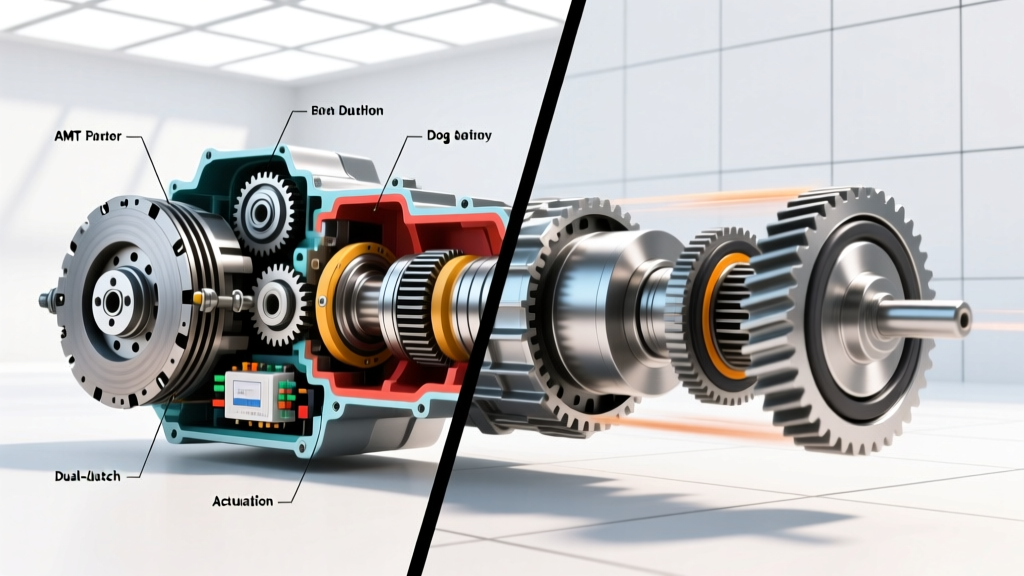
If you have ever found yourself asking what is AMT transmission in cars while shopping for a budget-friendly commuter or an entry-level sports car, you are looking at an Automated Manual Transmission. An AMT is fundamentally a traditional manual gearbox equipped with electronic actuators, hydraulic pumps, and a transmission control unit (TCU) that operate the clutch and shift forks on your behalf. Systems like the Fiat Dualogic, Suzuki AGS, and the older Smart Fortwo Getrag 5MTT250 are classic examples. They are cost-effective to manufacture and offer the fuel efficiency of a manual, but they are notorious for slow shift times (often exceeding 150 milliseconds) and the infamous "head-nod" effect during gear changes.
However, in the realm of high-performance motorsport and track-day builds, the AMT's basic architecture is evolved into something far more aggressive, precise, and mechanically fascinating: the sequential transmission. While an AMT automates a standard H-pattern synchromesh gearbox for daily comfort, a sequential gearbox completely reimagines the internal mechanics for pure, unadulterated speed.
The Track-Bred Evolution: Understanding Sequential Transmissions
Unlike an AMT or a traditional manual where you can skip gears (e.g., shifting directly from 4th to 2nd), a sequential transmission forces the driver to select gears in a strict, linear order: 1-2-3-4-5-6. You push forward for upshifts and pull backward for downshifts. This eliminates the possibility of missing a gear and accidentally dropping the engine into redline over-rev, but the real magic lies inside the transmission casing.
The Mechanics: Dog Rings and Straight-Cut Gears
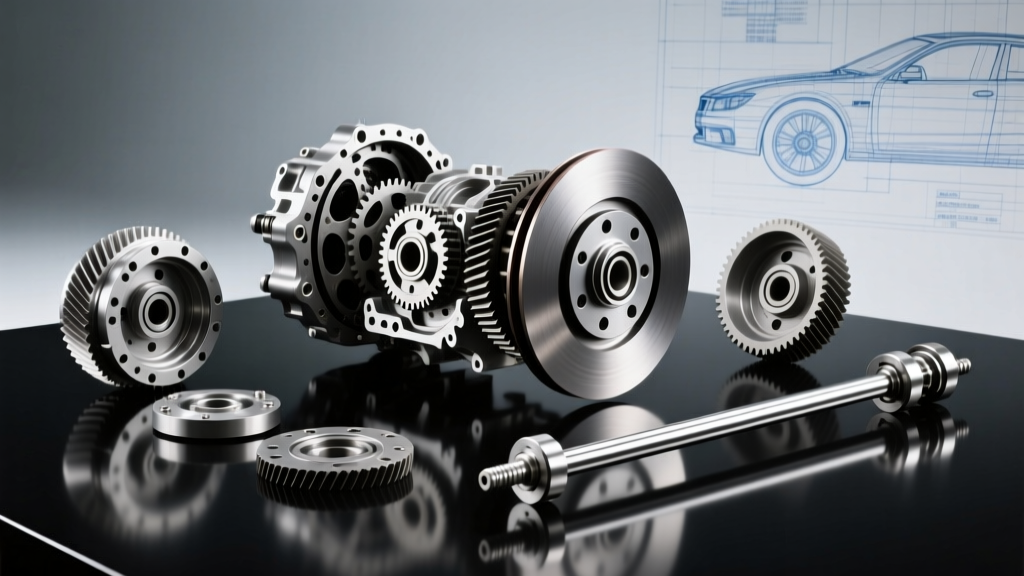
To understand why sequential gearboxes are the gold standard in rallying, GT3 racing, and time attack, we have to look at the internals. Standard AMTs and manual transmissions use synchronizers (synchros)—brass or carbon-fiber rings that match the speed of the gear to the shaft before engagement. Synchros are smooth but slow, and they burn out under extreme torque loads.
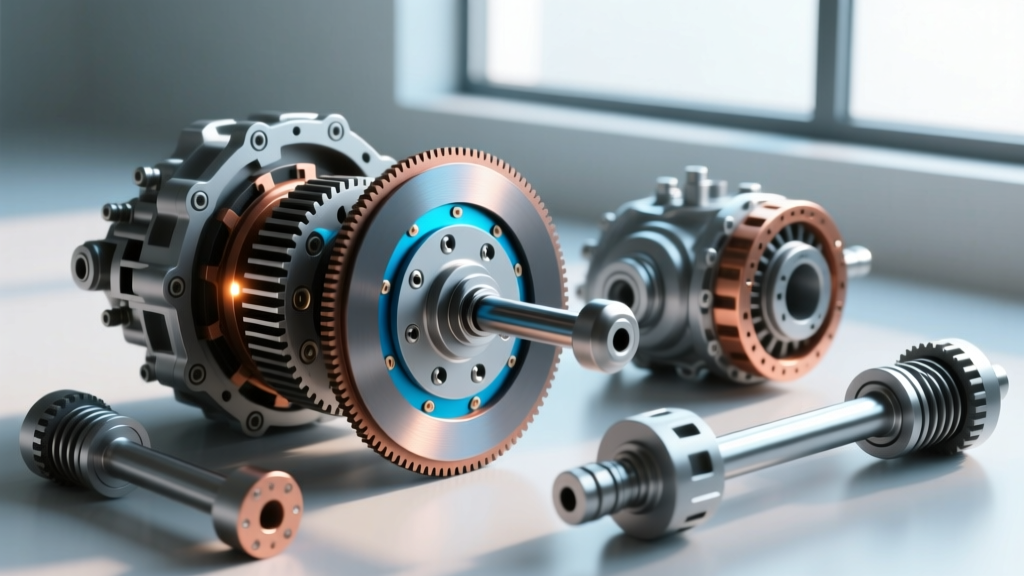
Sequential transmissions ditch synchros entirely. Instead, they utilize dog rings and straight-cut gears. The dog ring is a sliding steel sleeve featuring large, square-cut teeth (dogs) that lock directly into matching slots on the face of the gear. Because the engagement area is massive, a sequential gearbox can handle immense torque and lock into gear in roughly 35 to 50 milliseconds. The trade-off? Straight-cut gears and dog rings produce a characteristic, deafening whine and require precise throttle management (or electronic ignition cuts) to shift smoothly without clutching.
The Heart of the System: The Shift Drum and Ratchet
How does pulling a lever back result in a lightning-fast gear change? The secret is the shift drum (or shift barrel). This is a cylindrical metal barrel with precisely machined helical grooves cut into its surface. Shift forks, which move the dog rings back and forth, have pins that ride inside these grooves.
- The Ratchet Mechanism: When the driver pulls the shift lever, a ratchet pawl engages a star-wheel on the end of the shift drum, rotating it by a fixed increment (usually 60 degrees in a 6-speed).
- The Groove Translation: As the drum rotates, the helical grooves force the shift forks to slide laterally, instantly disengaging one dog ring and slamming the next one into place.
- Ignition Cut Integration: Modern sequential setups use a flat-shift system. A microswitch on the shift lever tells the ECU to cut ignition or fuel for exactly 40-60 milliseconds, unloading the transmission so the dog rings can swap under full throttle without binding.
Head-to-Head: AMT vs. Sequential Gearbox Comparison
To bridge the gap between the daily-driver AMT and the motorsport sequential, here is a structured comparison of their operational realities in 2026.
| Feature | Automated Manual (AMT) | Sequential Gearbox |
|---|---|---|
| Primary Application | Budget commuters, entry-level city cars | Rally, GT3, Time Attack, Drag Racing |
| Shift Mechanism | Electronic/Hydraulic actuators on H-pattern | Mechanical ratchet and shift drum |
| Shift Time (Upshift) | 120ms - 250ms | 25ms - 50ms (with ignition cut) |
| Internal Engagement | Brass/Carbon Synchronizers | Steel Dog Rings (4 to 6 dogs per ring) |
| Gear Cut Type | Helical (quiet, high axial load) | Straight-Cut (loud, efficient, no axial load) |
| Average Rebuild Interval | 100,000+ miles (Clutch/Actuator focus) | 3,000 - 5,000 track miles (Dog ring refresh) |
Real-World Sequential Transmissions: Specs and Maintenance
If you are planning a track build, you will likely be shopping for a standalone sequential gearbox from premier manufacturers like SADEV, Xtrac, or Holinger. These are not cheap modifications, and they require a strict, data-driven maintenance schedule.
SADEV ST82 Rally & Track Gearbox
The SADEV ST82 is a staple in the grassroots and semi-pro rally community. It is a compact, 6-speed sequential designed to handle the brutal launches of AWD and RWD rally cars.
- Max Torque Capacity: 600 Nm (442 lb-ft)
- Weight: Approximately 48 kg (105 lbs) without fluids
- Base Cost: $5,500 - $7,000 (new, depending on bell housing and ratios)
- Dog Ring Refresh Cost: ~$1,400 for a full set of replacement dog rings every 4,000 km.
Xtrac 1159 GT3 Specification
For high-horsepower circuit racing, the Xtrac 1159 is an industry benchmark. Used in various GT3 and prototype applications, it features a specialized drop-gear design and an integrated limited-slip differential.
- Max Torque Capacity: 800+ Nm (590+ lb-ft)
- Shift System: Pneumatic or electronic actuator compatible (Xtrac IGX shift system)
- Base Cost: $25,000 - $35,000+ (fully specced with custom ratios and cooling)
Critical Fluid and Torque Specifications
Beginners often make the mistake of treating a sequential gearbox like a standard manual, filling it with generic GL-5 gear oil and ignoring the cooling system. The extreme shear forces of straight-cut gears and the high-impact slamming of dog rings require specialized lubrication and meticulous torque settings.
Approved Lubricants and Capacities
Most high-end sequential gearboxes require a dedicated motorsport gear oil that can withstand extreme shock loads without foaming. A widely accepted standard is Motul Gear 300 75W-90 or Castrol Syntrax Universal Plus.
- Standard Capacity (SADEV ST82): 2.8 to 3.2 Liters (depending on external cooler line volume).
- Operating Temperature Target: 80°C to 100°C. Sustained temperatures above 120°C will rapidly degrade the oil and accelerate dog ring spalling.
- Cooling Requirement: Any sequential making over 400 hp on track requires an external fluid cooler and a dedicated scavenge pump to circulate oil through a front-mount heat exchanger.
Torque Specs for Assembly
When performing a drain-and-fill or inspecting the shift drum detents, precision is mandatory. Over-torquing can warp the magnesium or aluminum casing, causing shift fork binding.
- Magnetic Drain/Fill Plugs (M14x1.5): 25 - 28 Nm
- Shift Lever Pivot Bolt: 18 Nm (with medium-strength threadlocker)
- Bell Housing to Gearbox Case (M10 Bolts): 45 Nm
The Verdict: Why Sequential Gearboxes Stay on the Track
So, what is AMT transmission in cars compared to the visceral experience of a sequential? An AMT is an automation of convenience, designed to reduce driver fatigue in stop-and-go traffic while keeping manufacturing costs low. A sequential transmission is an instrument of violence and precision, engineered to shave tenths of a second off a lap time.
While you will never see a true dog-ring sequential gearbox in a daily driver due to the deafening straight-cut gear whine, the lack of a traditional clutch for pulling away from a stop, and the $5,000+ routine rebuild costs, it remains the undisputed king of motorsport. For the beginner looking to transition from track-day novices to serious time-attack competitors, understanding the shift drum, respecting the dog rings, and adhering to strict fluid maintenance intervals is the key to unlocking the true potential of a sequential transmission.