The MSRP Illusion: Upfront Purchase Costs in 2026
When enthusiasts and first-time buyers ask, are manual transmission cars cheaper, the immediate answer usually points to the dealership window sticker. Historically, automakers charged $800 to $1,500 less for a manual-equipped vehicle compared to its automatic counterpart. However, the 2026 automotive landscape has fundamentally shifted. Today, the manual transmission is largely gated behind enthusiast trim levels, meaning you can no longer simply 'delete' the automatic option on a base model to save cash.
Take the Honda Civic Si, for example. It is exclusively available with a 6-speed manual and a helical limited-slip differential (LSD). To compare it to an automatic, you must cross-shop it against the Civic Sport Touring or the Volkswagen GTI with its 7-speed DSG. While the manual Civic Si might carry a lower MSRP than a fully loaded DSG GTI, you are comparing different performance tiers. According to Car and Driver's annual manual transmission roundup, the true entry-level manual market in 2026 is dominated by the Mazda MX-5 Miata, Subaru BRZ, and Nissan Z—vehicles where the manual is the default, and the automatic is either an expensive option or entirely unavailable.
The Beginner Tax: Clutch and Flywheel Mechanics
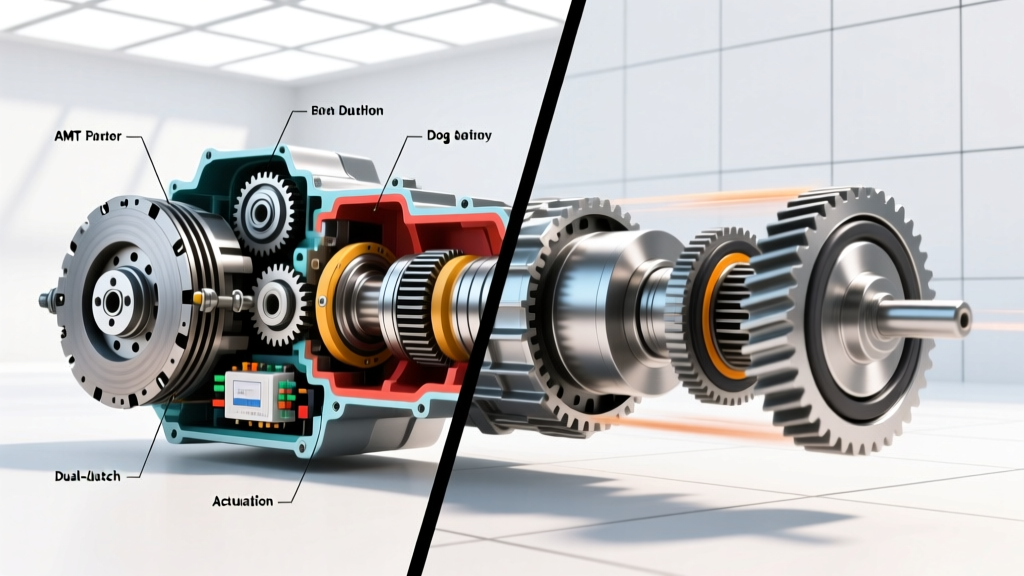
The most significant financial variable for a beginner learning to drive a stick shift is the clutch assembly. A manual transmission relies on a friction disc clamped between the engine's flywheel and the transmission's pressure plate. When a beginner improperly modulates the 'friction zone'—often riding the clutch pedal in stop-and-go traffic or excessive hill-starts—the organic friction material overheats. This leads to glazing, where the disc surface turns glassy and loses its coefficient of friction, resulting in clutch slip under load.
Single-Mass vs. Dual-Mass Flywheels (DMF)
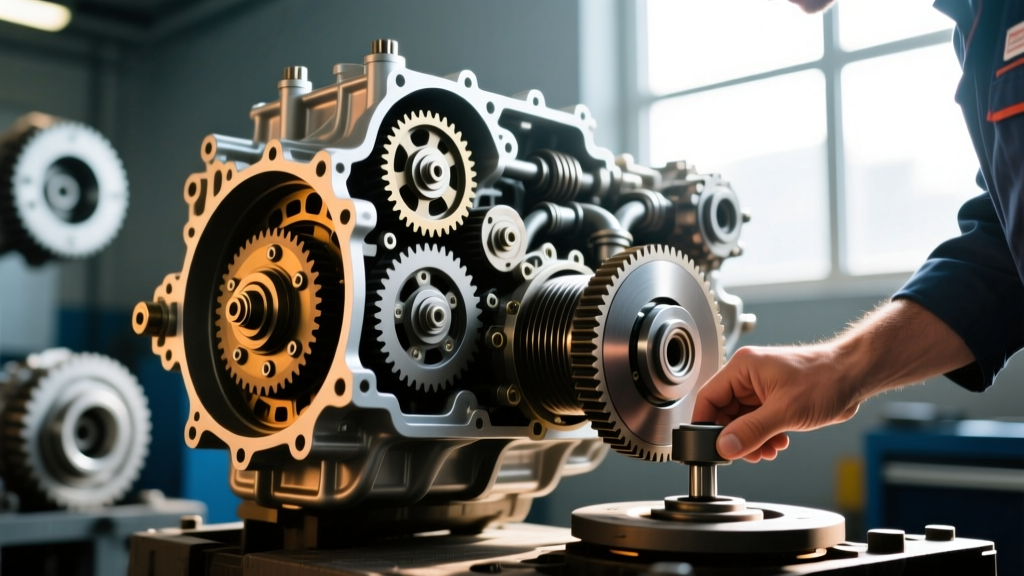
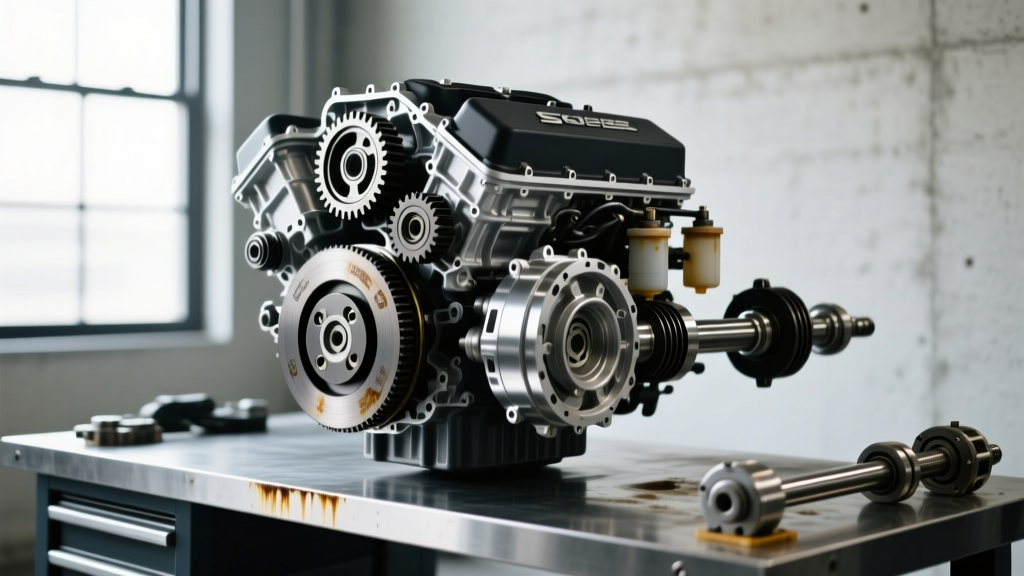
Many modern manual cars, including the Subaru BRZ (TL61 transmission) and Volkswagen GTI, utilize a Dual-Mass Flywheel (DMF). A DMF contains internal springs designed to dampen torsional vibrations from the engine, protecting the transmission input shaft. When a beginner rides the clutch, the excessive heat transfers into the DMF, destroying its internal damping grease and springs. While a traditional Single-Mass Flywheel (SMF) can often be resurfaced at a machine shop for $50-$100, a DMF cannot be resurfaced. A replacement OEM DMF for a Subaru BRZ costs between $750 and $1,100 just for the part, drastically inflating the cost of a beginner's first clutch job.
Real-World Clutch Replacement Data (Entry-Level Manuals)
Below is a technical breakdown of what a beginner can expect to pay when their clutch inevitably requires replacement, using OEM-equivalent Exedy clutch kits and factory torque specifications.
| Vehicle (Transmission) | OEM Clutch Kit Part # | Flywheel Type | Pressure Plate Torque Spec | Est. Dealer Cost (Parts + Labor) |
|---|---|---|---|---|
| Honda Civic Si (6-Speed) | Exedy HNC05U | Single-Mass (Resurfaced) | 19 lb-ft (Star Pattern) | $1,100 - $1,400 |
| Subaru BRZ (TL61 6-Speed) | Exedy SBR03U | Dual-Mass (Replaced) | 18 lb-ft (Star Pattern) | $1,800 - $2,400 |
| Mazda MX-5 Miata (M16 6-Speed) | Exedy MZC06U | Single-Mass (Resurfaced) | 15 lb-ft (Star Pattern) | $900 - $1,200 |
Note: Flywheel to crankshaft bolts typically require high torque plus an angle turn (e.g., 76 lb-ft + 90 degrees on Honda K-series engines) and must be replaced with new stretch bolts during reassembly.
Synchromesh Degradation: The Hidden Cost of Missed Shifts
Beginners often ask if grinding a gear once or twice will destroy the transmission. The answer lies in the synchromesh rings. Synchronizers are essentially small friction brakes that match the speed of the gear to the speed of the shaft before the dog teeth engage.
Most standard manual transmissions use brass or bronze alloy synchro rings. However, high-revving enthusiast cars like the Honda Civic Si and Civic Type R utilize advanced carbon-lined synchromesh rings to handle faster shift speeds and higher RPMs. When a beginner forces a gear without fully depressing the clutch pedal, or attempts a shift without rev-matching on a downshift, the dog teeth clash against the synchro sleeve. Over time, this shears the blocking teeth off the brass ring or strips the carbon lining. Replacing a single synchro ring part might only cost $60 to $150, but the labor requires removing the transmission, draining the fluid, and completely tearing down the gearbox on a bench—a job that routinely exceeds $1,500 in labor alone.
Drivetrain Fluids: Cheaper, But Specificity Matters
One area where manual transmission cars are undeniably cheaper is routine fluid maintenance. An automatic transmission requires a flush or drain-and-fill every 30,000 to 60,000 miles, often requiring 8 to 12 quarts of expensive proprietary ATF (Automatic Transmission Fluid). A manual transmission typically holds less than 2.5 quarts of gear oil and only requires a change every 60,000 to 100,000 miles.
However, beginners must be warned about the 'Quick Lube' trap. Manual transmissions require specific GL-4 rated gear oils (like Red Line MT-90 75W-90) or dedicated Manual Transmission Fluids (MTF). Many generic shops mistakenly pump GL-5 gear oil into manual gearboxes. GL-5 contains high levels of sulfur-phosphorus extreme pressure (EP) additives designed for hypoid differential gears. These sulfur additives are highly corrosive to the yellow metals (brass/bronze) used in manual transmission synchro rings. Using GL-5 in a manual transmission will chemically etch and destroy the synchros within a few thousand miles.
- Honda Civic Si: Requires 1.9 Quarts of Honda Manual Transmission Fluid (Part # 08200-9003). Cost: ~$35.
- Subaru BRZ / Toyota GR86: Requires 2.1 Liters of GL-4 75W-90 or OEM Subaru MTF (Part # 0432072600). Cost: ~$45.
- Mazda MX-5 Miata: Requires 2.0 Quarts of Mazda Long Life Gear Oil G7. Cost: ~$40.
Insurance, Depreciation, and the Enthusiast Tax
To fully answer whether manual cars are cheaper, we must look at the back-end of ownership: depreciation and insurance. Counterintuitively, while beginners might fear that a manual car will be harder to sell, the exact opposite is true in the current market. As automakers phase out manual gearboxes to meet stringent emissions and efficiency standards, the 'Enthusiast Tax' has taken hold.
According to valuation data analyzed by Hagerty's valuation team, manual-equipped sports cars and hot hatches consistently retain 10% to 15% more of their original MSRP over a five-year period compared to their automatic siblings. A well-maintained manual Subaru WRX or Porsche 718 Cayman will command a massive premium on the used market, effectively offsetting the higher upfront maintenance costs of a clutch replacement.
Insurance premiums for manual cars are generally identical to automatics for standard commuters. However, if a beginner purchases a high-performance manual (like a Dodge Challenger R/T with a Tremec TR-3650 or a Ford Mustang Dark Horse with a Tremec 3160 6-speed), insurers may classify the vehicle as a sports car, raising premiums by 15% to 25% regardless of the transmission type.
The Verdict for Beginners: Are manual transmission cars cheaper? Upfront, the gap has narrowed due to trim-level gating. In the short term, a beginner will pay a 'learning tax' in the form of premature clutch and flywheel wear. However, over a 5-to-10-year ownership cycle, the drastically lower fluid maintenance costs, simplified drivetrain mechanics (no torque converters, mechatronic units, or CVT belts to fail), and superior depreciation resistance make the manual transmission the more financially sound choice for the dedicated enthusiast.