The Economics of Shift Logic: ECU vs. Driver Input
The modern automatic transmission is a marvel of computational engineering, balancing performance, fuel economy, and component longevity. However, the proliferation of paddle shifters, Tiptronic gates, and sequential manual modes has given drivers the illusion of total control. While the manual shifting technique in an automatic vehicle can be engaging and useful for engine braking, it fundamentally overrides the factory-calibrated shift logic. From a financial perspective, this raises a critical question for automotive enthusiasts and daily commuters alike: what is the actual cost of taking over the duties of the Transmission Control Module (TCM)?
In this 2026 cost analysis, we break down the exact financial implications of manual shifting an automatic transmission. We will examine component wear, fluid degradation rates, and the hidden costs of overriding the ECU, ultimately determining whether the manual shifting technique saves or costs you money over the lifespan of your drivetrain.
How Does an Automatic Transmission Know When to Shift?
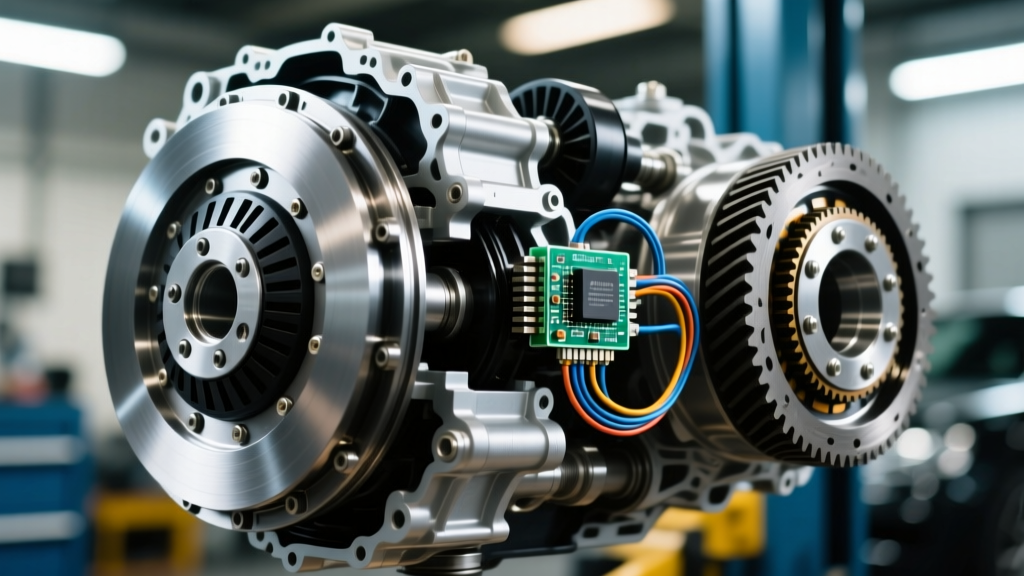
To understand the financial risk of overriding the system, we must first answer the foundational question: how does an automatic transmission know when to shift? The TCM relies on a complex network of sensors to calculate the exact millisecond a gear change should occur, prioritizing clutch pack longevity and thermal management.
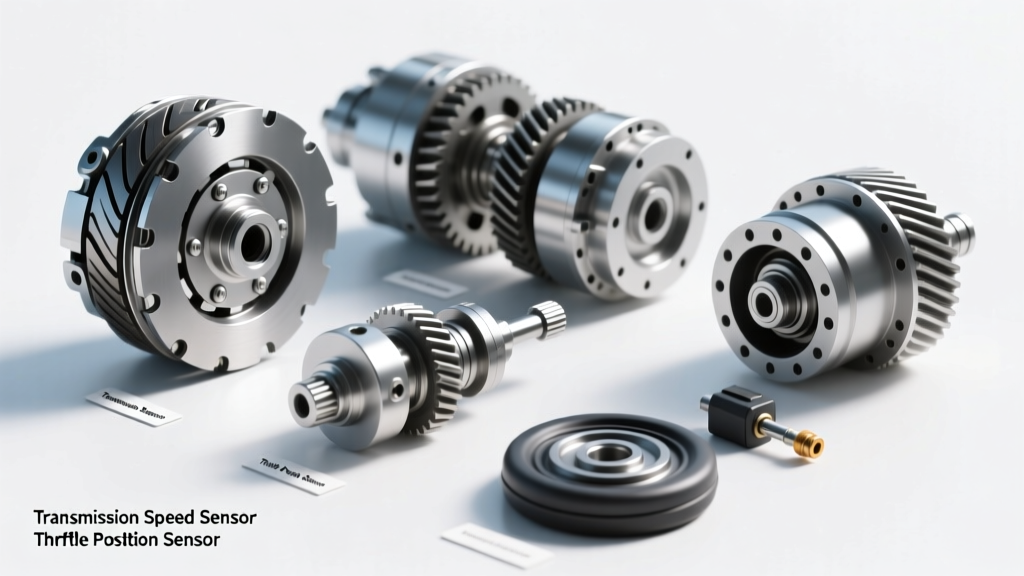
- Throttle Position Sensor (TPS) & Manifold Absolute Pressure (MAP): These dictate engine load. The TCM uses this data to adjust line pressure via Pulse Width Modulation (PWM) solenoids, ensuring clutch packs apply with enough force to prevent slip without causing harsh engagement.
- Vehicle Speed Sensor (VSS) & Turbine Shaft Speed: By comparing input and output shaft speeds, the TCM calculates torque converter slip and determines the precise shift point based on 3D volumetric efficiency maps.
- Transmission Fluid Temperature (TFT) Sensor: If fluid exceeds 220°F (104°C), the TCM alters shift maps to lock the torque converter earlier, reducing heat generation and protecting the friction materials.
When you utilize the manual shifting technique to hold a gear or force a downshift, you are bypassing these thermal and load-based protections. According to ZF Group's engineering documentation, modern 8-speed and 10-speed automatics (like the ZF 8HP70 or Ford 10R80) execute shifts in under 200 milliseconds while simultaneously pulling ignition timing to cushion the clutch packs. Manual overrides often eliminate this torque-reduction intervention, leading to severe drivetrain shock.
Cost Breakdown: Manual Shifting vs. ECU-Controlled Shifting
Below is a comparative cost analysis of long-term drivetrain wear when relying on factory ECU shift maps versus frequent manual shifting techniques in popular automatic transmissions.
| Component / Service | ECU-Controlled Shifting (OEM Logic) | Frequent Manual Shifting (Driver Override) | Estimated Replacement Cost (2026) |
|---|---|---|---|
| ATF Fluid Flush (Synthetic) | Every 60,000 - 80,000 miles | Every 30,000 - 45,000 miles (Thermal breakdown) | $250 - $450 per service |
| Mechatronic / TEHCM Unit | 150,000+ miles lifespan | 80,000 - 100,000 miles (Solenoid fatigue) | $800 - $2,200 (Parts & Labor) |
| Clutch Pack Friction Material | 120,000+ miles lifespan | 70,000 - 90,000 miles (Glazing & slip) | $1,500 - $3,500 (Rebuild) |
| Torque Converter Clutch (TCC) | 150,000+ miles lifespan | 100,000 miles (Shudder from manual lockup) | $900 - $1,400 |
The Hidden Cost of Solenoid and Valve Body Fatigue
When you manually command a downshift via paddle shifters, the TCM must rapidly reroute hydraulic fluid through the valve body to engage the lower gear clutch pack. In transmissions like the GM 6L80, the Transmission Electronic Hydraulic Control Module (TEHCM) houses the solenoids directly inside the fluid pan. Forcing rapid, high-RPM manual downshifts spikes hydraulic line pressure, accelerating the wear of the internal solenoid regulator valves.
As noted by Sonnax Technical Resources, bore wear in the valve body leads to cross-leaking and delayed engagements. Replacing a failing GM 6L80 TEHCM unit costs between $450 and $650 for the part alone, plus $150 in labor and a mandatory fluid refill. In ZF 8HP units, the entire mechatronic assembly is integrated, pushing replacement costs well over $2,000 if internal pressure switches fail from manual-shift-induced hydraulic shock.
Thermal Economics: Fluid Degradation in Manual Mode
The most immediate financial penalty of the manual shifting technique is accelerated Automatic Transmission Fluid (ATF) oxidation. Modern synthetic fluids, such as Dexron ULV or ZF Lifeguard 8, are engineered to withstand immense shear forces, but they are highly sensitive to heat.
When the ECU controls the shift, it modulates the torque converter lockup clutch (TCC) to minimize slip, keeping fluid temperatures in the optimal 180°F to 200°F range. When a driver holds a gear manually to keep the engine in the powerband, the torque converter often remains unlocked, generating massive amounts of friction heat. For every 20°F increase in fluid temperature above 200°F, the lifespan of the ATF is effectively halved.
The Financial Impact: If your vehicle requires 10 quarts of specialized ATF (averaging $18 to $25 per quart), a single fluid and filter service costs roughly $250 to $400. Drivers who aggressively use manual mode on track days or during mountain towing will need to perform this service twice as often, adding $300 to $500 in annual maintenance costs.
The Offset: Engine Braking and Brake Pad Savings
Is there a financial benefit to manual shifting? Yes, but it is highly situational. The primary economic advantage of the manual shifting technique is engine braking during steep descents. By manually selecting a lower gear (e.g., dropping from 6th to 4th gear on a 6% grade), you utilize engine vacuum and mechanical compression to slow the vehicle, saving your friction brakes.
A set of premium ceramic brake pads and coated rotors for a modern SUV or light truck can cost between $350 and $600 installed. If towing a 5,000 lb trailer down a mountain pass in 'Drive', the ECU may upshift prematurely to save fuel, causing the brakes to overheat, glaze, and warp. In this specific scenario, utilizing the manual shift gate to hold 3rd or 4th gear saves the brake hardware, yielding a net positive return on investment. However, using manual mode for everyday stoplight-to-stoplight driving offers zero brake savings while actively harming the transmission.
Drivetrain Shock: The Cost of Ignoring Ignition Retard
One of the most expensive consequences of poor manual shifting technique is drivetrain shock. When the ECU initiates a shift, it communicates with the Engine Control Module (ECM) to momentarily pull ignition timing and cut fuel injection. This 'torque hole' unloads the clutch packs, allowing for a buttery smooth gear change.
When drivers use aftermarket tunes or aggressive manual shifting techniques that bypass these parameters, the transmission attempts to absorb the full torque output of the engine during the shift event. This results in the 'clunk' heard in the drivetrain. Over time, this shock load stretches the transmission chain (in CVT or certain transfer cases), chips the planetary gear teeth, and fractures the torque converter fins. Rebuilding a planetary gearset in a heavy-duty transmission like the Allison 10L1000 can easily exceed $4,500 in machine shop and labor fees.
2026 Verdict: Maximizing Drivetrain ROI
So, how does an automatic transmission know when to shift, and should you trust it? The TCM's shift logic is calibrated by thousands of hours of OEM dyno testing to maximize the lifespan of the friction materials and hydraulic components. From a strict cost-analysis perspective, relying on the ECU for 95% of your driving is the most financially sound decision you can make.
The manual shifting technique should be reserved exclusively as a defensive driving tool: engine braking on steep declines, holding a lower gear to prevent shift-hunting while towing, or pre-selecting a gear before entering a corner on a closed course. By understanding the intricate balance of hydraulic pressure, thermal limits, and solenoid fatigue, drivers can protect their wallets and ensure their automatic transmission reaches its full 200,000-mile potential without premature, out-of-pocket rebuilds.