The Evolution of Friction: Understanding Auto Car Clutch Degradation
As we navigate the 2026 automotive service landscape, the drivetrain ecosystem has fractured into highly specialized categories. Whether you are servicing a legacy Tremec T56 Magnum manual transmission or recalibrating a VW DQ250 wet dual-clutch system, understanding the degradation of an auto car clutch assembly is critical for accurate diagnostics. Clutch wear is rarely a sudden catastrophic event; rather, it is a quantifiable decline in friction coefficient, thermal mass, and hydraulic displacement. This technical deep-dive explores the exact measurements, adaptive learning limits, and physical wear signs that dictate the lifespan of modern clutch systems.
The Physics of Friction Material Decay
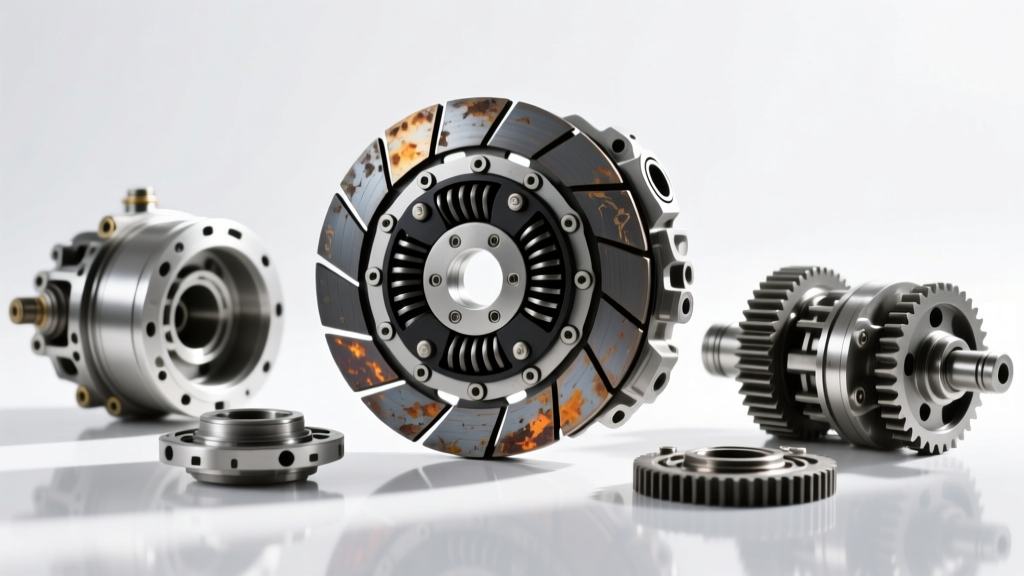
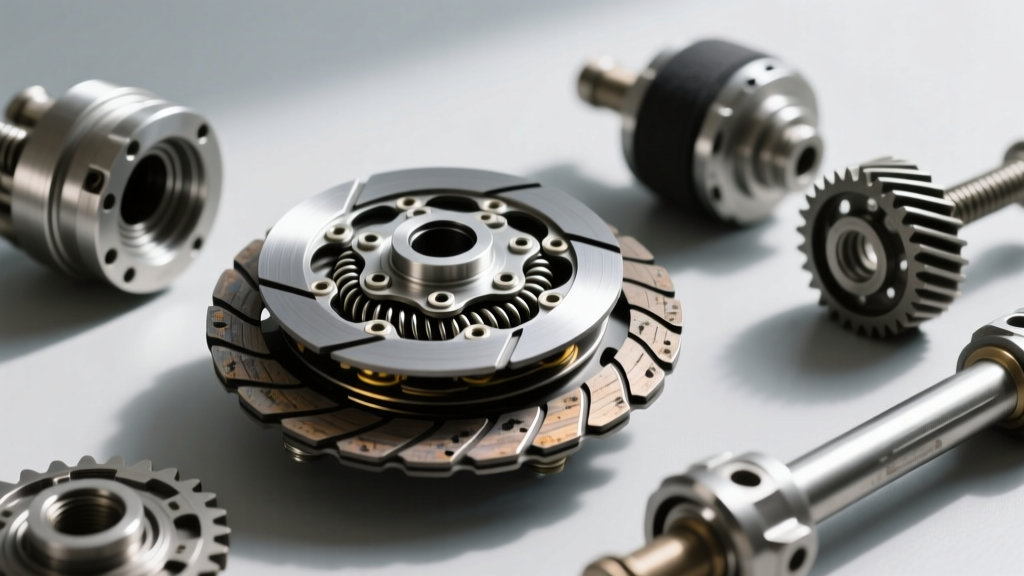
Friction materials—whether organic, Kevlar-reinforced, or sintered iron—operate in a state of controlled destruction. Every engagement event generates localized thermal spikes. In a traditional manual setup, surface temperatures can briefly exceed 400°F (204°C) during aggressive slip. Over time, this thermal cycling causes the resin binders in organic discs to outgas and carbonize, leading to glazing. Glazing reduces the coefficient of friction (μ) from an optimal 0.35–0.45 down to below 0.20, resulting in the classic high-RPM slip symptom.
In automated manual and dual-clutch transmissions (DCT), the apply clutches are bathed in specialized fluid (e.g., G 052 182 A2). Here, wear manifests differently. The friction material shears off at a microscopic level, contaminating the mechatronic valve body solenoids and altering the fluid's dielectric properties. Recognizing these distinct failure modes is the first step in accurate clutch system diagnostics.
Quantifiable Wear Tolerances and Thresholds
Guesswork has no place in modern transmission repair. Technicians must rely on precise OEM specifications to determine if a clutch pack or disc has reached its end-of-life. Below is a reference matrix for common drivetrain configurations:
| Transmission / Assembly | Component | New Spec / Thickness | Condemning Limit / Wear Sign |
|---|---|---|---|
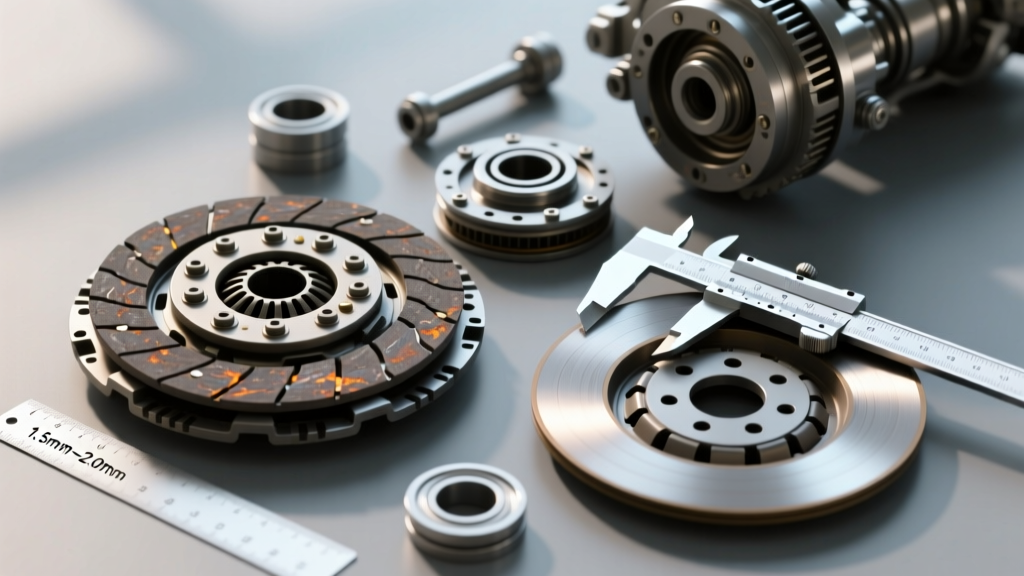
| Tremec T56 / LS-Series (OEM LuK) | Friction Disc | 7.80 mm | < 5.50 mm at thinnest point |
| Tremec T56 / LS-Series | Flywheel Runout | 0.000" - 0.002" | > 0.005" (causes chatter) |
| VW DQ250 (6-Speed Wet DSG) | Clutch Pack Gap | Factory Calibrated | Adaptation Current > 14.0A |
| ZF 8HP70 (8-Speed Auto) | Clutch Volume Index (CVI) | 60 - 85 ml (varies by clutch) | < 35 ml (indicates severe wear) |
| Porsche G50 (Manual) | Diaphragm Spring Fingers | Flush with bearing collar | > 1.5mm wear grooves |
Diagnostic Framework: Manual Transmission Wear Signs
For traditional manual gearboxes, diagnosing an auto car clutch system requires a blend of physical inspection and dynamic testing. The lifespan of a manual clutch typically ranges from 60,000 to 100,000 miles, but this is heavily dependent on driver behavior and dual-mass flywheel (DMF) health.
1. Pedal Displacement and Hydraulic Analysis
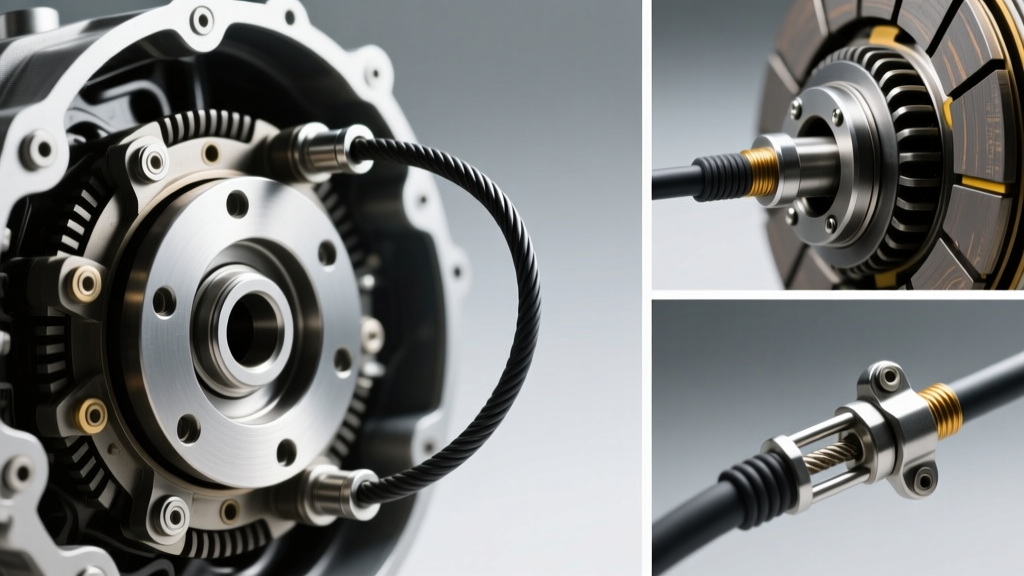
Before dropping the transmission, measure the clutch pedal free-play. Most hydraulic systems (utilizing a concentric slave cylinder or CSC) require 10mm to 15mm of free-play at the pedal pad. If the self-adjusting mechanism inside the CSC has maxed out its travel, the clutch will begin to slip under load because the release bearing is perpetually applying pressure to the diaphragm spring. Furthermore, check the DOT 4 hydraulic fluid; dark, particulate-laden fluid indicates internal master cylinder seal degradation, which mimics clutch slip by failing to maintain line pressure.
2. The Static Slip Test and DMF Evaluation
Perform a static slip test: engage 3rd or 4th gear, hold the engine at 2,000 RPM, and slowly release the pedal while applying the parking brake. If the engine RPM drops and lugs immediately, the friction material is adequate. If the RPM flares, the disc is glazed or worn past the 5.5mm threshold.
Crucially, clutch lifespan is inextricably linked to the Dual-Mass Flywheel (DMF). According to Schaeffler REPXPERT guidelines, a DMF must be checked for radial free-play and rotational arc. If the rotational arc exceeds the manufacturer's tooth-count limit (often 15-20 degrees of free movement), the DMF's internal torsion springs have collapsed. Installing a new clutch disc on a failed DMF will result in immediate chatter and premature destruction of the new friction material.
Diagnostic Framework: Automatic and DCT Apply Clutches
In modern automatics and DCTs, the 'clutch pedal' has been replaced by solenoids and mechatronic units. Wear signs are no longer felt in the driver's left foot; they are read via OBD-II telematics and proprietary scan tools.
1. ZF 8HP Clutch Volume Index (CVI)
The ZF 8HP (found in BMW, Chrysler, and Jaguar applications) utilizes multiple overlapping apply clutches. As the friction material wears, the piston must travel further to clamp the clutch pack, requiring more fluid volume. The Transmission Control Module (TCM) tracks this via the Clutch Volume Index (CVI). Using a bi-directional scan tool, monitor the CVI for Clutches A through E. As noted in Sonnax Technical Resources, if a specific clutch's CVI drops below 35 ml, the friction material has physically sheared away, and the drum may be scoring. This data point is an absolute indicator that a teardown and friction module replacement is required, regardless of whether the vehicle is currently exhibiting shift flares.
2. VW/Audi DSG Adaptation Limits
For the BorgWarner-designed DQ250 6-speed wet DSG, clutch wear is monitored via adaptation current. The mechatronic unit uses a solenoid to apply the clutch pack. As the clutches wear and the gap widens, the solenoid requires higher amperage to achieve the same clamping force. By accessing Measuring Value Block (MVB) 098 or 095 via VCDS or ODIS, technicians can view the adaptation current. If the value consistently exceeds 14.0 Amps, the clutch pack has reached its mechanical limit. At this stage, the vehicle will exhibit low-speed shudder and harsh 2nd-to-3rd gear engagements.
Expert Technician Note: When replacing a wet DCT clutch pack, simply bolting in the new assembly will destroy the mechatronic unit. You MUST perform a Basic Settings adaptation (clutch kiss-point learning) and flush the system with exactly 5.0 liters of OEM-spec fluid (e.g., VAG G 052 182 A2) to ensure the solenoid maps correctly to the new friction thickness.
Real-World Replacement Costs and OEM Part Data
Budgeting for a clutch replacement requires understanding the difference between OEM, OEM-equivalent, and aftermarket friction materials. Below is a breakdown of typical 2026 market pricing for common assemblies (parts only, excluding core charges and local labor rates):
- GM LS / Tremec T56 Manual: LuK RepSet Pro (Part# 04-161) includes disc, pressure plate, and CSC. Retail: $450 - $550. (Note: Always torque M8x1.25 pressure plate bolts to 22 lb-ft in a star pattern, and M10x1.5 flywheel bolts to 74 lb-ft).
- VW DQ250 DSG Clutch Pack: BorgWarner OEM Replacement Kit (Part# 502109). Retail: $900 - $1,150. Requires specialized clutch compressor tool (e.g., OEM Tools 27124) to safely remove the snap ring without damaging the K1/K2 input shafts.
- ZF 8HP70 Friction Module: Complete OEM ZF Friction and Steel plate kit. Retail: $650 - $850. Reassembly requires precise snap-ring thickness selection using a dial indicator to set clutch pack end-play between 0.020" and 0.040".
Summary: Proactive vs. Reactive Diagnostics
The lifespan of any auto car clutch system is ultimately dictated by thermal management and adherence to OEM service intervals. For manual transmissions, measuring disc thickness and DMF rotational arc before failure prevents secondary damage to the transmission input shaft bearings. For automatics and DCTs, monitoring CVI and adaptation amperage allows technicians to replace friction modules proactively, saving the valve body and clutch drums from catastrophic scoring. Rely on hard data, precise torque specifications, and OEM adaptation procedures to ensure long-term drivetrain reliability.
For further reading on automatic transmission clutch drum wear and Sonnax repair sleeves, consult the Transmission Digest technical archives.