The Core Difference: How a Manual Clutch Works vs. Automatic Wet Packs
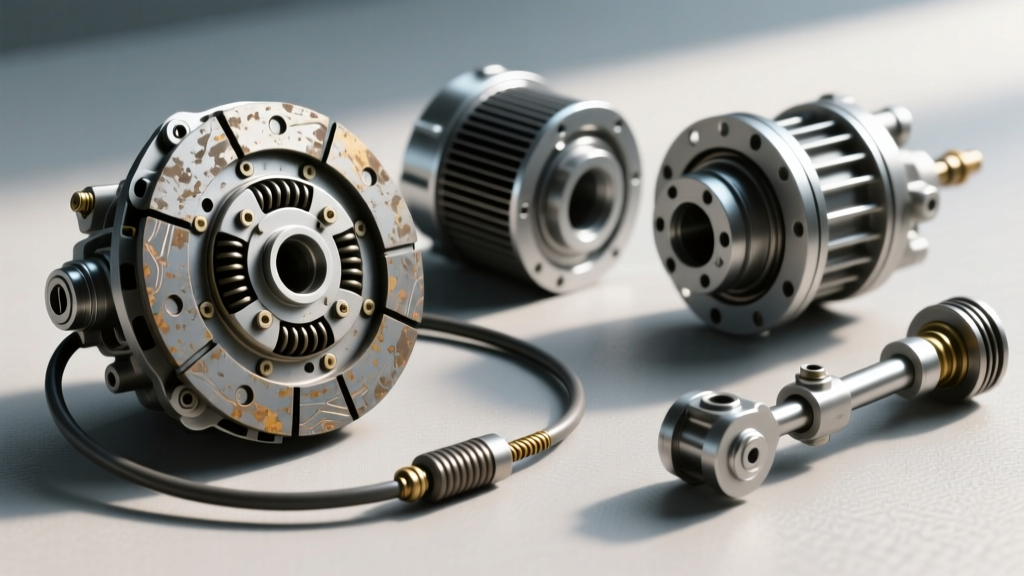
When drivers experience drivetrain slip, their first thought often drifts to the pedal on the left. Understanding how a manual clutch works provides a vital baseline for diagnosing broader transmission issues. A traditional manual clutch relies on a single, dry friction disc squeezed between the engine's flywheel and a diaphragm-spring pressure plate. Clamping force is mechanical, typically generating 2,500 to 3,500 pounds of pressure, and engagement is modulated directly by the driver's foot.
Automatic transmissions, however, abandon the single dry plate for a complex array of wet clutch packs submerged in transmission fluid. Instead of a mechanical linkage, automatic clutch packs are applied hydraulically. Pressurized fluid acts upon a machined aluminum or steel piston inside a clutch drum, compressing alternating layers of friction and steel plates against a snap ring. While a manual clutch fails primarily from friction wear or thermal glazing, automatic clutch problems stem from hydraulic leaks, piston seal degradation, and fluid shear breakdown.
Common Automatic Transmission Clutch Problems
Diagnosing clutch problems in automatic transmissions requires looking past the friction material and into the hydraulic control circuits. Here are the most prevalent failure modes in modern units:
1. GM 6L80 / 6L90: The 3-5-R Wave Plate Catastrophe
The GM 6L80 is notorious for premature failure in the 3-5-R clutch pack. The root cause is rarely the friction material itself; rather, it is the OEM wave plate (cushion plate) that fatigues and fractures under high-torque, high-heat conditions. When the wave plate shatters, metallic debris circulates through the valve body, scoring the clutch apply bores and destroying the 1-2-3-4 and 4-5-6 clutch packs. If you are rebuilding a 6L80, omitting the wave plate and using a flat steel apply plate is a mandatory upgrade.
2. ZF 8HP: Mechatronic Sleeve Leaks
In the ZF 8HP series (found in BMW, Audi, and FCA vehicles), clutch slip is frequently misdiagnosed as burnt friction packs. In reality, the plastic adapter sleeve connecting the Mechatronic unit to the transmission case (ZF PN 1068.327.235) develops micro-cracks. This leak bleeds off critical line pressure before it reaches the clutch pistons, resulting in delayed engagements and slip codes (e.g., P0730). Replacing this $40 sleeve often resolves the issue without pulling the transmission.
Diagnostic Framework: Pinpointing Automatic Clutch Slip
Before ordering replacement parts, transmission specialists rely on a strict diagnostic protocol to isolate automatic clutch problems:
- Scan Tool Data (Slip RPM): Using a bi-directional scanner, monitor the Transmission Fluid Temperature (TFT) and Clutch Slip RPM. A slip reading consistently above 25-50 RPM under steady-state cruise indicates hydraulic leakage or worn friction faces.
- Manifold Gauge Line Pressure Test: Connect a 0-500 PSI transmission pressure gauge to the main line pressure tap. For the GM 6L80, base line pressure in Park/Neutral at idle should read 50-70 PSI, spiking to 250+ PSI at wide-open throttle (WOT). A failure to reach commanded pressure points to a worn pressure regulator valve in the valve body, not necessarily the clutch packs.
- Solenoid Circuit Testing: Modern transmissions use Variable Force Solenoids (VFS) to modulate clutch apply pressure. Using an oscilloscope to monitor the Pulse Width Modulation (PWM) signal to the specific clutch apply solenoid can reveal electrical faults. If the Transmission Control Module (TCM) is commanding a 70% duty cycle for maximum pressure, but the slip RPM remains high, the fault is mechanical (leaking piston seal or worn clutch pack) rather than electrical.
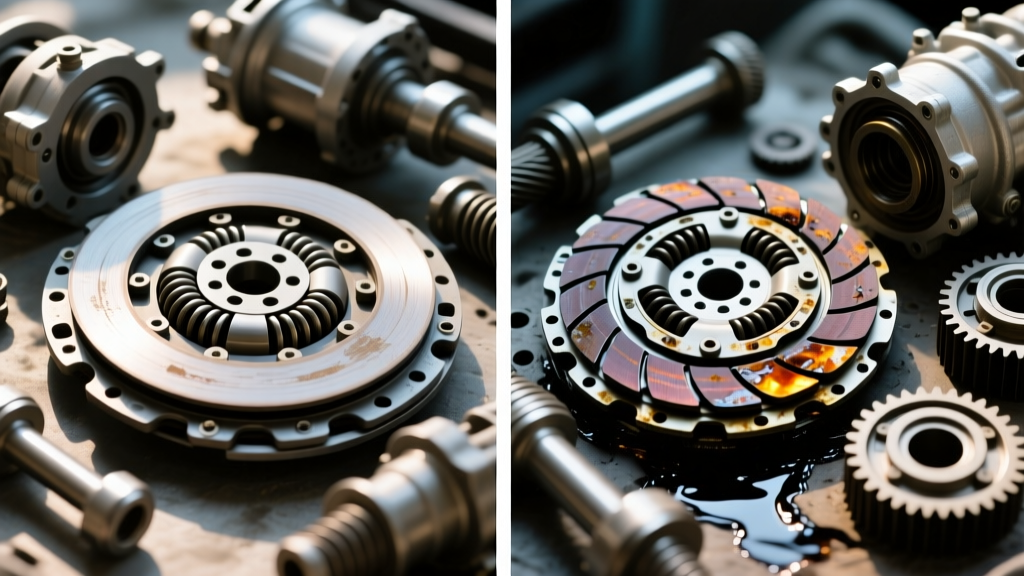
- The Burnt Toast Fluid Test: Automatic transmission fluid (ATF) acts as both a lubricant and a hydraulic medium. If the ATF smells sharply of burnt toast and appears black, the wet clutch packs have experienced thermal runaway, glazing the friction material and necessitating a complete teardown.
The Role of Transmission Fluid in Wet Clutch Systems
In a manual setup, the clutch operates entirely dry, meaning friction coefficients are dictated solely by the organic, ceramic, or sintered iron material on the disc. In an automatic, the transmission fluid is an active participant in the clutch engagement process. Modern wet clutch friction materials are designed with microscopic porosity. As the clutch pack applies, the ATF must be rapidly squeezed out from between the friction and steel plates to allow mechanical lock-up. If the fluid's viscosity breaks down due to excessive heat or shear, it cannot evacuate the micro-pores fast enough. This results in a hydrodynamic wedge effect, where the fluid layer prevents full mechanical contact, causing micro-slip, extreme heat generation, and eventual delamination of the friction paper from the steel core. Maintaining strict adherence to OEM fluid specifications—such as Dexron ULV for newer GM 10-speeds or ZF LifeguardFluid 8—is not just a recommendation; it is a hydraulic necessity.
2026 Buyer’s Guide: Automatic Clutch Pack Replacement Kits
When a teardown confirms physical clutch pack failure, selecting the right replacement kit is critical. The aftermarket offers distinct friction technologies tailored to different performance and towing profiles. Below is a comparison of the top-tier automatic clutch kit manufacturers.
| Brand & Line | Friction Technology | Best Application | Est. Cost (6L80 Master Kit) |
|---|---|---|---|
| Raybestos GPZ | High-energy synthetic/carbon weave | Heavy towing, tuned vehicles, daily driving | $280 - $340 |
| Alto Red Eagle | Proprietary high-friction paper/ceramic | Motorsport, high-RPM shift recovery | $220 - $270 |
| OEM (GM / ZF) | Standard cellulose/aramid blend | Stock restorations, warranty compliance | $380 - $450 |
For most heavy-duty and modified applications in 2026, Raybestos Powertrain's GPZ line is the industry benchmark. GPZ friction plates feature a specialized weave that maintains a high coefficient of friction even as temperatures exceed 300°F, drastically reducing the glazing that plagues standard OEM cellulose packs.
Torque Specs and Reassembly Best Practices
Proper reassembly is just as critical as the parts you buy. Automatic clutch packs require precise air gaps to function. If the clearance is too tight, the clutches will drag and overheat; if too loose, the piston will bottom out before fully clamping the pack, causing immediate slip.
GM 6L80 Critical Clearances & Torques
- 1-2-3-4 Clutch Pack Clearance: 0.050 to 0.070 inches (Select snap ring accordingly)
- 3-5-R Clutch Pack Clearance: 0.040 to 0.060 inches (Use flat apply plate, discard wave plate)
- Oil Pump to Case Torque: 10 Nm (89 in-lbs)
- Valve Body to Case Torque: 8 Nm (71 in-lbs) in the specified crisscross sequence
ZF 8HP Reassembly Notes
When reinstalling the ZF 8HP Mechatronic unit, always use new aluminum sealing sleeves and torque the Mechatronic retaining bolts to exactly 10 Nm. Over-torquing will warp the plastic valve body casing, leading to internal cross-leaks between clutch apply circuits. Always fill with the exact OEM-specified fluid, as universal synthetic ATFs can cause the specialized ZF friction materials to chatter during the 2-3 and 4-5 shift events.
Final Thoughts on Drivetrain Diagnostics
While understanding how a manual clutch works is essential for traditional drivetrain diagnostics, mastering automatic transmission clutch problems requires a shift in mindset. You must transition from thinking about mechanical linkages to analyzing hydraulic circuits, fluid dynamics, and electronic solenoid control. By leveraging bi-directional scan tools, performing rigorous line pressure tests, and selecting advanced friction materials from trusted suppliers like Sonnax and Raybestos, you can accurately diagnose and permanently resolve automatic clutch slip.
For further technical bulletins and diagnostic flowcharts, technicians should regularly consult the Automatic Transmission Rebuilders Association (ATRA) to stay updated on the latest valve body modifications and clutch pack clearances for emerging transmission platforms.