The Evolution of Freightliner Fan Clutch Systems
When diagnosing heavy-duty commercial vehicles like the Freightliner Cascadia or Columbia, the engine cooling system is inextricably linked to drivetrain and powertrain longevity. While traditional automotive diagnostics often focus on transmission friction clutches, the fan clutch freightliner ecosystem represents a critical rotational clutch mechanism that dictates engine thermal management, parasitic horsepower loss, and overall fuel economy. In 2026, with the proliferation of Detroit DD15 Gen 5 and Cummins X15 Efficiency Series engines, understanding the precise failure modes of viscous, thermal, and electronic fan clutches is essential for accurate root cause analysis and smart procurement.
A failing fan clutch does not merely cause overheating; it can trigger severe drivetrain derate codes. The engine control module (ECM) monitors coolant temperature and fan speed feedback. If the clutch fails to engage, the ECM initiates a torque derate to protect the engine, which many drivers misdiagnose as a transmission or fuel system fault. This guide dissects the exact failure modes of heavy-duty fan clutches and provides a comprehensive 2026 buyer's guide for sourcing the correct replacement.
Root Cause Analysis: Top 4 Freightliner Fan Clutch Failure Modes
1. Viscous Fluid Shear Degradation (Thermal/Viscous Clutches)
Viscous fan clutches, commonly found on older Freightliner M2 and legacy Cascadia models equipped with Schwitzer or early Horton units, rely on a precise gap filled with polydimethylsiloxane (silicone) fluid. The root cause of failure in these units is often shear-thinning. Over hundreds of thousands of miles, the continuous mechanical shearing of the silicone fluid between the rotor and stator breaks down the fluid's polymer chains. This reduces the fluid's viscosity, leading to a condition known as 'fan slip.' The clutch will fail to achieve a 1:1 lockup ratio at high temperatures, resulting in elevated coolant temps under heavy loads. Unlike friction clutches that fail suddenly, viscous clutch degradation is insidious and progressive.
2. Bimetallic Spring Hysteresis and Fatigue
Thermal on/off clutches utilize a bimetallic coil spring on the front face of the clutch to actuate a valve based on ambient air temperature. A frequent failure mode is thermal hysteresis—the spring loses its calibrated tension after years of extreme thermal cycling (from -20°F to 220°F). When the spring fatigues, the valve fails to open fully, restricting fluid flow to the working chamber. The root cause is metallurgical fatigue, often accelerated by aftermarket engine tuning that elevates baseline coolant temperatures. The symptom is a clutch that remains disengaged (freewheeling) even when the radiator air temperature exceeds 180°F.
3. Electromagnetic Coil Burnout and Multiplexing Faults
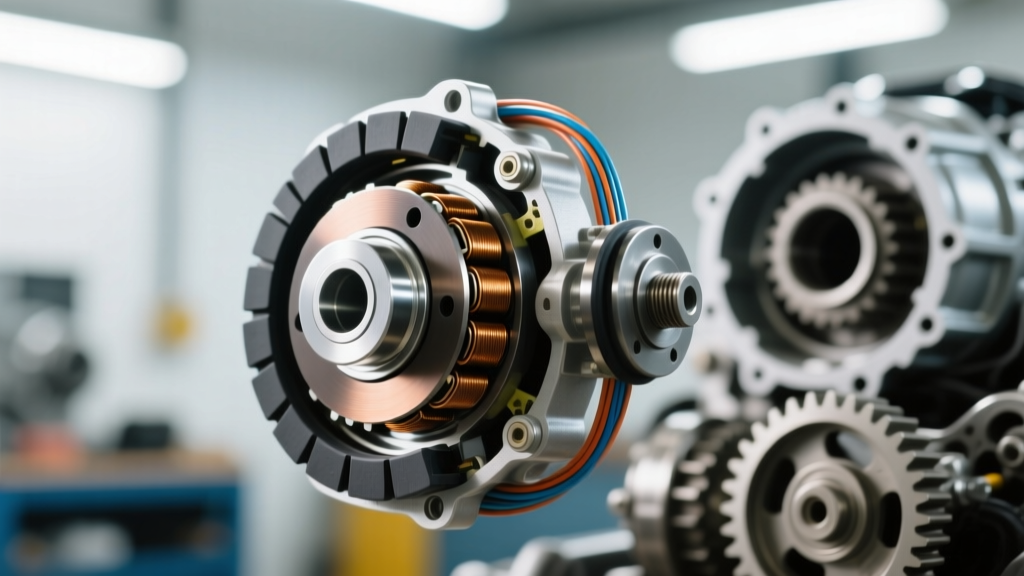
Modern Freightliner Cascadias utilize electronic fan clutches controlled by the Detroit or Cummins ECM via a 12V or 24V pulse-width modulated (PWM) signal. The root cause of failure here is typically electromagnetic coil burnout due to voltage spikes or moisture ingress into the coil housing. Furthermore, because these clutches are integrated into the J1939 CAN bus network, a corroded connector at the clutch pigtail can cause the ECM to default to a 'fail-safe' mode, locking the fan at 100% engagement. This causes massive parasitic horsepower loss (up to 70 HP) and a noticeable drop in fuel economy, often accompanied by a roaring noise at highway speeds.
4. Pneumatic Air Actuator Diaphragm Rupture (Kysor/Horton)
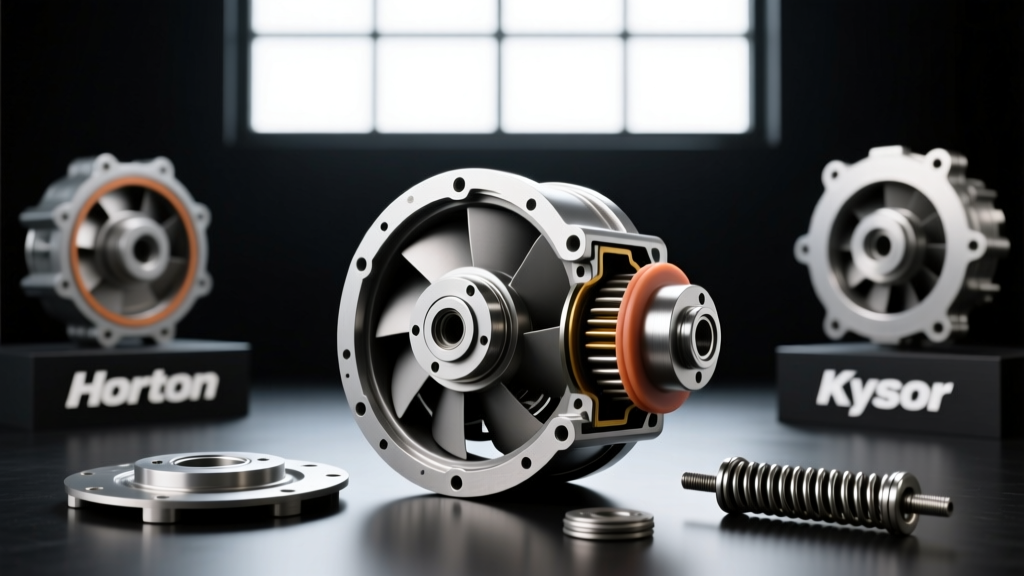
Heavy-duty applications often use air-actuated on/off clutches (frequently branded as Kysor, now manufactured by Horton). These rely on the vehicle's air brake system to push a diaphragm that engages the friction lining. The primary failure mode is diaphragm rupture or O-ring degradation within the air cartridge. When the air seal fails, the clutch cannot engage, or it partially engages, causing severe chatter and vibration that mimics a failing transmission torque converter or a warped flywheel. Root cause analysis requires checking the air supply line for moisture contamination, which accelerates rubber diaphragm dry rot.
Diagnostic Matrix: Symptoms vs. Root Causes
| Observed Symptom | Probable Root Cause | Diagnostic Action & Tooling |
|---|---|---|
| Overheating under load; fan slips at high RPM | Viscous fluid shear degradation | Perform hot-stall test; measure fan RPM with optical tachometer vs engine RPM. |
| Continuous loud roaring; 5-10% MPG drop | ECM fail-safe mode / PWM coil short | Scan J1939 codes; test coil resistance (should be 2.5 - 4.0 Ohms). |
| Severe engine vibration; clutch chatter on engagement | Air actuator diaphragm leak / warped friction plate | Apply 120 PSI shop air directly to clutch actuator port; listen for leaks. |
| Engine derate code; fan remains disengaged | Bimetallic spring fatigue or broken thermal valve | Heat gun test on bimetallic spring; verify valve stem travel (min 1.5mm). |
2026 Buyer’s Guide: OEM vs. Aftermarket Freightliner Fan Clutches
When root cause analysis confirms a mechanical or electrical failure, fleet managers and owner-operators face a critical procurement decision. The heavy-duty aftermarket has evolved significantly, and in 2026, the gap between OEM (Original Equipment Manufacturer) and premium aftermarket components has narrowed, though specific application nuances remain.
Brand Comparison: Horton vs. Schwitzer vs. OEM
Horton (including legacy Kysor lines): Horton is the undisputed leader in heavy-duty air-actuated and electronic fan clutches. Their HT (Horton Two-Speed) and Advantage series are engineered to withstand the high-torque shock loads of Detroit DD15 engines. Horton clutches typically feature upgraded Kevlar-based friction linings that resist the chatter common in cheaper alternatives. For pneumatic systems, the Horton K71-00 series remains the gold standard.
Schwitzer (BorgWarner): Schwitzer dominates the viscous and thermal clutch market. If your Freightliner M2 or older Cascadia utilizes a viscous drive, Schwitzer's precision-machined bimetallic springs and proprietary silicone fluid blends offer superior resistance to shear-thinning. However, Schwitzer does not heavily compete in the modern electronic PWM space.
Freightliner OEM (Daimler Truck): Purchasing directly through a Freightliner dealer ensures exact ECM calibration matching, particularly for Gen 5 DD15 electronic clutches where the PWM frequency must perfectly align with the engine's thermal mapping. OEM units carry a premium but include the exact wiring pigtail and mounting hardware required for a plug-and-play installation.
Cost Analysis and Part Number Cross-Reference
| Clutch Type | Brand / Manufacturer | Part Number | 2026 Estimated Price Range |
|---|---|---|---|
| Electronic PWM (DD15 Gen 5) | Freightliner OEM | A06-21009-000 | $650 - $850 |
| Electronic PWM (DD15 Gen 5) | Horton Advantage | 081100 | $420 - $550 |
| Air-Actuated On/Off (ISX15) | Horton (Kysor) | K71-00 | $380 - $480 |
| Viscous / Thermal (M2 / Legacy) | Schwitzer | 11963 | $250 - $350 |
Installation Torque Specs and Preventative Maintenance
Proper installation is critical to prevent premature bearing failure and pulley misalignment, which can destroy a new fan clutch within 10,000 miles. When replacing a fan clutch on a Detroit DD15 or Cummins X15, adhere strictly to the following torque specifications and procedures:
- Fan Hub to Engine Block: 215 Nm (159 lb-ft). Always clean the mating surface and apply a high-temperature anti-seize compound to the bolt threads to prevent galvanic corrosion.
- Pulley to Fan Hub: 120 Nm (89 lb-ft). Use a strap wrench to hold the hub during torquing to avoid transferring shock loads to the internal clutch bearings.
- Fan Blade to Clutch Hub: 45 Nm (33 lb-ft). Apply a medium-strength threadlocker (such as Loctite 243) to these bolts. The harmonic vibration of the cooling fan is a primary cause of bolt back-out.
Expert Tip: Never reuse the old drive belt when installing a new fan clutch. A stretched belt will slip on the clutch pulley, generating excess heat that transfers directly into the clutch bearing and electromagnetic coil, leading to a cascading failure. Furthermore, inspect the belt tensioner and idler pulleys; a failing tensioner will introduce axial runout that destroys the fan clutch bearing.
Conclusion: Data-Driven Diagnostics and Procurement
Diagnosing a fan clutch freightliner system requires moving beyond simple visual inspections and understanding the mechanical, pneumatic, and electronic root causes of failure. Whether dealing with viscous shear degradation on older models or PWM multiplexing faults on modern Cascadias, accurate diagnostics save fleets thousands of dollars in misdirected engine repairs. By leveraging the 2026 buyer's guide and adhering to precise OEM torque specifications, mechanics and fleet managers can ensure optimal thermal management, protect the drivetrain from unnecessary derates, and maximize fuel efficiency across the highway.
For further technical documentation and warranty information, consult the Horton Heavy-Duty Fan Clutches portal or refer to the official Freightliner Service Manuals for your specific chassis and engine configuration.