The MT-82 Transmission: A Masterclass in Hydraulic Quirks
The Tremec MT-82 manual transmission, found in 2011-2023 Ford Mustang GTs, is a robust gearbox capable of handling immense torque. However, its factory hydraulic clutch actuation system is notorious for developing frustrating pedal anomalies. Whether you are dealing with a spongy pedal that refuses to disengage fully, a binding pedal that feels like stepping on a brick, or high-frequency vibrations traveling up your left leg, the root cause usually lies in a mix of hydraulic aeration, plastic component fatigue, or worn discos de clutch (clutch discs). As of 2026, the aftermarket has developed definitive solutions for these factory shortcomings. This model-specific guide breaks down the exact diagnostics, part numbers, and torque specifications required to restore or upgrade your Mustang's clutch system.
Diagnosing the 4 Core Clutch Pedal Symptoms
1. The Spongy Pedal (Hydraulic Aeration & The CDV)
A spongy or soft clutch pedal in the MT-82 is rarely caused by a failing master cylinder right out of the gate. Instead, it is usually the result of two factory design choices:
- The Clutch Delay Valve (CDV): Located inside the hydraulic line, the CDV restricts fluid flow to prevent harsh engagement and drivetrain shock. Unfortunately, it also traps microscopic air bubbles, leading to a perpetually soft pedal feel.
- Plastic Quick-Connect Fittings: The factory CR3Z-7A507-A hydraulic line uses plastic push-connect fittings at the bellhousing. Under high exhaust heat, these plastics warp slightly, allowing air to be drawn into the system during the pedal's return stroke.
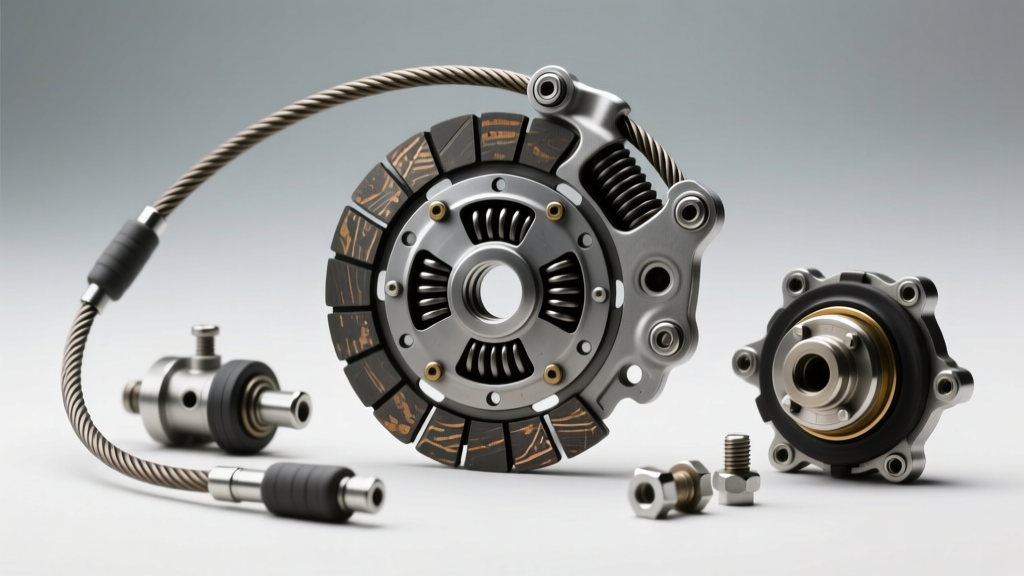
The Fix: Remove the CDV (often done by drilling out the internal restrictor or replacing the line with an aftermarket stainless steel braided line from companies like Tick Performance). Flush the system with high-temp DOT 4 fluid, and utilize a pressure bleeder at 15 PSI to force air out of the remote bleeder valve located on the passenger side of the transmission.
2. The Hard or Binding Pedal (Pivot & Pressure Plate Interference)
If the pedal requires excessive force or feels notchy, you are likely dealing with mechanical binding. The factory plastic clutch fork pivot ball is prone to wear and galling. When the pivot wears, the throwout bearing (TOB) rides at an incorrect angle, causing the diaphragm spring fingers of the pressure plate to bind.
The Fix: Upgrade to the Ford Performance M-7A548-A heavy-duty master cylinder and a billet aluminum pivot ball. When installing new discos de clutch and a high-clamp-load pressure plate, ensure the TOB preload is measured. The MT-82 requires a specific TOB gap; if the aftermarket pressure plate's fingers sit too high, the hydraulic system will remain under constant tension, leading to a hard pedal and premature TOB failure.
3. Pedal Vibration (Throwout Bearing & Runout)
A high-frequency vibration felt exclusively when the clutch pedal is depressed (or right at the friction point) points to rotational imbalance. This is typically caused by a failing throwout bearing or excessive flywheel runout. The MT-82's concentric slave cylinder (CSC) setup is sensitive to flywheel runout. If the dual-mass or single-mass flywheel exceeds 0.004 inches (0.10mm) of lateral runout, the TOB will oscillate, sending vibrations directly through the hydraulic fluid to your foot.
4. Pedal Sticking to the Floor (Master Cylinder Bypass)
If the pedal stays on the floor during high-RPM shifts, the internal seals of the factory master cylinder are bypassing fluid. This is common when upgrading to heavy-duty discos de clutch with stiff diaphragm springs, as the increased hydraulic pressure blows past the aging factory rubber seals. Replacing the master cylinder with an adjustable, billet aftermarket unit resolves this instantly.
Upgrading Your Discos de Clutch: OEM vs. Aftermarket
When bilingual enthusiasts, international buyers, and professional builders search for heavy-duty discos de clutch for high-horsepower MT-82 applications, they are generally looking to move past the limitations of the factory single-disc setup. Below is a 2026 market comparison of the most popular clutch configurations for the Mustang GT.
| Clutch Setup | Torque Capacity | Pedal Effort | Best Application | Est. Price (2026) |
|---|---|---|---|---|
| Ford OEM (Single Disc) | 420 lb-ft | Light (OEM) | Daily Driving, Stock Coyote | $280 - $350 |
| Exedy Mach 400 (Single) | 520 lb-ft | Medium (+15%) | Bolt-ons, Mild Supercharger | $450 - $550 |
| McLeod RXT Twin Disc | 1,000 lb-ft | Light/Medium (Progressive) | High-HP Whipple, Drag/Track | $1,100 - $1,300 |
Note: When installing twin-disc setups like the McLeod RXT, you must use the included floater plate straps and verify the clutch fork geometry, as the overall stack height differs from the factory single disc.
MT-82 Reassembly: Critical Torque Specs & Clearances
Proper reassembly is critical to preventing pedal vibration and premature wear. Always use a calibrated torque wrench and follow the OEM sequence. For comprehensive OEM part diagrams and factory service manuals, refer to the Ford Owner Service Resources or trusted databases like RockAuto's Mustang Catalog.
- Flywheel Bolts (M12 x 1.25): 59 lb-ft (80 Nm) + an additional 90-degree turn. Must use new OEM stretch bolts (Part # W715589-S430).
- Pressure Plate Bolts (M8 x 1.25): 25 lb-ft (34 Nm). Tighten in a crisscross/star pattern to prevent warping the diaphragm spring.
- Bellhousing to Engine Block (M12): 35 lb-ft (48 Nm).
- Driveshaft to Differential Flange (M12): 20 lb-ft (27 Nm) + 90 degrees.
- Clutch Fork Pivot Ball Torque: 18 lb-ft (apply high-temp moly grease to the ball and fork contact pad).
2026 Cost Breakdown & Labor Estimates
If you are tackling this repair at a professional shop, expect labor to be the primary expense due to the exhaust and driveshaft removal required to drop the MT-82. Here is a realistic 2026 pricing breakdown for a complete hydraulic and friction refresh:
- OEM Clutch Kit & Flywheel: $450 - $600
- Aftermarket Braided Hydraulic Line (No CDV): $85 - $120
- Billet Pivot Ball & Heavy Duty Master Cylinder: $250 - $350
- Shop Labor (R&R Transmission, Bleed, Resurface): $800 - $1,200 (varies by regional shop rate)
By addressing the hydraulic bottlenecks and selecting the correct discos de clutch for your specific horsepower goals, the MT-82 transforms from a source of frustration into a precise, race-ready manual shifting experience.