The MQB 2.0T Clutch Pedal Conundrum: Soft, Spongy, or Vibrating?
For owners of the Volkswagen Group’s MQB platform—specifically the Golf GTI, Golf R, and Audi A3/S3 equipped with the 2.0T TSI engine and the MQ350 6-speed manual transmission—the clutch pedal is a direct, unfiltered communication line to the drivetrain. As we navigate the 2026 automotive landscape, the aging of early Mk7 and 8V chassis models has led to a surge in drivetrain complaints. The most common? Clutch pedal anomalies ranging from a soft, spongy sink to the floor, to an abrupt, hard engagement, or a low-frequency vibration that rattles the firewall.
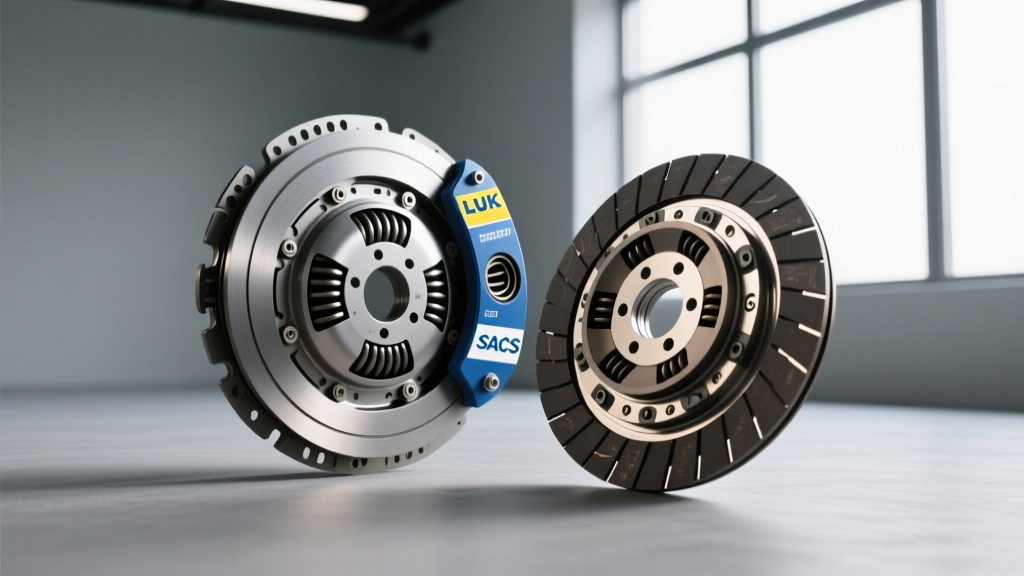
When these symptoms arise, enthusiasts and technicians immediately face the ultimate replacement dilemma: LuK vs Sachs clutch kits. Both Schaeffler (LuK) and ZF (Sachs) are Tier 1 OEM suppliers for Volkswagen. However, their aftermarket replacement kits exhibit distinct mechanical characteristics that directly influence pedal feel, engagement linearity, and vibration dampening. Before wrenching, we must accurately diagnose the root cause of the pedal failure, as a spongy pedal is rarely cured by a new friction disc alone.
Decoding MQ350 Pedal Symptoms
The MQ350 transmission utilizes a hydraulic clutch actuation system paired with a Concentric Slave Cylinder (CSC) and a Dual Mass Flywheel (DMF). Here is how to isolate the failure point based on pedal feedback:
- Soft or Spongy Pedal: This is almost exclusively a hydraulic issue. The MQB pedal box houses a master cylinder with a specialized restrictor valve. If standard DOT 4 fluid is used instead of the required DOT 4 LV (Low Viscosity / ISO 4925 Class 6), the fluid struggles to pass through the restrictor valve in cold weather, causing a delayed, spongy return. Furthermore, internal bypassing in the master cylinder or a weeping CSC inside the bellhousing will result in a pedal that slowly sinks to the floor when held at a stoplight.
- Hard or Notchy Pedal: A sudden increase in pedal effort usually points to mechanical binding. The clutch fork pivot ball on the MQ350 is prone to wear and galling, creating immense friction. Alternatively, the diaphragm spring fingers on the pressure plate may have fatigued or warped, requiring excessive hydraulic pressure to disengage.
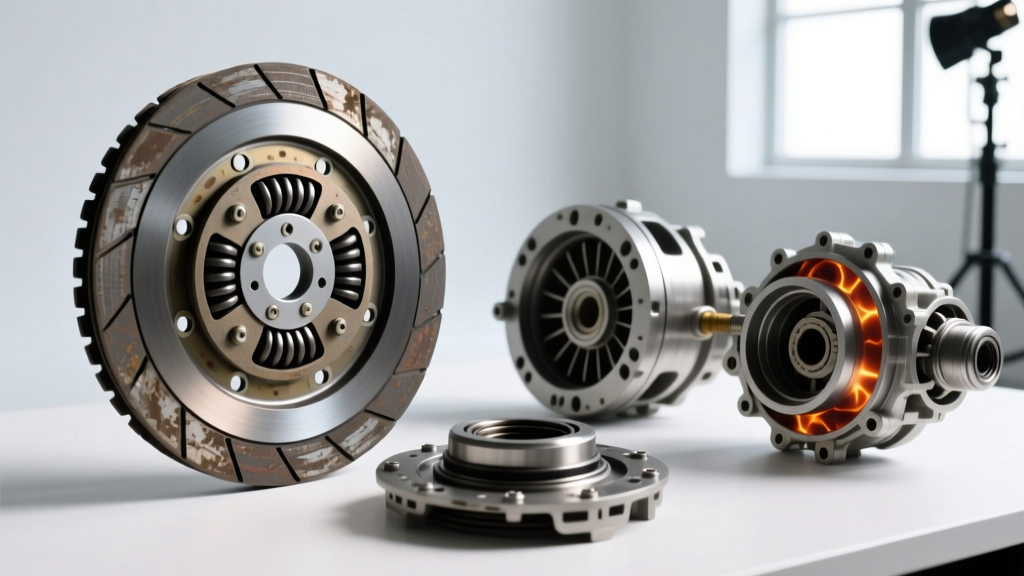
- Vibrating or Shuddering Pedal: This is the hallmark of Dual Mass Flywheel (DMF) failure. The internal grease dries out, and the primary/secondary mass dampening springs sag. This causes a low-frequency shudder at idle (typically between 750-900 RPM) that travels through the hydraulic fluid and manifests as a vibrating clutch pedal. It is often misdiagnosed as engine misfires or bad motor mounts.
LuK vs Sachs Clutch: How Brand Choice Alters Pedal Feel
When replacing the entire assembly (Clutch, DMF, and CSC), the debate between LuK and Sachs is highly nuanced. While both meet OEM specifications, their metallurgical approaches to the pressure plate diaphragm and DMF dampening springs yield different pedal experiences.
| Feature | LuK RepSet DMF (Schaeffler) | Sachs DMF Kit (ZF) |
|---|---|---|
| Common MQB 2.0T Part Number | 600 0161 00 (RepSet DMF) | 2290 601 009 (DMF Kit) |
| Pedal Effort & Feel | Softer initial bite, highly linear, closer to factory VW comfort tuning. | Slightly firmer, more aggressive engagement; favored for tuned Stage 2+ setups. |
| DMF Dampening | Exceptional idle vibration isolation; uses advanced arc-spring technology. | Robust, but can transmit slightly more high-frequency gear rattle at idle. |
| CSC Inclusion | Yes (Includes hydraulic release bearing) | Yes (Includes hydraulic release bearing) |
| Average 2026 Pricing | $650 - $780 USD | $620 - $750 USD |
According to data from Schaeffler REPxpert, LuK’s pressure plate diaphragm springs are engineered to prioritize pedal comfort and gradual engagement, making it the ideal choice for daily-driven GTIs experiencing hard-pedal fatigue. Conversely, ZF Sachs Aftermarket designs their clutch covers with a slightly stiffer clamping force to handle the torque spikes of modified 2.0T EA888 Gen 3 engines. If your pedal feels spongy due to a worn master cylinder, installing a Sachs kit will make the hydraulic system work harder, potentially exposing weak master cylinder seals faster than a LuK kit would.
Model-Specific Repair Protocol: MQ350 6-Speed
Replacing the clutch and DMF on a transverse MQB 2.0T requires dropping the rear subframe and removing the axles. To ensure your new LuK or Sachs kit resolves your pedal issues, strict adherence to VW’s assembly and bleeding protocols is mandatory.
1. Teardown and DMF Extraction
Once the MQ350 is separated from the EA888 engine block, you must lock the flywheel to break the crankshaft bolts free. Use a dedicated VAG flywheel lock tool (or an equivalent strap wrench on the starter ring gear—never pry against the DMF teeth). The DMF is secured by six M10 stretch bolts. Discard these immediately; they cannot be reused.
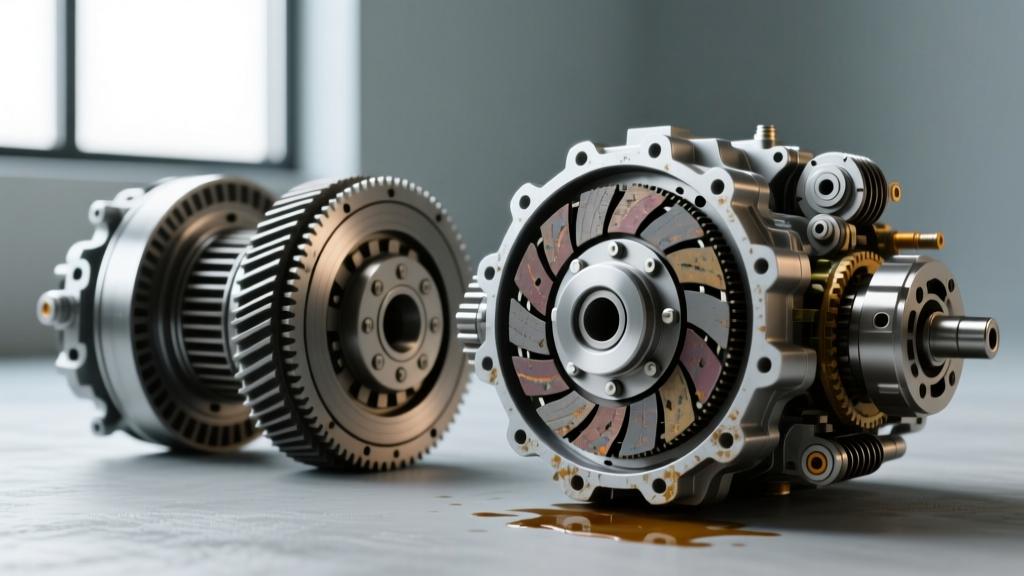
Diagnostic Tip: Before removing the old DMF, check for rotational play. A healthy DMF should have roughly 60-75 degrees of rotational free-play between the primary and secondary masses. If it spins freely with zero resistance, or if you hear a metallic clunk and see black grease on the bellhousing, the internal springs have catastrophically failed, confirming the source of your pedal vibration.
2. Critical Torque Specifications
Improper torqueing of the DMF or pressure plate will induce immediate pedal shudder. Use a calibrated torque wrench and an angle gauge for the following MQ350 fasteners:
- DMF to Crankshaft (M10 Bolts): 60 Nm + 90-degree turn. (Apply a medium-strength threadlocker to the bolt threads).
- Pressure Plate to DMF (M8 Bolts): 22 Nm. Tighten in a crisscross star pattern to prevent warping the diaphragm spring.
- Bellhousing to Engine Block: M12 bolts at 65 Nm; M10 bolts at 45 Nm.
- Front Axle Nut (Stretch Nut): 180 Nm + 180-degree turn. (Must be replaced every time the axle is pulled).
3. The Concentric Slave Cylinder (CSC) Trap
Both LuK and Sachs kits include a new CSC. CRITICAL WARNING: Do NOT compress the CSC piston before installation. The MQ350 CSC is a self-adjusting, non-bleedable internal bearing. If you compress it on the bench to "make room" for the transmission input shaft, you will permanently blow the internal hydraulic seal. When you bolt the transmission to the engine, the clutch fork will naturally push the CSC piston into its correct operating position. If you compress it beforehand, your new clutch pedal will be completely dead and soft the moment you fill the reservoir.
4. The 2-Bar Hydraulic Bleed Procedure
To cure a spongy pedal, gravity bleeding or manual pumping is insufficient for the MQB pedal box restrictor valve. You must use a pressure bleeder (like a Motive Products Power Bleeder).
- Fill the pressure bleeder tank with fresh DOT 4 LV (Low Viscosity) fluid. Standard DOT 4 is too thick and will cause a spongy pedal return in sub-50°F weather.
- Pressurize the tank to exactly 2.0 Bar (29 PSI). Do not exceed 2.5 Bar, or you risk blowing the master cylinder pushrod seal behind the dash.
- Locate the CSC bleeder valve on top of the MQ350 bellhousing (accessed by removing the rubber inspection plug near the starter motor).
- Attach a clear catch tube and open the bleeder valve. Allow fluid to flow until it is 100% free of micro-bubbles (usually requires 500ml - 750ml of fluid).
- Close the valve, release the tank pressure, and verify pedal firmness. The pedal should offer heavy resistance within the first 1 inch of travel.
Final Verdict: Restoring Factory Pedal Feel
Resolving clutch pedal problems on the VW/Audi 2.0T MQB platform requires looking beyond the friction disc. If your pedal is vibrating, the DMF is your culprit; if it is spongy, look to the hydraulics and fluid viscosity; if it is hard, inspect the pivot ball and master cylinder. When it comes time to bolt in the replacement, the LuK vs Sachs clutch decision should be dictated by your power goals and desired pedal effort. For stock to Stage 1 daily drivers seeking that buttery, factory-smooth pedal feel and superior idle dampening, the LuK RepSet DMF remains the gold standard in 2026. For Stage 2+ track cars where a firmer, more communicative pedal is preferred over comfort, Sachs delivers the necessary clamping force. Pair your chosen kit with strict adherence to the 2-Bar LV fluid bleed procedure, and your MQ350 will shift with telepathic precision for another 80,000 miles.