The Mechanical Divide: Open vs. Limited Slip Differentials
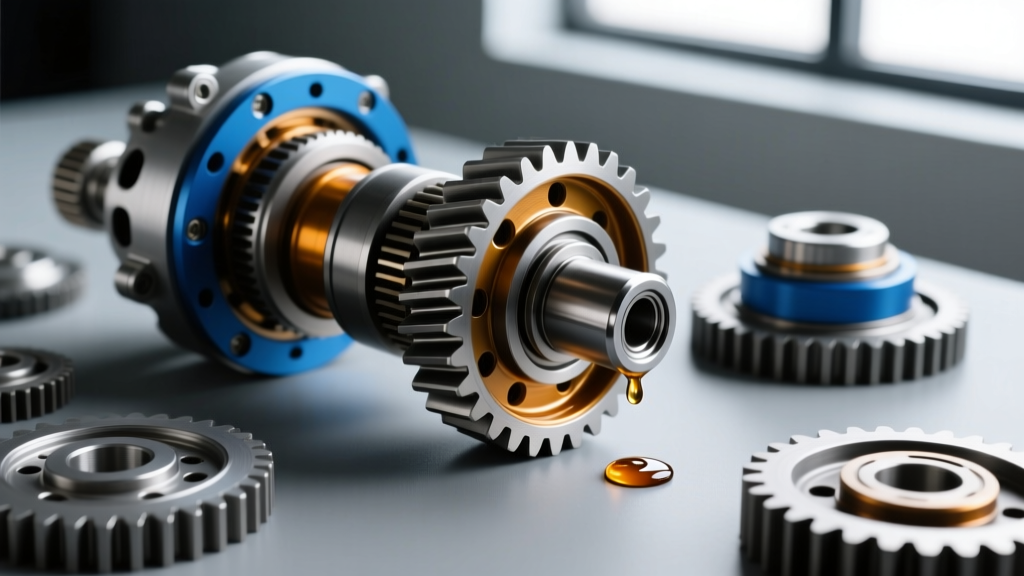
Understanding the internal architecture of your axle is the first step in selecting the correct lubricant and determining if a differential oil additive is necessary. While modern synthetic gear oils have advanced significantly by 2026, the fundamental mechanical differences between open and limited slip differentials (LSD) dictate entirely different chemical requirements for the fluid bathing the ring and pinion gears.
Open Differentials: The Baseline
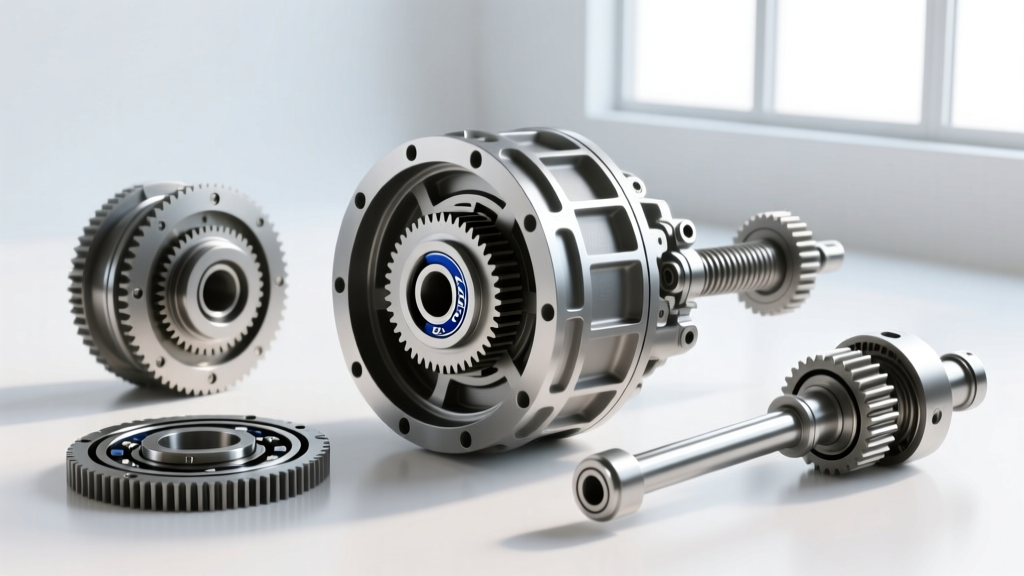
An open differential utilizes a simple spider gear set to allow the left and right axles to rotate at different speeds during cornering. Because there are no friction clutches or binding mechanisms inside the carrier, an open differential relies solely on the Extreme Pressure (EP) additives found in standard API GL-5 75W-90 or 80W-90 gear oils. These EP additives (typically sulfur-phosphorus compounds) form a sacrificial tribofilm on the hypoid gear teeth to prevent metal-on-metal welding under high torque loads. For open differentials, adding a friction modifier is not only unnecessary, but it is also a waste of money.
Clutch-Type Limited Slip Differentials (LSD)
Clutch-type LSDs, such as the Ford 8.8 Trac-Lok, Dana Trac-Lok, and Eaton Positraction, utilize alternating steel and friction-material clutch packs to bias torque to the wheel with traction. When cornering, these clutches must slip smoothly against one another. If the fluid lacks the proper friction-modifying esters, the static friction coefficient will exceed the kinetic friction coefficient. This results in the 'stick-slip' phenomenon, universally known by drivetrain technicians as axle chatter or shudder.
Helical Gear LSDs: The Exception to the Rule
It is vital to distinguish clutch-type LSDs from helical gear LSDs like the Torsen (Torque Sensing) or Quaife ATB units. These differentials use complex worm and spur gear sets to bias torque mechanically. Because they contain zero clutch packs, they do not require a friction modifier additive. According to the Eaton Differential Catalog, standard GL-5 synthetic gear oil is perfectly sufficient for helical units, and adding a modifier will not improve performance.
The Chemistry of Chatter: Why a Differential Oil Additive Matters
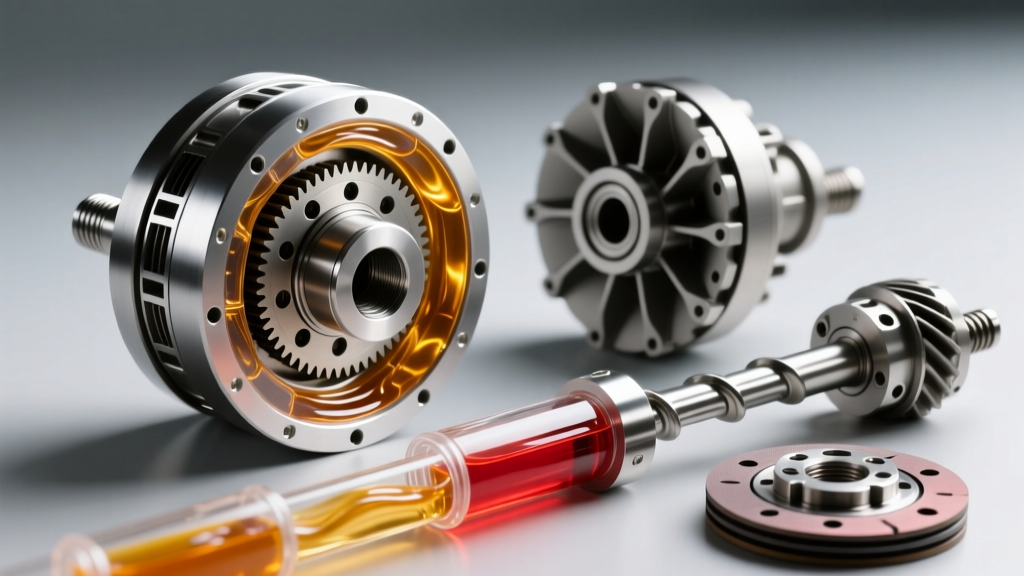
When servicing a clutch-type LSD, the base 75W-90 GL-5 fluid provides the necessary film strength for the ring and pinion, but it fails to manage the micro-slippage of the clutch packs. A dedicated differential oil additive introduces long-chain organic friction modifiers (often derived from animal fats or synthetic esters like oleamide). These molecules attach to the porous friction material of the clutch discs, creating a microscopic boundary layer that ensures a smooth transition between static and kinetic friction.
According to Dana Spicer Service Resources, failing to use the correct friction modifier in a Trac-Lok assembly will lead to premature degradation of the friction discs, resulting in a completely open differential within 15,000 to 20,000 miles of aggressive driving.
2026 Buyer's Guide: Top Friction Modifier Additives
If your chosen synthetic gear oil does not explicitly state 'Limited Slip Compatible' or 'LS' on the bottle, you must manually dose the axle with an additive. Below is a comparison of the most reliable friction modifiers available on the market.
| Brand / Product | Part Number | Est. Price (2026) | Dosing Ratio | Best Application |
|---|---|---|---|---|
| Lubegard Limited Slip Friction Modifier | 40602 | $11.99 - $13.50 | 1 oz per quart | High-mileage clutch packs, severe chatter elimination |
| Red Line Limited Slip Friction Modifier | 70204 | $15.99 - $17.50 | 1 oz per quart | Performance racing, high-heat Dana 44/60 axles |
| Mopar OEM Friction Modifier | 04318060AD | $16.50 - $19.00 | 4 oz per 1.5 quarts | Chrysler/Dodge/Jeep factory Trac-Lok service |
| Motorcraft XL-3 Additive | XL-3 | $12.00 - $14.50 | 4 oz per 1.5 quarts | Ford 8.8 and 9.75-inch Trac-Lok axles |
Service Specifications: Torque, Capacity, and Dosing
Proper installation of the fluid and additive is just as critical as the chemical selection. Overdosing a differential with friction modifier can cause the clutch packs to slip excessively under heavy throttle, effectively robbing you of the LSD's torque-biasing benefits. Always start with the manufacturer's minimum recommended dose, test drive the vehicle, and add in 0.5 oz increments only if chatter persists.
Common Axle Service Data
- Ford 8.8-Inch (Solid Axle): Capacity is approximately 1.8 to 2.0 quarts. Fill and drain plugs typically require a 3/8-inch square drive or 13mm hex. Torque Spec: 22 to 30 lb-ft. If equipped with a differential cover, torque the 10 cover bolts to 28-38 lb-ft in a crisscross pattern.
- Dana 44 (Jeep/Truck): Capacity is roughly 2.0 quarts. Fill plug usually takes a 1/2-inch wrench or 3/8-inch square drive. Torque Spec: 25 to 35 lb-ft. Always replace the crush washer on the fill plug to prevent weeping.
- GM 10-Bolt (8.5/8.625-inch Ring Gear): Capacity is about 2.1 quarts. Torque Spec: Fill plug to 24 lb-ft. Note that many GM G80 locking differentials are mechanical locker hybrids and do not require friction modifier, despite being marketed as limited slips. Consult the API Lubricant Standards and your specific RPO code (e.g., G80 vs. GU6) before dosing.
Expert Technician Tip: Never pour the friction modifier into the axle first. The high viscosity of the 75W-90 gear oil will trap the lighter additive at the top of the housing. Always pour the additive into your fluid pump bottle before drawing the heavy gear oil into the pump. This ensures the additive is thoroughly mixed and distributed evenly across the ring gear and clutch packs as it is injected into the fill hole.
Diagnosing Additive Deficiency: The Figure-8 Test
After completing the differential service and adding your chosen differential oil additive, you must perform the Figure-8 test to verify the friction coefficient is balanced. Find a clean, dry, empty parking lot. Turn the steering wheel to full lock and drive the vehicle in a tight figure-8 pattern at 5 to 10 mph.
Listen and feel for binding, hopping, or a rhythmic groaning noise from the rear axle. If the axle hops or chatters, the clutch packs are still experiencing stick-slip. Return to the shop, extract a small amount of fluid if the axle is overfilled, or add an additional 0.5 oz of friction modifier. Repeat the test until the cornering is silent and smooth. This simple diagnostic step ensures your limited slip differential operates exactly as engineered, maximizing both traction and component longevity.