The Symbiosis of LSD Clutch Packs and Differential Bearings
When enthusiasts and mechanics discuss limited slip differential (LSD) maintenance, the conversation almost exclusively revolves around clutch packs, friction modifiers, and S-springs. However, the entire torque-biasing mechanism relies entirely on the structural integrity of the differential bearings. In 2026, as automakers push higher torque outputs through smaller, more efficient axle assemblies, the tolerance stack-up between carrier bearings, side gears, and clutch packs has become microscopic. A failure to understand how differential bearings dictate LSD operation will inevitably lead to premature clutch wear, erratic torque transfer, and catastrophic axle failure.
Clutch-Type vs. Gear-Type LSD Operation
To diagnose axle noise and maintain proper limited slip differential operation, you must first identify the internal architecture. The two dominant designs behave entirely differently when differential bearings begin to wear.
Clutch-Type LSDs (Ford 8.8, Dana 44)
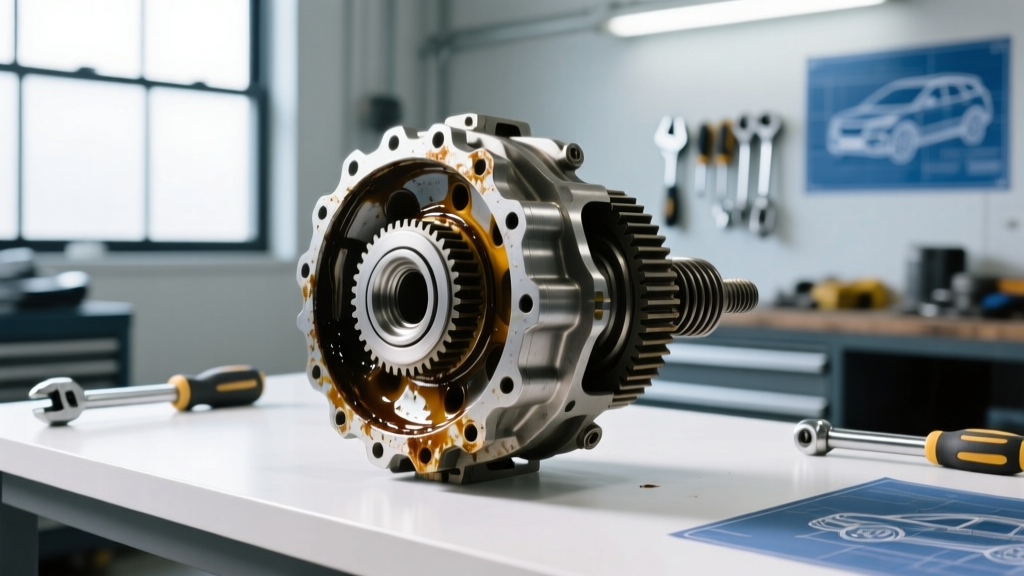
Clutch-type limited slip differentials utilize a series of alternating friction and steel discs positioned behind the side gears. A preload spring (often an S-spring or coil spring pack) forces the side gears outward, compressing the clutch packs against the carrier housing. When one wheel loses traction, the spider gears walk up the side gear ramp, increasing axial thrust and locking the clutches. If the differential bearings (specifically the carrier tapered roller bearings) develop axial play, the entire carrier assembly shifts laterally. This lateral movement relieves the static preload on the clutch packs, resulting in a one-wheel-peel scenario even when the clutches are brand new.
Gear-Type LSDs (Torsen, Eaton Truetrac)
Gear-type LSDs, such as the Spicer Truetrac or legacy Torsen units, rely on helical gear binding rather than friction clutches. Under torque, the helical side gears attempt to move axially within the carrier pockets, binding against thrust washers. Because these units have no clutch packs, they are highly sensitive to gear oil viscosity and bearing preload. Worn differential bearings introduce rotational lash and axial deflection, preventing the helical gears from achieving the precise binding angle required to multiply torque to the high-traction wheel.
How Differential Bearings Govern Axial Preload
The carrier in a solid rear axle rides on two tapered roller differential bearings. During a proper rebuild, these bearings are shimmed to create a specific carrier bearing preload—typically between 12 and 18 inch-pounds of rotating torque. This preload ensures the ring gear remains perfectly aligned with the pinion gear under heavy acceleration and deceleration.
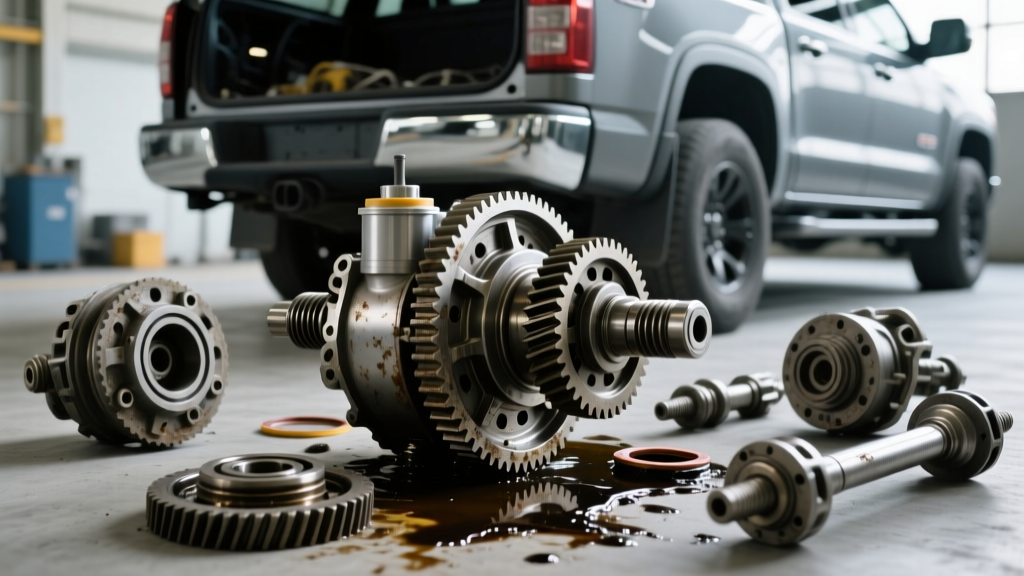
When differential bearings suffer from spalling, cage failure, or simple fatigue, the carrier preload drops to zero. The consequences for the LSD are immediate:
- Clutch Pack Disengagement: In a Ford 8.8, a mere 0.015-inch of carrier bearing wear allows the side gears to retract into the carrier, eliminating the 40-60 lbs of axial force required to keep the clutch packs engaged during straight-line cruising.
- Ring Gear Deflection: Without bearing support, the ring gear deflects away from the pinion under load, altering the backlash from the optimal 0.008-inch to over 0.020-inch, causing severe driveline clunk.
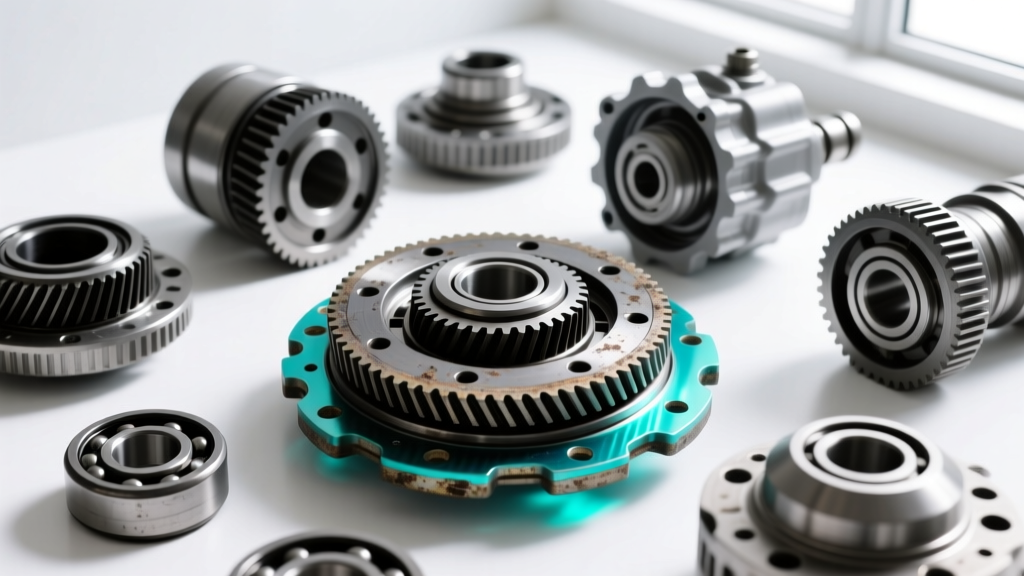
- Fluid Contamination: As the tapered rollers pit, they shed microscopic steel particulates into the gear oil. This metallic swarf embeds itself into the porous friction material of the LSD clutch discs, permanently ruining them.
Fluid Chemistry: 2026 Formulations and Friction Modifiers
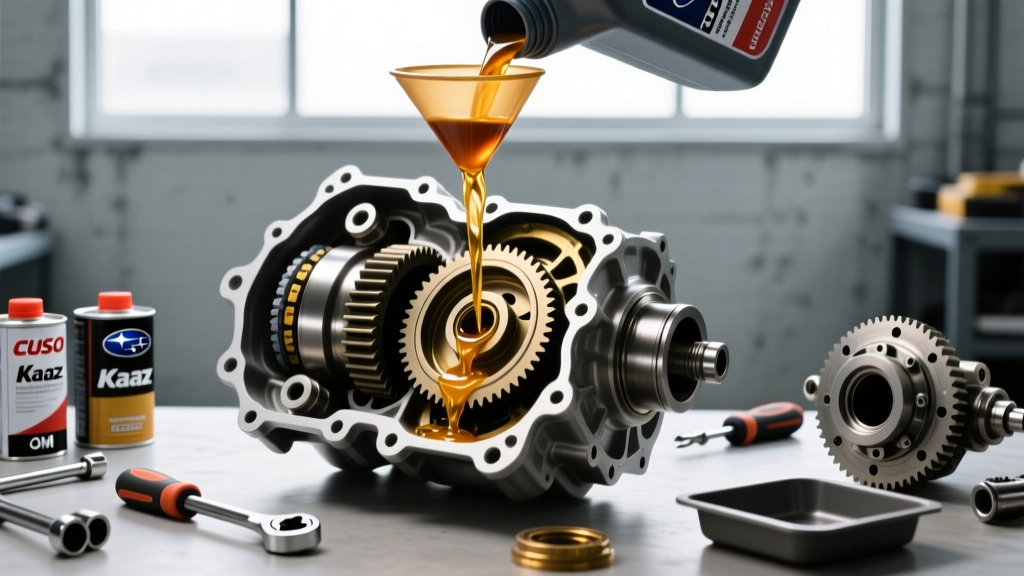
Maintaining limited slip differential operation requires a nuanced understanding of gear oil chemistry. Standard API GL-5 75W-90 gear oils contain high levels of Zinc and Phosphorus (ZDDP) to protect the sliding friction of the ring and pinion gears. However, the friction modifiers added to prevent LSD clutch chatter (such as Ford XL-3 or GM EOS) alter the coefficient of friction across the entire assembly, including the differential bearings.
For clutch-type LSDs, a high-quality synthetic like Motul Gear 300 75W-90 paired with a dedicated friction modifier is mandatory. The modifier prevents stick-slip chatter during low-speed cornering without compromising the hydrodynamic film strength protecting the differential bearings.
Conversely, gear-type LSDs require a completely different approach. Using friction modifiers in a Torsen or Truetrac will coat the helical gears, preventing the metal-on-metal binding required for torque transfer. For these applications, specialists recommend fluids like Red Line 75W90 NS (Non-Slip) Gear Oil, which provides extreme pressure (EP) protection for the differential bearings while allowing the helical gears to bind properly.
Diagnostic Matrix: Bearing Whine vs. LSD Chatter
One of the most common misdiagnoses in axle service is confusing failing differential bearings with worn LSD clutch packs. Both can produce noise during cornering, but their acoustic signatures and operational triggers are distinct. Use the following diagnostic matrix to isolate the fault:
| Symptom | Primary Source | Diagnostic Trigger | Fluid Condition Indicator |
|---|---|---|---|
| Low-frequency chatter or binding on tight turns | LSD Clutch Packs | Low-speed, full-lock steering (e.g., parking lots) | Dark, smells burnt, lacking friction modifier |
| High-pitch whine that changes with vehicle speed | Pinion or Carrier Differential Bearings | Constant at specific MPH (e.g., 45-55 mph), load-independent | Glitter or metallic flakes on magnetic drain plug |
| Deep growl that loads/unloads on coast vs. drive | Ring & Pinion Gear Wear | Throttle application vs. deceleration (load reversal) | Clean, but gear pattern shows edge-loading |
| Clunk on shifting from Reverse to Drive | Excessive Backlash / Worn Carrier Bearings | Drivetrain take-up, worn spider gear bores | Normal color, but large metallic chunks present |
Precision Rebuild Protocol: Torque Specs and Clearances
If your diagnostic indicates that the differential bearings have compromised the LSD operation, a complete teardown is required. Simply adding friction modifier or swapping the fluid will not fix mechanical axial play. Below is a precision rebuild protocol based on the ubiquitous Ford 8.8-inch solid axle, a staple in performance and truck applications.
Step 1: Carrier Bearing and Race Removal
Never reuse crushed or pitted bearing races. Use a dedicated bearing puller to remove the carrier bearings. For the Ford 8.8, the OEM carrier bearing is typically a Timken SET-10 (Cone LM104948, Cup LM104911A). Inspect the carrier housing bore for elongation; if the bore exceeds 3.270 inches, the housing must be sleeved or replaced.
Step 2: LSD Clutch Pack Measurement
Before reassembling the LSD, measure the clutch pack thickness. A stock Ford 8.8 clutch pack should measure between 0.060 and 0.070 inches per disc stack. If the friction material is worn below 0.050 inches, the S-spring cannot generate enough axial force to lock the axles. Install a rebuild kit (e.g., Eaton Posi kit 19588-01) featuring carbon-fiber composite clutches for superior heat resistance.
Step 3: Torque Specifications and Preload Setup
Proper torque sequence is non-negotiable. Refer to the following specifications:
| Component | Specification | Notes |
|---|---|---|
| Ring Gear Bolts (ARP 200-1002) | 85 lb-ft | Apply red Loctite 271; torque in a star pattern. |
| Pinion Bearing Preload (New Bearings) | 8-14 in-lb rotating torque | Achieved via crush sleeve or solid spacer shimming. |
| Pinion Nut Torque (Yoke Retention) | 160-220 lb-ft | Do not exceed 220 lb-ft or you will over-crush the sleeve. |
| Total Carrier Rotational Torque | 12-18 in-lb (Added to pinion) | Adjust via carrier shims on both sides of the housing. |
Cost Breakdown and Part Sourcing for 2026
Budgeting for a complete LSD and differential bearing service requires understanding the delta between OEM, premium aftermarket, and budget parts. Cutting corners on tapered roller bearings will result in whine within 5,000 miles.
- Premium Bearings (Timken / SKF): $35 - $55 per set. Always verify the country of origin; counterfeit bearings stamped with premium logos are prevalent in online marketplaces. Source from authorized drivetrain distributors.
- LSD Rebuild Kits (Eaton / Spicer): $90 - $160. Includes carbon clutches, steel plates, and S-springs.
- Ring Gear Bolt Kit (ARP): $45 - $65. OEM bolts are often torque-to-yield and should not be reused during a rebuild.
- Synthetic Gear Oil & Additives: $40 - $60 for 3 quarts of 75W-90 and one bottle of OEM friction modifier.
Total parts cost for a high-quality Ford 8.8 LSD and differential bearing refresh typically lands between $210 and $340, excluding specialized shop tools like the dial indicator and inch-pound torque wrench required for setup.
Conclusion
Limited slip differential operation is a masterclass in mechanical tolerance. While the clutch packs and helical gears execute the torque biasing, it is the differential bearings that provide the rigid foundation necessary for those components to function. By adhering to strict preload specifications, utilizing application-specific gear oils, and recognizing the early acoustic warnings of bearing fatigue, you can ensure your axle assembly delivers predictable, reliable traction for hundreds of thousands of miles.