Understanding the 2017 Ford Escape Rear Drive Unit (RDU)
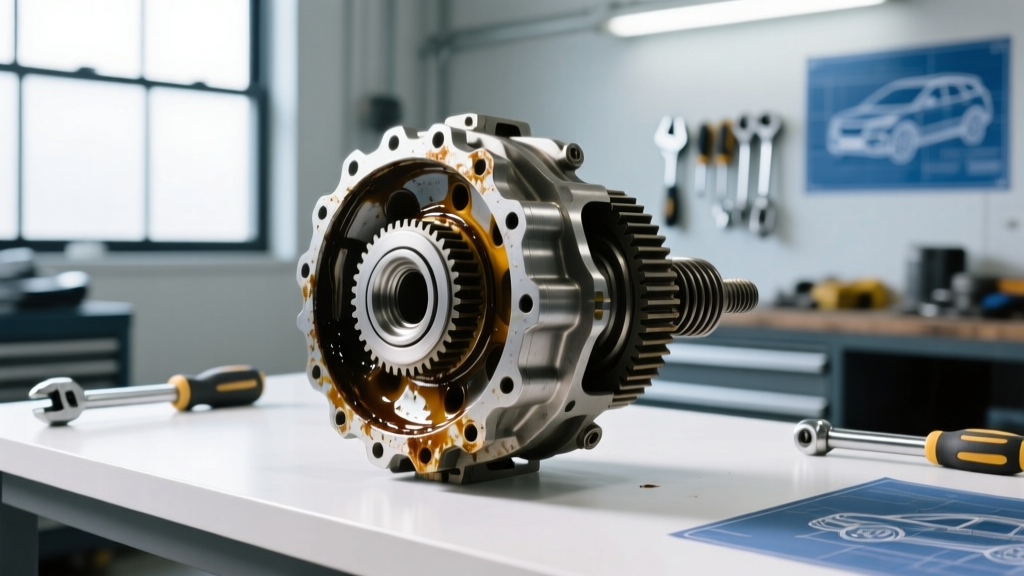
When diagnosing a 2017 Ford Escape rear differential noise, it is critical to understand that Ford does not use a traditional solid-axle setup in this crossover. The 2017 AWD Escape utilizes an independent rear suspension paired with a Rear Drive Unit (RDU). This RDU houses the ring and pinion gears, the differential carrier, and an electronically controlled Active Torque Coupling (ATC) clutch pack that engages the rear axle when front-wheel slip is detected.
Because the RDU is a sealed, modular unit, diagnosing noise requires a methodical approach to isolate whether the sound originates from the hypoid gear set, the carrier bearings, or the ATC clutch hub. Misdiagnosing an RDU noise often leads to unnecessary full-unit replacements, costing owners upwards of $2,000 when a targeted fluid service or bearing swap could resolve the issue.
The Acoustic Diagnostic Matrix
Differential noises change pitch and intensity based on vehicle load and speed. Use the following matrix to pinpoint the exact failure point within the 2017 Escape RDU.
| Noise Type | Load Scenario | Probable Failure Point | Severity & Action |
|---|---|---|---|
| High-Pitch Whine | Deceleration (Coasting) | Pinion bearing wear or improper pinion depth | High - Requires teardown and bearing replacement |
| Low Howl | Acceleration (Under Load) | Ring and pinion gear wear, excessive backlash | Critical - Metal fatigue imminent; replace RDU or rebuild |
| Rhythmic Clunk | Shifting from Reverse to Drive | Excessive carrier backlash or worn ATC clutch hub splines | Moderate - Check fluid condition and spline engagement |
| Chatter / Binding | Low-speed tight turns | ATC clutch pack drag, incorrect fluid friction modifiers | Low - Perform fluid flush with exact OEM spec fluid |
Note: Always rule out the front Power Transfer Unit (PTU) and the center driveshaft carrier bearing before condemning the rear RDU. PTU whine is notoriously common on EcoBoost Escapes and can easily transmit through the chassis, mimicking rear differential noise.
Fluid Analysis: The First Step in Drivetrain Triage
Before unbolting the driveshaft or dropping the RDU, the fluid condition will tell you exactly what is happening inside the housing. The 2017 Escape RDU does not have a traditional removable cover; it relies on a fill plug and a drain plug located on the rear-facing side of the aluminum casing.
Required Fluid Specifications and Capacities
Using the wrong fluid in the Escape RDU is a primary cause of clutch chatter and premature wear. The ATC clutch pack requires a specific friction coefficient that standard 75W-90 gear oils cannot provide.
- OEM Fluid Requirement: Motorcraft SAE 75W-85 Premium Synthetic Hypoid Gear Lubricant (Part # XY-75W85-QL / WSS-M2C942-A).
- Capacity: 0.65 Liters (0.69 Quarts).
- Drain/Fill Plug Torque: 24 lb-ft (32 Nm).
- Driveshaft Flange Bolts: 59 lb-ft (80 Nm).
Reading the Drain Plug
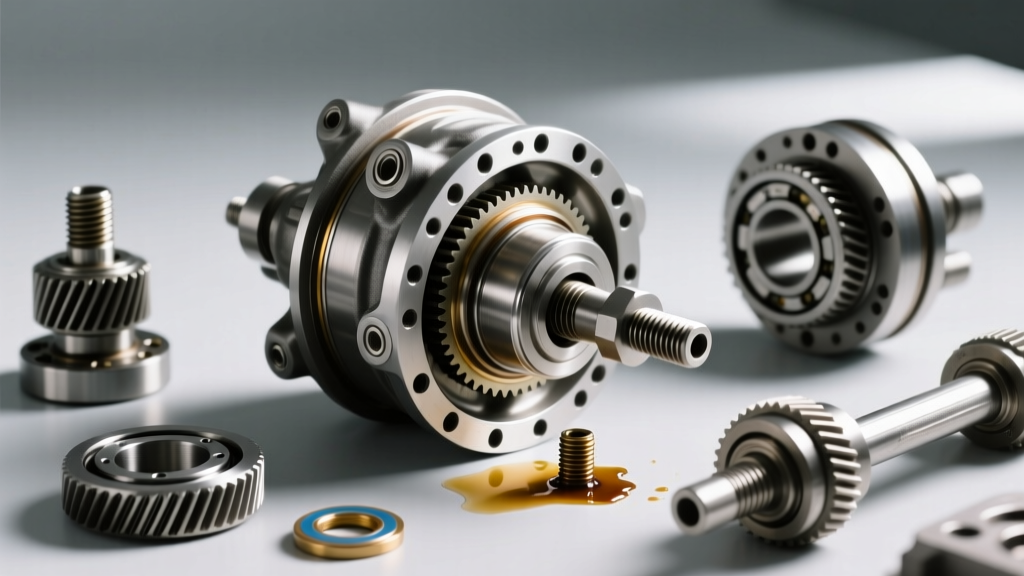
The RDU drain plug is magnetic. When you remove it, evaluate the debris:
- Fine Glitter (Paste-like): Normal wear for an RDU with over 60,000 miles. If the fluid smells burnt, a fluid exchange may quiet down minor whining.
- Chunky Metal Shavings: Indicates catastrophic bearing cage failure or ring gear tooth spalling. A fluid change will not fix this; the RDU must be rebuilt or replaced.
- Brass-Colored Flakes: Points to the internal ATC clutch hub or thrust washers wearing down. This often correlates with the low-speed binding noise heard in parking lots.
For comprehensive OEM maintenance intervals and fluid specifications, always cross-reference the Ford Motorcraft Maintenance Schedules.
Isolating ATC Clutch Chatter from Gear Whine
A frequent complaint on the 2017 Ford Escape forums is a "binding" or "hopping" sensation in the rear end during tight, low-speed turns. Many owners mistakenly believe their rear differential is failing. In reality, this is almost always an issue with the Active Torque Coupling (ATC) clutch pack failing to disengage fully.
When the RDU fluid degrades, it loses its friction-modifying properties. The ATC clutch plates begin to stick, effectively locking the rear axle in a bind during turns. The Fix: Perform a complete drain and fill using the exact Motorcraft 75W-85 fluid. Do not use aftermarket 75W-90 with generic limited-slip additives, as the viscosity difference alters the thermal expansion tolerances inside the RDU, leading to clutch drag.
Mechanical Verification: Backlash and Bearing Preload
If the fluid is clean but a distinct whine or howl persists, mechanical wear is the culprit. Because the 2017 Escape RDU is a sealed unit, measuring backlash requires removing the entire assembly from the vehicle and mounting it to a bench fixture.
- Mount a Dial Indicator: Attach the magnetic base to the RDU casing and position the indicator needle against the ring gear tooth face.
- Measure Backlash: Hold the pinion flange stationary and rock the ring gear. Ford's acceptable backlash specification for this RDU typically falls between 0.005" and 0.009" (0.13mm - 0.23mm).
- Interpret the Data: If backlash exceeds 0.012", the carrier bearings have worn, allowing the ring gear to pull away from the pinion under load. This causes the acceleration howl.
- Check Pinion Bearing Preload: Using a beam-style inch-pound torque wrench on the pinion nut, rotating torque should read between 12 to 18 in-lbs for used bearings. Anything lower indicates a collapsed pinion bearing spacer.
Sourcing replacement bearings requires precision. While Ford sells the RDU as a complete assembly, aftermarket bearing kits from manufacturers like Timken Automotive or SKF can be sourced via the RockAuto Drivetrain Catalog for a fraction of the dealer price.
2026 Repair Cost Analysis: Rebuild vs. Replace
When a 2017 Ford Escape rear differential suffers internal hard-part failure, owners must choose between a dealership replacement, an independent rebuild, or sourcing a used unit. Below is a realistic cost breakdown for the current market.
| Repair Option | Parts Cost (Est.) | Labor Cost (Est.) | Total Estimate | Warranty / Risk |
|---|---|---|---|---|
| OEM Dealer RDU Replacement | $1,400 - $1,800 | $450 - $600 | $1,850 - $2,400 | 12-month/12k mile OEM warranty |
| Independent Rebuild (Bearings & Seals) | $250 - $400 | $600 - $800 | $850 - $1,200 | Dependent on shop expertise; high risk if gear set is pitted |
| Used / Salvage Yard RDU | $350 - $600 | $450 - $600 | $800 - $1,200 | 30-90 days; high risk of inheriting another failing unit |
| Fluid Service (Corrective for ATC Chatter) | $40 - $60 | $80 - $120 | $120 - $180 | N/A - Resolves 80% of low-speed binding complaints |
Expert Best Practices for Longevity
The 2017 Ford Escape RDU is generally robust, but it is highly sensitive to fluid degradation and thermal stress. To maximize the lifespan of the ring and pinion and the ATC clutch pack, adhere to these expert best practices:
- Severe Duty Intervals: If you frequently tow, drive in mountainous terrain, or live in extreme climates, abandon the "lifetime fluid" myth. Service the RDU fluid every 30,000 to 45,000 miles.
- Seal Inspections: During every oil change, inspect the axle seals and the driveshaft input seal. A minor weep will quickly drop the fluid level below the pinion bearing, causing rapid thermal failure and a high-pitch whine.
- PTU Synergy: If you are servicing the rear RDU, simultaneously service the front PTU. The PTU is notorious for overheating and failing on the 2017 Escape; maintaining both ends of the AWD system ensures balanced torque distribution and prevents drivetrain binding.
By understanding the unique architecture of the Escape's Rear Drive Unit and relying on precise acoustic and mechanical diagnostics, you can accurately pinpoint differential noise and avoid the costly trap of unnecessary full-unit replacements.