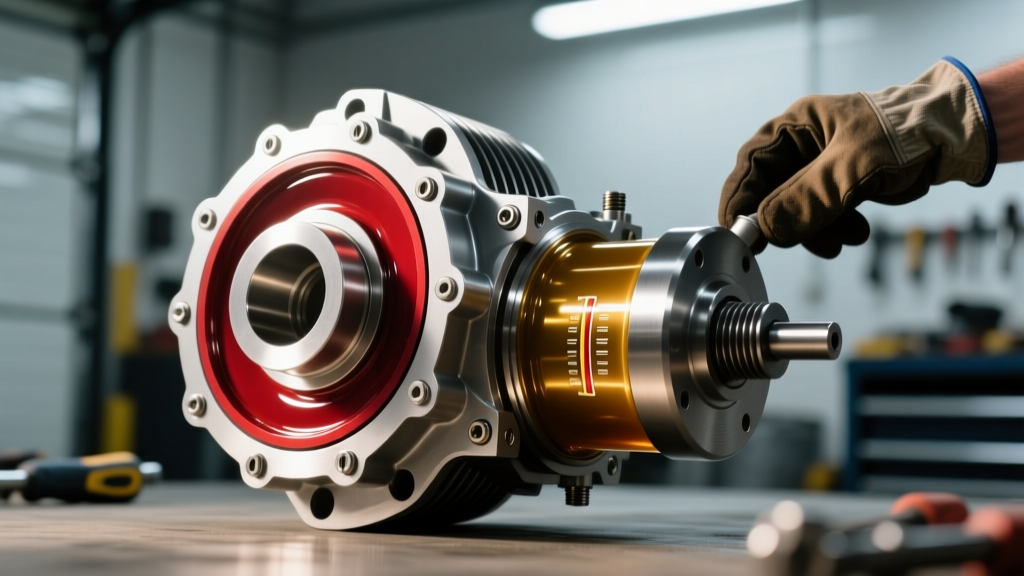
When diagnosing drivetrain behavior or planning a rear-axle rebuild, enthusiasts and technicians often focus heavily on ring and pinion setups or carrier bearings. However, the true magic of torque distribution in a limited slip differential (LSD) relies on a heavily stressed, frequently overlooked component: the differential side gear. Acting as the critical mechanical interface between the spider gears, the clutch packs, and the axle shafts, the side gear dictates how effectively your vehicle can put power to the pavement. In this 2026 technical deep-dive, we explore the metallurgy, physics, and maintenance requirements of the differential side gear within clutch-type limited slip systems like the Ford 8.8 Trac-Lok and the GM Eaton Positraction.
The Core of Torque Transfer: Inside the LSD Carrier
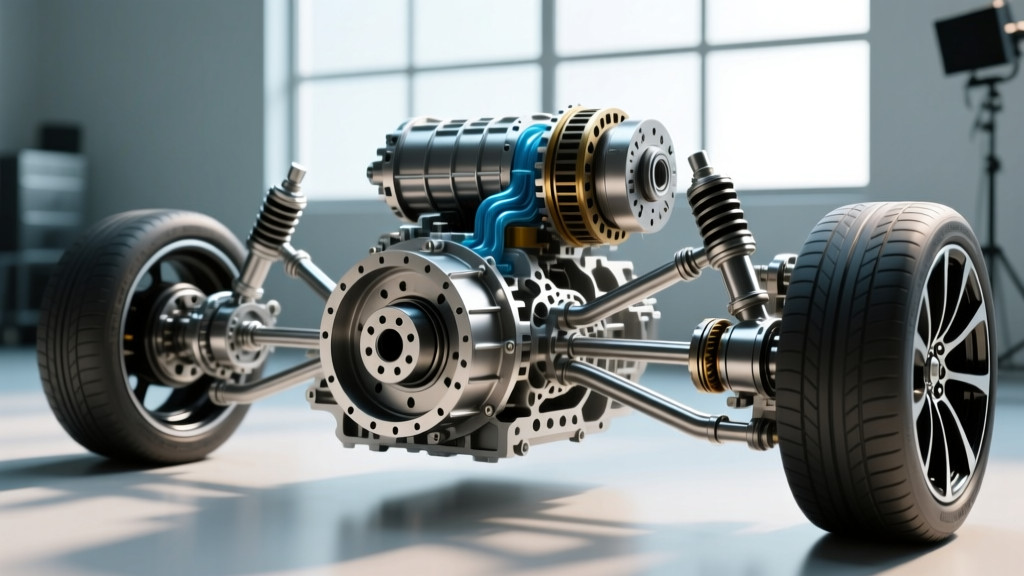
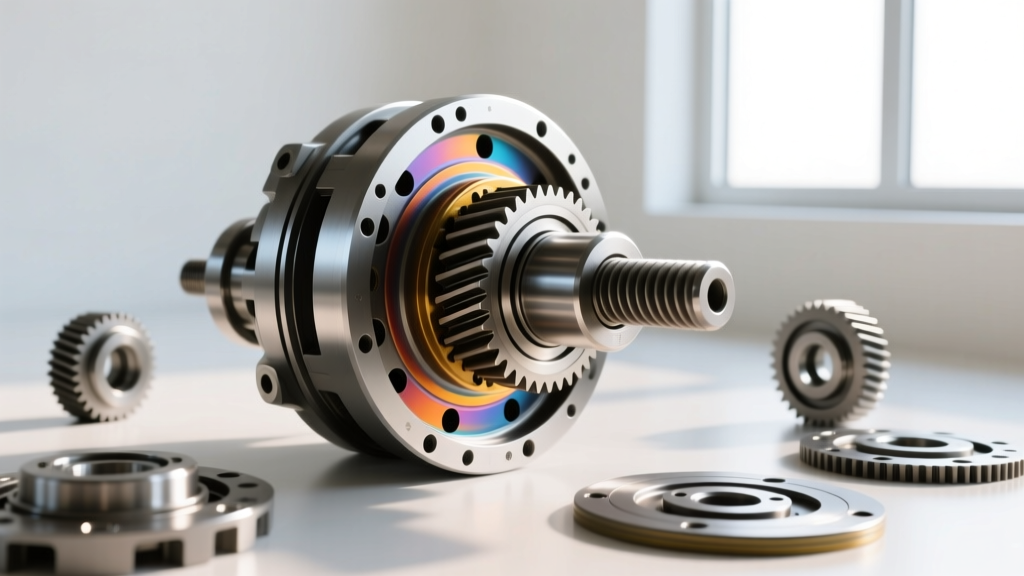
To understand limited slip operation, we must first map the internal architecture of the carrier assembly. In an open differential, the differential side gear simply meshes with the spider (pinion) gears and slides over the axle shaft splines, allowing wheels to rotate at different speeds during cornering. In a clutch-type LSD, the side gear is transformed into a dynamic friction piston.
According to Dana Spicer's differential component engineering guidelines, the side gear in an LSD features a specialized outer hub that interfaces directly with a stack of friction and steel discs. When the carrier rotates, the clutch pack is squeezed between the carrier housing and the backside of the differential side gear. This mechanical arrangement means the side gear must withstand immense axial thrust loads while simultaneously transmitting rotational torque to the axle shaft. For high-horsepower applications, upgrading from factory powdered-metal side gears to forged 8620 steel variants (available from aftermarket suppliers like Motive Gear or USA Standard) is essential to prevent spline shearing under aggressive launch conditions.
How the Differential Side Gear Manages Torque Bias
The Physics of Torque Biasing and Clutch Preload
The fundamental goal of an LSD is to resist the natural tendency of an open differential to send all available torque to the wheel with the least resistance. The differential side gear achieves this through axial movement. When one wheel begins to lose traction and spin faster than the carrier, the spider gears begin to walk across the side gear's inner teeth. This walking action forces the differential side gear to slide outward, compressing the clutch pack against the carrier housing.
The resistance provided by this compression is what transfers torque to the wheel that still has grip. However, this dynamic action requires a baseline static resistance, known as clutch preload. Behind each differential side gear, a set of Belleville springs (or cone springs) applies a constant outward pressure, typically ranging from 40 to 80 lbs of force depending on the application. This preload ensures that minor torque differences—such as those experienced during gentle highway sweeping turns—do not immediately cause the clutch packs to slip, thereby reducing unnecessary wear and maintaining straight-line stability.
The Role of the S-Spring and Axle Retention
In many C-clip retained axles, such as the legendary Ford 8.8-inch, the differential side gear plays a secondary, equally vital role: axle retention. The inner bore of the side gear features a precision-machined groove. When the axles are fully inserted into the carrier, a C-clip snaps into this groove, locking the axle shaft in place. The differential side gears are then forced apart by a central S-spring (or cross-shaft block) that sits between the spider gears. Removing the center pin and S-spring allows the side gears to collapse inward, granting access to the C-clips for axle removal. If the side gear's inner groove becomes wallowed out from years of high-load driving, the C-clip can dislodge under hard cornering, leading to catastrophic axle shaft ejection.
Critical Maintenance: Gear Oil and Friction Modifiers
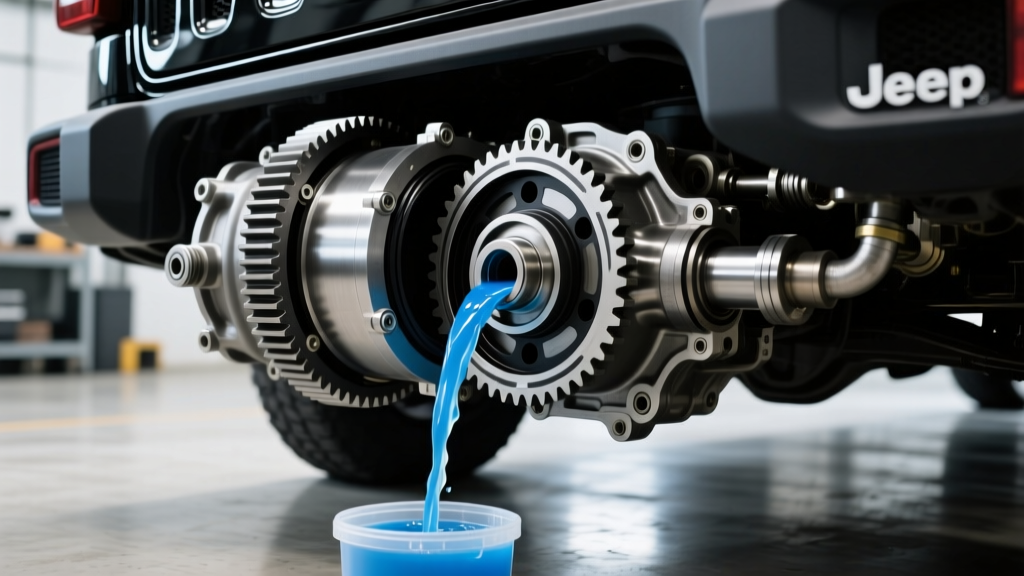
The operational lifespan of the differential side gear and its mating clutch packs is entirely dependent on proper fluid chemistry. Clutch-type LSDs require API GL-5 rated gear oils, typically in a 75W-90 or 75W-140 viscosity. GL-5 fluids contain 3% to 5% sulfur-phosphorus extreme pressure (EP) additives, which are necessary to protect the hypoid ring and pinion gears from micro-welding under high shear.
The Chemistry of Stick-Slip and Friction Modifiers
While GL-5 protects the gears, it does nothing to manage the friction characteristics of the clutch packs resting against the differential side gear. Without a dedicated friction modifier (FM), the clutch packs will experience the 'stick-slip' phenomenon. This occurs when the static coefficient of friction is higher than the dynamic coefficient, causing the clutches to aggressively grab and release as the side gear rotates during a turn. This results in the infamous LSD chatter—a violent shuddering felt through the chassis.
Friction modifiers utilize long-chain polar molecules that bond to the porous surfaces of the friction discs, creating a microscopic boundary layer that ensures the dynamic coefficient of friction remains equal to or slightly higher than the static coefficient. For maintenance, always use OEM-equivalent modifiers, such as Ford XL-3 (Part # C8AZ-19B546-A) or GM ACDelco (Part # 88862624). The standard dosage is 4 oz of modifier per 2.5 quarts of gear oil. Many modern synthetic lubricants, such as those detailed in Royal Purple's Max Gear lineup, come with friction modifiers pre-blended, though high-mileage units with worn side gear thrust surfaces may still require an additional top-off to eliminate chatter.
Rebuild Data: Torque Specs and Side Gear Clearances
When rebuilding an LSD, measuring the clearance between the differential side gear and the spider gears is a mandatory step that separates professional drivetrain builders from amateurs. Excessive backlash allows the spider gears to hammer the side gears during load reversals, accelerating spline wear and creating a distinct 'clunk' when shifting from drive to reverse. Below is a comparison of critical rebuild specifications for two of the most common North American limited slip differentials.
| Specification | Ford 8.8 Trac-Lok | GM 8.5in 10-Bolt (Eaton Posi) |
|---|---|---|
| Ring Gear Bolt Torque | 70-85 ft-lbs (with Loctite) | 55 ft-lbs (with Loctite) |
| Carrier Bearing Preload | 0.008in - 0.012in shim | 0.010in - 0.015in shim |
| Side Gear to Spider Backlash | 0.003in - 0.008in | 0.004in - 0.009in |
| Clutch Pack Total Thickness | 0.600in (approx) | 0.580in (approx) |
| Fluid Capacity | 2.5 Quarts | 2.1 Quarts |
| Avg. Rebuild Kit Cost (2026) | $85 - $130 | $95 - $145 |
Note: Always select side gear thrust washers of varying thicknesses during assembly to dial in the exact side gear backlash specification. Never reuse crushed or glazed thrust washers.
Diagnosing Side Gear Spline Wear and Clutch Fade
Because the differential side gear operates entirely submerged in gear oil, visual inspection requires a teardown. However, you can diagnose side gear and clutch pack health dynamically using the Figure-8 test and coast-down evaluation.
Expert Diagnostic Tip: Find an empty, paved lot. Drive the vehicle in a tight, continuous figure-8 pattern at 5-10 mph with the windows down. If you feel a rhythmic binding or hear a 'chattering' noise from the rear axle, the clutch packs have lost their friction modifier, or the differential side gear thrust surfaces have worn down, reducing the Belleville spring preload. If the binding only occurs on tight turns but the axle howls during highway deceleration, you are likely dealing with ring-and-pinion gear wear, not the side gears.
Another common failure mode involves the side gear's internal splines. If the vehicle exhibits a one-wheel peel under hard acceleration despite having an LSD, the internal splines of the differential side gear may be rounded off, or the axle shaft splines are stripped. This is highly prevalent in modified vehicles making over 450 wheel-horsepower that launch on sticky tires without upgrading to aftermarket 35-spline axles and matching forged side gears. As documented in Eaton's Positraction aftermarket technical resources, maintaining proper clutch pack thickness and utilizing high-quality synthetic fluids are the best defenses against premature side gear wear, ensuring your limited slip differential operates predictably for tens of thousands of miles.
Final Thoughts on Drivetrain Longevity
The differential side gear is the linchpin of limited slip operation. It translates the rotational forces of the spider gears into axial thrust, engaging the clutch packs to keep both tires turning in unison. By adhering to strict rebuild clearances, utilizing the correct GL-5 fluids with precise friction modifier ratios, and understanding the mechanical limits of your specific carrier, you can maximize the lifespan of your axle assembly and maintain optimal traction in any driving scenario.