Preventive maintenance of your vehicle's drivetrain is often overshadowed by engine oil changes and brake inspections, yet the health of your axle assemblies dictates your vehicle's ability to put power to the ground. As we navigate the automotive landscape in 2026, inflation and supply chain shifts have notably impacted service pricing, making it crucial for enthusiasts and daily drivers alike to understand the true cost of differential maintenance. At the heart of this service lies a fundamental mechanical interface: the differential covers. Whether you are servicing a rugged solid-axle Jeep Wrangler, a heavy-duty Ford Super Duty, or a classic GM 10-bolt rear end, understanding how differential covers influence service methods, parts selection, and overall pricing is essential for protecting your ring and pinion gears.
Pump-Out vs. Dropping Differential Covers: The Maintenance Debate
When scheduling a differential fluid service, the first variable that impacts cost and thoroughness is the axle housing design. Many modern independent front suspension (IFS) setups and specific rear axles, such as the GM 9.5-inch semi-floating axle found in late-model Silverados, lack a traditional removable inspection plate. Instead, they rely on a drain plug or require a fluid pump to extract the old gear oil through the fill hole. While pump-out methods are faster and reduce the risk of improper resealing, they are universally despised by seasoned drivetrain mechanics for one critical reason: they prevent visual inspection of the internal components.
Conversely, traditional solid axles like the legendary Dana 44, the Ford 8.8, and the Chrysler 9.25 utilize bolt-on differential covers. Removing these differential covers is a cornerstone of rigorous preventive maintenance. Dropping the cover allows the technician or DIYer to completely drain the contaminated fluid, scrape away accumulated sludge, clean the internal housing magnets, and most importantly, inspect the ring gear, pinion gear, and carrier bearings for abnormal wear patterns or excessive ferrous metal shavings. This visual diagnostic step can save you from a catastrophic $3,000 axle rebuild by catching a failing pinion bearing early. Consequently, services involving differential covers generally cost slightly more in labor due to the meticulous cleaning and RTV resealing process required, but they offer exponentially higher preventive value.
2026 Differential Fluid Service Cost Breakdown
The cost of servicing your differential fluid has risen alongside general automotive labor rates. In 2026, the average dealership shop rate hovers between $165 and $225 per hour, while independent 4x4 and drivetrain specialists typically charge between $120 and $160 per hour. Below is a comprehensive breakdown of what you can expect to pay for a complete front and rear differential service.
| Service Provider | Front Axle Cost | Rear Axle Cost | Total (F&R) | Service Method |
|---|
| OEM Dealership | $180 - $240 | $190 - $260 | $370 - $500 | Pump-Out or Cover Drop |
| Independent Specialist | $130 - $170 | $140 - $180 | $270 - $350 | Cover Drop & Inspection |
| Quick Lube / Chain | $90 - $120 | $90 - $120 | $180 - $240 | Pump-Out Only |
| DIY (At-Home) | $35 - $60 | $40 - $75 | $75 - $135 | Cover Drop & Clean |
Material Costs: Fluids, Gaskets, and RTV Sealants
For the DIYer or the meticulous shop owner, the cost of materials is where E-E-A-T (Experience, Expertise, Authoritativeness, and Trustworthiness) truly shines. Choosing the correct gear oil and sealing method is non-negotiable. Standard 75W-90 GL-5 synthetic gear oil remains the gold standard for most half-ton trucks and SUVs, while heavy-duty applications (like the Ford 10.5-inch Sterling axle) demand a thicker 75W-140 to maintain hydrodynamic film strength under extreme towing loads.
A high-quality synthetic fluid like
AMSOIL Severe Gear 75W-90 or Mobil 1 Synthetic Gear Lube (Part #104361) will cost between $14 and $22 per quart. Most standard axles require 3.5 to 4.5 pints, meaning you will need to purchase two to three quarts per axle, totaling $30 to $60 in fluid alone. If your vehicle features a clutch-type Limited Slip Differential (LSD), such as the Ford Trac-Lok or Auburn Gear Pro-Series, you must also factor in the cost of a friction modifier additive (e.g., Motorcraft XL-3 or Lucas Oil 10070), which adds another $8 to $12 to the bill. Note that many modern synthetic fluids, including AMSOIL and Royal Purple, already contain the necessary friction modifiers, eliminating this extra step and cost.
Sealing the differential covers properly is equally critical. While pre-cut cork or rubber gaskets (like the Fel-Pro RDS 55024 for the Ford 8.8, priced around $12) are convenient, many veteran mechanics prefer high-temp RTV silicone. Permatex Ultra Black (Part #81878) or The Right Stuff 1-Minute gasket maker ensures a leak-free seal that withstands the high thermal cycling of modern axles. A tube of premium RTV costs roughly $10 to $18. Additionally, you must budget $5 for a can of brake parts cleaner to thoroughly degrease the mating surfaces of the differential covers and the axle housing flange before applying the sealant.
Precision Torque Specifications for Common Axle Housings
Overtightening the bolts on differential covers is a rookie mistake that leads to warped stamped-steel covers, crushed cork gaskets, and inevitable fluid leaks. When reinstalling the cover, you must adhere strictly to the manufacturer's torque specifications and utilize a star-pattern tightening sequence to ensure even clamping force.
- Ford 8.8-Inch Axle: 33 lb-ft (28-38 lb-ft range). Uses 10 bolts, typically 3/8"-16 or 10mm depending on the exact year and cover style.
- Dana 44 (Jeep/Scout/Aftermarket): 30 to 35 lb-ft. Uses 10 or 12 bolts depending on the specific housing variant.
- GM 10-Bolt (8.6-Inch Ring Gear): 25 lb-ft. Uses 10 bolts. Be exceptionally careful, as the GM 10-bolt stamped steel covers are notoriously prone to warping if over-torqued.
- Chrysler 9.25-Inch (Ram 1500): 30 lb-ft. Uses 12 bolts.
Always allow RTV sealant to skin over (usually 15-30 minutes) before torquing the differential covers down, and wait at least 12 to 24 hours before filling the axle with gear oil to prevent the fluid from washing out the uncured silicone.
Diagnosing Drivetrain Wear During Cover Removal
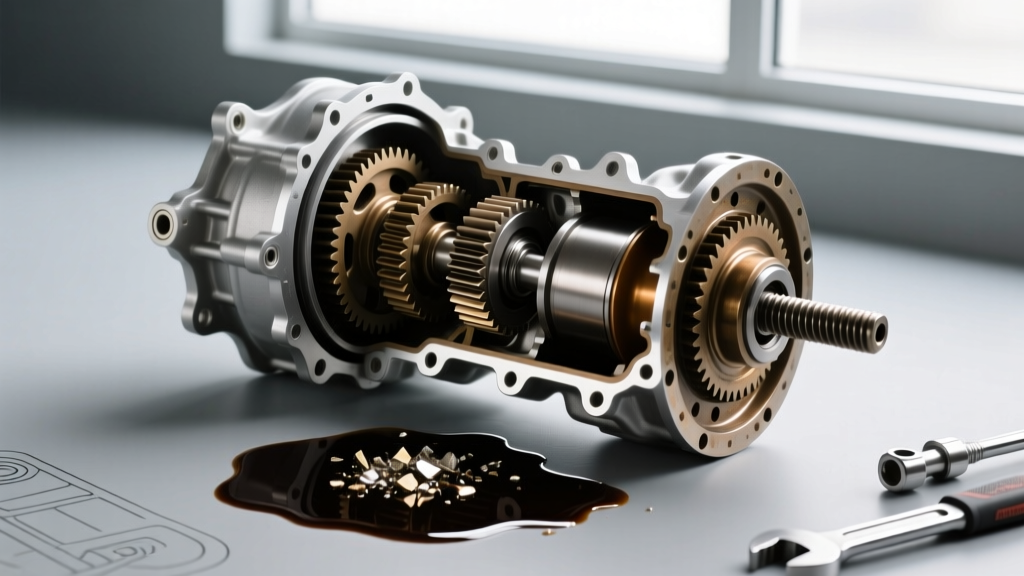
The primary advantage of removing differential covers is the diagnostic window it provides. Once the fluid is drained, inspect the drained oil under a bright light. A slight silvery sheen is normal for a high-mileage axle, as microscopic metal particles naturally suspend in the oil. However, if you find large, jagged chunks of metal, or if the drain plug magnet resembles a fuzzy metallic caterpillar, your carrier or pinion bearings are actively failing.
Furthermore, use a flashlight to inspect the ring gear teeth through the cover opening. You are looking for a smooth, uniform wear pattern across the face and flank of the teeth. If you notice pitting, spalling (flaking of the metal surface), or severe edge-loading wear, the gear set has been subjected to extreme shock loads or improper backlash settings. While a simple fluid change cannot fix these mechanical faults, catching them early allows you to plan for a ring and pinion rebuild before the differential seizes entirely on the highway. For deeper technical insights on gear patterns, consulting resources like
RockAuto's technical forums or specialized drivetrain manuals is highly recommended.
The Case for Aftermarket Upgrades
If you frequently tow heavy trailers, rock crawl, or live in a region with extreme ambient temperatures, upgrading your factory stamped-steel differential covers is a highly recommended preventive modification. Aftermarket covers from brands like Mag-Hytec, ARB, and Alloy USA are cast from heavy-duty aluminum or nodular iron. These upgraded differential covers offer three massive benefits:
- Increased Fluid Capacity: Many finned covers add 1 to 2 quarts of extra fluid volume, which drastically reduces operating temperatures and delays fluid degradation.
- Cooling Fins: The external fins act as a heat sink, pulling thermal energy away from the gear oil and dissipating it into the ambient air.
- Magnetic Drain and Fill Plugs: Unlike factory covers that often require messy fluid extraction, aftermarket covers feature dedicated, magnetized drain plugs. This allows for gravity draining and captures ferrous debris before it can circulate through the carrier bearings.
While an aftermarket cover may cost between $120 and $280, the extension it provides to your differential's lifespan—and the ease of future fluid changes—makes it a cornerstone investment for any serious preventive maintenance strategy. According to
Ford's official maintenance guidelines, keeping differential temperatures in check is vital for preserving the integrity of synthetic gear oils during sustained heavy-load driving.
Conclusion
Understanding the economics and mechanics of differential fluid service empowers you to make informed decisions about your vehicle's drivetrain health. Whether you are paying a specialist to drop the differential covers for a thorough inspection or turning the wrenches yourself in your garage, using the correct fluids, adhering to precise torque specs, and prioritizing visual diagnostics will ensure your axles survive the demands of the road. In 2026, preventive maintenance isn't just about saving money on repairs; it's about guaranteeing reliability when you need it most.