The Complexity of AWD Drivetrain Bind and Misdiagnosis
Modern All-Wheel-Drive (AWD) architectures rely on a delicate torque-split balance managed by sophisticated center differentials and electronic control units. As we navigate the increasingly complex drivetrain layouts of 2024–2026 vehicles, technicians face a recurring diagnostic trap: misattributing center differential faults to the rear axle. When a driver complains of low-speed steering bind, acceleration shudder, or coast-down whining, novice mechanics often immediately target the rear end differentials. However, in vehicles equipped with active torque-splitting systems—such as Subaru’s Variable Torque Distribution (VTD), BMW’s xDrive, or Audi’s Quattro—a failing center differential or degraded transfer case fluid will mimic rear axle failure, leading to unnecessary parts replacement and frustrated customers.
Isolating the root cause requires a systematic understanding of how parasitic stress transfers through the driveline. If an active center clutch pack fails to modulate slip during low-speed cornering, it forces the front and rear axles to rotate at identical speeds. This mechanical bind transfers immense shock loads directly to the rear end differentials, accelerating ring and pinion wear and burning out limited-slip differential (LSD) clutch packs. Accurate symptom diagnosis hinges on separating upstream torque-bias faults from downstream axle failures.
Anatomy of the Fault: Center Diff vs. Rear Axle
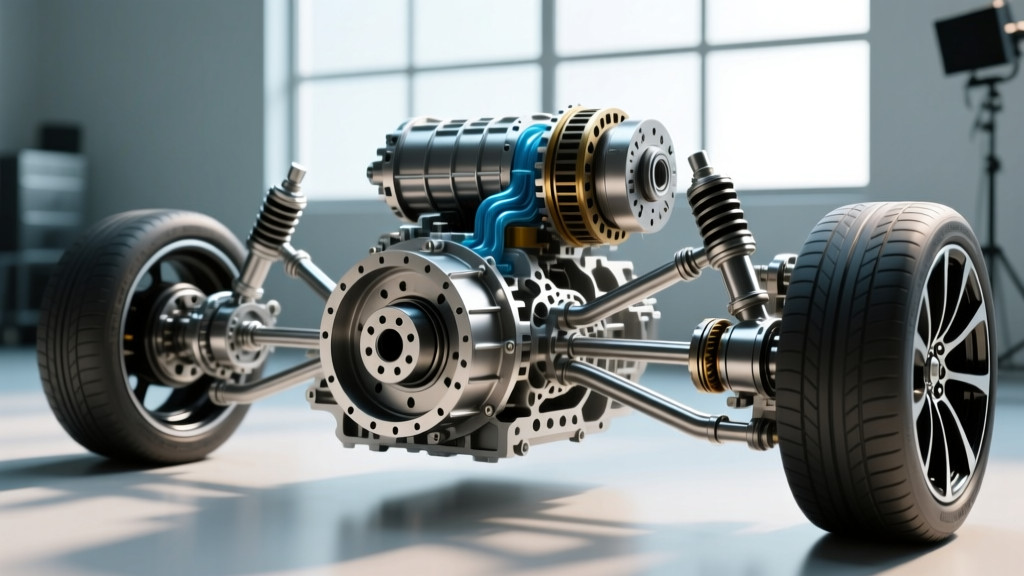
Before pulling drain plugs, it is vital to understand the distinct failure modes of the center differential versus the rear axle assembly. The center differential (often integrated into the transaxle or a standalone transfer case) manages longitudinal slip between the front and rear axles. The rear end differential manages lateral slip between the left and right wheels while executing the final gear reduction.
| Symptom Profile | Center Differential / Transfer Case Fault | Rear End Differential Fault |
|---|---|---|
| Low-Speed Turning Bind | Clutch pack drag; friction modifier depletion; TCM/ECU mapping fault. | Rear LSD clutch pack weld-up; incorrect rear gear oil viscosity. |
| Coast-Down Whine (Decel) | Transfer case chain stretch; center diff bearing preload loss. | Rear pinion bearing wear; ring/pinion backlash out of spec. |
| Acceleration Shudder (20-40 mph) | Active center diff failing to slip; driveshaft CV joint bind. | Rear axle shaft imbalance; worn rear diff spider gears. |
| Fluid Debris Analysis | Bronze/brass shavings (clutch material); fine metallic paste. | Hard ferrous chunks (gear teeth); spalling on magnet. |
Fluid Degradation: The Hidden Culprit in AWD Systems
Because this diagnostic process heavily intersects with fluid dynamics, understanding the specific tribology of AWD systems is non-negotiable. The center differential and the rear end differentials rarely share the same fluid architecture, yet cross-contamination or incorrect fluid application is a leading cause of drivetrain bind.
Friction Modifier Depletion
Active center differentials, like the BMW xDrive ATC35L transfer case, rely on highly specialized shear-stable fluids to manage wet clutch modulation. BMW specifies TF 0870 (Part #83220397244). Over 40,000 to 60,000 miles, the friction modifiers in this fluid break down, causing the clutch plates to stick rather than slip during tight turns. This stick-slip phenomenon creates a drivetrain bind that feels exactly like a locked rear differential. According to AA1Car's AWD diagnostic guidelines, failing to perform a 'fluid burp' and adaptation reset after a transfer case fluid change will leave the xDrive system in a default locked state, mimicking a catastrophic rear end differential failure.
Viscosity and Shear Stability in the Rear Axle
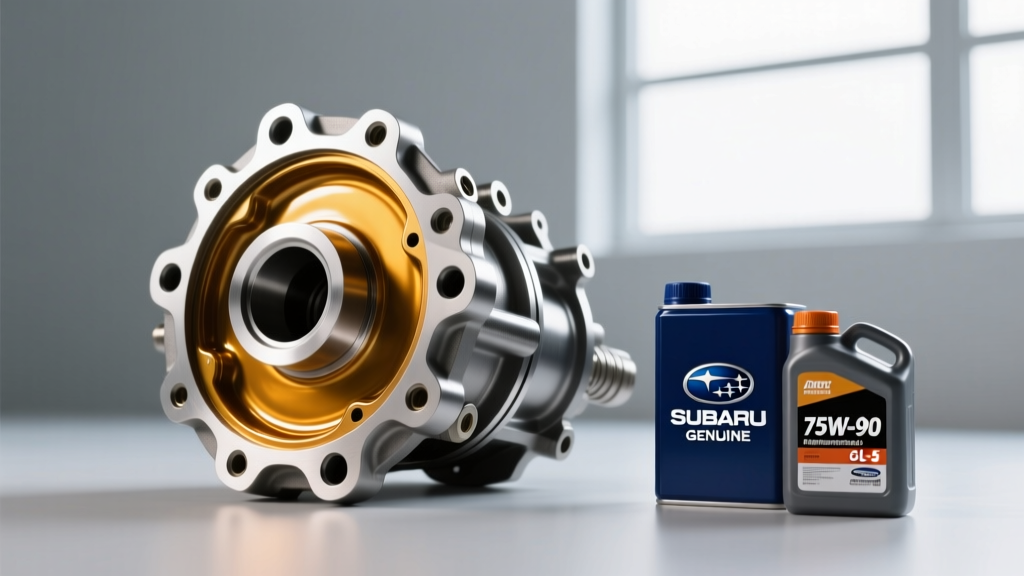
Conversely, the rear end differentials in these same AWD platforms require high-pressure GL-5 gear oils, typically 75W-90. If a technician mistakenly tops off a rear LSD with standard 80W-90 lacking the necessary friction modifiers (like Subaru’s LSD Gear Oil, Part #SOA635040), the rear clutch packs will chatter violently under load. This chatter resonates through the chassis and is frequently misdiagnosed as a failing center differential bearing.
Step-by-Step Diagnostic Isolation Protocol
When a vehicle presents with ambiguous AWD drivetrain noise or bind, follow this isolation sequence to pinpoint the exact failing component.
Step 1: The Figure-8 Steering Test
Locate a smooth, dry, paved surface. Drive the vehicle in a tight figure-8 pattern at 3–5 mph with the windows down.
- If bind occurs only when turning: The issue is likely friction modifier depletion in either the center diff clutches or the rear LSD.
- If bind occurs while driving straight but disappears on turns: Suspect a binding front or rear driveshaft U-joint/CV joint, not the differentials.
Step 2: Driveshaft Isolation (The Drop Test)
This is the most definitive mechanical test for separating center diff faults from rear end differentials. Safely support the vehicle on a lift and unbolt the rear driveshaft from the rear differential pinion flange. Secure the driveshaft to the exhaust or chassis to prevent it from hanging on the transfer case output seal.
- Start the engine, engage drive, and lightly accelerate (on a dyno or with rear wheels suspended and clearances verified).
- If the shudder/bind disappears, the fault lies upstream in the center differential or transfer case.
- If the noise/bind persists at the rear axle, the rear end differential, rear brakes, or rear wheel bearings are at fault.
Step 3: Magnetic Plug Forensics
Drain both the center differential (transfer case) and the rear end differential. Inspect the magnetic drain plugs.
- Center Diff Magnet: A thick, bronze-colored paste indicates wet clutch pack wear. This requires a complete transfer case flush, clutch pack replacement, and ECU adaptation reset.
- Rear Diff Magnet: Hard, shiny steel flakes or chunks indicate ring and pinion spalling or bearing cage failure. This mandates a rear differential teardown and backlash measurement.
Real-World Case Study: 2022 Subaru Outback VTD Shudder
Vehicle: 2022 Subaru Outback 2.4T (Variable Torque Distribution AWD)
Complaint: Violent shudder at 15 mph during light acceleration; binding sensation in parking lots.
Initial Misdiagnosis: Previous shop recommended a $2,800 rear end differential replacement, citing 'internal LSD failure'.
Actual Diagnosis: The VTD center differential utilizes a planetary gearset and a hydraulic transfer clutch. Using Subaru Technical Information System (STIS) data, we monitored the Transfer Clutch Duty Cycle via the OBD-II port. The duty cycle was stuck at 45% at low speeds, failing to drop to 0% during turns. The root cause was a degraded transfer clutch solenoid and contaminated ATF-HP fluid in the center diff section. A $180 solenoid replacement and a 12-quart fluid flush resolved the issue, saving the customer from an unnecessary rear axle rebuild.
Critical Torque Specifications and Service Data
Proper reassembly and fluid filling are critical to preventing recurrence. Always adhere to OEM specifications when servicing AWD drivetrains. Below are baseline specs for common platforms:
- BMW xDrive (G-Chassis): Transfer case fill plug torque: 60 Nm (44 lb-ft). Fluid capacity: ~0.6L to 0.8L depending on the ATC model. Must perform 'VTG Calibration' via ISTA after fluid service.
- Subaru VTD/Symmetrical AWD: Rear differential drain plug torque: 45 Nm (33 lb-ft). Fill plug torque: 40 Nm (29.5 lb-ft). Rear diff capacity: ~1.2L to 1.4L of 75W-90 GL-5.
- Audi Quattro (Torsen Type C / Ultra): Center differential housing bolts require strict sequence torquing, typically 25 Nm + 90 degrees. Rear end differential crown wheel bolts must be torqued to 160 Nm (118 lb-ft) with new stretch bolts.
Conclusion: Look Upstream Before Rebuilding the Rear
As AWD systems become more integrated with vehicle stability and torque-vectoring networks, the line between a transmission fault and an axle fault blurs. When diagnosing drivetrain bind, coast-down whine, or acceleration shudder, technicians must resist the urge to immediately condemn the rear end differentials. By utilizing driveshaft isolation, analyzing fluid debris, and monitoring center differential clutch duty cycles via advanced scan tools, you can accurately pinpoint the fault. For deeper insights into drivetrain NVH (Noise, Vibration, and Harshness) analysis, refer to SAE International technical papers on AWD torque biasing dynamics. Accurate diagnosis not only saves thousands of dollars in misdirected parts but ensures the safety and longevity of the vehicle's entire driveline.