The Thermodynamics of Limited Slip Differentials
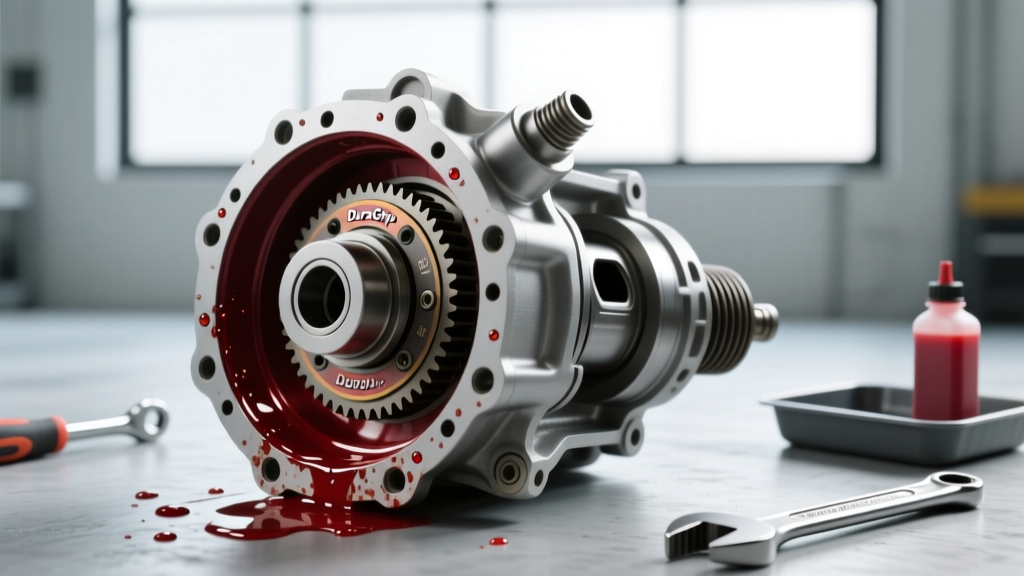
When evaluating the thermal management of a drivetrain, understanding the distinct types of limited slip differential architectures is critical. Unlike an open differential, which routes torque to the path of least resistance, a limited slip differential (LSD) intentionally induces internal friction or gear-binding to transfer torque to the wheel with traction. This mechanical resistance inherently generates massive amounts of parasitic heat. If this thermal energy is not efficiently transferred out of the gear oil and into the surrounding atmosphere, the fluid's shear stability collapses, leading to catastrophic clutch-pack degradation or ring-and-pinion scoring.
In high-load scenarios—such as off-road crawling, track days, or heavy towing—differential fluid temperatures can easily exceed 275°F (135°C). At these thresholds, standard stamped-steel factory covers become thermal bottlenecks. Upgrading the differential cover and optimizing the cooling pathway is not merely an aesthetic modification; it is a vital mechanical intervention required to preserve the friction modifiers and base oil integrity within the housing.
Heat Generation Profiles by LSD Architecture
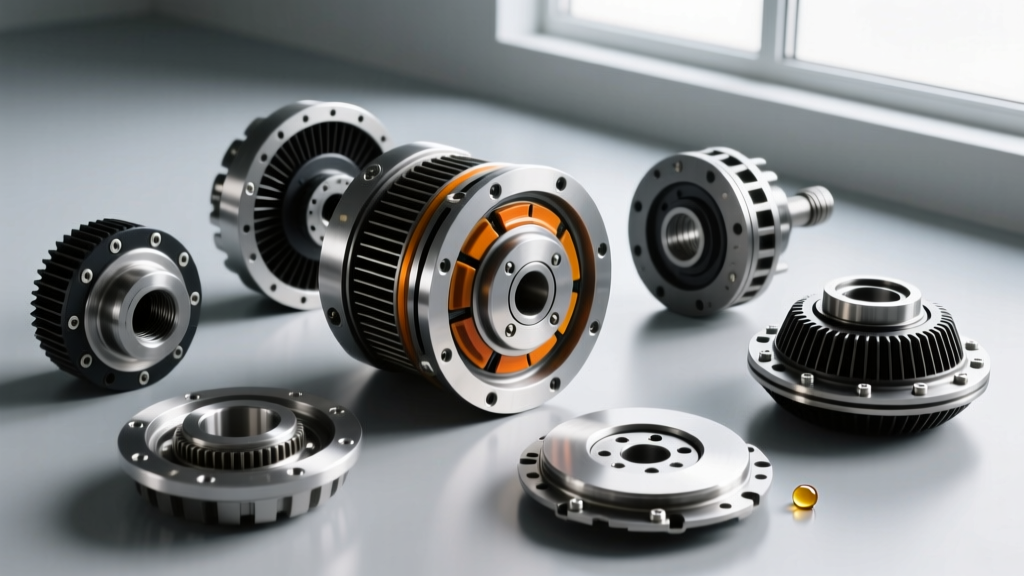
Not all limited slip differentials generate heat in the same manner. The internal mechanism dictates where the heat is concentrated and how the fluid must flow to mitigate it. Below is a comparative analysis of heat generation across the most common LSD platforms.
| LSD Architecture | Primary Heat Source | Peak Temp Threshold | Fluid Shear Risk |
|---|---|---|---|
| Clutch-Pack (e.g., Auburn, Eaton Posi) | Friction discs and steel separator plates | 300°F+ under slip | Extreme (Requires high-viscosity 75W-140) |
| Helical Gear (e.g., Torsen, Truetrac) | Gear tooth sliding friction and side-gears | 250°F under heavy bind | Moderate (75W-90 or 75W-110 synthetic) |
| Viscous Coupling (OEM legacy) | Silicone fluid shear inside sealed drum | 350°F+ (Internal hump) | N/A (Sealed unit, external cooling only) |
Clutch-Pack LSDs and Thermal Runaway
Clutch-based units, like the Auburn Gear High Performance Series or traditional Eaton positraction units, rely on alternating friction and steel discs. When wheel speed differentiation occurs, these discs slide against one another. According to Eaton Performance engineering data, the localized temperature at the friction interface can spike well beyond the bulk fluid temperature. This localized superheating carbonizes the gear oil, creating varnish that glues the clutch packs together, resulting in a locked, chattering axle during low-speed cornering.
Helical Gear (Torsen/Truetrac) Dynamics
Helical gear LSDs, such as the Eaton Detroit Truetrac, operate without friction clutches. They use the axial thrust of helical gears to bind against the differential case. While they do not require specialized friction modifiers, the sliding contact of the gear teeth still generates significant bulk heat. Because there are no clutch packs to absorb and dissipate localized friction, the heat is transferred directly into the gear oil, making bulk fluid cooling via the differential cover paramount.
Stamped Steel vs. Cast Aluminum Cover Metallurgy
Original equipment manufacturers (OEMs) typically equip vehicles with stamped steel differential covers to minimize production costs. Steel has a thermal conductivity of approximately 50 W/m·K. Furthermore, the smooth, curved exterior of a stamped steel pan offers minimal surface area for convective heat transfer.
In contrast, aftermarket performance covers are cast from A356-T6 aerospace-grade aluminum, which boasts a thermal conductivity of roughly 150 W/m·K—three times that of steel. When you combine the superior conductivity of aluminum with aggressive external finning, the surface area exposed to ambient airflow increases by up to 400%. For example, a standard Ford 8.8-inch stamped steel cover costs around $35 and retains heat, whereas a finned cast aluminum replacement (such as the Yukon Gear finned aluminum series) retails between $130 and $170, dropping bulk fluid temperatures by 20°F to 40°F under sustained highway loads.
Internal Baffles, Paddles, and Fluid Dynamics
External fins are only half of the thermal equation. The ring gear acts as a high-speed slinger, throwing gear oil violently against the interior walls of the housing. Advanced differential covers utilize internal engineering to manipulate this fluid dynamics chaos:
- Directional Scoops: Premium covers feature internal paddles cast in the direction of ring gear rotation. These scoops catch the slung oil and direct it upward toward the pinion bearing and the top of the housing, ensuring the most heavily loaded bearings receive a constant bath of cooled fluid.
- Magnetic Drain Plugs and Baffles: Internal baffles prevent fluid slosh away from the ring gear during hard acceleration or steep inclines. Integrated neodymium magnets capture ferrous metallic shear particles before they can embed into the soft babbitt material of the carrier bearings.
- Increased Fluid Capacity: Deep-sump aluminum covers can increase fluid volume by 0.5 to 1.5 quarts. This larger thermal mass takes longer to reach critical temperatures, acting as a buffer during short bursts of high-traction loading.
Active vs. Passive Cooling Systems
For extreme applications, such as SRT Hellcat drag racing or Class 8 heavy-duty towing, passive finned covers are insufficient. Active cooling systems utilize a mechanical or electric pump to draw hot fluid from the differential housing, route it through an external air-to-oil heat exchanger (mounted in the grille or underbody), and return it via a spray nozzle aimed directly at the ring-and-pinion mesh point. These kits (priced between $400 and $850) require drilling and tapping the differential cover or housing for -6 AN or -8 AN ORB fittings.
Fluid Selection and Shear Stability Under Thermal Load
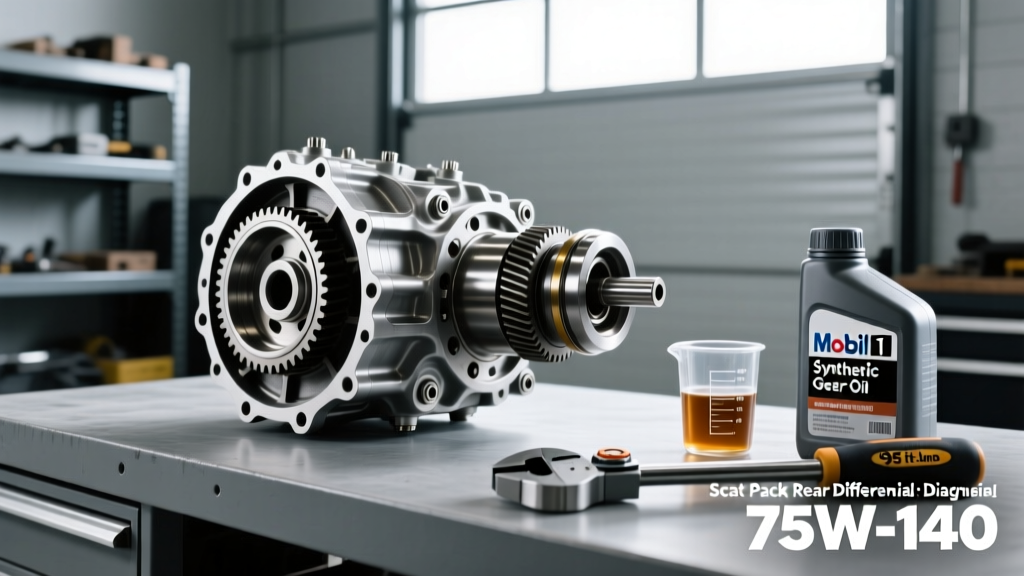
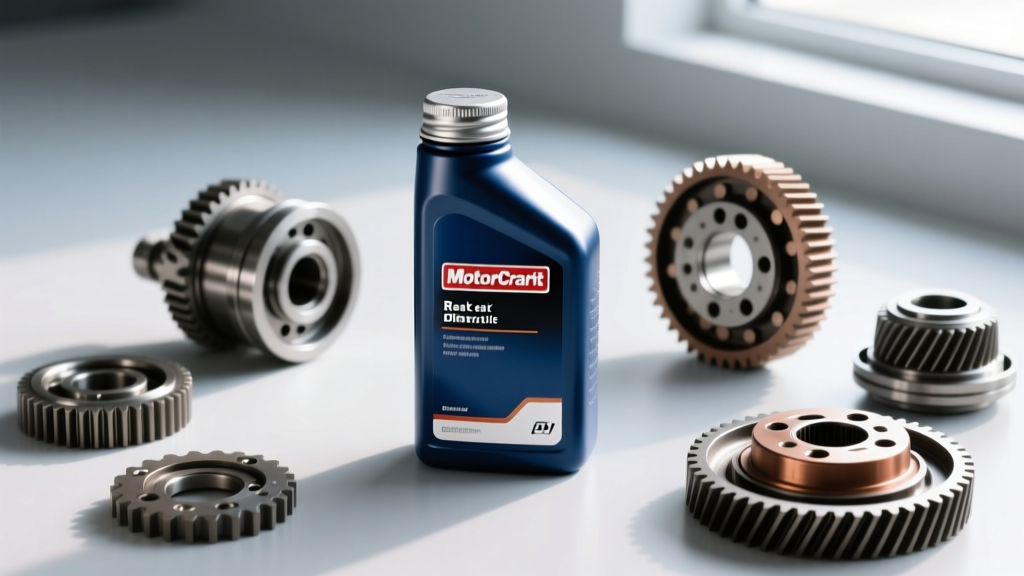
A finned cover cannot save a fluid that lacks shear stability. When selecting gear oil for a clutch-type LSD, you must balance thermal resistance with the necessary friction modifiers. Red Line Synthetic Oil's 75W140 (Product #50104) utilizes polyol ester base stocks that resist thermal breakdown up to 350°F. However, for clutch-type LSDs, an additional friction modifier—such as Motorcraft XL-3 (EST-M2C118-A) or GM EOS (1052358)—is mandatory to prevent stick-slip chatter. Helical gear LSDs like the Truetrac do not require these modifiers and perform optimally on 75W-90 or 75W-110 synthetic formulations, which reduce parasitic drag while maintaining adequate film strength.
Installation Torque Specs and Sealing Protocols
Improper installation of an upgraded differential cover will result in leaks, fluid starvation, and rapid differential failure. The mating surface must be surgically clean, utilizing brake cleaner and a plastic scraper to avoid gouging the axle housing flange.
Sealing Methodology
While many technicians rely on RTV silicone (like Permatex Ultra Black), reusable elastomer gaskets (such as Lube Locker) are vastly superior for maintenance intervals. RTV requires a 24-hour cure time and risks internal bead-breakoff, which can clog oil pickup tubes or bearing journals. Reusable gaskets seal instantly and tolerate the thermal expansion differences between the steel axle housing and the aluminum cover.
Common Axle Housing Torque Specifications
Always tighten differential cover bolts in a crisscross star pattern to ensure even clamping force and prevent warping the aluminum flange. Below are standard torque specifications for popular axle platforms:
- Ford 8.8-inch (10mm bolts): 24 - 30 lb-ft
- GM 12-Bolt (3/8-16 UNC bolts): 25 - 30 lb-ft
- Dana 44 (3/8-24 UNF bolts): 30 - 35 lb-ft
- Chrysler 8.75 (3/8-24 bolts): 30 - 35 lb-ft
- Dana 60 (1/2-20 UNF bolts): 40 - 45 lb-ft
Conclusion: Matching the Cover to the LSD
Understanding the mechanical nuances of the various types of limited slip differential architectures is the first step in diagnosing drivetrain thermal issues. Whether you are running a clutch-based Auburn unit that requires maximum convective cooling to save the friction discs, or a helical Truetrac that demands high-volume fluid circulation to cool the pinion bearings, upgrading to a baffled, A356-T6 cast aluminum differential cover is one of the most cost-effective reliability modifications available. Pair this hardware with a high-shear synthetic fluid and precise torque protocols, and your axle assembly will withstand the most punishing traction loads without missing a beat.