The True Cost of Front Differential Service in 2026
When maintaining a 4WD truck or SUV, the front differential is frequently neglected until a catastrophic failure occurs. Unlike the rear axle, the front differential must manage steering angles, CV joint articulation, and the sudden shock loads of engaging 4WD on low-traction surfaces. In 2026, with the rising cost of synthetic lubricants and shop labor rates, understanding the exact cost breakdown of a front differential fluid service is critical for your maintenance budget.
Whether you are driving a stock Ford F-150 with an open front differential or running a custom off-road rig with a swapped clutch-type LSD, the fluid requirements and service costs vary dramatically. Below, we break down the real-world pricing for front axle servicing, with a specific deep-dive into the complexities introduced when a DuraGrip limited slip differential is installed in a front steering axle.
2026 Front Differential Service Pricing Matrix
| Service Provider | Standard Open Diff | Clutch-Type LSD (e.g., DuraGrip) | Notes & Variables |
|---|---|---|---|
| Dealership Service Center | $195 - $280 | $240 - $320 | High markup on synthetic fluid; mandatory shop supplies fee; may not properly dose friction modifier. |
| Independent 4x4 Shop | $140 - $180 | $175 - $220 | Better familiarity with LSD additives; labor rates typically $120-$150/hr. |
| DIY (Standard Open) | $45 - $65 | N/A | Cost of 2-3 qts 75W-90 Synthetic + RTV or reusable gasket. |
| DIY (DuraGrip LSD) | N/A | $75 - $105 | Includes synthetic gear oil, Motorcraft XL-3 Friction Modifier, and LubeLocker gasket. |
The DuraGrip Limited Slip Differential: Front Axle Implications
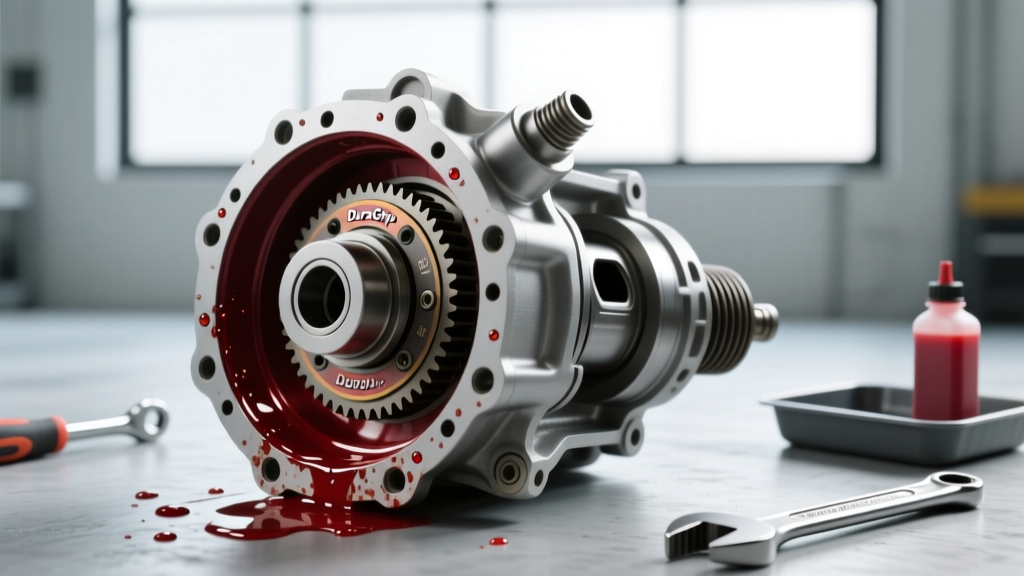
The DuraGrip limited slip differential is legendary in the Ford 8.8-inch and 9-inch rear axles, utilizing a clutch-pack design to provide excellent street manners and off-road traction. However, hardcore off-roaders and rock crawlers frequently swap DuraGrip units (or similar clutch-type LSDs) into front Dana 44 and Dana 60 axles to maximize front-end bite in snow, mud, and technical terrain.
Servicing a front differential equipped with a DuraGrip limited slip differential requires strict adherence to friction modifier protocols. If a technician or DIYer simply dumps standard GL-5 gear oil into a front DuraGrip without the necessary friction modifier, the clutch packs will bind during tight, low-speed turns. In a rear axle, this causes an annoying 'chatter' or wheel hop. In a front steering axle, this binding can cause severe steering wheel kickback, premature wear to the CV joints, and in extreme cases, snapped front axle shafts due to torsional stress.
Pro-Tip: The Figure-8 Test
After servicing a front diff with a DuraGrip LSD, find an empty, wet parking lot. Put the truck in 4-High and drive in tight figure-8 patterns. If you feel the front tires skipping or the steering wheel jerking, the fluid lacks sufficient friction modifier. Drain and add 2 more ounces of modifier immediately.
Required Fluids and Exact Part Numbers
To properly service a front differential with a clutch-type LSD in 2026, you must source high-quality synthetic gear oil and the correct additive. Here is the exact shopping list and cost analysis for a standard front Dana 44 or Ford 8.8 IFS setup:
- Base Gear Oil: Mobil 1 75W-90 Synthetic Gear Lube (Part #104361) or Amsoil Severe Gear 75W-90. Expect to pay $12 to $16 per quart. Most front diffs require 2.0 to 2.5 quarts. (Cost: $30 - $40)
- Friction Modifier: Motorcraft XL-3 Friction Modifier Additive (Part #XO-3-QFM). This is the exact OEM formula required for DuraGrip clutch packs. (Cost: $14 - $18 per 4oz bottle)
- Gasket vs. RTV: Skip the messy silicone RTV and the 24-hour cure time. Use a LubeLocker reusable elastomer gasket (e.g., LL-D44 for Dana 44). (Cost: $32 - $38)
Step-by-Step Front Diff Service & Torque Specifications
Servicing the front differential is more labor-intensive than the rear due to skid plates, steering linkages, and tighter clearance. Below is the professional procedure and exact torque specifications to ensure a leak-free service.
- Vehicle Preparation: Safely jack up the front of the vehicle and support it on jack stands. Ensure the front axle is hanging freely to allow the CV joints to rest at their natural ride-height angle. Remove any factory skid plates (typically requiring a 13mm or 15mm socket).
- Break the Fill Plug First: Never drain the differential before confirming you can remove the fill plug. The fill plug is usually located on the upper passenger side of the diff housing. Use a 3/8-inch or 1/2-inch drive ratchet. Torque spec for reinstallation: 22 to 30 lb-ft.
- Drain and Clean: Remove the drain plug (if equipped) or unbolt the differential cover. If removing the cover, use a crisscross pattern to break the 10mm or 13mm bolts. Clean the housing mating surface with non-chlorinated brake cleaner. Inspect the magnetic drain plug for excessive metal shavings (fine glitter is normal; chunks indicate bearing failure).
- Gasket Installation: If using a LubeLocker gasket, install it dry. Do not use RTV with a reusable elastomer gasket. Align the cover and hand-thread all bolts.
- Torque the Cover Bolts: Tighten the cover bolts in a star pattern. For standard M8 bolts (common on Dana 44), torque to 20 to 25 lb-ft. For M10 bolts (common on Dana 60), torque to 30 to 35 lb-ft.
- Fill and Additive Protocol: If servicing a DuraGrip limited slip differential, pour the 4oz bottle of Motorcraft XL-3 friction modifier into the fill hole before adding the thick 75W-90 gear oil. This ensures the modifier mixes thoroughly. Fill until the fluid reaches the bottom of the fill hole threads. Reinstall and torque the fill plug.
When to Suspect Mechanical Failure Over Fluid Degradation
Before spending money on a fluid service, it is vital to diagnose whether your front differential is actually suffering from mechanical wear. In 2026, with the average cost of a remanufactured Dana 44 front axle assembly exceeding $2,500, catching early failure signs is paramount.
If you hear a rhythmic 'howling' noise that changes pitch precisely with vehicle speed (regardless of whether you are on the throttle or coasting), your ring and pinion gears are likely worn, or the pinion bearing preload has collapsed. Fluid changes will not fix gear whine. Conversely, if you hear a 'clunk' when shifting from Reverse to Drive, inspect your front axle shaft C-clips and the differential side gears for excessive backlash.
For more in-depth axle specifications and OEM torque charts, always consult authoritative drivetrain resources like Dana Incorporated or your manufacturer's official parts portal, such as Ford Parts. Proper maintenance of your front differential, especially when running complex clutch-type LSDs, ensures your 4WD system remains reliable, safe, and capable of handling whatever traction challenges you throw at it.