When a puddle of red hydraulic fluid appears on your garage floor, the immediate panic often revolves around low transmission fluid symptoms. However, because modern drivetrains share similar fluid colors and routing real estate, misdiagnosis is rampant. This leads many DIYers down a dangerous rabbit hole, asking the infamous question: can you use automatic transmission fluid in power steering systems? In the current 2026 automotive landscape, mixing these fluids or misidentifying the leak source can lead to catastrophic drivetrain failure. In this technical deep-dive, we dissect the exact symptoms of a starved transmission, the chemical realities of hydraulic fluid cross-compatibility, and how to accurately pinpoint your leak before clutch pack destruction occurs.
Core Low Transmission Fluid Symptoms in Modern Drivetrains
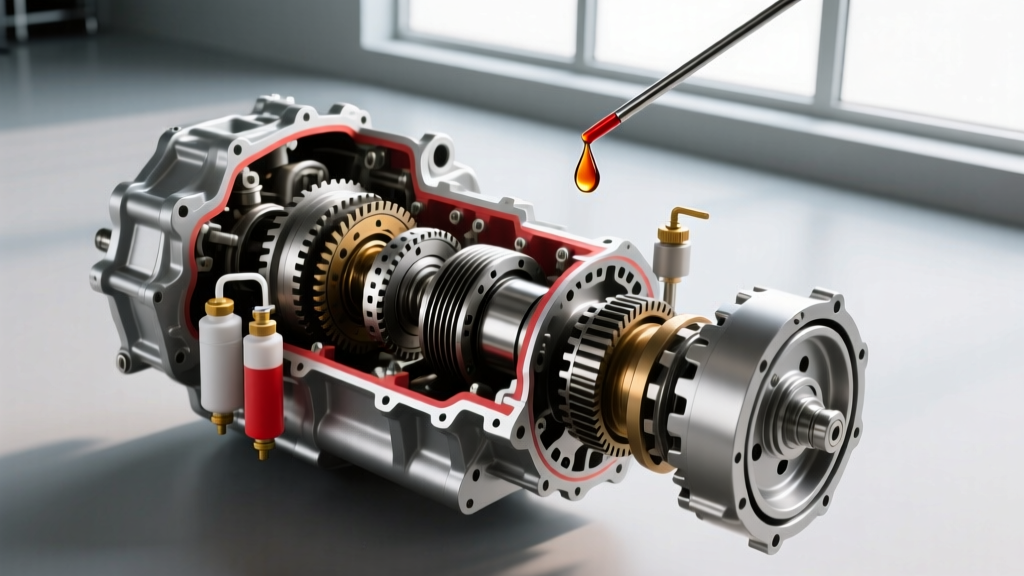
Modern automatic transmissions, such as the GM 6L80, Ford 10R80, and ZF 8HP45, rely on precise hydraulic pressure to actuate clutch packs and manage torque converter lockup. When the fluid level drops below the critical threshold on the dipstick or internal sensor, the symptoms manifest in distinct, measurable ways.
1. Delayed Engagement and Clutch Pack Fill Errors
When you shift from Park to Reverse or Drive, the transmission pump must fill the respective clutch piston cavities. If fluid is low, the pump ingests air (cavitation), leading to a 2-to-4-second delay in engagement. On a ZF 8HP, this often triggers a soft limp mode as the Transmission Control Module (TCM) detects excessive clutch fill time and logs a P2714 (Pressure Control Solenoid D Performance) code.
2. Torque Converter Clutch (TCC) Shudder
The TCC requires a micro-slip apply strategy for smooth lockup. Low fluid volume causes pressure fluctuations in the TCC regulator valve. This results in a rhythmic shudder between 40-55 mph, frequently throwing a P0741 (Torque Converter Clutch Circuit Performance or Stuck Off) code. According to Sonnax Technical Resources, TCC shudder is one of the earliest indicators of hydraulic starvation or degraded fluid friction modifiers.
3. Pump Cavitation Whine
A distinct, high-pitched whine that scales with engine RPM (most audible at 1200-1500 RPM) indicates the internal gerotor or vane pump is starving. This is a critical warning sign; running a pump dry for even 15 miles can score the aluminum pump housing, requiring a $2,500+ rebuild.
The Red Fluid Dilemma: Can You Use ATF in Power Steering?
Because power steering racks and automatic transmissions both historically utilized red-dyed hydraulic fluids, a pervasive myth persists in garage forums: can you use automatic transmission fluid in power steering? The answer requires a deep understanding of tribology and seal chemistry.
The Historical Context
In the 1980s and 1990s, many manufacturers (notably Ford and GM) specified Dexron II or Mercon ATF for their power steering systems. In those legacy systems, the seal materials (primarily older nitrile rubbers) were compatible with the friction modifiers and base oils of early ATFs. If you are restoring a 1993 Ford F-150, ATF in the steering reservoir is generally acceptable.
The 2026 Reality: Synthetic Divergence
Modern power steering and transmission systems have radically diverged. Today’s transmissions require ultra-low viscosity fluids like Dexron ULV or Mercon LV to reduce parasitic drag and meet strict CAFE fuel economy standards. Conversely, modern electro-hydraulic power steering (EHPS) racks require specific synthetic fluids like Pentosin CHF 11S / CHF 202 or specialized OEM Power Steering Fluids (e.g., Honda PSF-S, GM Part No. 89021184).
The Danger of Cross-Contamination
If you attempt to top off a modern power steering rack with modern ATF, the aggressive detergent packages and specific friction modifiers in the ATF will cause the EPDM (Ethylene Propylene Diene Monomer) seals in the steering rack to swell, blister, and ultimately fail. Conversely, if you mistakenly identify a steering rack leak as a transmission leak and top off your 6L80 with power steering fluid, the lack of necessary friction modifiers will cause immediate clutch pack slippage. As noted by fluid tribology experts at Bob Is The Oil Guy (BITOG), introducing non-friction-modified hydraulic oil into an automatic transmission will burn up the cellulose and Kevlar friction material in a matter of miles.
Hydraulic Fluid Compatibility & Specification Matrix
Understanding the chemical differences prevents costly DIY mistakes. Below is a comparative matrix of modern hydraulic fluids.
| Specification | ATF (Dexron ULV / Mercon LV) | Modern PSF (CHF 11S / OEM Synthetic) |
|---|---|---|
| Primary Function | Clutch friction modulation, cooling, hydraulic actuation | Hydrostatic pressure transfer, anti-wear, anti-foaming |
| Viscosity (cSt @ 100°C) | 5.5 - 6.5 (Ultra-Low Viscosity) | 6.0 - 7.5 (High Viscosity Index) |
| Friction Modifiers | High (Organic & Molybdenum-based) | None / Trace |
| Seal Compatibility | Fluorocarbon (Viton), Polyacrylate | EPDM, Silicone, Teflon |
| Dye Color | Red / Cherry | Green, Clear, or Amber (Rarely Red) |
Pinpointing the Leak: Steering Rack vs. Transmission Cooler Lines
To accurately diagnose low transmission fluid symptoms, you must first verify the fluid is actually leaving the transmission. The proximity of the transmission cooler lines to the power steering rack on many front-wheel-drive and longitudinal platforms makes visual identification tricky. Industry data from Transmission Digest highlights that misdiagnosed cooler line leaks are a leading cause of unnecessary transmission removals.
- Transmission Cooler Line Leaks: Inspect the quick-connect fittings at the radiator or the auxiliary cooler. These fittings utilize internal O-rings that harden over time due to thermal cycling. A leak here will drip directly onto the subframe and often coats the bell housing, mimicking a rear main seal leak.
- Steering Rack Boot Leaks: Inspect the inner tie-rod bellows. If a steering rack seal fails, fluid fills the rubber boot. Once the boot reaches capacity, it ruptures, slinging fluid onto the exhaust and lower control arms. If the fluid is green or clear, it is PSF. If it is red, it may be an older vehicle using ATF in the rack, or you are misidentifying a trans cooler line drip above it.
Corrective Actions and Replenishment Protocols
If you confirm the transmission is the culprit, addressing the low fluid level requires strict adherence to OEM procedures. Guessing the fluid level will result in either cavitation (too low) or blown lip seals (too high).
GM 6L80 / 8L90 Procedure
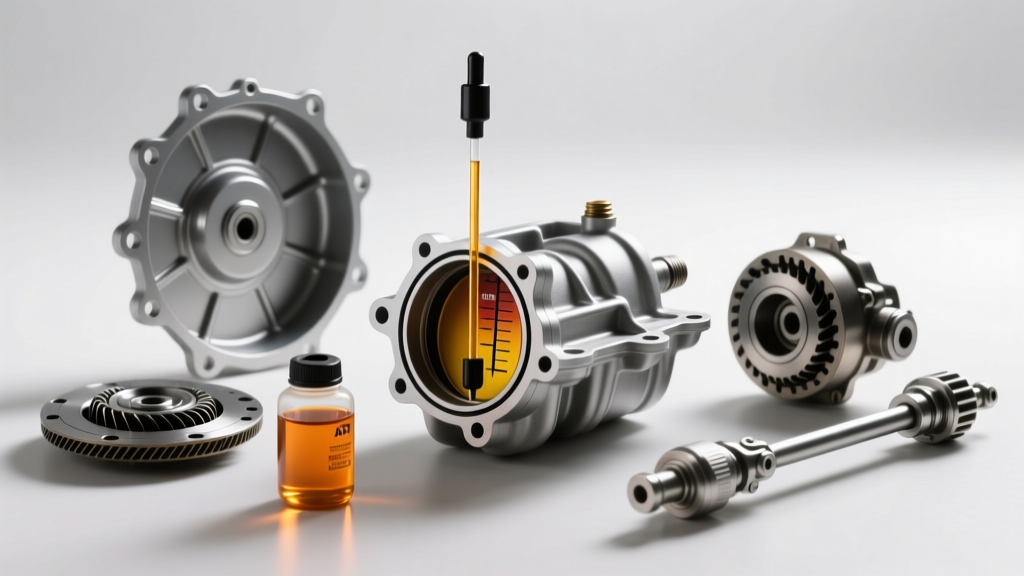
These units do not have a traditional dipstick. You must check the fluid level via the threaded plug on the transmission pan with the fluid temperature between 86°F and 122°F (30°C-50°C) as monitored by a bidirectional OBD2 scan tool. The engine must be running. The pan plug torque specification is exactly 15 Nm (11 lb-ft). Over-torquing will strip the aluminum pan threads.
ZF 8HP (Chrysler/BMW/Jaguar) Procedure
The ZF 8HP features a sealed plastic pan with an integrated filter and a specialized leveling plug. ZF mandates that the plastic pan bolts are torque-to-yield; if removed, the entire pan and bolt set must be replaced (Part No. ZF 1078.298.045). The leveling plug torque is 10 Nm, and the fill procedure requires the engine to be running and the transmission in Park. If the fluid is low, you must pump Dexron VI or ZF Lifeguard 8 into the fill hole until it drips out at the correct temperature threshold.
Summary
Low transmission fluid symptoms are a precursor to mechanical destruction. While the historical overlap of red hydraulic fluids leads many to ask if they can use ATF in power steering, the 2026 reality of EPDM seals and ultra-low viscosity friction modifiers makes cross-contamination a fatal error. Always trace the leak to its exact origin, verify the fluid chemistry, and adhere to strict OEM temperature and torque specifications during replenishment.