The Physics of Stalling: Will Low Transmission Fluid Cause Car to Stall?
When diagnosing drivetrain anomalies in modified or high-mileage vehicles, enthusiasts and technicians frequently ask: will low transmission fluid cause car to stall? The short answer is yes, but the mechanical cascade that leads to a stalled engine is highly specific and often misunderstood. In modern automatic transmissions, the torque converter acts as the fluid coupling between the engine and the transmission input shaft. The transmission oil pump, driven directly by the torque converter hub, relies on a precise volume of hydraulic fluid to maintain line pressure and lubricate internal clutches.
When the fluid level drops below the critical threshold, the pump begins to ingest air—a phenomenon known as cavitation. This results in an immediate drop in mainline hydraulic pressure. As you decelerate and come to a stop, the Transmission Control Module (TCM) commands the Torque Converter Clutch (TCC) solenoid to release the lockup clutch. If the fluid volume is too low to actuate the release valve smoothly, or if the severe lack of fluid causes the torque converter to starve and bind, the mechanical connection between the engine and the wheels remains engaged. The engine is essentially forced to lug down against the brakes, resulting in a harsh shudder and an inevitable stall at idle.
Furthermore, low fluid compromises the thermal capacity of the system. In performance applications, fluid temperatures can easily exceed 240°F (115°C), causing the remaining fluid to thin out, lose shear stability, and fail to provide adequate hydraulic resistance, exacerbating the stalling condition.
Why Standard Dipstick Checks Fail Performance Builds
For stock daily drivers, a quick dipstick check in the driveway might suffice. However, from a performance and upgrade perspective, standard procedures often yield false readings. When you upgrade to a high-stall torque converter (such as a Circle D 3200 or Vigilante 3600), the internal volume and operating temperatures change drastically. High-stall converters generate significantly more heat due to increased slippage off the line. If the fluid level is even slightly overfilled, the rotating internal components of the transmission whip the fluid into an aerated foam. Aerated fluid is compressible; it cannot hold hydraulic pressure, leading to the exact same slipping and stalling symptoms as low fluid. Therefore, executing a precise, temperature-specific transmission fluid check procedure is non-negotiable for tuned vehicles.
Step-by-Step: The GM 6L80 / 4L60E Hot-Check Protocol
General Motors transmissions like the legendary 4L60E and the heavier-duty 6L80 utilize a traditional dipstick, but the procedure requires strict adherence to thermal parameters to ensure the fluid is properly expanded.
- Fluid Specification: Dexron VI (e.g., ACDelco Part No. 10-9395). Do not mix with older Dexron III formulations.
- Temperature Target: The fluid must be between 180°F and 200°F (82°C - 93°C). Use an OBD2 bi-directional scanner to read the Transmission Fluid Temperature (TFT) PID. Guessing the temperature via the radiator hoses is inaccurate.
- The Procedure: With the vehicle on a perfectly level surface and the engine idling in Park, cycle the gear selector through every position (P-R-N-D-L), pausing for 3 seconds in each. Return to Park.
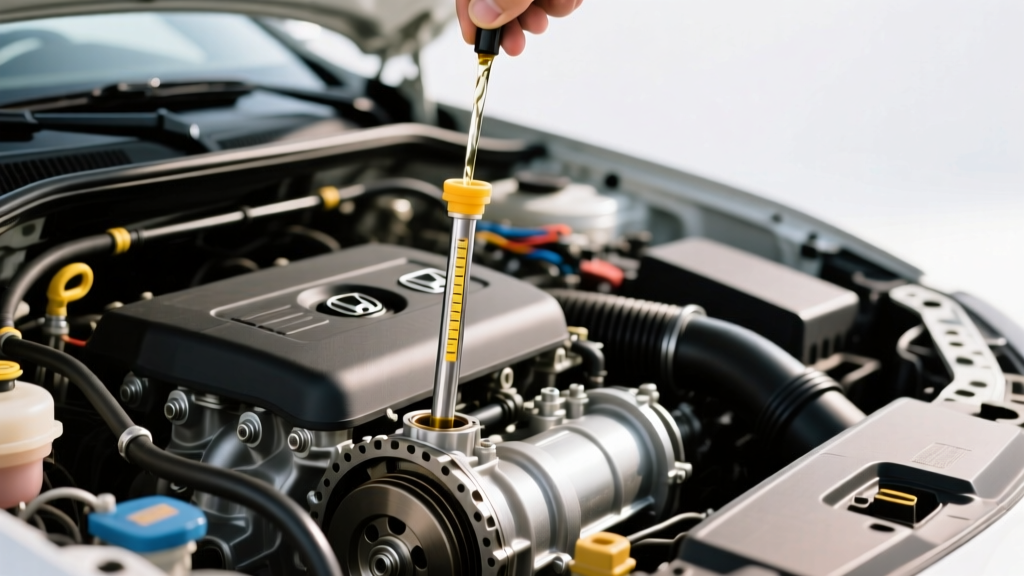
- Reading the Level: Pull the dipstick, wipe it clean, reinsert fully, and pull again. The fluid level must be in the upper crosshatch area marked 'HOT'. If it is at the bottom of the crosshatch, you are risking pump cavitation and subsequent stalling at stoplights.
- Pan Torque Spec: If you are dropping the pan to add a filter or upgrade to a deep pan, the 6L80 pan bolts require exactly 9 Nm (80 lb-in) of torque. Over-torquing will warp the aluminum sealing surface.
Step-by-Step: The ZF 8HP 'No-Dipstick' Leveling Procedure
The ZF 8HP transmission (found in everything from the BMW M3 to the Dodge Charger Hellcat and 2026 Ford Mustang variants) eliminated the dipstick to prevent consumer overfilling. Checking and setting the fluid level on a ZF 8HP requires a lift, a specialized fill tool, and an infrared thermometer or advanced scan tool.
- Fluid Specification: ZF LifeguardFluid 8 (Part No. 1071.298.920). Using incorrect fluid will destroy the mechatronic sleeve and clutch packs.
- Temperature Target: 30°C to 50°C (86°F to 122°F). ZF specifically mandates this narrow window because the plastic oil pan and internal clearances expand at specific rates.
- The Procedure: Raise the vehicle on a level lift. With the engine idling, remove the 10mm hex leveling plug located on the bottom of the plastic transmission pan. If no fluid drips out, the system is starved, which will absolutely cause the car to stall under load or at idle due to TCC drag.
- Filling: Pump ZF Lifeguard 8 into the fill port (located on the side or rear of the casing depending on the specific 8HP generation) until fluid begins to weep out of the leveling hole. Wait for the drip to slow to a steady, slow drop.
- Torque Specs: Reinstall the leveling plug immediately and torque to 35 Nm. The plastic pan bolts (if removed) must be torqued to 10 Nm. Never reuse the O-ring on the leveling plug.
Diagnostic Matrix: Fluid Volume vs. Drivetrain Behavior
Understanding how fluid volume correlates with specific drivetrain symptoms is critical for performance tuning and diagnostics. Refer to the table below to cross-reference your vehicle's behavior before tearing into the valve body or replacing the torque converter.
| Fluid Condition | Line Pressure | TCC Behavior | Primary Symptom | Stall Risk |
|---|---|---|---|---|
| Severely Low (Starved) | Erratic / Drops at idle | Fails to release (Drag) | Harsh engagement, engine stalls at stops | HIGH |
| Slightly Low | Adequate but delayed | Slips during apply | Flare shifts, high trans temps | MODERATE |
| Correct Level | Stable (e.g., 110-130 PSI) | Smooth apply/release | Crisp shifts, optimal thermal management | NONE |
| Overfilled (Aerated) | Low (Compressible foam) | Chatters or fails to hold | Whining pump noise, slipping, stalling | HIGH |
Upgrade Considerations: Deep Pans and External Coolers
When prepping a vehicle for track duty or heavy towing, upgrading the transmission pan is a common first step. Cast aluminum deep pans from manufacturers like PML or Summit Racing increase fluid capacity by 2 to 4 quarts and feature external cooling fins. However, this alters the transmission fluid check procedure.
If you install a deep pan on a 4L60E or 6L80, you must account for the additional volume. A standard 6L80 pan drop requires roughly 6.0 quarts of Dexron VI for a refill. A deep pan setup will require 8.0 to 9.5 quarts. If you only add the factory-specified 6 quarts and immediately check the dipstick, the system will be critically low, guaranteeing pump cavitation and stalling. Always add the factory baseline volume, start the engine, cycle the gears to fill the new cooler lines and torque converter, and then top off incrementally while monitoring the TFT sensor via your OBD2 scanner.
Additionally, if you are running an external cooler with a thermal bypass valve (highly recommended for 2026 performance builds to prevent varnish buildup), ensure the bypass is open (fluid temp above 180°F) during the check procedure. If you check the fluid while the thermal bypass is closed, the fluid trapped in the external cooler will not register on the dipstick or leveling plug, leading you to overfill the system once the thermostat opens.
Sourcing and Final Diagnostics
Proper fluid maintenance is the bedrock of transmission longevity and performance. According to technical data from Sonnax, hydraulic pressure anomalies caused by incorrect fluid levels are responsible for a vast majority of premature clutch pack failures and TCC solenoid burnouts. Furthermore, adhering to the exact leveling procedures outlined by ZF Group ensures that the mechatronic unit operates within its designed hydraulic parameters.
If you have verified the fluid level is correct, the temperature is within spec, and the car still stalls when coming to a stop, the issue is likely internal. A stuck TCC valve in the valve body, a failed PWM solenoid, or a mechanically welded torque converter clutch will mimic the symptoms of low fluid. In these cases, a transmission pressure gauge test on the mainline and TCC apply ports is the next mandatory diagnostic step.