The Paradigm Shift: Dipsticks vs. Sealed Overflow Systems
Preventive transmission maintenance has evolved dramatically over the last decade. Gone are the days when every vehicle featured a brightly colored dipstick under the hood. Today, automotive engineers utilize two distinct architectures for automatic transmission fluid (ATF) level verification. Understanding which system your vehicle employs is the critical first step in avoiding catastrophic hydraulic starvation or overfill-induced aeration.
Method A: The Traditional Dipstick (e.g., GM 4L60E, Toyota A750F)
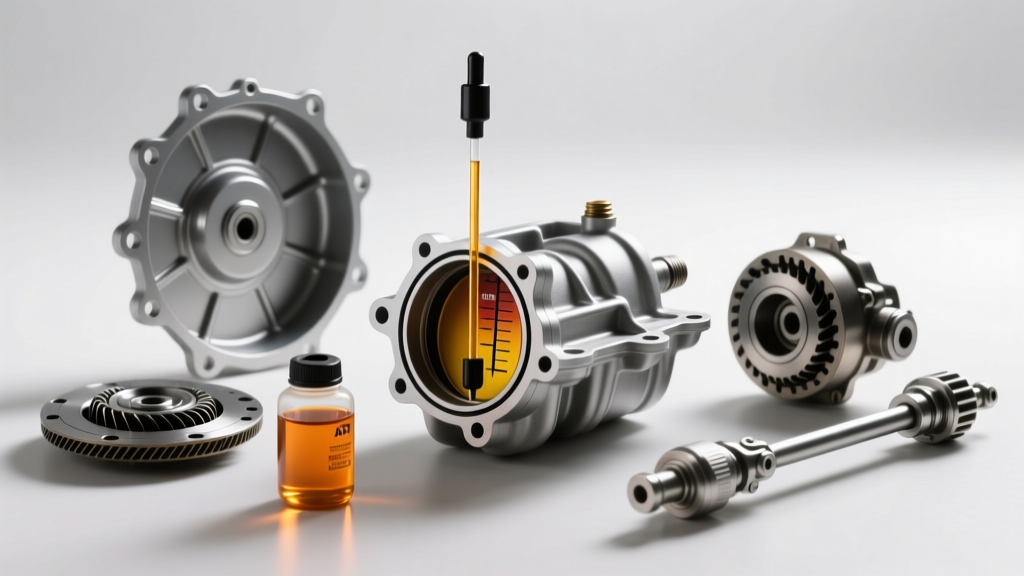
Older or heavy-duty platforms often retain the traditional dipstick tube. For example, the venerable GM 4L60E and the Toyota A750F (found in the 4Runner and Tacoma) utilize a dipstick with 'HOT' and 'COLD' crosshatch zones. However, checking these requires more than just pulling the stick. The fluid must be at normal operating temperature (typically 180°F to 200°F), and the engine must be idling in 'Park' or 'Neutral' on a perfectly level surface. The transmission pump must be actively circulating fluid to provide an accurate pan-level reading.
Method B: The Sealed Overflow Plug (e.g., ZF 8HP, GM 6L80)
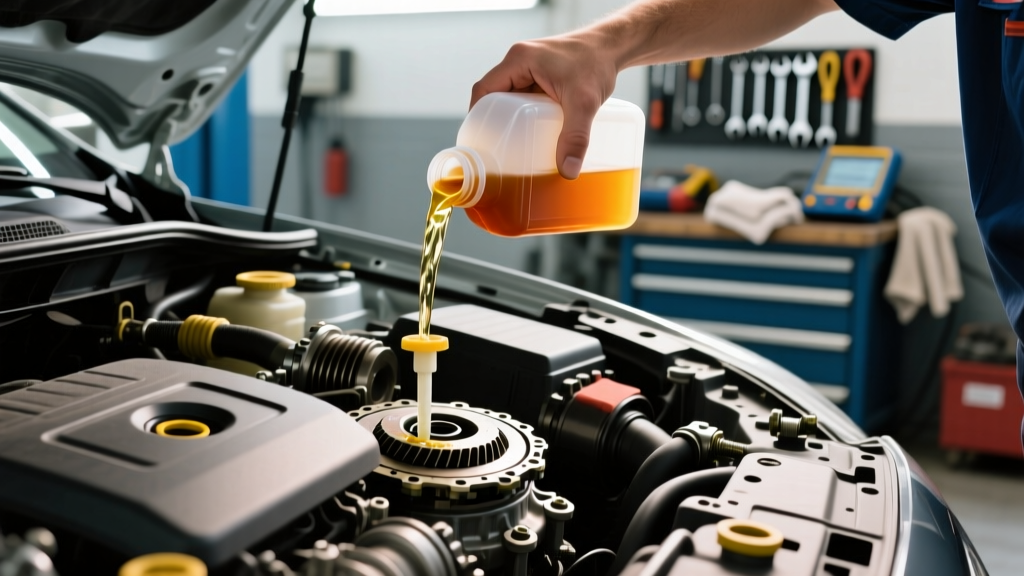
Modern 8-speed and 10-speed transmissions, such as the ZF 8HP series (used by BMW, Audi, Ram, and Ford) and the GM 6L80/8L90 families, utilize a sealed overflow plug located on the transmission pan or side casing. There is no dipstick. To check the fluid, you must use a bi-directional OBD2 scanner to monitor the Transmission Fluid Temperature (TFT) sensor. For the ZF 8HP, the fluid must be between 86°F and 122°F (30°C–50°C). For many GM applications, the target window is 104°F to 113°F. With the engine idling and the vehicle level, the overflow plug is removed. If a steady stream drips out and slows to a trickle, the level is correct. If nothing comes out, fluid must be pumped in through the fill hole until it overflows.
Calculating Volume: How Many Quarts of Automatic Transmission Fluid?
When planning a preventive maintenance drain-and-fill, the most common question DIYers and fleet technicians ask is how many quarts of automatic transmission fluid are required for the service fill. The answer depends entirely on the difference between 'Total Dry Capacity' and 'Service Fill Capacity'.
Total dry capacity is the volume required to fill a completely bone-dry transmission, torque converter, and cooler lines at the factory. Service fill capacity is what you actually need when dropping the pan or pulling the overflow plug, as a significant volume of fluid remains trapped inside the torque converter and cooler circuits.
| Transmission Model | Common Applications | Service Fill (Pan Drop) | Total Dry Capacity | OEM Fluid Spec |
|---|---|---|---|---|
| GM 4L60E | Silverado, Tahoe (1993-2013) | 5.0 Quarts | 11.2 Quarts | ACDelco Dexron VI |
| GM 6L80 | Camaro, Corvette, Trucks | 6.0 Quarts | 11.2 Quarts | ACDelco Dexron VI |
| ZF 8HP45 / 8HP70 | BMW F-Series, Ram 1500, Audi | 5.5 Quarts | 9.5 Quarts | ZF LifeguardFluid 8 |
| Toyota A750F | 4Runner, Tacoma, FJ Cruiser | 3.2 Quarts | 11.8 Quarts | Toyota ATF WS |
As the table illustrates, attempting to pour 11 quarts into a GM 6L80 after simply dropping the pan will result in a massive overfill. Overfilled transmissions suffer from fluid aeration (foaming) as the planetary gearsets whip the fluid, leading to erratic line pressures, delayed shifts, and eventual clutch pack failure. Always start by adding 80% of the expected service fill volume, run the thermal stabilization protocol, and then top off via the dipstick or overflow plug.
Step-by-Step Preventive Inspection Protocol
Whether you are dealing with a dipstick or a sealed unit, a rigorous preventive maintenance inspection requires following a strict sequence to ensure accuracy and prevent contamination.
1. Thermal Stabilization and Thermostat Cycling
Modern transmissions feature thermal bypass valves in the cooler lines. If you check the fluid when it is ice cold, the valve is closed, and fluid is trapped in the cooler. As the fluid heats and the valve opens, the level in the pan will drop drastically. You must drive the vehicle for 15-20 minutes to ensure the cooler thermostat has cycled open. For sealed units like the GM 8L90, a scan tool is required to command the thermostat open electronically during the check procedure.
2. Level Verification and Torque Specifications
Once the target TFT is reached on your scanner, place the vehicle on a level lift. For sealed units, place a catch pan underneath and remove the overflow plug. For the ZF 8HP, the fill/overflow plug requires a 10mm hex bit. Once the level is verified and the plug is reinstalled, you must adhere to strict torque specifications to prevent pan distortion or stripped threads. The ZF 8HP fill plug torque spec is exactly 35 Nm. The GM 6L80 pan bolts are notoriously soft and require just 9 Nm (80 lb-in); over-torquing these will snap the bolt heads or warp the aluminum pan.
Expert Warning: Never reuse the O-ring or sealing sleeve on a ZF 8HP fill plug. The elastomer deforms under heat and torque. Always use a new OEM sealing ring (Part # 2411 752 258) to prevent slow weeping that leads to low-fluid limp modes.
3. Tribological Condition Assessment
Checking the level is only half the battle; assessing the fluid's chemical and physical condition is where true preventive maintenance shines.
- Color: Fresh Dexron VI or Toyota WS is a translucent ruby red. ZF Lifeguard 8 is naturally a pale, translucent yellow/green. Do not assume ZF fluid is 'burnt' just because it isn't red.
- Odor: A sharp, acrid, burnt-toast smell indicates that the clutch friction material has overheated and the binding resins have broken down. This requires an immediate pan inspection for debris.
- Particulates: Wipe the fluid on a white paper towel. Fine metallic 'glitter' is normal wear from thrust bearings and bushings. However, visible metal flakes or chunks indicate catastrophic planetary gear or hard-part failure, necessitating a teardown.
- Emulsification: If the fluid looks like a strawberry milkshake, coolant has breached the Transmission Oil Cooler (TOC) inside the radiator. The transmission must be flushed immediately, and the radiator replaced.
Essential Tools and 2026 Pricing Expectations
To properly check and service modern sealed transmissions, you cannot rely on basic hand tools. Budget for the following specialized equipment:
- Bi-Directional OBD2 Scanner ($60 - $350): Required to read the specific TFT sensor PID, not just the engine coolant temperature. Tools like the Autel MaxiCOM or XTOOL D7 are highly recommended for accessing the 'Service Fill' modes on BMW and GM vehicles.
- Pneumatic or Manual Fluid Transfer Pump ($25 - $80): Sealed transmissions require fluid to be pumped UP into the fill hole. A standard hand-pump transfer kit with the correct adapter hose for the ZF or GM fill port is mandatory.
- Infrared Thermometer (Optional, $20): While a scan tool is required for the final level check, an IR gun on the transmission pan can help you gauge when the unit is approaching the target temperature window during your test drive.
By mastering both the dipstick and sealed overflow methods, and understanding the critical difference between dry capacity and service fill volume, you can extend the life of your drivetrain well past the 150,000-mile mark. For further reading on fluid shear stability and thermal degradation, consult the technical resources at AMSOIL's ATF Engineering Portal or the aftermarket service bulletins provided by ZF Aftermarket. Additionally, Sonnax Transmission Tech Resources offers unparalleled deep-dives into hydraulic line pressure and valve body wear related to fluid maintenance.