Decoding Lockup Torque Converter Operation and Shudder
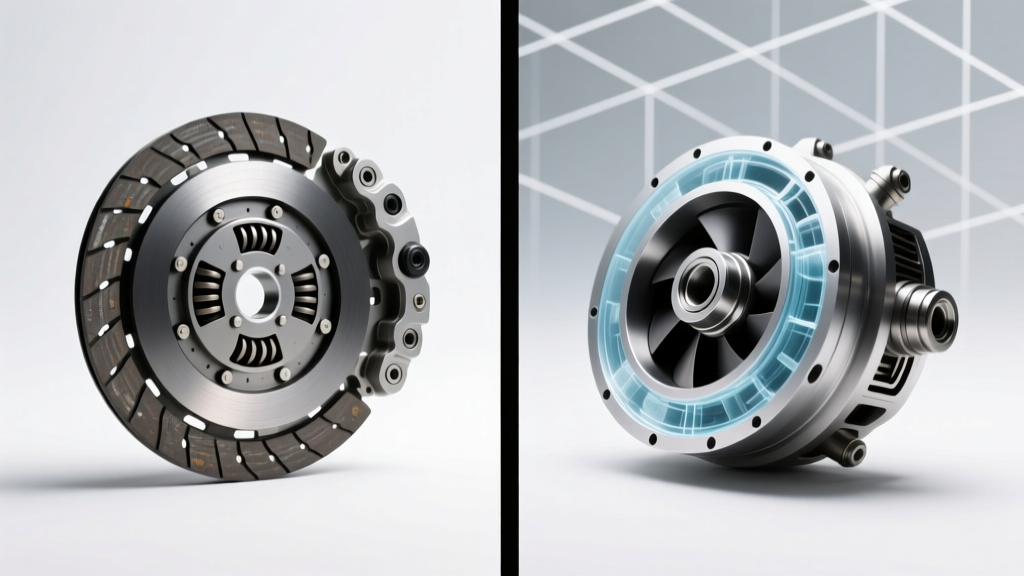
The modern automatic transmission relies heavily on the torque converter clutch (TCC) to bridge the gap between fluid coupling and direct mechanical drive. When an owner or technician asks what torque converter means in the context of a violent highway shudder or erratic RPM behavior, they are almost always dealing with a failure in the TCC lockup circuit. Unlike older generations that only locked up in overdrive, modern units like the ZF 8HP and GM 6L80 utilize continuous slip control across multiple gears to maximize fuel economy. When this delicate hydraulic balance fails, the result is a driveline shudder that mimics driving over rumble strips.
Diagnostic Rule of Thumb: If the shudder occurs precisely when the TCC slip speed PID drops below 20 RPM on your bi-directional scanner, you have isolated the issue to the lockup apply circuit, friction liner, or TCC regulator valve.
The Mechanics of TCC Lockup and PWM Control
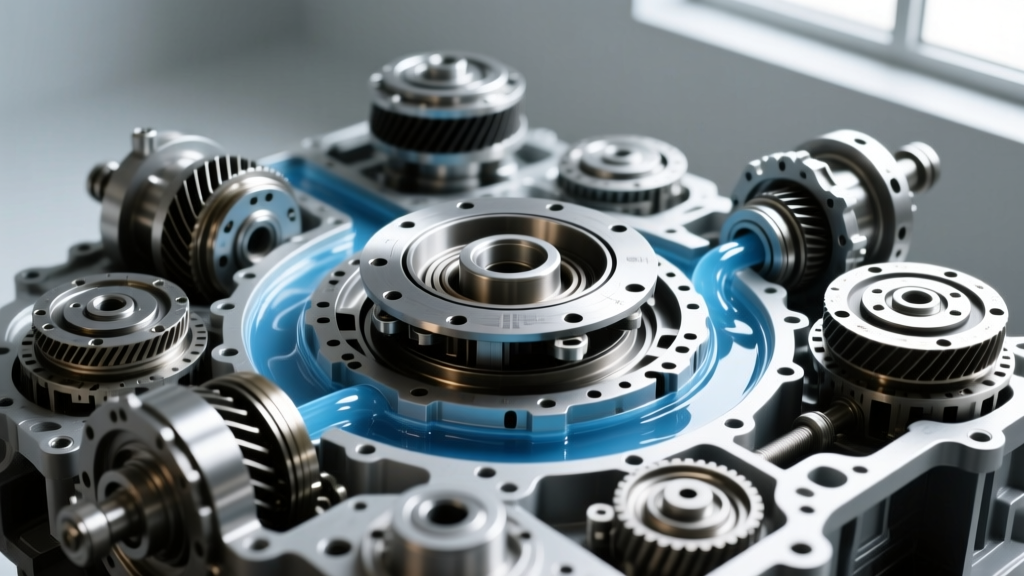
To accurately diagnose lockup torque converter operation, you must understand the hydraulic routing. In the release mode, transmission fluid enters the front of the converter (between the impeller and the TCC piston), pushing the clutch away from the converter cover. In the apply mode, the Transmission Control Module (TCM) energizes the TCC Pulse Width Modulation (PWM) solenoid. This shifts the TCC regulator valve, reversing fluid flow. Fluid now enters the rear of the converter, pressing the friction-lined piston against the machined inner surface of the cover.
Why Continuous Slip Changes the Diagnostic Landscape
In a GM 4L60E, the TCC was either fully on or fully off. A failure meant a harsh bang or a complete lack of lockup. In a ZF 8HP45 or GM 6L80, the TCM commands a 'controlled slip' of 10 to 40 RPM to dampen engine torsional vibrations. This constant micro-slipping generates immense heat and accelerates friction material wear. When the carbon-based or Kevlar-lined friction material degrades, or the TCC apply valve bore wears out in the valve body, the hydraulic pressure fluctuates. This rapid apply-release oscillation is what the driver feels as a 30-50 Hz shudder between 45 and 65 mph.
Symptom Matrix: Identifying Lockup Torque Converter Failure
Use the following diagnostic matrix to cross-reference customer complaints, OBD-II codes, and common failure points across prevalent transmission platforms.
| Symptom Profile | OBD-II Code | Probable Mechanical Culprit | Common Transmission Models |
|---|---|---|---|
| Shudder at 45-60 mph (Light Throttle) | P0741 / P1870 | Worn TCC Friction Liner / TCC Regulator Valve Bore Wear | GM 4L60E, GM 6L80, Ford 6R80 |
| Engine Stalls When Stopping | P0742 | TCC Stuck On / Lockup Valve Seizure / Solenoid Debris | ZF 8HP, Chrysler 45RFE, Aisin TF-80SC |
| RPM Fluctuation / Surging in Overdrive | P0743 / P2763 | TCC PWM Solenoid Electrical Fault / Wiring Chafe | ZF 8HP, GM 9-Speed, Ford 10R80 |
| Harsh Engagement into Lockup (Bang) | P0741 | Stuck TCC Apply Valve / Blocked Orifice in Turbine Shaft | GM 4L60E, Ford 4R70W |
Advanced Diagnostic Procedures for TCC Shudder
Replacing the torque converter based on a shudder complaint without verifying hydraulic integrity will result in a comeback. The new converter will quickly be destroyed by the same underlying valve body or solenoid issue. Follow this structured diagnostic path.
Step 1: Bi-Directional Scanner Command Tests
Connect a high-end diagnostic tool (e.g., Snap-on Zeus or Autel MaxiSys) and monitor the TCC Slip Speed PID while driving at a steady 55 mph in top gear. Command the TCC solenoid to 100% duty cycle (or 0 RPM slip).
- Normal Operation: Actual slip matches commanded slip (within 5 RPM).
- Hydraulic/Friction Failure: Actual slip remains above 50 RPM despite a 0 RPM command, or the slip speed wildly oscillates (indicating valve bore wear or lining delamination).
- Electrical/Solenoid Failure: The TCC slip PID drops to zero, but the commanded duty cycle shows erratic spikes, or the solenoid circuit throws a P0743 code.
Step 2: Fluid Analysis and Friction Material Degradation
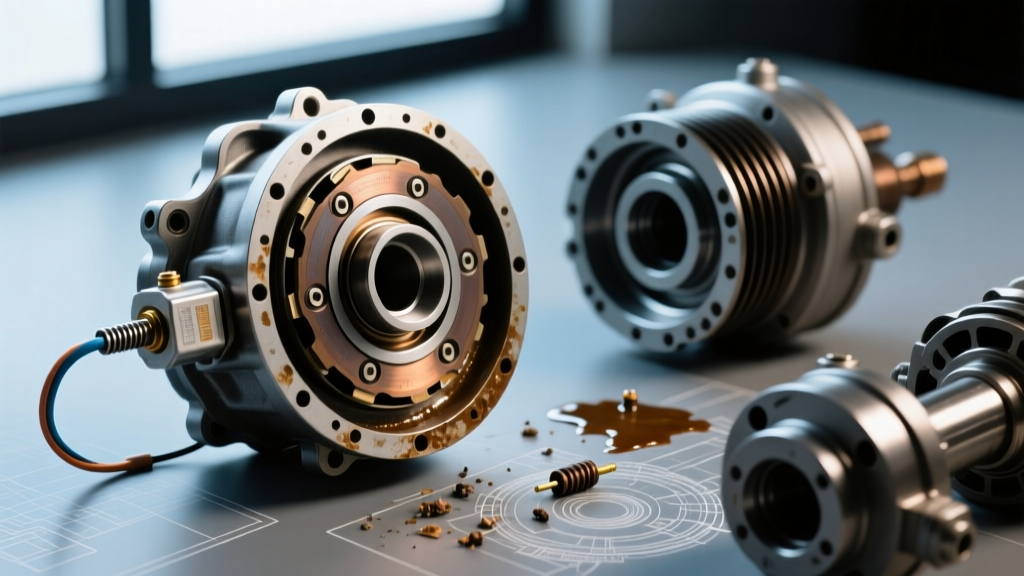
Drop the transmission pan and inspect the fluid. TCC friction material looks distinct from standard clutch pack wear. While standard clutches leave a dark, burnt-smelling residue, TCC material (especially in the ZF 8HP and GM 6L80) often presents as a fine, grayish-black 'glitter' or paste. If you find thick, metallic flakes alongside the gray paste, the stator support bushing or the turbine shaft pilot bearing has likely failed, contaminating the TCC apply circuit.
Valve Body Wear and Hydraulic Leaks
According to Sonnax Technical Resources, one of the most prevalent causes of TCC shudder is wear in the TCC regulator valve bore within the valve body casting. The constant oscillation of the valve spool against the aluminum bore creates an oval-shaped leak path. When this happens, apply pressure bleeds off, and the TCC piston chatters against the cover.
For the GM 4L60E, inspecting the TCC apply valve and regulator valve is mandatory. If a vacuum test at the TCC regulator valve port yields less than 18 inches of Hg, the bore must be repaired. This requires a specialized reamer tool (such as Sonnax part number 104740-TL) and the installation of an oversized, anodized aluminum valve to restore hydraulic integrity without replacing the entire valve body.
Repair Realities: Costs, Part Numbers, and Torque Specs
Addressing lockup torque converter operation issues requires a multi-pronged approach. Below is a breakdown of real-world repair costs, specific part numbers, and critical installation specifications for 2026 workshop environments.
GM 6L80 / 6L90 Platform
- Diagnostic Focus: TEHCM (Transmission Electro-Hydraulic Control Module) solenoid body wear and TCC PWM solenoid failure.
- Parts: Sonnax Zip Kit
6L80-ZIP(Addresses TCC regulator valve wear and solenoid feed limits). Replacement GM TEHCM assembly (Requires programming via GDS2). - Cost Estimate: Valve body repair kit ($280 - $350); Remanufactured Torque Converter ($450 - $700); Labor for R&R and flush ($800 - $1,200).
- Fluid Spec: Must use DEXRON HP (Ultra Low Viscosity). Using standard DEXRON VI will cause immediate TCC slip codes due to the tighter clearances in the 6L80 clutch packs.
ZF 8HP45 / 8HP70 Platform (Chrysler, BMW, Audi)
- Diagnostic Focus: The ZF 8HP utilizes a specialized carbon-fiber TCC lining designed for continuous slip. Shudder here is often mistaken for a mechatronic unit failure, but fluid degradation is the primary suspect.
- Parts: ZF Original Equipment Fluid (Lifeguard 8) or Shell Helix Ultra AV-L. ZF 8HP Mechatronic sleeve adapter (Part # 2411 7 588 724) which is notorious for leaking and dropping TCC apply pressure.
- Cost Estimate: ZF Fluid Flush and Filter Kit ($250 - $400); Mechatronic Sleeve Replacement ($150 part, $600 labor); Full TC Replacement ($900 - $1,400).
Critical Installation Torque Specifications
When installing a new or remanufactured torque converter to resolve a lockup failure, adhering to exact torque specifications is vital to prevent flexplate warping, which will immediately induce a secondary shudder.
- GM 6.2L V8 (6L80E): Torque converter to flexplate bolts must be torqued to 37 lb-ft (50 Nm). Use new OEM bolts with pre-applied threadlocker.
- Flexplate to Crankshaft: Verify the crankshaft pilot hub is free of debris. Torque to 74 lb-ft (100 Nm) plus an additional 80-degree turn (Yield spec for most GM Gen V blocks).
- ZF 8HP Bellhousing to Engine Block: Torque sequence requires starting from the top center and spiraling outward, torqued to 33 lb-ft (45 Nm).
Final Verification: The Road Test Protocol
As noted by the Automatic Transmission Rebuilders Association (ATRA), a repair is not complete until a specific road test protocol is executed. After replacing the torque converter and addressing valve body wear, the technician must perform a 'TCC break-in' procedure. This involves driving the vehicle at 50 mph in 4th or 5th gear, commanding the TCC on and off in 5-second intervals for approximately 10 miles. This burnishes the new friction material into the converter cover, ensuring smooth micro-slip operation and preventing premature shudder recurrence. For deeper insights into hydraulic circuit mapping, Transmission Digest regularly publishes updated valve body schematics that are indispensable for advanced TCC troubleshooting.