The Fluid Coupling: How a Torque Converter Actually Works
If you have ever wondered how an automatic transmission allows your engine to keep running while the car is completely stopped, the answer lies inside the torque converter. Unlike a manual transmission, which relies on a mechanical friction clutch that must be disconnected to prevent stalling, an automatic uses a fluid coupling. Understanding this component is the first step in diagnosing drivability issues, including the highly common torque converter seal leak symptoms that plague aging vehicles.
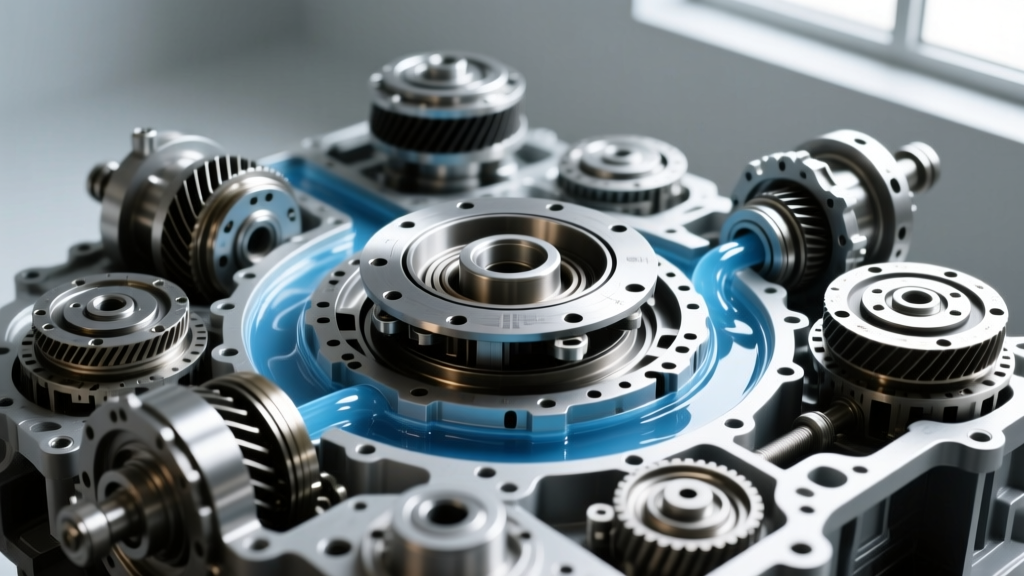
At its core, a torque converter is a donut-shaped housing filled with automatic transmission fluid (ATF). It bolts directly to the engine's flexplate, meaning it spins at engine RPM whenever the motor is running. Inside this sealed unit, hydraulic fluid transfers rotational energy from the engine to the transmission's input shaft, while simultaneously multiplying torque during initial acceleration.
The Two-Fan Analogy (and Why It Is Incomplete)
Many beginner guides explain the torque converter using the 'two-fan analogy': imagine two electric fans facing each other. If you turn one on (the engine), the air it blows will eventually spin the blades of the second fan (the transmission). While this illustrates fluid coupling, it misses the most critical feature of a modern torque converter: torque multiplication. To achieve this, engineers added a third internal component called the stator.
Internal Architecture: Impeller, Turbine, and Stator
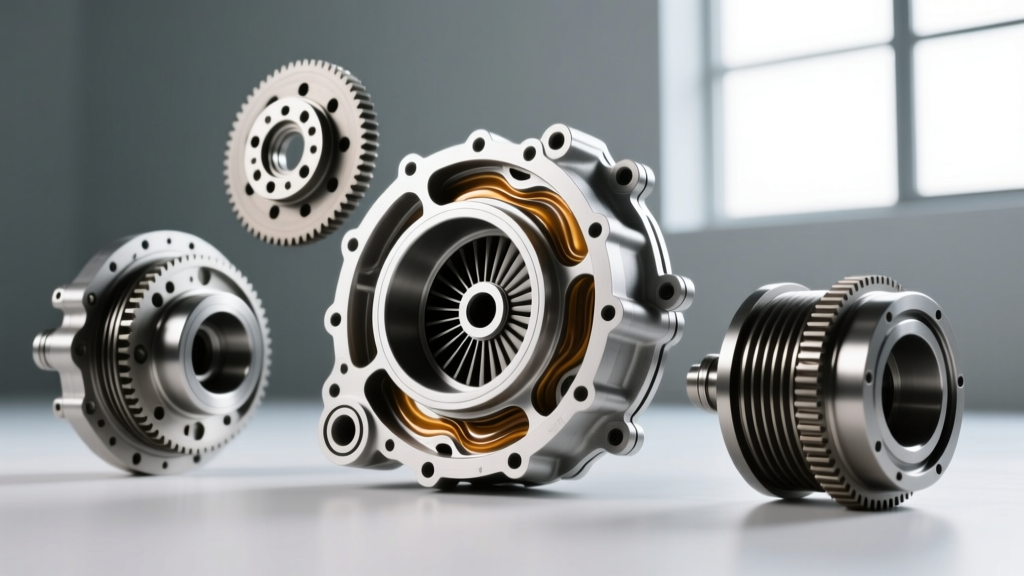
To truly grasp how power moves through your drivetrain, you need to know the three primary internal components:
- The Impeller (Pump): Welded directly to the converter's outer shell, the impeller spins at engine speed. Its curved fins draw ATF from the center and fling it outward using centrifugal force, creating a high-velocity fluid stream.
- The Turbine: Connected to the transmission input shaft, the turbine sits opposite the impeller. The high-velocity fluid from the impeller strikes the turbine's fins, forcing it to spin and driving the vehicle forward.
- The Stator: Positioned between the impeller and turbine on a one-way clutch, the stator catches the fluid returning from the turbine and redirects it back into the impeller. This redirection prevents the returning fluid from fighting the impeller's rotation, effectively multiplying engine torque by up to 2.5:1 during heavy acceleration or 'stall' conditions.
According to Sonnax Technical Resources, the stator's one-way clutch is a frequent wear item. If it fails to lock up, the converter loses torque multiplication, resulting in severe sluggishness off the line.
The Torque Converter Clutch (TCC) and Lockup
Fluid coupling is excellent for smooth stops and starts, but it inherently creates 'slip.' This slip generates massive amounts of heat and reduces fuel efficiency. To solve this, modern converters feature a Torque Converter Clutch (TCC).
When you reach cruising speeds (usually between 35 and 50 mph), the transmission's valve body routes pressurized ATF to apply the TCC. This friction-lined piston locks the turbine directly to the converter shell, creating a 1:1 mechanical connection between the engine and transmission. In advanced units like the ZF 8HP, the TCC uses sophisticated carbon-fiber friction materials and can remain locked up in multiple gears, virtually eliminating slip and mimicking the efficiency of a dual-clutch system.
The Vulnerable Front Seal: Where Fluid Escapes
The torque converter must interface with the transmission's front pump. The smooth, hardened steel 'hub' of the converter slides into the pump gear assembly. To keep the highly pressurized ATF inside the transmission, a front pump seal (often made of Viton or PTFE/Teflon) rides tightly against this spinning converter hub.
Over time, extreme heat cycles, microscopic misalignments, and abrasive debris in the fluid can wear a groove into the converter hub or harden the seal lip. When this happens, ATF bypasses the seal and leaks out of the bell housing. Recognizing early torque converter seal leak symptoms is vital; running a transmission low on fluid will destroy the clutch packs and the front pump in a matter of miles.
5 Critical Torque Converter Seal Leak Symptoms
Because the seal is buried between the engine and the transmission, you cannot see it without dropping the gearbox. However, the drivetrain will exhibit several distinct warning signs:
1. Red or Brown Fluid Puddles Near the Bell Housing
The most obvious symptom is finding ATF on the ground. Unlike engine oil (brown/black) or coolant (green/orange), ATF is typically bright red (or dark brown if severely degraded). If you trace the leak upward and find it originating from the weep hole at the bottom of the bell housing or the inspection cover, the front seal is the primary suspect.
2. Delayed Engagement and Slipping
As the seal leaks, the overall fluid volume in the transmission drops. Automatic transmissions rely on hydraulic pressure to apply clutch packs. Low fluid levels lead to low line pressure, causing a noticeable delay when shifting from Park to Drive or Reverse. You may also experience RPM 'flares' (engine revs climbing without a corresponding increase in vehicle speed) during gear changes.
3. TCC Shudder During Highway Cruising
If the leak has caused a drop in hydraulic pressure, the Torque Converter Clutch may not receive enough force to fully lock. This results in micro-slip, felt by the driver as a rhythmic shaking or 'shudder' through the chassis, typically occurring between 40 and 60 mph under light throttle. As noted by experts at Transmission Digest, TCC shudder is often misdiagnosed as an engine misfire or bad spark plugs, but it is fundamentally a hydraulic pressure issue.
4. Transmission Overheating
ATF does more than lubricate; it carries heat away from the clutch packs to the transmission cooler. A leaking seal reduces fluid volume, severely compromising the system's thermal capacity. If your dashboard displays a 'Transmission Over Temp' warning, or if a scan tool reads fluid temperatures exceeding 220°F (104°C), a fluid leak is a likely culprit.
5. Whining or Cavitation Noises
When fluid levels drop below the pickup tube in the transmission pan, the front pump begins to suck in air alongside the remaining fluid. This aeration causes pump cavitation, which sounds like a high-pitched mechanical whine that changes pitch with engine RPM. If you hear this noise, stop driving immediately to prevent catastrophic pump failure.
Repair Data: Seals, Specs, and Costs
Replacing a front seal is inexpensive in terms of parts, but labor-intensive because the transmission must be removed from the vehicle. Below is a comparison of specifications and estimated repair costs for three of the most common automatic transmissions on the road today.
| Transmission Model | OEM Seal Part Number | Bellhousing Bolt Torque | Total Fluid Capacity | Avg. Reseal Cost (Parts & Labor) |
|---|---|---|---|---|
| GM 4L60E | ACDelco 24225255 | 35 lb-ft (47 Nm) | 11.2 Quarts | $450 - $650 |
| GM 6L80 | ACDelco 24238499 | 37 lb-ft (50 Nm) | 10.5 Quarts | $600 - $850 |
| ZF 8HP45 (BMW/FCA) | BMW 24347588725 | 63 lb-ft (85 Nm)* | 9.5 Quarts | $800 - $1,200 |
*Note: Many modern ZF and aluminum-block transmissions use Torque-To-Yield (TTY) aluminum bellhousing bolts. These must be replaced, not reused, during reassembly.
Expert Fix: Addressing Hub Wear with Repair Sleeves
Here is a crucial piece of expert advice that many general mechanics miss: simply replacing the rubber seal often will not fix the leak. If the torque converter's steel hub has been scored or worn into a groove by years of friction, the new seal lip will ride in that same groove and leak within a few thousand miles.
Before installing the new seal, run your fingernail across the converter hub where the seal rides. If you feel a deep ridge or groove, you have two options:
- Replace the entire torque converter (Cost: $300 - $800+ for the part).
- Use a precision repair sleeve. Companies like Sonnax manufacture ultra-thin stainless steel sleeves (e.g., part number 92834-01K for many GM applications) that press over the worn hub. This provides a brand-new, perfectly smooth surface for the seal to ride on, saving you hundreds of dollars and ensuring a permanent fix.
Conclusion
Understanding how a torque converter transfers power via fluid dynamics and mechanical lockup demystifies the automatic transmission. More importantly, recognizing the early torque converter seal leak symptoms—from bell housing drips to highway TCC shudder—allows you to intervene before a simple $15 seal turns into a $3,500 transmission rebuild. Always verify your converter hub condition during a reseal job, adhere strictly to OEM torque specifications, and use the correct manufacturer-specified ATF to ensure your drivetrain operates flawlessly for years to come.