The Anatomy of Traction: Why Your Differential Choice Dictates Drivetrain Dynamics
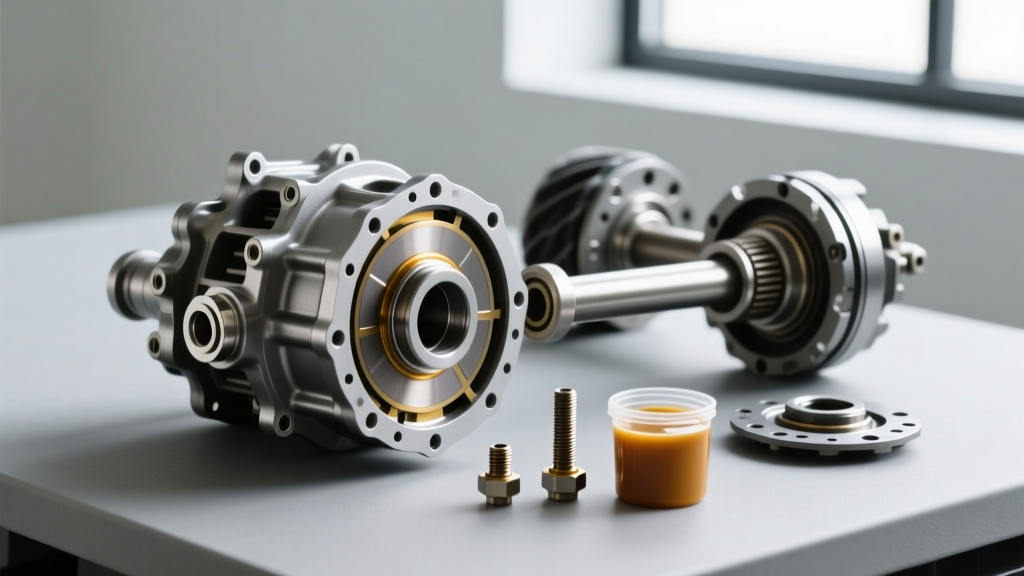
Horsephone is merely a number until it meets the pavement or the dirt. As we navigate the 2026 off-road, overlanding, and motorsport seasons, the bottleneck for nearly every high-output vehicle remains the rear axle assembly. Upgrading from an open or factory limited-slip differential (LSD) to a true locking differential is the single most effective modification you can make for traction. However, the mechanical violence inherent in locking differentials demands a complete reevaluation of your drivetrain maintenance strategy—specifically regarding the gear oil for rear differential assemblies equipped with aggressive locking hardware.
Selecting the right locker is only half the battle. Matching that hardware with the correct fluid chemistry, understanding installation torque specifications, and adhering to strict break-in protocols will determine whether your axle survives its first high-load cycle or scatters hardened steel across the garage floor.
Automatic vs. Selectable: Decoding Locking Differential Types
Before draining your housing, you must understand the mechanical distinctions between the primary locking differential architectures available on the market today.
Automatic Mechanical Lockers (Detroit, Spartan, Aussie)
Automatic lockers, such as the legendary Eaton Detroit Locker (e.g., Part #225SL-1 for the Ford 8.8-inch axle), utilize a ratcheting mechanism with internal dog clutches and spring-loaded thrust washers. They lock both axles together under torque but allow one wheel to ratchet and spin faster during cornering. While they offer bulletproof straight-line traction and are entirely maintenance-free from the driver's seat, they are notorious for on-road 'bucking' and tire chirping during low-speed turns.
Selectable Pneumatic and Electronic Lockers
For dual-purpose rigs that see highway miles and extreme trails, selectable lockers are the gold standard. The ARB Air Locker (e.g., RD147 for the Dana 44) uses an onboard air compressor to actuate a pneumatic seal inside the carrier, engaging a locking collar. Alternatively, the Eaton E-Locker (Part #19982-010) uses an electromagnetic coil to push a ramped side gear into the carrier, achieving 100% lockup instantly. These units behave exactly like an open differential when disengaged, preserving factory street manners.
Mini-Spools and Full Spools
Reserved strictly for dedicated drag racing, drift, or extreme rock-crawling rigs, spools permanently lock both axles together. A mini-spool replaces only the internal spider gears, while a full spool replaces the entire carrier. Full spools eliminate the weak point of the cross-pin shaft entirely, making them mandatory for any rear axle pushing north of 800 wheel-horsepower on sticky tires.
Application Matrix: Matching the Locker to the Mission
Choosing the wrong locker for your use case leads to premature driveline fatigue and compromised safety. Reference the matrix below to align your hardware with your primary driving environment.
| Locker Architecture | Primary Mechanism | Best Application | Avg. Hardware Cost | Street Drivability |
|---|---|---|---|---|
| Automatic (Detroit) | Ratcheting Dog Clutches | Dirt Racing, Rock Crawling, Heavy Towing | $600 - $800 | Poor (Bucking in turns) |
| Automatic (Lunchbox) | Internal Pin/Cam Replacement | Budget Off-Road, Mild Trail Use | $250 - $400 | Fair (Noticeable clicking) |
| Selectable (ARB Air) | Pneumatic Collar Actuation | Overlanding, Daily-Driven Trail Rigs | $1,000 - $1,300 | Excellent (When unlocked) |
| Selectable (E-Locker) | Electromagnetic Ramp Gear | Trail Running, Snow/Ice, Light Axle Hauling | $850 - $1,100 | Excellent (When unlocked) |
| Full Spool | Solid Billet Carrier | Dedicated Drag/Drift, Ultra4 Racing | $400 - $700 | Undrivable on dry pavement |
The Missing Link: Specifying Gear Oil for Rear Differential Lockers
The most common point of failure in a freshly built rear axle is not the ring and pinion—it is fluid incompatibility. When upgrading your hardware, the gear oil for rear differential assemblies must be matched precisely to the internal friction requirements of the locker. According to Eaton's differential engineering guidelines, utilizing the wrong additive package can destroy a mechanical locker in under 500 miles.
Friction Modifiers: The Enemy of Mechanical Lockers
Factory clutch-type LSDs (like the Ford 8.8 Traction-Lok or GM G80) require synthetic gear oils heavily dosed with friction modifiers (such as Ford EST-M2C154-A) to prevent the clutch packs from chattering. Never use friction modifiers in an automatic mechanical locker or a spool. Because mechanical lockers rely on the sharp, aggressive engagement of steel dog clutches against thrust washers, friction modifiers cause these surfaces to slip rather than lock. This slip generates massive kinetic heat, glazes the engagement surfaces, and ultimately shears the cross-shafts under load.
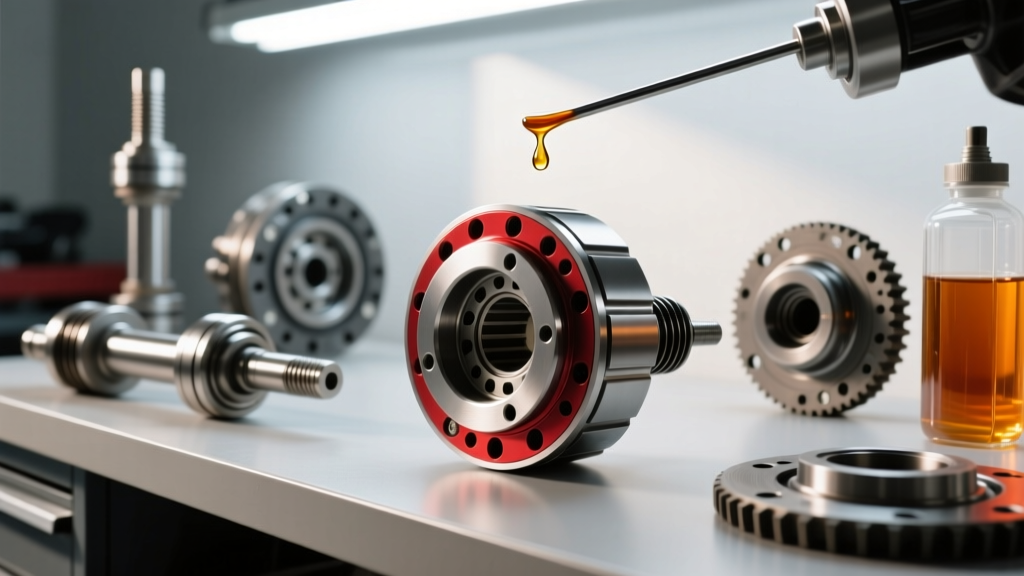
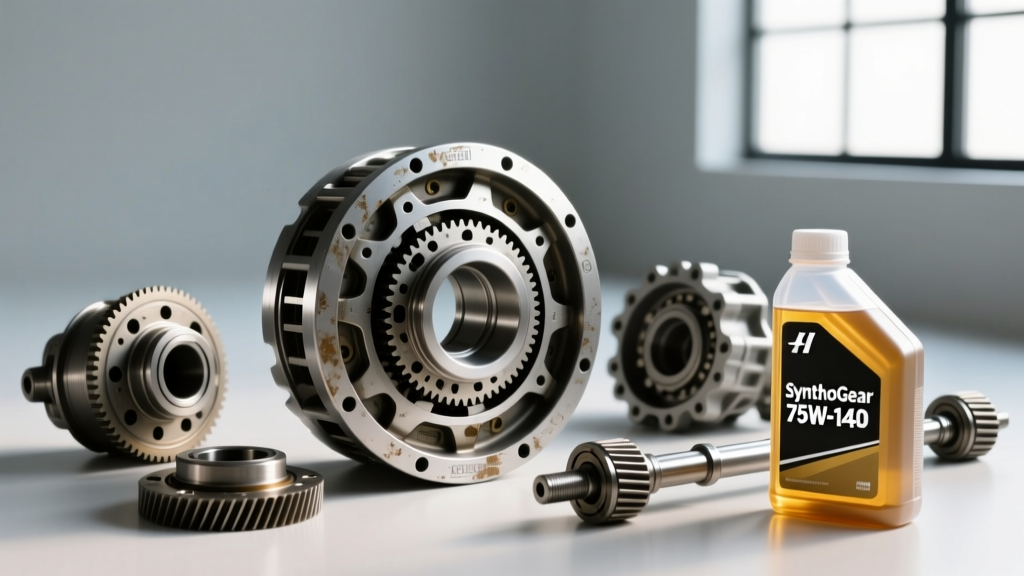
For Detroit Lockers, Spartan Lockers, and Spools, you must use a 'Non-Slip' or straight GL-5 synthetic. Red Line Oil's 75W90 NS (Non-Slip) is specifically formulated without friction modifiers, making it the definitive choice for automatic lockers. AMSOIL Severe Gear 75W-90 is another exceptional GL-5 option that provides the necessary extreme-pressure (EP) protection without the slip agents found in LSD-specific fluids.
Viscosity and Thermal Breakdown Under Load
When running 35-inch or larger tires with deep numerical gears (e.g., 4.88 or 5.13 ring and pinion sets), pinion bearing temperatures can easily exceed 230°F (110°C) on the highway. Standard 80W-90 mineral oils will suffer thermal shear, dropping in viscosity and failing to protect the hypoid gear teeth. A high-quality 75W-90 or 75W-140 full synthetic maintains its shear stability, ensuring the hydrodynamic wedge between the ring and pinion gears remains intact even during sustained high-speed desert runs or slow-speed rock crawling.
Installation Realities: Torque Specs and Setup Nuances
A locking differential transfers 100% of the axle's torque load to both wheels simultaneously, effectively doubling the stress on the ring gear bolts and carrier bearings compared to an open differential. Precision assembly is non-negotiable.
Ring Gear Fasteners and Thread Locking
Never reuse stretched ring gear bolts. When installing a new locker and ring gear, apply a high-strength threadlocker like Loctite 262 (Red) to the threads.
- Ford 8.8-inch: Torque ring gear bolts to 85-110 lb-ft in a star pattern.
- Dana 44 / Dana 60: Torque ring gear bolts to 110-130 lb-ft. Ensure the ring gear mating surface on the carrier is completely free of oil and debris to prevent runout.
- GM 12-Bolt: Torque to 70-90 lb-ft with red Loctite.
Carrier Bearing Preload and Shimming
Locking differentials, particularly automatic ratcheting types, generate immense lateral thrust during cornering when the internal dog clutches ratchet and disengage. If your carrier bearing preload is too loose, the entire carrier will deflect under load, altering the ring and pinion contact pattern and leading to catastrophic tooth shearing. Always use a case spreader to set carrier bearing preload to the manufacturer's specification (typically 0.008 to 0.012 inches of shim crush on Dana axles). Hammering shims in with a brass drift is a shortcut that guarantees premature bearing failure.
Break-In Procedures and Thermal Cycling
The first 500 miles dictate the lifespan of your new gear set and locker. Hypoid gears mate through microscopic wear. During the initial break-in phase, the friction generates immense heat, which can easily exceed 250°F and cook standard gear oils into a burnt varnish.
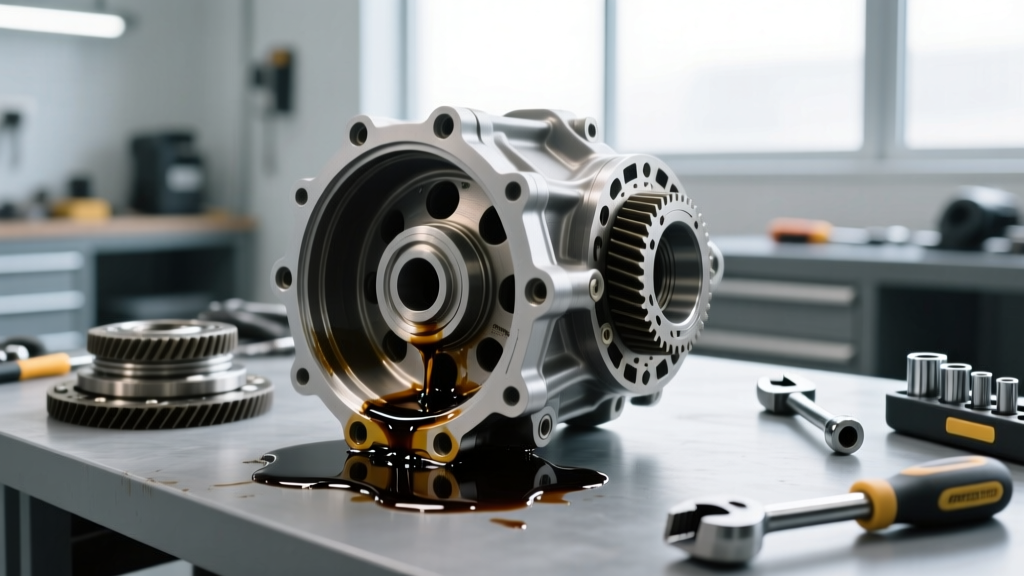
Expert Break-In Protocol: Drive conservatively for the first 50 miles, then allow the axle to cool completely to ambient temperature. Repeat this heat/cool cycle 4 to 5 times. After 500 miles, drain the differential immediately. You will likely find a metallic paste on the drain plug magnet—this is normal molybdenum and steel wear from the gear mating process. Refill with fresh, high-synthetic gear oil for rear differential longevity.
By respecting the mechanical requirements of your chosen locker and pairing it with the correct fluid chemistry, your rear axle will deliver uncompromising traction and reliability, whether you are launching on a prepped surface or winching up a 40-degree incline. For further technical documentation on pneumatic actuation systems, refer to the ARB Air Locker installation resources to ensure your onboard air plumbing meets the CFM requirements for rapid engagement.