The Traction Mandate: Why Open Differentials Fail Off-Road
When building a dedicated off-road rig, heavy-duty tow rig, or high-horsepower street machine, the factory open differential is almost always the weakest link in the drivetrain. Open differentials route torque to the path of least resistance, meaning if one wheel loses traction, your vehicle stops moving. Upgrading to a locking differential is the single most transformative modification you can make to your axle assembly. However, installing a high-performance locker is only half the battle; proper fluid management and a meticulous differential oil check routine are critical to ensuring your new gears and locking mechanisms survive extreme loads.
In this performance and upgrade guide, we break down the engineering differences between selectable and automatic lockers, provide application-specific part numbers for popular axles, and detail the exact procedures for post-installation break-in and fluid verification.
Selectable vs. Automatic Lockers: A Performance Breakdown
Choosing the right locker depends entirely on your vehicle's dual-purpose requirements. A rig that sees daily highway driving requires vastly different drivetrain manners than a dedicated rock crawler or drag car. According to engineering data from Eaton Vehicle Group, understanding the torque bias and engagement mechanisms is vital for preventing axle shaft bind and driveline shock.
| Locker Type | Examples | Street Manners | Off-Road Traction | Avg. Cost (Parts) |
|---|---|---|---|---|
| Selectable (Air) | ARB Air Locker | Perfect (Open when disengaged) | 100% Lock | $950 - $1,150 |
| Selectable (Electric) | Eaton E-Locker | Perfect (Open when disengaged) | 100% Lock | $600 - $850 |
| Automatic (Mechanical) | Detroit Locker | Poor (Clicking, binding on turns) | 100% Lock (Unlocks on overrun) | $700 - $900 |
| Full Spool | Strange, Yukon | Undrivable on pavement | 100% Lock (Always) | $150 - $300 |
Selectable Lockers: The Daily-Driven Compromise
Selectable lockers, such as the ARB Air Locker or the Eaton E-Locker, operate as standard open differentials when disengaged. This provides smooth, quiet highway driving and prevents premature tire wear. When you encounter low-traction terrain, you flip a switch to engage a pneumatic or electromagnetic mechanism that physically locks the side gears to the carrier, forcing both wheels to spin at the exact same RPM. For 90% of overlanders and weekend warriors, selectable lockers are the ultimate upgrade.
Automatic Lockers and Spools: Pure Performance
Automatic lockers like the Detroit Locker use a ratcheting mechanism that locks under load but allows the outside wheel to overrun (spin faster) during cornering. While brilliant for hardcore rock crawling and drag racing, they produce noticeable driveline clunking and can cause the vehicle to push or snap-oversteer on wet pavement. Full spools permanently lock both axles together and should only be used in dedicated competition vehicles or mud boggers.
Application-Specific Selection: Dana 60, GM 14-Bolt, and Ford 8.8
Let's look at real-world upgrade scenarios for the most common heavy-duty and light-duty axles on the market today.
The Dana 60: ARB Air Locker (RD167)
The Dana 60 is the gold standard for off-road front and rear axles. For a 35-spline Dana 60, the ARB Air Locker (Part# RD167) is the premier choice. Priced around $1,050, it requires an onboard air compressor and air lines routed through the axle housing. Pro-Tip: When drilling the Dana 60 housing for the air fitting, use a magnetic drill bit catcher to ensure no metal shavings enter the ring and pinion gear set.
The Ford 8.8: Eaton E-Locker (19900-010)
Found in everything from the Ford Ranger to the F-150 and Mustang, the Ford 8.8 is a robust, cost-effective axle. The Eaton E-Locker (Part# 19900-010) for 31-spline axles retails for roughly $650. It utilizes an electromagnetic coil that is much easier to wire than air lines, making it a favorite for budget-conscious builders who still want on-demand locking performance.
The GM 14-Bolt 10.5": Detroit Locker (225SL18A)
For heavy towing, plowing, or extreme mud bogging with a GM 14-bolt, the Detroit Locker (Part# 225SL18A) is legendary. Priced near $750, it replaces the entire carrier. Because the 14-bolt is often used in heavy agricultural or off-road work where pavement manners are secondary, the automatic engagement of the Detroit Locker provides foolproof traction without requiring the driver to remember to flip a switch.
The Break-In Phase and Your First Differential Oil Check
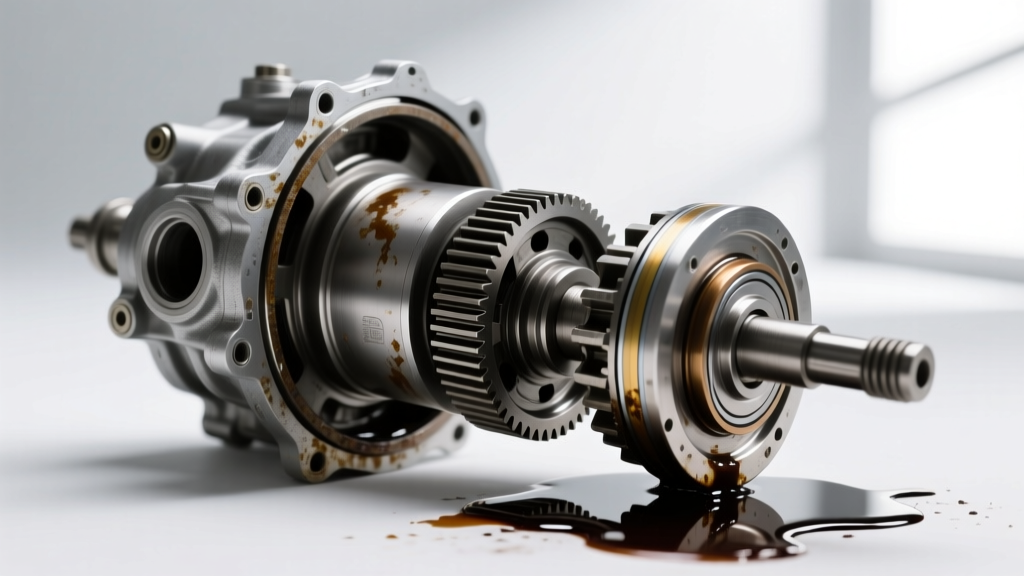
Whether you are installing a locker into an existing carrier or swapping in a complete ring and pinion set, the first 500 miles are critical. The mating surfaces of the ring and pinion gears generate immense heat as they wear into their specific contact pattern. During this break-in period, the gear oil degrades rapidly, accumulating microscopic metallic particulates that can destroy the precision bearings inside your new locker.
Performing a meticulous differential oil check and subsequent drain-and-fill at the 500-mile mark is non-negotiable. Furthermore, the thermal expansion and contraction during break-in can cause fluid levels to fluctuate or push past the axle seals if the differential was overfilled at the shop. A post-break-in inspection ensures your fluid is at the exact operational level and free of catastrophic metal chunking.
Step-by-Step Differential Oil Check Procedure for Upgraded Axles
Do not rely on the quick glance a dealership technician might give a stock SUV. Upgraded axles with lockers demand a precision approach to fluid verification. Here is the professional protocol for a comprehensive differential oil check:
- Vehicle Positioning: Park the vehicle on a perfectly level surface. If the vehicle is on a lift, the axle housing must be lowered to resting suspension height, or the fluid will read incorrectly due to the pinion angle.
- Temperature Normalization: The differential oil check should be performed when the differential is at ambient room temperature (approx. 65°F - 75°F). Hot fluid expands and will yield a false-high reading.
- Clean the Perimeter: Use brake cleaner and a shop towel to thoroughly degrease the area around the fill plug. Introducing dirt into the axle housing will score the carrier bearings.
- Remove the Fill Plug FIRST: This is the golden rule of axle service. Always remove the fill plug before the drain plug or before dropping the cover. If the drain plug is stripped or the cover bolts snap, you still have a way to refill the housing. On a Dana 60, the fill plug typically requires a 3/8" or 1/2" square drive and should be torqued to 25-30 lb-ft upon reinstallation.
- Verify the Level: Insert a clean finger or a zip-tie into the fill hole. The correct fluid level is exactly at the bottom edge of the fill hole opening. If fluid drips out immediately, it is overfilled. If it is more than 1/4-inch below the hole, you must add fluid.
- Inspect for Locker Debris: Rub the fluid between your fingers. A slight metallic sheen is normal for the first 5,000 miles. However, if you feel distinct shards, jagged chips, or brass-colored flakes (indicating thrust washer failure), the locker must be torn down and inspected immediately.
Expert Warning: Never use a suction pump to extract gear oil through the fill hole as your primary method of fluid service. While it works for a quick differential oil check and top-off, it leaves heavy metallic sludge and degraded friction modifiers pooled at the bottom of the housing. Always drop the cover or pull the drain plug for a full service.
Viscosity, Additives, and Fluid Selection for Lockers
The type of locker you install directly dictates the chemical makeup of the gear oil you must use. A common mistake that ruins newly installed differentials is the improper use of Limited Slip Friction Modifiers.
The Friction Modifier Trap
Clutch-type limited-slip differentials (LSDs), like the Ford Trac-Lok or Eaton Posi, require a friction modifier additive to prevent the clutch packs from chattering during tight turns. However, full locking differentials (ARB, Eaton E-Locker, Detroit Locker) and full spools do not have clutch packs. Adding a friction modifier to a full locker provides zero benefit and actually reduces the shear stability and protective film strength of the gear oil. When servicing a locker, use a straight synthetic gear oil without LSD additives.
Choosing the Right Viscosity
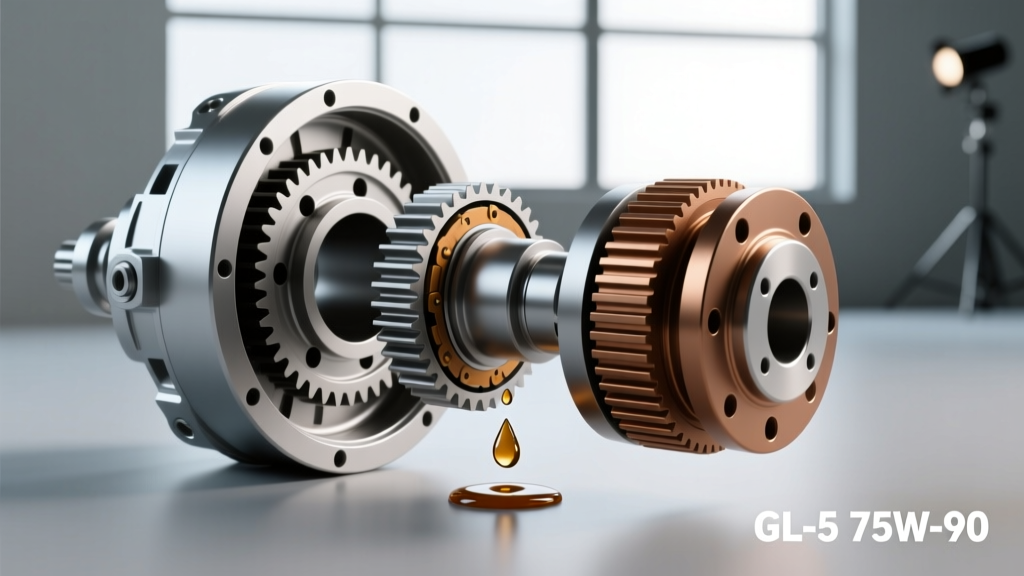
For most street-driven and light off-road applications, a high-quality 75W-90 Synthetic (such as Amsoil Severe Gear or Red Line 75W90) provides the best balance of cold-weather flow and high-temperature protection. However, if your vehicle is equipped with 37-inch or larger tires, sees heavy towing duties, or operates in extreme desert heat, stepping up to a 75W-140 Synthetic is highly recommended. The thicker 140-weight fluid maintains a stronger hydrodynamic film between the ring and pinion teeth under the immense shock loads generated by large, heavy tires landing from jumps or climbing ledges.
Final Torque Specs and Reassembly
Once your differential oil check is complete and the fluid is topped off, proper reassembly torque is vital to prevent leaks and housing distortion. For a Ford 8.8 with a 10-bolt cover, tighten the cover bolts in a crisscross pattern to 28-38 lb-ft. For a Dana 60 or GM 14-bolt, refer to the specific Spicer Parts or ARB 4x4 Accessories service manuals, as over-torquing the cover bolts can warp the bearing caps and cause premature carrier bearing failure.
Upgrading to a locking differential transforms your vehicle's capability, but it is the rigorous attention to maintenance—specifically the break-in drain and the routine differential oil check—that ensures your axle assembly performs flawlessly for hundreds of thousands of miles.