Why Drivetrain Maintenance Matters on the 4Runner
The Toyota 4Runner is a cornerstone of the off-road and overlanding community, celebrated for its rugged body-on-frame architecture and bulletproof drivetrain. Whether you are driving a 5th-generation model (2010-2024) or the newer 6th-generation i-FORCE MAX (2025-2026), the underlying solid rear axle and independent front differential rely on a thin film of extreme-pressure gear oil to survive immense mechanical stress. Neglecting a Toyota 4Runner differential fluid change leads to accelerated ring and pinion wear, bearing failure, and catastrophic drivetrain bind under load.
While Toyota's official maintenance schedule often labels the differential gear oil as 'inspect' or 'replace only under severe driving conditions,' the reality of modern off-roading, towing, and high-temperature highway driving tells a different story. In 2026, with the increased thermal loads generated by hybrid-assisted drivetrains and heavier overlanding builds, proactive fluid service is non-negotiable. This comprehensive guide will walk you through the exact procedure, OEM specifications, and real-world intervals required to keep your axles whispering quietly for 300,000 miles.
Factory Intervals vs. Real-World 2026 Recommendations
The Toyota Owners Portal traditionally recommends inspecting the differential gear oil every 15,000 miles and replacing it only if the vehicle is subjected to heavy towing, repeated water submersion, or extensive off-road use. However, independent drivetrain specialists and fleet mechanics universally recommend a much stricter interval to protect your investment.
| Drivetrain Component | Fluid Capacity | OEM Fluid Specification | Aftermarket Alternative (2026) | Recommended Interval |
|---|---|---|---|---|
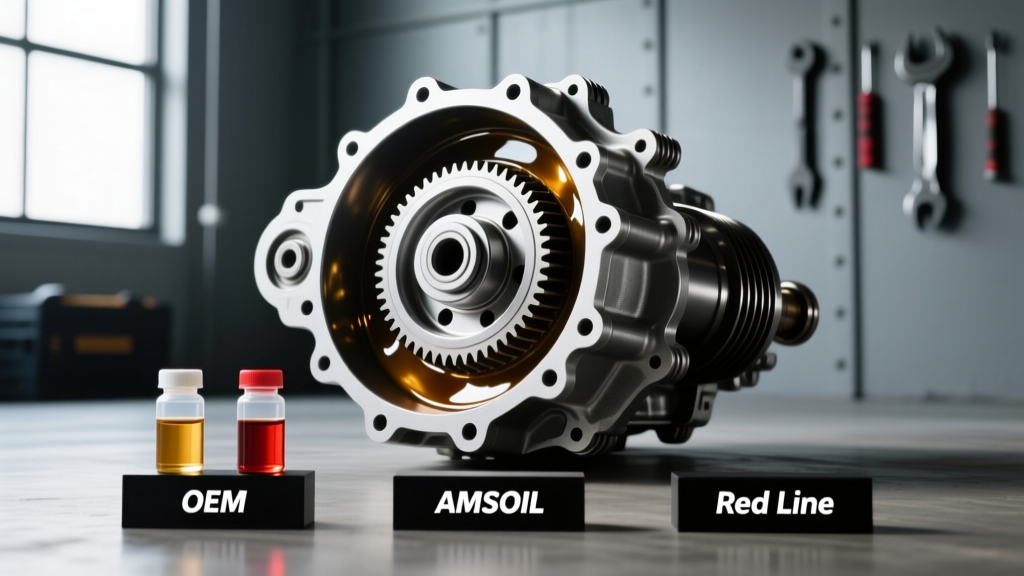
| Front Differential | 1.6 Liters (1.7 qts) | Toyota Genuine 75W-85 GL-5 | AMSOIL Severe Gear 75W-90 | 30,000 Miles / 3 Years |
| Rear Differential | 3.0 Liters (3.2 qts) | Toyota Genuine 75W-85 GL-5 | Red Line 75W-90 GL-5 | 30,000 Miles / 3 Years |
| Transfer Case | 1.4 Liters (1.5 qts) | Toyota Genuine 75W-85 GL-5 | Motul Gear 300 75W-90 | 30,000 Miles / 3 Years |
Note: If you frequently submerge your axles in water during trail riding or river crossings, the differential breathers can draw in moisture as the hot axle housings rapidly cool. In these scenarios, a fluid change should be performed immediately after the trip to prevent emulsification and gear corrosion.
The Shopping List: Fluids, Tools, and OEM Part Numbers
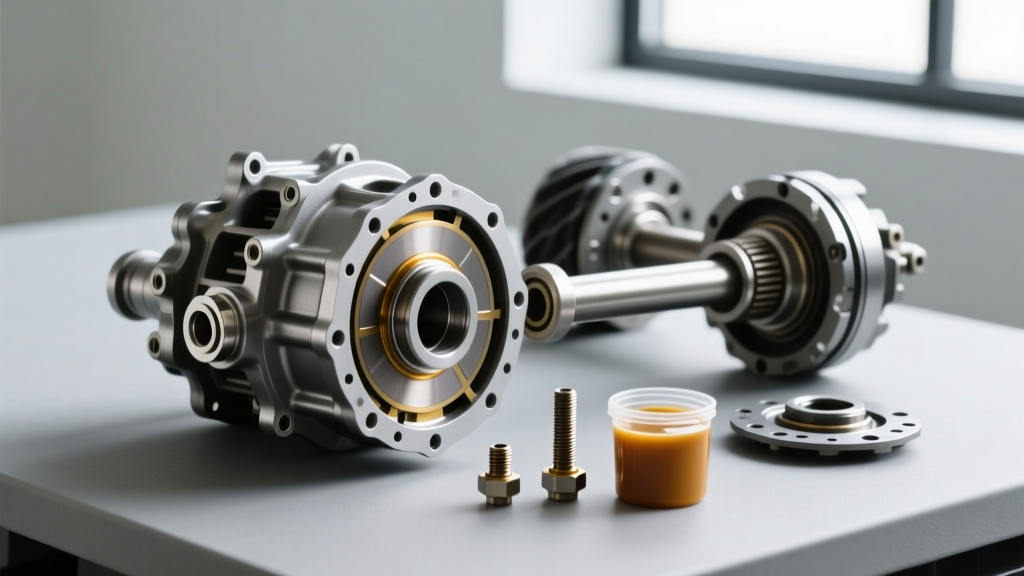
Before you slide under the truck, gather the necessary supplies. Using the correct crush washers is critical; reusing old aluminum or copper washers often leads to persistent weeping and fluid loss on the trail.
Required Tools
- 24mm socket and 1/2-inch drive breaker bar (for drain/fill plugs)
- 1/2-inch drive torque wrench (calibrated for 20-40 ft-lbs)
- Manual fluid transfer pump (essential for the front diff and transfer case)
- Drain pan (minimum 5-gallon capacity to catch all three components)
- Nitrile gloves and brake cleaner (for cleaning magnetic plugs)
- 3/8-inch drive ratchet and 10mm socket (for skid plate removal, if equipped)
Consumables & OEM Part Numbers
- Gear Oil: 6 to 7 quarts of 75W-90 GL-5 Synthetic Gear Lube. We highly recommend checking the AMSOIL Synthetic Gear Lube specifications for superior shear stability under heavy towing loads.
- Fill Plug Crush Washers (x3): Toyota Part# 90430-24003 (Aluminum)
- Drain Plug Crush Washers (x3): Toyota Part# 12157-11010 (Copper/Aluminum composite)
Phase 1: Front Independent Differential Service
The front differential on the 4Runner is an independent, offset unit that runs significantly hotter than the rear axle due to its proximity to the exhaust and engine bay. Furthermore, the clearance between the fill plug and the suspension components is notoriously tight.
Step 1: Remove the Fill Plug FIRST
The Golden Rule of Drivetrain Service: Always remove the fill plug before the drain plug. If you drain the fluid and subsequently find that your fill plug is seized or stripped, your vehicle is immobilized. Locate the fill plug on the passenger side of the front differential housing, near the axle shaft. Use your 24mm socket to break it loose.
Step 2: Drain and Inspect
Position your drain pan and remove the lower drain plug. Allow the 1.6 liters of fluid to drain completely. Once empty, wipe the drain plug with a shop towel. The drain plug is magnetic; inspect it for debris. A fine, silvery metallic paste is normal wear. If you find chunky metallic shards or needle-bearing fragments, your differential requires an immediate teardown and rebuild.
Step 3: Reinstall and Torque
Clean the drain plug threads with brake cleaner. Install a new Toyota Part# 12157-11010 crush washer. Thread the plug back in by hand to avoid cross-threading, then torque it to 29 ft-lbs (39 Nm).
Step 4: Pump and Fill
Attach your manual transfer pump to your bottle of 75W-90 GL-5. Pump fluid into the fill hole until the gear oil begins to weep out of the threads. This indicates the differential is exactly at the 1.6-liter factory fill level. Wipe the area, install a new Part# 90430-24003 washer on the fill plug, and torque to 29 ft-lbs (39 Nm).
Phase 2: Solid Rear Axle & e-Locker Considerations
The rear axle is a traditional solid housing, holding a much larger 3.0-liter capacity. Many 4Runners are equipped with Toyota's electronic locking rear differential (e-Locker). A common misconception in the off-road community is that locking differentials require specialized limited-slip friction modifiers.
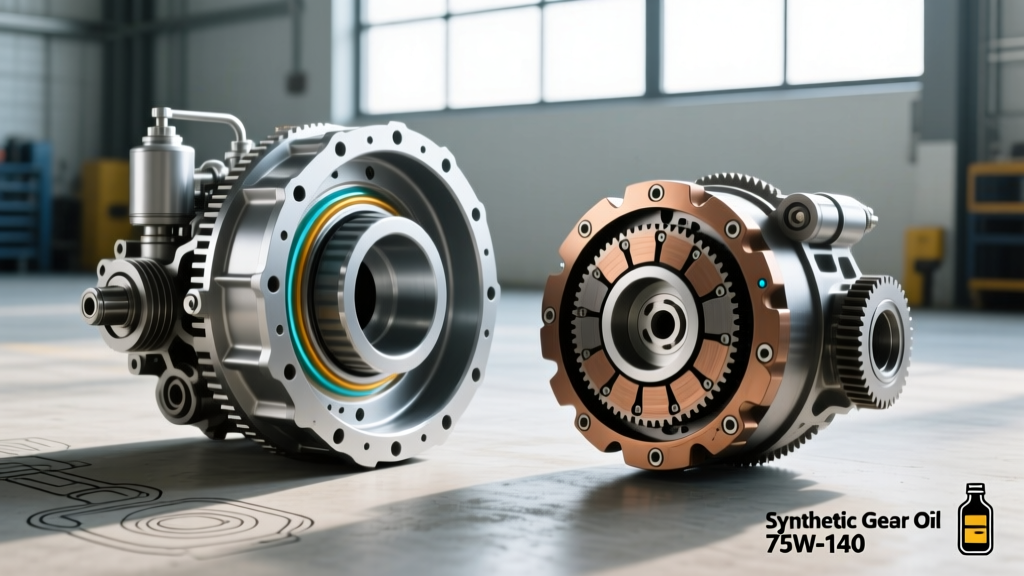
Expert Insight: Toyota's e-Locker is a mechanical, dog-clutch locking mechanism. Unlike clutch-pack limited-slip differentials (LSDs) found in other manufacturers' trucks, the e-Locker does not require a friction modifier additive. Using a standard GL-5 75W-90 synthetic gear oil is perfectly safe and optimal. Adding unnecessary friction modifiers can actually dilute the extreme-pressure (EP) sulfur-phosphorus additives required to protect your hypoid ring and pinion gears.
The procedure for the rear axle mirrors the front: remove the fill plug (located on the driver's side, slightly above the axle tube centerline), drain the fluid via the bottom plug, inspect the magnet, and refill until the fluid weeps from the fill hole. Torque both the drain and fill plugs to 29 ft-lbs (39 Nm) using new crush washers.
Bonus: Transfer Case Integration
While technically not a differential, the transfer case shares the same GL-5 fluid specification and should be serviced simultaneously to ensure uniform drivetrain protection. The transfer case holds 1.4 liters. The fill and drain plugs are located on the rear output housing. Use the same 24mm socket, the same 29 ft-lbs torque specification, and the same crush washer part numbers. For deep technical discussions on transfer case binding and chain stretch, the ih8mud.com Technical Archives remain an invaluable resource for Toyota truck owners.
Reading the Tea Leaves: Magnetic Plug Diagnostics
Your differential drain plugs are your earliest warning system for catastrophic failure. Learning to read the magnetic deposits can save you thousands of dollars.
- Fine Black Sludge: Normal. This is a mixture of microscopic gear wear, heat-cycled oil carbon, and dust. Wipe it off and proceed.
- Glitter/Silver Paste: Acceptable for the first 15,000-mile break-in period. If seen at 100,000 miles, it indicates accelerated ring and pinion wear. Consider shortening your service interval to 15,000 miles.
- Visible Metal Flakes or Chunks: Critical failure imminent. This usually points to a failing pinion bearing or a chipped gear tooth. Do not simply refill the fluid; schedule a differential inspection and gear backlash measurement immediately.
Dealership vs. DIY Cost Breakdown (2026 Pricing)
Understanding the financial impact of this service highlights why the DIY approach is so popular among 4Runner owners.
Dealership Service Costs
Most Toyota dealerships charge between $120 and $180 per axle for a differential drain and fill, utilizing bulk conventional 75W-85 mineral oil. Servicing the front, rear, and transfer case at a dealer will typically result in an invoice ranging from $360 to $540, plus taxes and shop supplies.
DIY Service Costs
By sourcing your own high-quality synthetic fluids and OEM crush washers, you can perform a superior service for a fraction of the cost.
Total DIY Cost: Approximately $85 to $110 for all three components, assuming you already own the required hand tools and a fluid transfer pump. Not only do you save hundreds of dollars, but you also gain the peace of mind that comes from personally inspecting the magnetic drain plugs and verifying the exact torque specifications on your drivetrain hardware.
Performing a meticulous Toyota 4Runner differential fluid change is one of the most rewarding and cost-effective maintenance tasks you can undertake. By adhering to strict 30,000-mile intervals, utilizing premium synthetic GL-5 lubricants, and replacing your crush washers every time, your 4Runner's axles will remain reliable whether you are commuting on the highway or crawling through remote wilderness trails.