Decoding the Locking Differential Meaning for Heavy-Duty Rigs
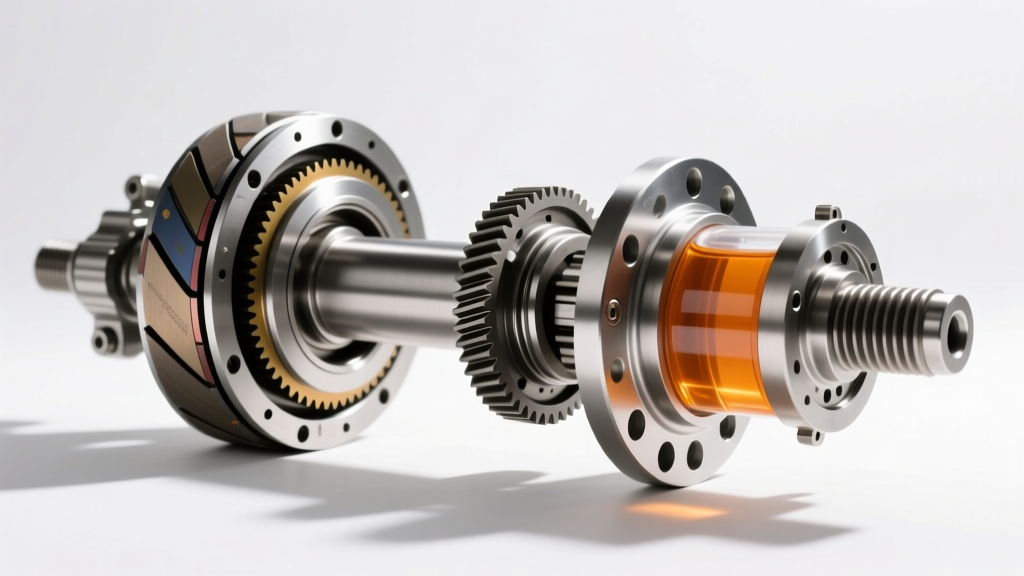
When building a reliable off-road rig or a heavy-duty towing truck, understanding the exact locking differential meaning is the foundational step toward drivetrain supremacy. In its simplest form, a locking differential forces both wheels on an axle to rotate at the exact same speed, regardless of traction availability. Unlike an open differential that routes power to the path of least resistance (the spinning wheel), or a limited-slip differential (LSD) that uses clutch packs or helical gears to bias torque, a true locker provides 100% mechanical lockup. For trucks and SUVs tackling rock crawling, deep mud, or steep off-camber trails, this mechanical solidarity is the difference between forward progress and a stranded vehicle.
However, installing an ARB Air Locker, an Eaton ELocker, or a Detroit Locker is only half the battle. The extreme forces generated by locked axles place immense stress on ring and pinion gears, carrier bearings, and axle shafts. As of 2026, modern truck platforms are producing unprecedented low-end torque from the factory, meaning your differential fluid and maintenance protocols must evolve to handle the severe shear forces and thermal loads inherent to locked, heavy-duty drivetrains.
The Severe-Duty Maintenance Reality for Trucks and SUVs
Factory maintenance schedules for trucks like the Ford F-250, Ram 2500, or Chevrolet Silverado HD often suggest differential fluid intervals of 150,000 miles under 'normal' driving conditions. For performance enthusiasts, off-roaders, and heavy towers, this interval is a recipe for catastrophic failure. When you engage a locking differential on the trail, the axle shafts and gears endure shock-loading that can instantly spike internal differential temperatures well past 250°F (121°C).
Thermal Degradation and Shear Stability
Gear oil relies on complex polymer chains to maintain its viscosity under pressure. When subjected to the extreme shearing forces of a locked axle pushing 4,000+ RPMs through 35-inch mud tires, inferior conventional oils literally tear apart at the molecular level. This loss of shear stability results in a drop in viscosity, leading to metal-on-metal contact between the ring and pinion gears. According to the Dana Spicer Resource Center, maintaining a robust hydrodynamic film is critical to preventing micro-pitting on gear teeth, a common failure point in neglected Dana 60 and AAM 11.5 axles.
Axle Identification and Factory Specifications
Before you can perform a proper service or upgrade, you must identify your axle housing and understand its specific requirements. Below is a reference chart for the most common heavy-duty truck and SUV axles encountered in performance builds.
| Axle Model | Typical Application | Fluid Capacity | Cover Torque Spec | Recommended Upgrade |
|---|---|---|---|---|
| Dana 60 (Front/Rear) | Ford Super Duty, Dodge Ram | 3.5 - 4.0 Pints | 30 - 35 lb-ft | ARB Air Locker / 35-Spline Shafts |
| AAM 11.5 | GM 2500HD/3500HD (2001+) | 4.0 - 4.5 Pints | 33 lb-ft | Eaton ELocker / Deep Sump Cover |
| Ford 10.5 | Ford F-250/F-350 (1985+) | 3.5 - 3.75 Pints | 30 - 36 lb-ft | Detroit Locker / Disc Brake Swap |
| Dana 80 | Ford/Chrysler 1-Ton Dually | 4.0 - 4.5 Pints | 30 - 35 lb-ft | Spool (Drag Racing) / Truetrac |
Performance Upgrades: Selecting the Right Locker
Upgrading from a factory open or clutch-type LSD to a dedicated locker transforms your truck's capability. However, the type of locker you choose dictates your maintenance and fluid requirements.
Drop-In Lockers vs. Selectable Lockers
Automatic Drop-In Lockers (e.g., Detroit Locker, LockRight): These replace the factory spider gears and utilize internal springs and dog clutches to lock under torque and ratchet during turns. They are incredibly robust and require zero external maintenance or wiring. However, they can be harsh on the street and transmit significant NVH (Noise, Vibration, and Harshness) through the chassis.
Selectable Lockers (e.g., ARB Air Locker, Eaton ELocker, Ox Locker): These function as standard open differentials on the street, providing smooth handling, but lock solidly via compressed air or electromagnetic actuators when engaged. Selectable lockers require meticulous attention to sealing surfaces and, in the case of ARB, the maintenance of O-rings and air lines. The Ring & Pinion Technical Guides emphasize that improper carrier bearing preload during selectable locker installation is the leading cause of premature gear whine and failure.
The Heavy-Duty Differential Service Protocol
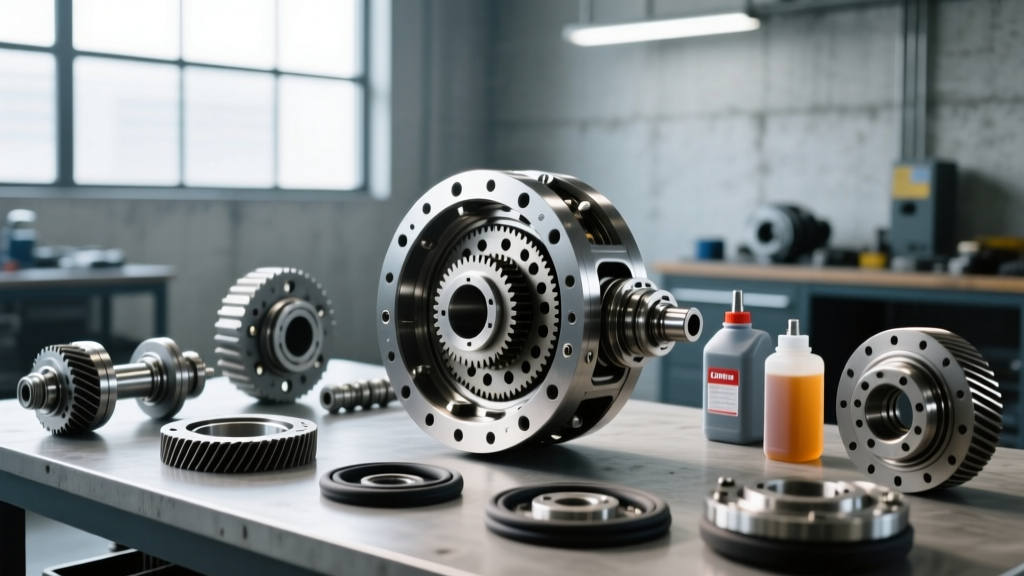
Whether you are servicing a stock AAM 10.5 or a built Dana 60 with a spool, the maintenance protocol must be exact. Sloppy shop practices lead to leaks, contaminated fluid, and destroyed bearings.
Step 1: Teardown, Cleaning, and Debris Analysis
Drain the fluid while the differential is warm to ensure suspended metallic particles flow out with the oil. Once the cover is removed, do not simply wipe it down with a rag. Lint from shop towels is a known contaminant that can clog narrow oiling galleries in helical-gear LSDs. Use a dedicated brake cleaner and a plastic scraper to remove old RTV. Inspect the fluid and the magnetic drain plug (if equipped). A fine, glittery paste on the magnet is normal wear; chunky metal shards or broken needle bearings indicate imminent carrier or pinion failure.
Step 2: Sealing with RTV vs. Gaskets
While cork and rubber gaskets are convenient, high-performance truck axles subjected to flexing and extreme heat demand high-grade RTV silicone. Permatex Ultra Black (Part #85103) is the industry standard for differential covers. Apply a continuous 1/8-inch bead around the cover, ensuring you circle all bolt holes. Critical Step: Allow the RTV to skin over for 10-15 minutes before mating the cover, and torque the bolts in a crisscross pattern to the manufacturer's specification (e.g., 33 lb-ft for the GM AAM 11.5). Do not overtighten, as this will squeeze the RTV out of the joint and cause immediate leaks.
Step 3: Refilling and the Friction Modifier Trap
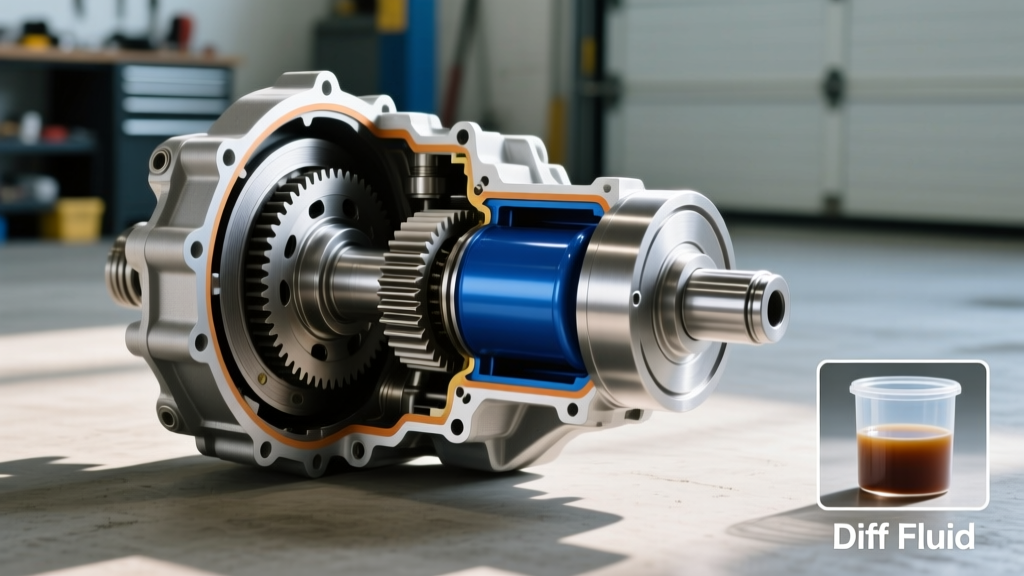
This is where many DIYers destroy their drivetrains. You must match the fluid and additives to the specific differential type:
- Open Differentials & True Lockers (Detroit, ARB, Spools): Use a high-quality 75W-90 or 75W-140 synthetic gear oil (like Amsoil Severe Gear or Mobil 1). DO NOT add friction modifiers. Lockers rely on raw friction to engage their dog clutches; modifiers will cause them to slip and fail.
- Clutch-Type LSDs (Ford Traction-Lok, Auburn): Require 75W-90/140 fluid PLUS a dedicated friction modifier (e.g., Ford XL-3 Additive, Part #C8AZ-19B546-A). Without it, the clutch packs will chatter violently during low-speed turns.
- Helical Gear LSDs (Eaton Truetrac, Torsen): Operate on gear torque biasing, not clutches. They require standard synthetic gear oil and absolutely NO friction modifiers.
Break-In Procedures for Regeared and Upgraded Axles
If your maintenance service included installing a new ring and pinion set or a heavy-duty locker carrier, the break-in procedure is non-negotiable. New gears generate immense friction as the teeth mate. Drive the vehicle for 15-20 miles at varying speeds under 50 MPH, then stop and let the axle cool completely. Repeat this heat-cycle process three times. Avoid towing heavy loads or hitting the trails for the first 500 miles. Failure to perform this heat-cycling will bake the gear oil, glaze the pinion bearing, and result in a permanent, howling gear whine.
Cost Breakdown and Interval Recommendations
For severe-duty trucks and SUVs, abandon the factory 150k-mile myth. Adopt a strict maintenance schedule based on your usage profile:
- Heavy Towing (Over 8,000 lbs): Service every 30,000 miles using 75W-140 Full Synthetic.
- Off-Road / Water Crossings: Inspect fluid immediately after any deep water crossing. Water ingress turns gear oil into a milky emulsion that offers zero protection. Service every 15,000 miles or annually.
- Cost Expectations: A DIY service using premium synthetics (e.g., Red Line or Amsoil) costs roughly $80-$120 per axle. Professional shop rates in 2026 average $250-$350 per axle, making DIY maintenance a significant financial advantage for truck owners.
Expert Drivetrain Tip: When upgrading to 35-inch or larger tires, the increased rotating mass and leverage placed on the ring and pinion will accelerate wear. If you are running a locked axle with large tires, stepping up from a 75W-90 to a 75W-140 synthetic gear oil provides a thicker protective film at the gear tooth contact patch, mitigating the extreme shear forces generated by the larger tire footprint.
Ultimately, grasping the locking differential meaning extends far beyond a simple definition; it encompasses the entire philosophy of heavy-duty drivetrain management. By pairing the mechanical advantage of a true locker with meticulous, spec-driven fluid maintenance, your truck or SUV will conquer any terrain while maintaining the reliability required to drive home under its own power.