AWD Leaks: Center Diff vs Rear Differential Stop Leak Diagnosis
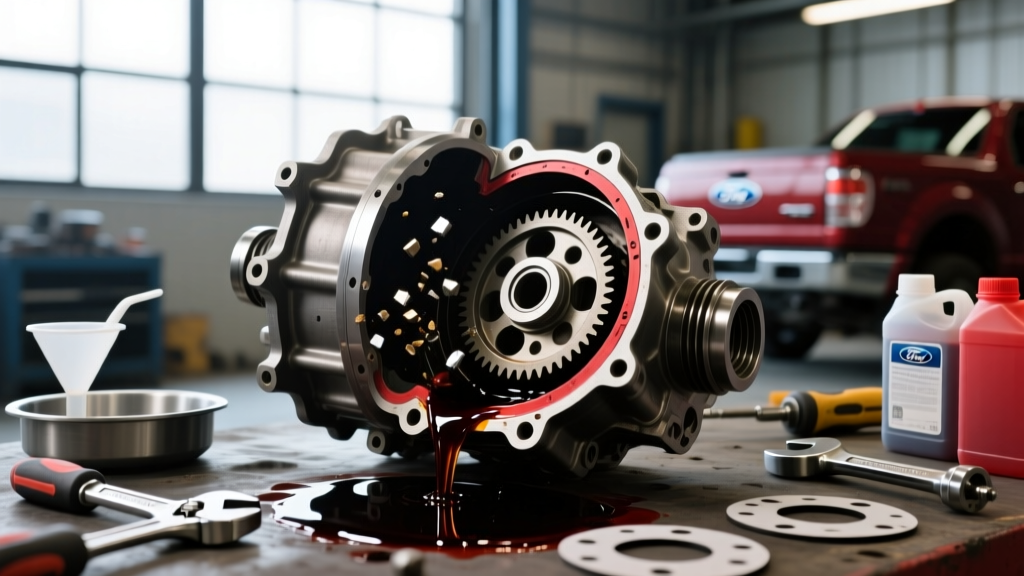
When a puddle of thick, sulfurous-smelling oil appears on your garage floor, the immediate instinct for many DIYers is to reach for a bottle of rear differential stop leak. However, in modern All-Wheel Drive (AWD) vehicles, identifying the exact origin of the leak is critical. A seep from the rear axle requires a vastly different approach than a leak from the center differential, Power Transfer Unit (PTU), or Haldex coupling. Misdiagnosing the source—or worse, applying chemical seal-swelling additives to a complex AWD center differential—can lead to catastrophic drivetrain failure.
As of 2026, AWD systems have become highly pressurized and thermally stressed. From Subaru's Symmetrical AWD to Ford's PTU-based systems and the latest BorgWarner Haldex Gen 6 couplings, the tolerances are measured in microns. This diagnostic guide will help you differentiate between rear axle leaks and center differential failures, explain why stop-leak additives are dangerous for AWD systems, and provide exact repair protocols.
The Architecture of AWD Fluid Leaks
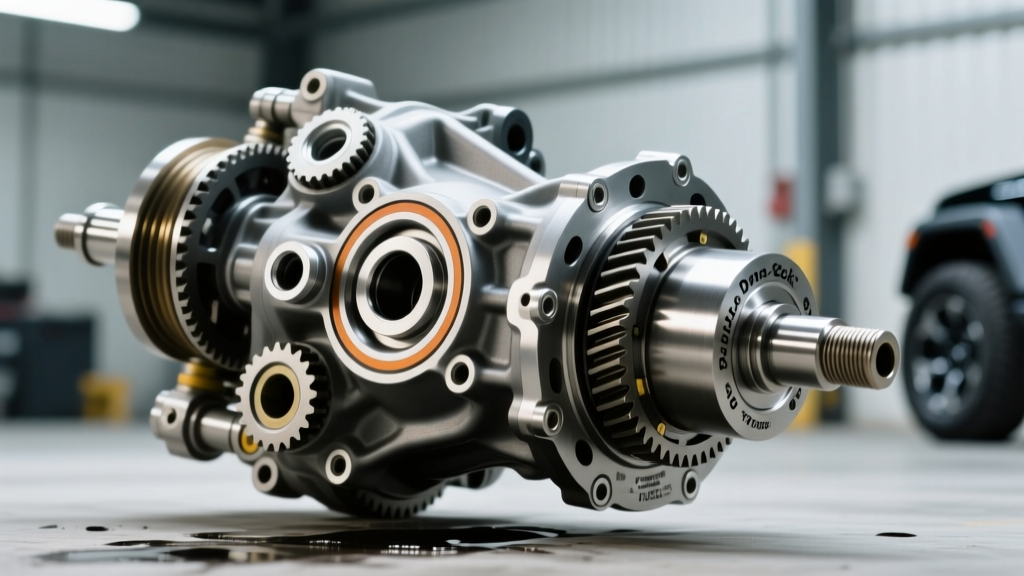
To troubleshoot effectively, you must understand how your AWD system distributes torque. The center differential (or equivalent coupling) sits between the transmission and the rear driveshaft. Its job is to manage speed differences between the front and rear axles. The rear differential, located on the rear axle housing, splits torque between the left and right rear wheels.
Center Differential & PTU Systems
In vehicles like the Subaru WRX or Audi Quattro (Torsen-based), the center differential is integrated into the transmission or bolted directly to the rear of it. In transverse-engine crossovers (like the Ford Explorer or Chevrolet Traverse), the center differential function is handled by a Power Transfer Unit (PTU) attached to the front transaxle. These units operate under extreme heat, often exceeding 220°F (104°C) during heavy towing or track use, which rapidly degrades seals and O-rings.
The Rear Differential
The rear differential is a self-contained hypoid gear set. Leaks here typically occur at the pinion seal (where the driveshaft connects), the axle shaft seals, or the differential cover gasket. Because the rear diff only contains hypoid gears and bearings (no wet clutches or viscous fluids), it is generally more forgiving of seal degradation, which is why rear differential stop leak products are marketed primarily for these components.
Symptom Diagnosis Matrix: Where is it Leaking?
Use the following diagnostic table to isolate the leak source based on physical symptoms, fluid characteristics, and vehicle architecture.
| Leak Location | Fluid Type & Smell | Common Failure Point | Estimated Repair Cost (2026) |
|---|---|---|---|
| Rear Pinion Seal | 75W-90 / 80W-90 GL-5 (Sulfur/Rotten Egg) | Worn pinion bearing preload or dried rubber seal lip | $180 - $350 |
| Rear Axle Shaft Seal | 75W-90 GL-5 (Sulfur) | Grooved axle shaft or clogged breather vent | $150 - $280 per side |
| Center Diff / PTU Output | 75W-140 or specific PTU fluid (Burnt/Metallic) | Output shaft seal, degraded PTFE O-ring | $400 - $950 |
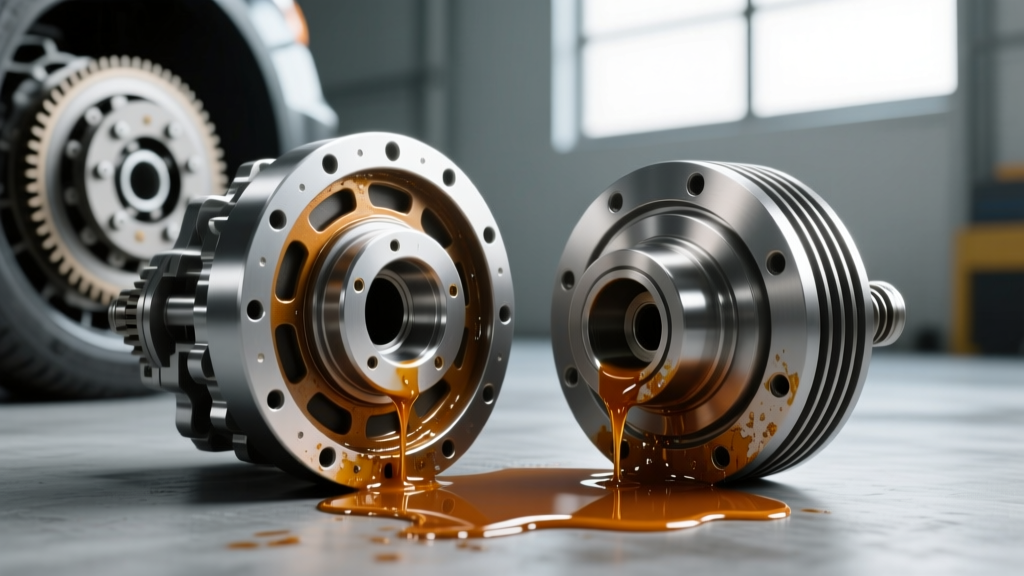
| Haldex Coupling (Rear) | Haldex Gen 5/6 Fluid (Mild, Hydraulic) | Filter housing O-ring, pump seal | $250 - $450 |
The Chemistry Problem: Why Stop-Leak Additives Ruin AWD Center Diffs
Products marketed as rear differential stop leak (such as Bar's Leaks Differential Repair or Lucas Heavy Duty Oil Stabilizer) rely on ester-based chemical swelling agents. These chemicals are designed to recondition and expand dried-out nitrile or polyacrylate rubber seals. In a standard open rear differential, this can temporarily halt a pinion seal weep.
However, applying these additives to an AWD center differential, PTU, or Haldex unit is a fatal mistake for three reasons:
- Wet Clutch Contamination: Many AWD center differentials (like Subaru's Multi-Mode DCCD or Ford's EcoBoost PTU) utilize wet clutch packs to vary torque split. Seal swellers alter the friction coefficient of the gear oil, causing clutch chatter, slip, and eventual burnout.
- Viscosity Shearing: Stop-leak additives are notoriously thick (often acting as 100W+ base oils). In a Haldex Gen 5 coupling, which relies on precise hydraulic pressure to engage the rear axle, thickened fluid will cavitate the pump and trigger an AWD warning light on the dash.
- Torsen Gear Binding: Torsen (Torque-Sensing) center differentials rely on precise helical gear clearances. Additives that leave behind heavy polymers can cause the element gears to bind in the housing, resulting in drivetrain wind-up and shattered spider gears.
Step-by-Step Troubleshooting & Repair Protocols
Instead of relying on chemical band-aids, proper mechanical diagnosis and seal replacement are required. Below are protocols for the two most common AWD architectures.
Protocol 1: Subaru Symmetrical AWD (Center Extension & Rear Diff)
Subaru's system uses a viscous or mechanical center diff housed in the transmission extension, sending power to a standalone rear differential.
- Diagnosis: If the leak is at the rear of the transmission where the driveshaft enters, it is the extension housing seal (Subaru Part # 806342030). If it is at the rear axle, check the rear pinion seal.
- Rear Diff Service: The rear differential requires exactly 0.8 Liters of Subaru Extra-HP 75W-90 GL-5. The drain and fill plugs are 13mm hex. Torque Spec: 33 lb-ft (45 Nm). Always replace the copper crush washers.
- Breather Check: Before replacing any rear axle seal, locate the rubber breather hose on top of the rear diff housing. If it is clogged with mud, internal pressure will blow out brand-new seals within 500 miles.
Protocol 2: Ford PTU (Power Transfer Unit) Leaks
The Ford PTU acts as the center differential for transverse AWD models (Explorer, Edge, Flex). It is notorious for running hot and leaking from the output shaft seal or the drain plug.
- Diagnosis: A leak directly beneath the passenger side of the front transaxle is usually the PTU output shaft seal. A leak near the firewall side is often the 18mm drain plug O-ring.
- The Drain Plug Issue: Early PTUs did not have drain plugs, requiring fluid extraction via a syringe. Later models included an 18mm plug, but the O-ring flattens over time. Replace the plug assembly with updated Part # 7T4Z-7A019-A.
- Fluid Spec: Ford specifies 75W-140 Synthetic Gear Oil. Capacity is roughly 1.2 Liters. Do not use standard 75W-90; the PTU's hypoid gears require the higher film strength of 140-weight oil to survive the heat generated by the exhaust crossover pipe located inches away.
Protocol 3: Haldex Gen 5 / Gen 6 (Audi, Volvo, VW)
Modern Haldex systems do not have a traditional rear differential with hypoid gears; they use a bevel gear and an electro-hydraulic clutch pack.
- Diagnosis: Leaks here are rare but occur at the pump housing O-ring. Note that Haldex Gen 5 and 6 units do not have a drain plug. Fluid must be extracted using a vacuum pump via the fill hole.
- The Filter Trap: The filter is integrated into the pump housing. If you suspect a leak and remove the pump, you must replace the filter screen and prime the system using a diagnostic scan tool (like VCDS or FORScan) to cycle the pump and prevent dry-start clutch burnout.
Final Diagnostic Verdict
When troubleshooting AWD drivetrain leaks, accurate identification is your best tool. While a rear differential stop leak might serve as a temporary, desperate measure for an old, solid-axle truck's pinion seal on the way to the scrapyard, it has no place in modern AWD diagnostics. The chemical makeup of these additives will destroy the wet clutches in your PTU, the hydraulic pump in your Haldex, or the precise gear tolerances in your Torsen center diff.
Invest in a high-quality infrared thermometer to check for PTU overheating, use a UV dye specific to gear oils to pinpoint the exact seal failure, and always adhere to OEM torque specifications and fluid viscosities. For further reading on driveline diagnostics and fluid chemistry, consult resources from Subaru's AWD Technology Division and the gear oil formulation data provided by Lubrizol. For general differential noise and leak diagnosis, the AA1Car Diagnostic Library remains an excellent baseline reference.