The Ozark Traction Deficit: Why Open Differentials Fail on the Trail
For off-road enthusiasts navigating the rocky, rutted trails of the Ozarks—from the technical climbs around Chadwick to the muddy banks of Table Rock Lake—an open differential is a severe liability. Open differentials operate on the principle of least resistance, sending torque to the wheel with the least grip. When one tire lifts off the ground or loses traction in a slick mud bog, forward momentum ceases entirely. Upgrading to a true locking differential is the single most transformative modification you can make to your drivetrain, ensuring 100% torque distribution across both wheels on an axle.
However, selecting the right locker is only half the battle. Installation requires precision gear setup, specialized bearing pullers, and dial indicators. If you lack the tooling or experience, seeking professional differential repair in Springfield MO is critical to avoid catastrophic ring and pinion failure. This guide breaks down the engineering, fluid requirements, and installation realities of the top locking differentials on the market.
Locking Differential Architecture: Automatic vs. Selectable
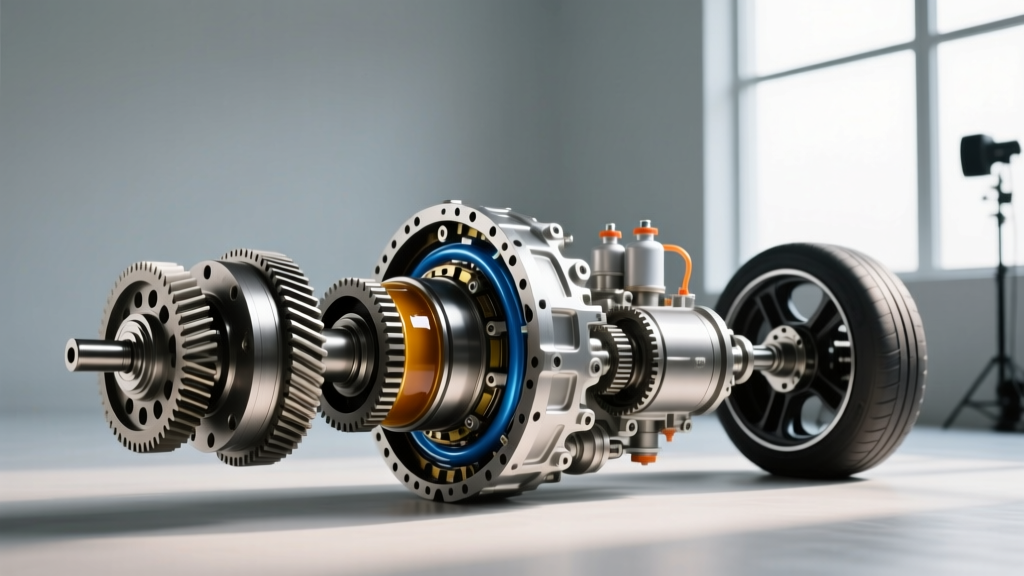
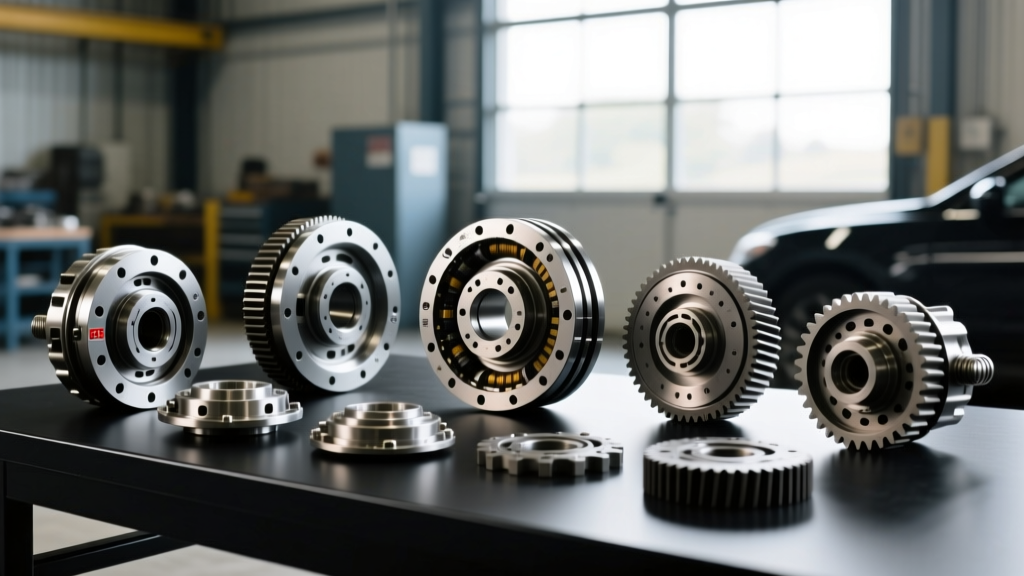
Locking differentials generally fall into two categories: automatic (mechanical) and selectable (pneumatic, electronic, or cable-actuated). Your selection should be dictated by your vehicle's primary use case, steering dynamics, and budget.
| Feature | Detroit Locker (Automatic) | ARB Air Locker (Selectable) | Eaton E-Locker (Electronic) |
|---|---|---|---|
| Actuation | Mechanical (Torque-sensing) | Pneumatic (12V Compressor) | Electromagnetic (12V Solenoid) |
| Street Manners | >Poor (Understeer, clunking)Excellent (Operates as open diff) | Good (Operates as open diff) | |
| Durability | Extreme (Forged steel internals) | High (Depends on O-ring seals) | High (Internal solenoid wear) |
| Avg. Cost (Parts) | $650 - $850 | $900 - $1,150 | $850 - $1,050 |
Eaton Detroit Locker: The Unbreakable Automatic
The Eaton Detroit Locker (Part No. 225SL-1 for standard Dana 44, 30-spline) is a ratcheting mechanical locker. It remains locked under load and unlocks only during cornering when the outer wheel must rotate faster than the inner wheel. The Engineering Reality: While virtually indestructible, the Detroit Locker induces significant understeer on high-traction surfaces because it resists differential wheel speeds. Furthermore, the internal dog clutches produce a loud "bang" when re-engaging under torque. It is the preferred choice for dedicated trail rigs and rock crawlers where steering predictability in loose dirt is less critical than raw pushing power.
ARB Air Locker: The Gold Standard for Selectables
For daily-driven 4x4s that see weekend trail duty, the ARB Air Locker (e.g., Part No. RD116 for Dana 44) is unmatched. Utilizing a pneumatically actuated internal clutch pack, the ARB locks the axle side gears to the carrier case when 12V air pressure (typically 85-100 PSI) is applied via an onboard compressor. Failure Modes: The most common failure point is the O-ring seal on the axle housing tube where the air line enters. If the housing is not perfectly deburred during installation, the O-ring will slice, leading to air leaks and an unlocked differential. Proper installation requires a specialized seal housing tool and meticulous cleaning of the axle tube.
Eaton E-Locker: The Modern Electronic Solution
The Eaton E-Locker uses an electromagnetic coil inside the carrier to push a locking collar into the side gears. It requires no air compressors or external lines—just a 12V power wire and a ground. While highly reliable, the internal solenoid can be susceptible to heat degradation if the differential fluid is neglected and allowed to exceed 250°F consistently during heavy towing or low-speed crawling.
Precision Setup: Why Professional Differential Repair in Springfield MO Matters
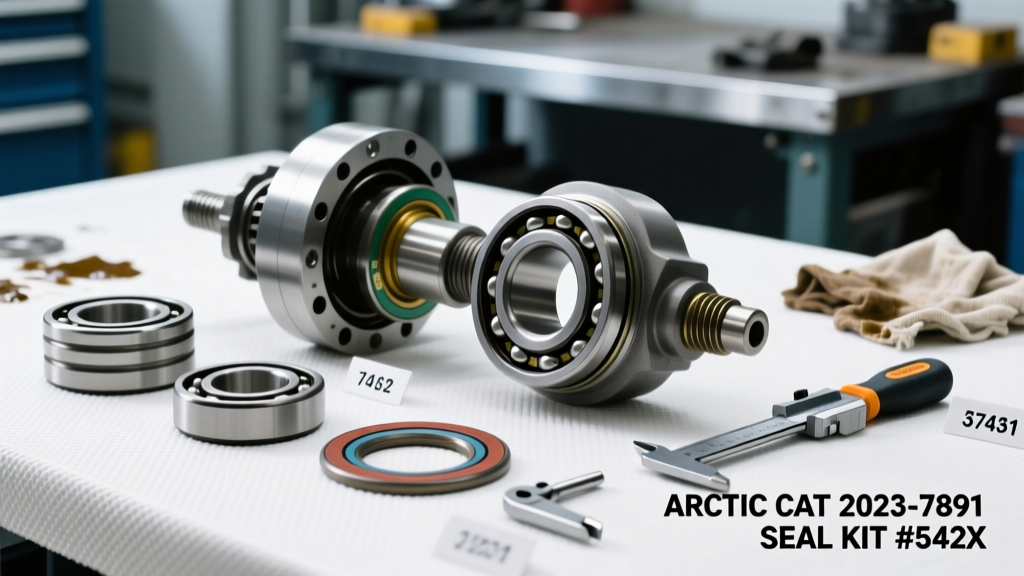
Installing a locking differential is not a simple "drop-in" procedure. It requires dismantling the carrier, pressing off and on heavy-duty tapered roller bearings, and resetting the ring and pinion gear geometry. If you are upgrading your axle and lack a hydraulic bearing press, a dial indicator with a magnetic base, and an inch-pound torque wrench, you must outsource the setup. Expert differential repair in Springfield MO shops possess the tooling to ensure your gear pattern and bearing preload are flawless.
Critical Setup Specifications
- Ring Gear Runout: Must be kept under 0.003 inches. Excessive runout will cause cyclic binding and rapid tooth wear.
- Backlash: Typically set between 0.006" and 0.010" for most Spicer/Dana and Ford axles. This is adjusted via threaded carrier adjusters or shims.
- Bearing Preload: Measured in inch-pounds of rotational torque. Too loose, and the carrier will wobble, destroying the ring gear teeth; too tight, and the bearings will overheat and seize within 50 miles.
- Ring Gear Bolt Torque: For a Dana 60, ring gear bolts must be torqued to 110-120 lb-ft using Red Loctite 263 (high-strength). For a Ford 8.8, the spec is 70-85 lb-ft. Never reuse stretched ring gear bolts.
Differential Fluid Dynamics for Locked Axles
Because locking differentials fundamentally alter how the carrier distributes torque, your differential fluid selection must adapt. When both wheels are locked and spinning at identical speeds over uneven terrain, immense shock loads are transferred through the axle shafts, bearings, and gear teeth.
Viscosity and Shear Stability
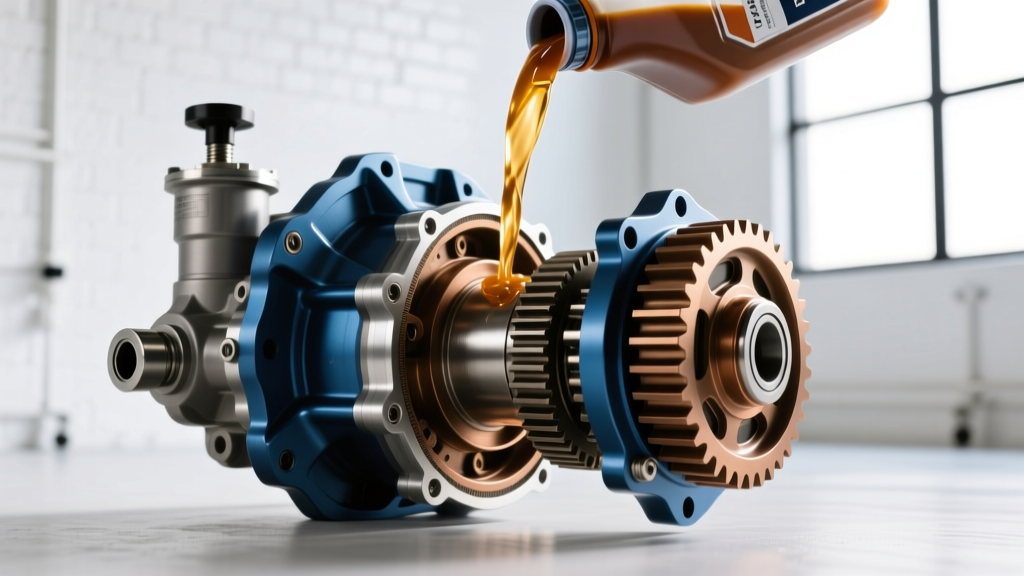
For heavy off-road use, rock crawling, or towing, upgrade from the factory 75W-90 to a full synthetic 75W-140 API GL-5 gear oil (such as AMSOIL Severe Gear or Royal Purple Max Gear). The higher high-temperature viscosity ensures the fluid film does not rupture between the ring and pinion teeth under extreme shock loading. A 75W-140 synthetic maintains its shear stability even when differential housing temperatures spike past 230°F on slow, technical climbs.
The Friction Modifier Warning
Critical Warning: Never add limited-slip friction modifiers to a differential equipped with an automatic locking differential (like the Detroit Locker) or a spool. Friction modifiers are designed to allow clutch packs to slip smoothly. In a mechanical locker, these additives can prevent the dog clutches from fully engaging or disengaging, leading to severe binding, erratic unlocking during turns, and premature internal wear. Always use straight GL-5 gear oil without modifiers in locked axles.
2026 Cost & Labor Expectations
Budgeting for a locking differential upgrade requires accounting for both the hardware and the machine shop labor. While the internet is full of DIY driveway rebuild videos, the cost of replacing a destroyed ring and pinion due to improper backlash setup far exceeds professional labor rates.
- Locker Hardware: $650 (Detroit) to $1,150 (ARB with compressor kit).
- Master Rebuild Kit: $120 - $180 (Includes Timken bearings, seals, and shims. Always use Timken or Koyo bearings; avoid unbranded overseas bearings).
- Professional Setup Labor: $400 - $650 for a reputable drivetrain specialist to press bearings, set pinion depth, and dial in the backlash.
- 75W-140 Synthetic Fluid: $45 - $70 per axle (Requires 2.5 to 3.5 quarts depending on the housing, e.g., Dana 60 takes ~3.25 quarts).
Final Verdict
Selecting the right locking differential transforms your vehicle from a trail-limited SUV into a capable, obstacle-conquering machine. Choose the Detroit Locker for uncompromising, maintenance-free durability on dedicated trail rigs. Opt for the ARB Air Locker or Eaton E-Locker if you require civilized street manners and on-demand traction. Regardless of your choice, respect the precision required for carrier setup. Partnering with a trusted shop for differential repair in Springfield MO ensures your gear pattern is perfect, your bearings are preloaded correctly, and your rig is ready to dominate the Ozarks without fear of drivetrain implosion.