Understanding the Front Differential: Open vs. Limited Slip
When power is routed to the front axle in four-wheel-drive and all-wheel-drive vehicles, the front differential is responsible for splitting torque while allowing the left and right wheels to rotate at different speeds during cornering. However, not all differentials manage torque equally. The two most common architectures are the open differential and the limited slip differential (LSD). Understanding the mechanical differences between these two systems is the first step in accurately diagnosing front differential symptoms, selecting the correct gear oil, and planning future drivetrain upgrades.
An open differential always sends power to the wheel with the least amount of resistance. If your left front wheel is on ice and the right is on dry pavement, an open diff will spin the left wheel endlessly while the right wheel receives zero torque. Conversely, a limited slip differential utilizes internal clutch packs or helical gear sets (like the Torsen or Eaton Truetrac) to bias torque toward the wheel with traction. This fundamental difference in torque management drastically alters the acoustic, vibrational, and handling symptoms the differential exhibits as it ages or when improperly serviced.
Core Mechanical Differences and Failure Modes
Open Differential Mechanics
The open differential relies on a simple spider gear and side gear arrangement. Because there are no high-friction clutches to manage, the internal components are bathed in standard API GL-5 gear oil. Common failure modes in open front differentials include spider gear cross-pin wear, ring and pinion tooth pitting from shock loads, and pinion bearing degradation. Because the front differential only engages in 4WD or AWD modes (on part-time systems), open diffs often suffer from neglect, leading to severe fluid degradation.
Limited Slip Differential Mechanics
Clutch-based LSDs use a series of friction discs and separator plates that lock the side gears to the carrier under load. Helical gear LSDs use complex gear geometry to create internal binding forces that multiply torque. The primary failure mode for clutch-based LSDs is the glazing or burning of the friction discs, often caused by using standard gear oil without the necessary friction modifiers. This leads to the most notorious of all front differential symptoms: aggressive chatter and binding during tight, low-speed turns.
Diagnosing Front Differential Symptoms by Type
Identifying the root cause of drivetrain noise requires isolating the specific behavior of the axle. Here is how symptoms diverge based on the differential type installed in your vehicle.
Common Open Differential Symptoms
- Coast-Down Whine: A howling noise that occurs only when you let off the throttle. This indicates pinion bearing wear or improper ring and pinion backlash (ideal spec is typically 0.006" to 0.010").
- One-Wheel Spin: The classic hallmark of an open diff. When traction is broken, only one wheel spins. This is normal operation, not a failure, but it is a functional limitation.
- Clunking on Engagement: Excessive backlash between the spider gears and side gears causes a metallic clunk when shifting from reverse to drive or when the 4WD system engages the front axle.
Common Limited Slip Front Differential Symptoms
- Low-Speed Cornering Chatter: If you hear a rhythmic grinding or feel a skipping sensation in the front axle during tight parking lot turns, your LSD clutch packs are binding. This is the most frequently misdiagnosed of all front differential symptoms. Before assuming mechanical failure, verify the fluid contains the correct friction modifier.
- Understeer in AWD Systems: A failing front LSD in an AWD vehicle (such as those paired with a ZF 8HP transmission and a torque-biasing transfer case) will fail to pull the vehicle through the corner, resulting in heavy understeer as the inside wheel loses drive.
- Metallic Flakes on the Drain Plug: While some fine metallic paste is normal, finding distinct metallic shards or brass-colored debris indicates the friction disc separators or internal thrust washers are disintegrating.
The Crucial Role of Differential Fluid and Friction Modifiers
Because this guide focuses heavily on maintenance and diagnosis, we must address the lifeblood of the axle: the gear oil. Using the wrong fluid is the leading cause of premature LSD failure and the primary trigger for adverse front differential symptoms. Clutch-type LSDs require a specific friction modifier additive that alters the coefficient of friction between the clutch discs, allowing them to slip smoothly during cornering rather than grab and release violently.
| Fluid Specification | Viscosity | Application & Differential Type | Friction Modifier Required? | Average Capacity (Front Axle) |
|---|---|---|---|---|
| API GL-5 Conventional | 80W-90 | Open Differentials (Older heavy-duty trucks) | No | 2.5 - 3.5 Pints |
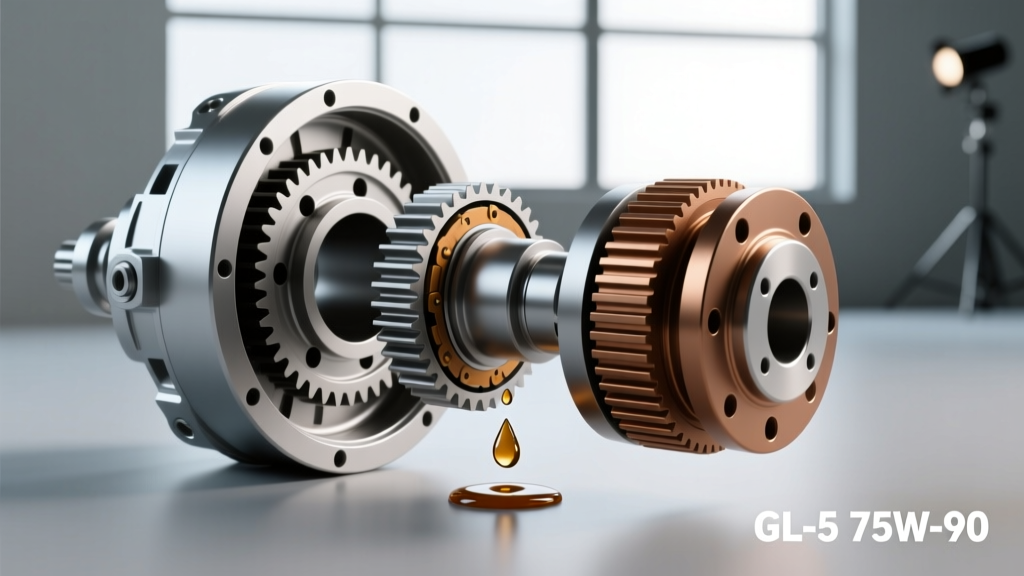
| API GL-5 Full Synthetic | 75W-90 | Open & Helical LSDs (Eaton Truetrac) | No (Helical) / Yes (Clutch) | 2.5 - 3.0 Pints |
| API GL-5 Synthetic + LS Additive | 75W-140 | Clutch-Based LSDs (Heavy Towing/Off-Road) | Yes (Pre-mixed or Added) | 3.0 - 4.0 Pints |
For clutch-based limited slip differentials, products like Red Line 75W90 V-Twin Synthetic Gear Oil or Amsoil Severe Gear already contain the necessary limited slip friction modifiers. If you are using a standard GL-5 synthetic, you must add a dedicated modifier, such as Motorcraft XL-3 or GM ACDelco 10-4016. The standard dosage is 4 ounces per axle, but this should be adjusted based on test drives. If chatter persists, add 1 ounce increments; if the axle begins to slip excessively under hard acceleration, you have over-modified the fluid and must perform a complete drain and refill.
Buyer's Guide: Upgrading and Rebuilding Your Front Differential
If your front differential symptoms point to catastrophic internal failure, or if you are tired of the limitations of an open differential, a rebuild or upgrade is necessary. When shopping for replacement carriers, it is vital to match the gear ratio and the spline count of your front axle shafts.
Cost Breakdown and Part Numbers
Upgrading from an open differential to a helical gear LSD provides massive traction benefits without the maintenance headaches of clutch packs. The Eaton Truetrac is widely considered the gold standard for front axle applications because it operates smoothly as an open diff until slip occurs, and it requires no special friction modifiers—only standard 75W-90 GL-5 synthetic gear oil.
- Eaton Truetrac (Dana 30, 27-Spline): Part #911A486. Retail price: $650 - $750.
- Eaton Truetrac (Dana 44, 30-Spline): Part #913A481. Retail price: $700 - $820.
- Auburn Gear Pro Series LSD (Ford 8.8 IRS Front): Part #504400. Retail price: $550 - $650.
Critical Rebuild Torque Specifications
If you are performing the installation yourself or verifying the work of a drivetrain shop, adhering to precise torque specifications is non-negotiable. Improper torque leads to shifted bearing caps, altered backlash, and rapid ring gear failure. Always reference the specific OEM service manual, but standard baseline specifications for common front axles (like the Dana 30 and Dana 44) include:
- Ring Gear to Carrier Bolts: 70 - 85 lb-ft (Must be applied with Red Loctite 272 and torqued in a star pattern).
- Bearing Cap Bolts: 45 - 60 lb-ft (Never mix up left and right caps; they are line-bored from the factory).
- Pinion Nut (Crush Sleeve): 160 - 220 lb-ft (Torque to achieve correct rotational preload, typically 15-25 in-lbs for new bearings).
- Differential Cover Bolts: 25 - 35 lb-ft (Use RTV silicone or a reusable gasket; over-torquing will warp the cover and cause leaks).
Conclusion: Proactive Maintenance is Key
Whether your vehicle is equipped with a basic open differential or a high-performance clutch-based LSD, the front axle operates in a harsh environment, exposed to water crossings, extreme torque loads from modern turbocharged engines, and severe temperature fluctuations. By understanding the unique front differential symptoms associated with your specific hardware, you can intervene before a minor fluid issue becomes a $2,000 axle replacement. Service your front differential every 30,000 to 50,000 miles using high-quality synthetic GL-5 gear oil, respect the friction modifier requirements of clutch-based systems, and always verify your backlash and bearing preload settings during any carrier upgrade. For more detailed specifications on your specific axle housing, consult the engineering documentation at Dana Spicer or your vehicle manufacturer's drivetrain portal.