The Performance Case for True Locking Differentials
Upgrading from an open differential or a worn clutch-type limited-slip differential (LSD) to a true locking differential is the single most transformative modification you can make to a vehicle's drivetrain. Whether you are crawling over slick rock in a Dana 44-equipped Jeep Wrangler or launching a high-horsepower GM 10-bolt 8.5-inch axle on the drag strip, a locker ensures 100% torque distribution to both wheels. However, selecting the right locking differential type is only the first step. The longevity of your ring and pinion, as well as the internal engagement mechanisms of the locker, relies entirely on precision setup and meticulous post-installation monitoring. In this 2026 performance guide, we break down the engineering differences between mechanical, pneumatic, and electronic lockers, provide exact torque specifications for installation, and explain how to use a differential fluid color chart to diagnose your break-in procedure.
Locker Selection Matrix: Mechanical vs. Pneumatic vs. Electronic
Choosing the correct locker requires matching the engagement mechanism to your specific use case. Below is a comparative matrix of the most dominant locking differentials on the market today.
| Locker Type | Model Example | Engagement Method | Avg. Cost (2026) | Best Application |
|---|---|---|---|---|
| Pneumatic (Selectable) | ARB Air Locker (RD116) | On-board air compressor | $1,150 + Compressor | Rock crawling, expedition, daily driving |
| Mechanical (Automatic) | Detroit Locker (225SL-104) | Internal dog clutches / Sprag | $750 | Drag racing, heavy towing, hardcore mud |
| Electronic (Selectable) | Eaton E-Locker (19926-010) | 12V Electromagnetic coil | $895 | Trail riding, OEM-style integration |
| Mechanical (Lunchbox) | Spartan Locker (SP-286) | Internal pins and springs | $320 | Budget off-road builds, low-speed crawling |
Precision Setup: ARB and Detroit Torque Specs
A locking differential transfers immense shock loads through the carrier and ring gear bolts. If your setup is flawed, the locker will amplify the stress, leading to catastrophic gear failure. Here are the exact setup parameters for the two most popular performance lockers.
ARB Air Locker Setup Nuances
The ARB Air Locker relies on an internal O-ring seal and a bulkhead fitting to route pressurized air (typically 85-105 PSI) into the carrier. The most common failure point is not the gear set, but the air seal. When pressing the Air Locker into the Dana 44 carrier bearings, ensure the O-ring groove is perfectly clean and lubricated with the provided silicone grease. Ring Gear Bolt Torque: 70-85 lb-ft. You must use a high-strength threadlocker. While many manuals suggest Blue Loctite 242, for high-shock applications like rock crawling with 4.88 or 5.13 gears, we recommend cleaning the bolts with brake cleaner and applying Red Loctite 272, torquing to 75 lb-ft in a star pattern. Backlash Specification: Maintain 0.006 to 0.010 inches. Use a dial indicator with a magnetic base mounted to the axle housing to measure runout at the ring gear face.
Detroit Locker Backlash and Pre-Load
The Detroit Locker replaces the entire carrier, meaning you must transfer your ring gear and set carrier preload from scratch. Unlike clutch-based LSDs, the Detroit Locker requires a specific rotational drag to ensure the internal thrust washers and dog clutches seat properly without binding. Carrier Pre-load: You want a rotational drag of 15 to 25 inch-pounds (measured with the pinion disconnected) using an inch-pound beam torque wrench. Backlash: Detroit Lockers are slightly more forgiving than open carriers due to their internal clearances, but you should still target 0.008 to 0.012 inches of backlash. If backlash is too tight, the internal cross-shafts will bind during cornering, causing the locker to 'unlock' unpredictably or snap an axle shaft.
Post-Install Break-In and the Differential Fluid Color Chart
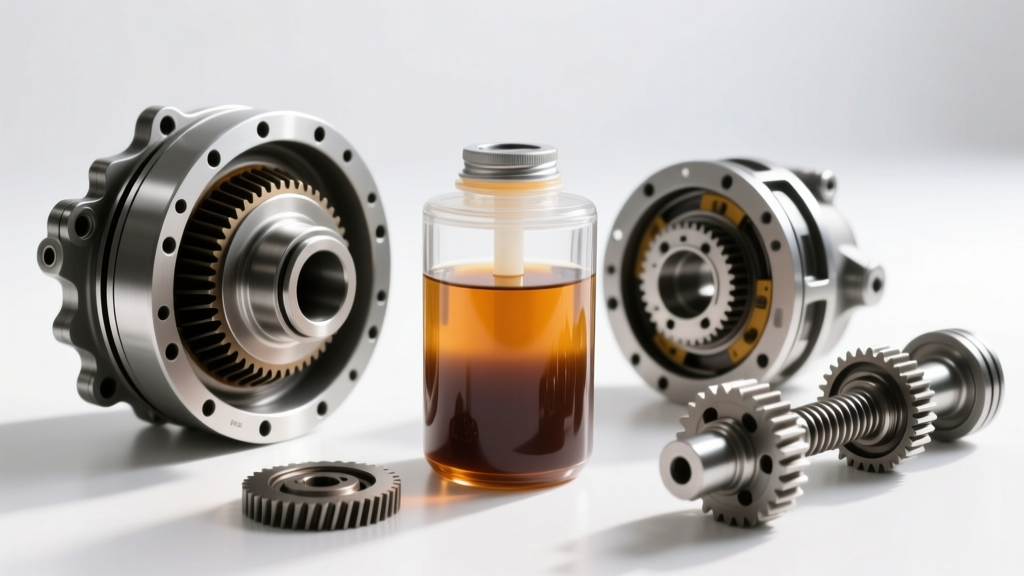
Once the locker and gears are installed, the first 500 miles are critical. The mating of the ring and pinion, combined with the initial seating of the locker's internal dog clutches or locking collars, generates significant heat and microscopic metal particulate. This is where the differential fluid color chart becomes your primary diagnostic tool. Draining the fluid at the 500-mile mark and comparing it to a differential fluid color chart will tell you if your setup is a success or if a teardown is required.
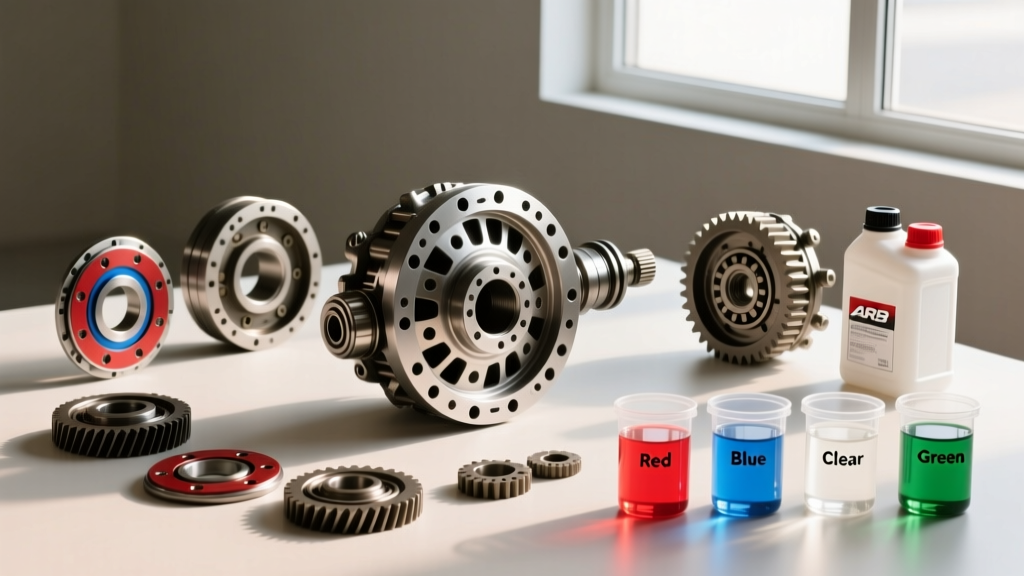
Reading the Differential Fluid Color Chart
Place a sample of the drained fluid on a white paper towel or in a clear glass catch pan under bright LED light. Cross-reference your findings with this diagnostic framework:
- Clear / Golden Amber: The fluid retains its original synthetic hue. This indicates a perfect gear pattern, correct pinion depth, and a flawless locker engagement. No action required other than refilling.
- Fine Silver Glitter (Mica-like): Normal. This is the expected result of the ring and pinion gears lapping together during the initial heat cycles. The locker's internal steel components may also shed microscopic surface coatings. This is safe.
- Dark Brown / Burnt Smell: Overheating. If the fluid smells like burnt toast, your pinion bearing preload is likely too tight (exceeding 25 inch-pounds of rotational drag), or you are running a gear ratio that exceeds the housing's cooling capacity. In selectable lockers, this can also indicate that the locking collar is partially engaged due to a misadjusted shift fork or low air pressure.
- Milky / Chocolate Milk Emulsion: Water intrusion. This has nothing to do with the locker itself, but rather a failed inner axle seal or a submerged, clogged axle breather tube. The water will destroy the locker's internal bearings within a few hundred miles. Replace seals and flush immediately.
- Chunky Ferrous Shards / Metal Slivers: Catastrophic failure. If you see pieces of metal larger than a grain of rice, the ring gear bolts have likely sheared, or the locker's internal dog teeth have shattered due to engagement while the drivetrain was under high-speed bind. Do not drive the vehicle; the axle requires a complete teardown.
Fluid Selection and the Friction Modifier Myth
One of the most pervasive myths in the off-road community is that all differentials require limited-slip friction modifiers (FM). This is false and will damage a true locker. Friction modifiers are designed for clutch-pack LSDs (like the Eaton Truetrac or OEM Auburn units) to prevent chatter during cornering. A mechanical Detroit Locker or a pneumatic ARB Air Locker does not use friction clutches to transfer torque; they use solid steel locking collars or dog gears. If you add a friction modifier to an ARB or Detroit Locker, the fluid becomes too slippery. This can cause the internal dog clutches to 'skate' or delay engagement when you hit the switch or when the torque threshold is met, leading to severe rounding of the internal teeth.
Recommended Fluids for True Lockers:
- AMSOIL Severe Gear 75W-90 Synthetic (SVGPK): Excellent shear stability for high-shock loads. Does not contain clutch-pack FMs.
- Red Line 75W90 GL-5 Gear Oil (Part # 50104): High zinc and phosphorus content for extreme pressure (EP) protection during rock crawling.
Capacity Note: A standard Dana 44 housing requires approximately 2.5 to 3.0 quarts, while a GM 8.5-inch 10-bolt requires about 2.1 quarts. Always fill until the fluid level is exactly at the bottom of the fill hole, and always torque the fill and drain plugs to 25-30 lb-ft using a fresh crush washer or Teflon tape to prevent weeping.
Expert Tip: When routing the ARB Air Locker bulkhead fitting or the Eaton E-Locker wiring harness, ensure you drill the carrier cap or housing in a location that does not intersect with the ring gear's rotational path. A misplaced wire or air line rubbing against a 5.13 ring gear will instantly shred the harness, lock the differential in an engaged state, and destroy the housing.
Final Axle Assembly Checklist
Before you drop the differential cover and fill the housing, verify these three critical metrics:
- Gear Pattern: Apply yellow gear marking compound. The drive and coast patterns must be centered on the face of the ring gear teeth, slightly biased toward the heel under load.
- Pinion Depth: Verified via the marking compound and micrometer measurements against the OEM pinion depth variance stamp.
- Locker Engagement Test: With the axle on jack stands and the cover off, manually actuate the ARB or Eaton locker. Watch the locking collar slide into the side gear. It should move smoothly without hanging up on the cross-shafts.
By combining the correct locking differential type for your application, adhering strictly to inch-pound torque specifications, and utilizing the differential fluid color chart during your 500-mile break-in service, you ensure your axle assembly will survive the most punishing environments you can throw at it.