The Diagnostic Power of Gear Oil: Reading the Lifeblood of Your Axle
In the realm of drivetrain preventive maintenance, the differential is often the most neglected assembly until it announces its distress through a high-pitched whine or a catastrophic binding event. Unlike engine oil, which is monitored via dipsticks and changed at rigid 5,000-mile intervals, gear oil operates in a sealed, high-pressure hypoid environment. However, the condition, color, and viscosity of this fluid provide a highly accurate window into the mechanical health of your ring and pinion set, carrier bearings, and axle shafts. By mastering the visual and tactile analysis of differential fluid, DIY mechanics and fleet technicians can identify microscopic wear patterns early, ultimately avoiding a premature and highly expensive rear differential replacement.
Modern hypoid gear sets, found in everything from the ubiquitous Ford 8.8-inch axle to heavy-duty Dana 60 and AAM 11.5-inch axles, rely on a precise film thickness to prevent metal-on-metal contact. The sliding friction inherent in hypoid gear geometry generates immense localized heat and shear forces. When the fluid degrades, the Extreme Pressure (EP) additive package fails, leading to spalling, bearing collapse, and gear tooth shearing. Understanding what your gear oil looks, smells, and feels like is the first line of defense against a $2,500+ axle rebuild.
The Visual Inspection Protocol: What Your Gear Oil is Telling You
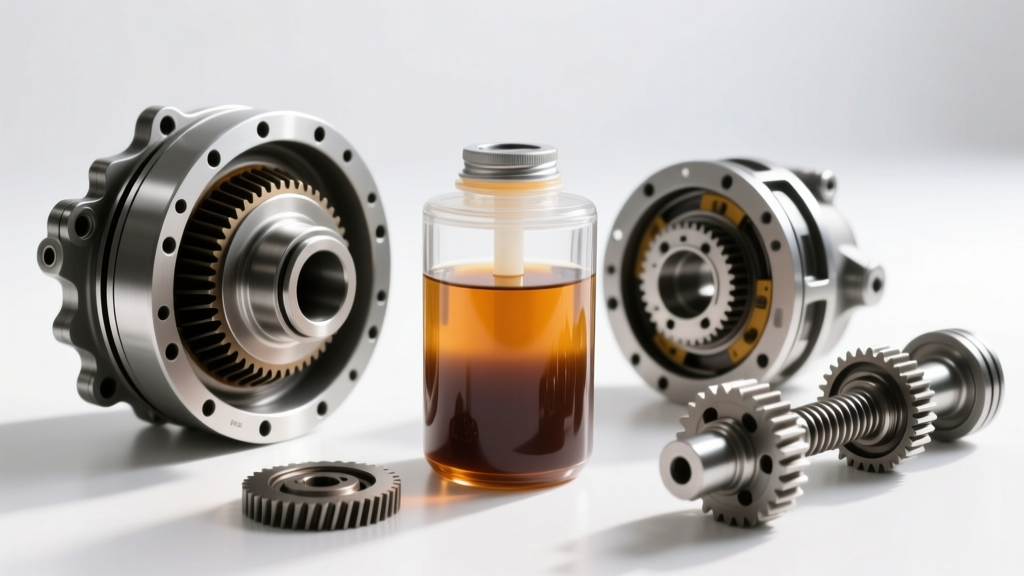
Pulling a fluid sample from the fill plug or differential cover is a simple procedure that yields massive diagnostic dividends. Before draining the entire housing, extract a small sample into a clear glass or plastic vessel and hold it under a bright, neutral light source. The color and suspension of particulates will immediately point to specific internal conditions.
| Fluid Color | Visual Characteristics | Underlying Mechanical Meaning | Required Action |
|---|---|---|---|
| Clear / Amber / Honey | Translucent, no suspended particles, smooth viscosity. | Fluid is healthy, EP additives are active, bearings and gears are within spec. | No action required; continue standard service intervals. |
| Opaque Black | Dark, completely opaque, but smooth to the touch. | Normal thermal degradation of sulfur-phosphorus EP additives over 50k+ miles. | Schedule a standard fluid drain and fill. |
| Milky / Chocolate Brown | Emulsified, opaque, resembles coffee with cream. | Water intrusion past axle seals, breather tube, or pinion seal. High risk of rust. | Immediate flush, inspect seals, replace fluid with fresh API GL-5. |
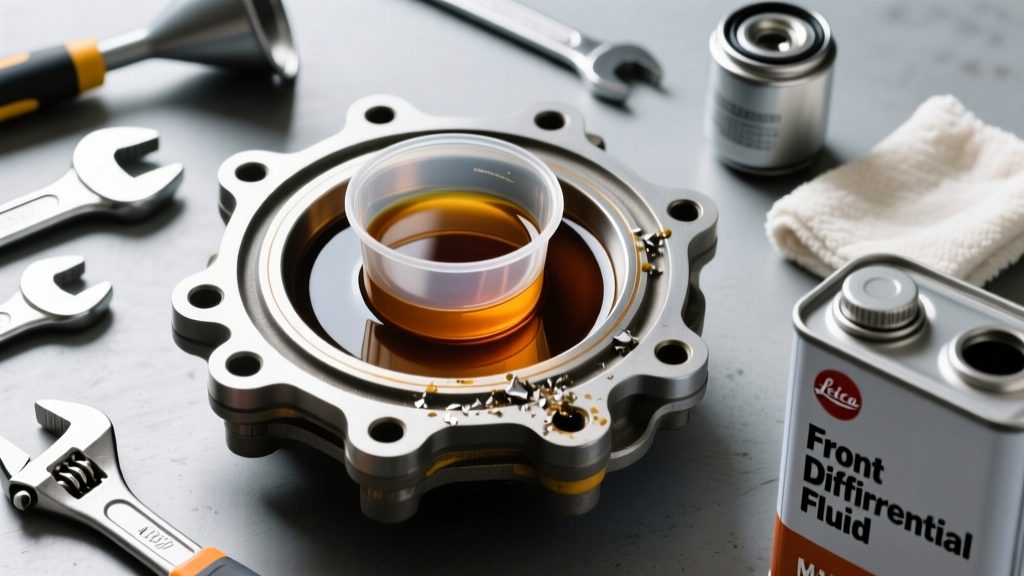
| Gunmetal Grey / Sparkling | Glitter-like metallic suspension, catches light like metallic paint. | Active wear of carrier bearings, pinion bearings, or thrust washers. | Urgent: Drop cover, inspect magnets, measure backlash and bearing preload. |
| Chunky / Sludge | Thick, tar-like, with visible metal flakes or brass chips. | Catastrophic failure in progress. Ring and pinion spalling or cage disintegration. | Halt driving. Prepare for full teardown or rear differential replacement. |
Olfactory and Tactile Diagnostics: Beyond the Visual Spectrum
While color provides a baseline, the smell and physical texture of the gear oil reveal critical data about operating temperatures and friction modifier breakdown. API GL-5 gear oils are heavily fortified with sulfur-phosphorus compounds to handle the extreme sliding pressures of the hypoid gear contact patch. When an axle is subjected to loads beyond its thermal capacity—such as heavy towing with an inadequate cooling differential cover—fluid temperatures can exceed 250°F (121°C).
The 'Burnt' Smell Indicator
If the extracted fluid smells acrid, sharp, or distinctly like burnt sulfur, the oil has suffered severe thermal breakdown. This indicates that the base oil has oxidized and the EP additives have been depleted. Running degraded fluid leads to accelerated micro-pitting on the ring and pinion teeth. If you detect this smell, a simple drain and fill is required immediately, alongside an evaluation of your vehicle's towing load versus the axle's Gross Axle Weight Rating (GAWR).
The Grit Test
Rub a drop of the differential fluid between your thumb and index finger. It should feel perfectly slick, akin to heavy syrup. If you feel any grittiness, scratching, or micro-abrasions, you are feeling the physical remnants of your axle's internal components. Fine grit usually indicates 52100 bearing steel wear from the carrier or pinion bearings. Larger, palpable flakes suggest that the ring gear teeth are spalling or the limited-slip clutch packs are disintegrating. According to technical guidelines from Ring & Pinion's technical archives, ignoring tactile grit is the fastest route to needing a complete rear differential replacement, as the suspended metal acts as a lapping compound, rapidly destroying the remaining gear surfaces.
Chemical Breakdown and the Limited-Slip Factor
For axles equipped with clutch-type Limited-Slip Differentials (LSD), such as the Ford 8.8-inch Traction-Lok or the GM 8.5-inch 10-bolt Eaton Positraction, fluid condition involves an additional chemical variable: the friction modifier. Over time, the friction modifier depletes, which does not necessarily change the fluid's color but drastically alters its mechanical behavior. The classic symptom is a low-speed 'chatter' or binding sensation during tight, low-speed turns.
While adding an aftermarket friction modifier (like Motorcraft XL-3 or GM EOS) can temporarily mask the chatter, it is a band-aid solution. If the base 75W-90 or 75W-140 synthetic gear oil has sheared out of its viscosity grade, the clutch packs will continue to slip and glaze. In high-mileage LSD applications, analyzing the fluid for a burnt odor alongside chatter symptoms is a clear indicator that a full fluid exchange and potential clutch pack rebuild is necessary.
Economic Impact: Fluid Analysis vs. Rear Differential Replacement
The financial argument for rigorous differential fluid analysis is undeniable. Consider the cost breakdown of preventive maintenance versus reactive repairs on a standard light-duty truck or SUV:
- Preventive Fluid Service: 2 to 3 quarts of high-quality synthetic 75W-90 API GL-5 gear oil (e.g., Amsoil Severe Gear or Red Line 75W90) costs between $45 and $75. A replacement crush washer or RTV sealant adds $5. Total cost: $50 - $80.
- Reactive Rear Differential Replacement: If fluid degradation leads to pinion bearing failure, the pinion gear can walk, destroying the ring gear and carrier. Sourcing a new OEM or high-quality aftermarket ring and pinion set (like Yukon or Motive Gear) costs $300 to $600. Add in master rebuild kits (bearings, seals, shims) at $150, and professional machine shop or mechanic labor (4 to 6 hours at $120/hr), and you are easily looking at $1,200 to $2,500. In severe cases where the housing is scored or the axle shafts are damaged, a complete remanufactured rear differential replacement can exceed $3,500.
By spending 15 minutes extracting and analyzing a fluid sample every 30,000 miles, you are effectively purchasing an insurance policy against catastrophic drivetrain failure.
Step-by-Step Preventive Fluid Sampling Technique
You do not need to remove the entire differential cover to perform a condition analysis. In fact, leaving the cover intact prevents the risk of introducing contaminants or causing seal leaks. Follow this extraction protocol:
- Warm the Axle: Drive the vehicle for at least 15 miles. Warm fluid is less viscous, allowing suspended particulates to flow out with the sample rather than settling at the bottom of the housing.
- Clean the Area: Use brake cleaner and a wire brush to thoroughly clean the fill plug and the surrounding housing. This prevents external dirt from falling into the axle when the plug is removed.
- Extract the Sample: Remove the fill plug (e.g., using a 3/8-inch square drive for GM 10-bolts or a 15mm hex for many Dodge Ram AAM axles). Insert a clean fluid extraction pump tube into the oil, ensuring it reaches near the bottom of the housing where heavier metallic particles settle. Pump 4 to 6 ounces into a clear sample jar.
- Inspect the Plug: If your fill plug is magnetic, inspect it carefully. A light, fuzzy coating of dark metallic dust is normal. Clumps, chips, or wire-like strands indicate severe internal wear.
- Top Off if Necessary: If you pulled a large sample, top off the housing with the exact same specification of gear oil until it reaches the bottom of the fill plug threads. Reinstall the plug and torque to factory specifications (typically 25 to 35 lb-ft, depending on the axle model).
Conclusion: Proactive Drivetrain Stewardship
The differential is a marvel of metallurgical engineering, designed to translate rotational force while allowing for variances in wheel speed. However, its longevity is entirely dependent on the microscopic film of gear oil separating its hardest components. By integrating fluid color, smell, and tactile analysis into your regular preventive maintenance routine, you transition from a reactive vehicle owner to a proactive drivetrain steward. The next time you service your vehicle, take the extra ten minutes to read the story your gear oil is telling you—it is the most effective way to ensure you never have to face the steep financial and mechanical burden of a rear differential replacement.
For further reading on hypoid gear lubrication standards and API GL-5 specifications, refer to the engineering resources provided by Dana Spicer's official axle maintenance documentation and the lubrication guidelines at Amsoil's technical library.