The Mechanical Divide: Open vs. Limited Slip Architectures
When a drivetrain begins to whine, clunk, or chatter, the immediate concern for any vehicle owner or fleet manager is the cost to fix differential components. However, before you can accurately estimate repair costs or plan an upgrade, you must understand the fundamental engineering divide between open differentials and limited slip differentials (LSDs). As we navigate the 2026 aftermarket landscape, the choice between repairing a factory open unit or upgrading to a modern helical LSD dictates not only your budget but your vehicle's traction capabilities.
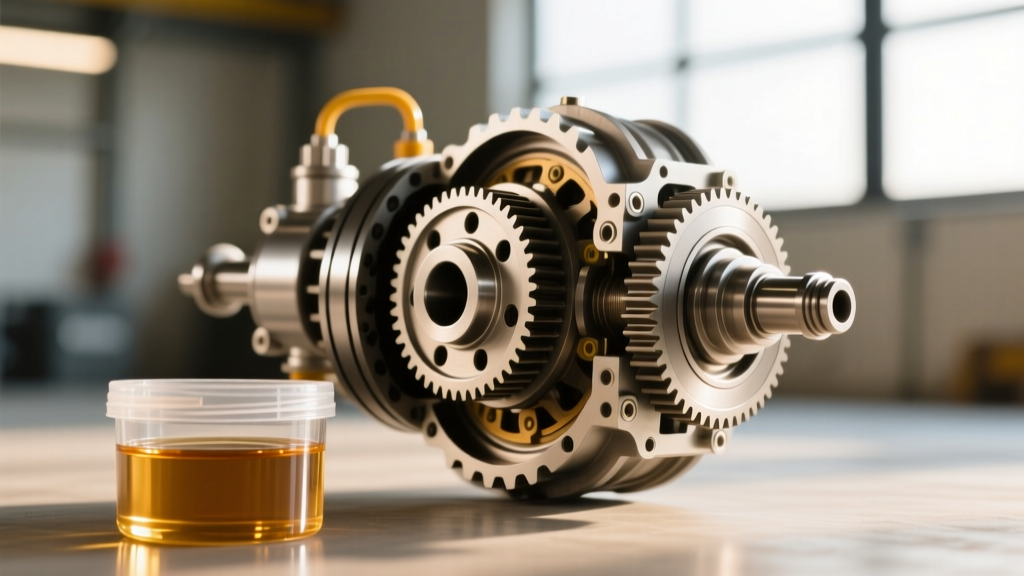
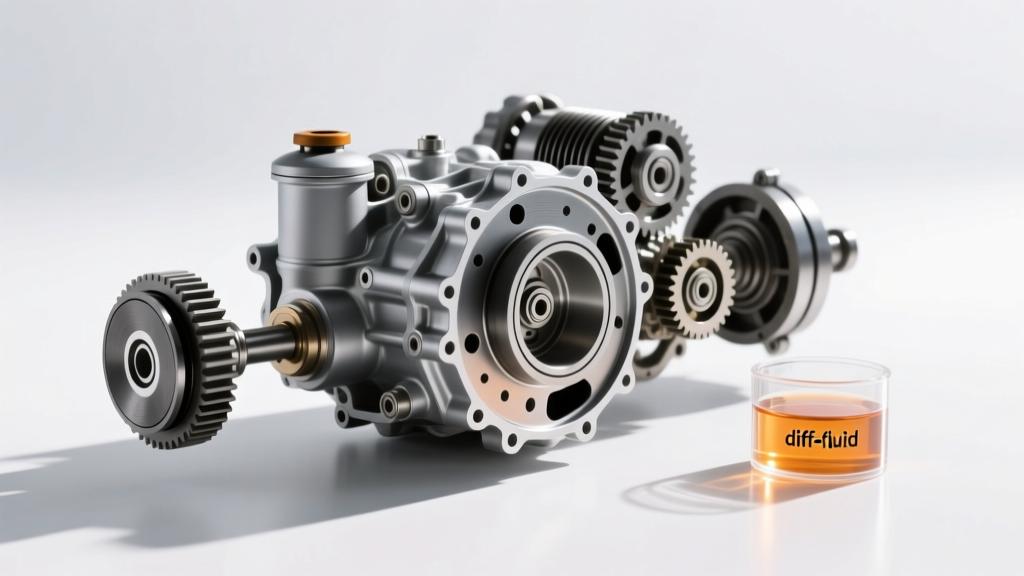
An open differential is a marvel of basic mechanical engineering, utilizing a spider gear cross pin and side gears to allow outer wheels to rotate faster than inner wheels during cornering. However, its fatal flaw is torque biasing: it sends power to the wheel with the least resistance. If one tire is on ice, the open diff sends 100% of the torque to that slipping wheel, leaving you stranded.
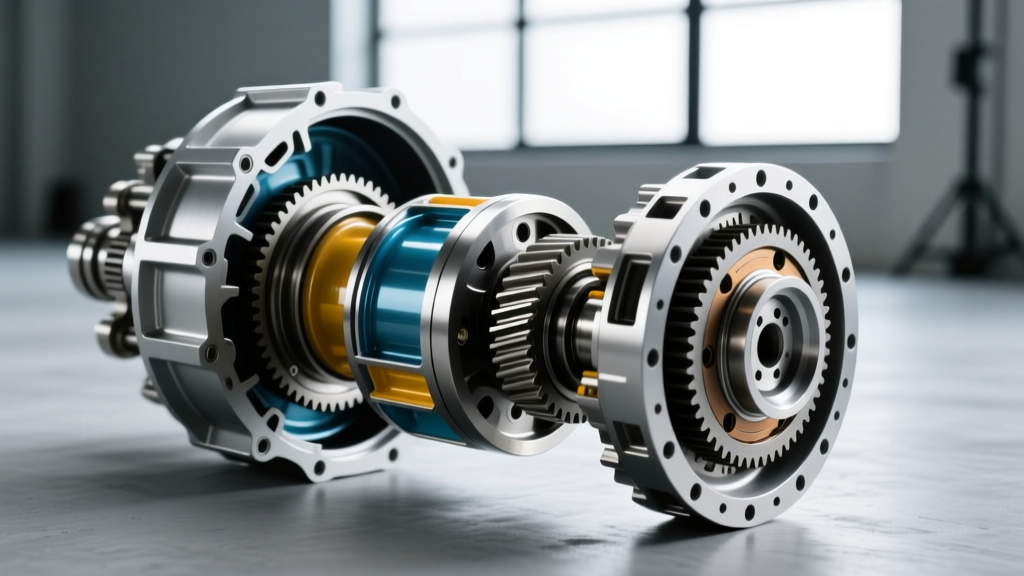
A limited slip differential mitigates this by introducing internal resistance. Traditional clutch-type LSDs (like the classic Eaton Positraction) use carbon-fiber or Kevlar clutch packs compressed by S-springs to lock the axles together under load. Modern helical LSDs (such as the Eaton Truetrac) use complex planetary worm gears to multiply torque biasing without the need for friction modifiers or wearable clutch packs.
Evaluating the Cost to Fix Differential Systems
The cost to fix differential assemblies varies wildly based on the internal architecture, the specific axle housing (e.g., Ford 8.8-inch, Dana 44, GM 10-bolt), and whether you are performing a baseline rebuild or executing a full traction upgrade. Below is a realistic 2026 pricing matrix for light-duty trucks and SUVs.
| Service / Upgrade Type | Target Application | Estimated Parts Cost | Estimated Labor Cost | Total Cost to Fix Differential |
|---|---|---|---|---|
| Open Diff Rebuild (Bearings, Seals, Crush Sleeve) | GM 8.5-inch 10-Bolt | $150 - $250 | $350 - $500 | $500 - $750 |
| Clutch-Type LSD Rebuild (Clutch Packs, Shims, S-Spring) | Ford 8.8-inch (28-Spline) | $200 - $350 | $450 - $600 | $650 - $950 |
| Helical LSD Drop-In Upgrade (No setup required) | Dana 44 (30-Spline) | $700 - $850 | $250 - $400 | $950 - $1,250 |
| Complete Ring & Pinion + LSD Install | Toyota 8-inch (V6/Tacoma) | $900 - $1,300 | $800 - $1,200 | $1,700 - $2,500 |
Note: Labor rates assume an independent drivetrain specialist shop billing between $120 and $160 per hour in 2026. Dealership rates will inflate these labor figures by 40-60%.
Fluid Chemistry: Why the Wrong Gear Oil Destroys LSDs
One of the most common reasons the cost to fix differential systems escalates prematurely is improper fluid selection. The chemical requirements for open and limited slip differentials are fundamentally opposed.
Open Differential Fluid Specs
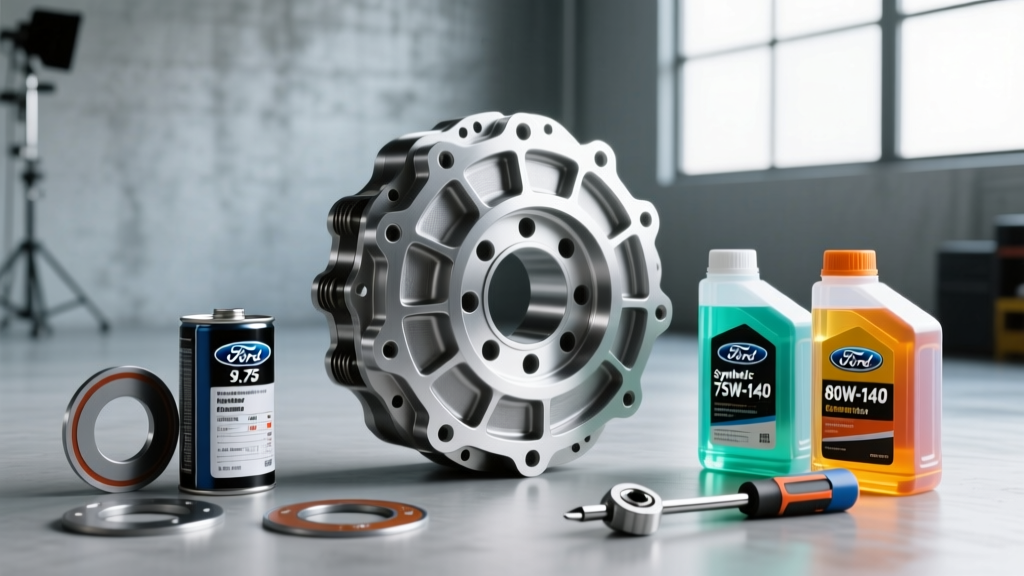
Open differentials require a standard API GL-5 rated gear oil, typically in a 75W-90 or 80W-90 viscosity. The GL-5 specification contains high levels of sulfur-phosphorus extreme pressure (EP) additives designed to protect the sliding contact of hypoid ring and pinion gears. A standard open Ford 8.8-inch axle requires approximately 2.5 quarts of fluid. Using a high-quality synthetic like AMSOIL Severe Gear 75W-90 will easily yield 100,000+ miles of service life under normal towing conditions.
Limited Slip Fluid Dynamics
If your vehicle is equipped with a clutch-type LSD, the sulfur-phosphorus additives in standard GL-5 oil are not enough. The clutch packs require a specialized friction modifier (such as GM Part #1052358 or Ford XL-3) to prevent the clutches from grabbing and releasing abruptly. Failing to add 4 to 8 ounces of friction modifier during a fluid change will result in severe "chatter" during low-speed parking lot turns, ultimately glazing and destroying the clutch packs. Conversely, helical gear LSDs like the Spicer Truetrac lineup do not utilize clutch packs and explicitly warn against the use of friction modifiers, which can reduce the torque-biasing efficiency of the worm gears.
Real-World Diagnostics: Identifying Your Failure Mode
Before authorizing a repair, you must diagnose the exact point of failure. Drivetrain acoustics are highly specific and can save you from paying for unnecessary ring and pinion replacements.
- Chatter on Low-Speed Turns: This is the hallmark of a failing clutch-type LSD. The friction modifier has depleted, or the clutch discs are worn. Fix: Fluid flush with friction modifier ($150). If chatter persists, clutch pack replacement ($650+).
- Whine on Deceleration (Coasting): This almost always indicates a failing pinion bearing or incorrect ring-and-pinion backlash. The hypoid gear pattern has shifted out of the optimal contact zone. Fix: Pinion bearing and crush sleeve replacement ($500 - $800).
- Clicking or Clunking on Acceleration: If you have an open differential, the spider gears or the cross pin shaft are likely worn or sheared. If the cross pin shears entirely, the side gears will machine away the internal bores of the differential carrier, requiring a total carrier replacement.
- Grinding at Highway Speeds: This points to catastrophic carrier bearing failure or ring gear bolt shearing. Immediate towing is required to prevent the ring gear from wedging into the axle housing, which turns a $1,500 repair into a $4,000 axle housing replacement.
Precision Rebuild Specs: Torque and Preload
For the DIY mechanic or the shop owner auditing a rebuild, understanding the precision required in differential assembly is crucial. The cost to fix differential mistakes made during reassembly is usually a second teardown and new bearings.
Critical Assembly Note: Never reuse a crush sleeve. Once a crush sleeve has been deformed to set pinion bearing preload, it loses its structural memory. Always use a new crush sleeve and a new pinion nut.
Essential Torque Specifications (Ford 8.8-Inch Reference)
- Ring Gear to Carrier Bolts: 70 - 85 lb-ft. Must be cleaned with brake cleaner and secured with Red Loctite 271. Torque in a crisscross pattern.
- Carrier Bearing Cap Bolts: 70 - 85 lb-ft. These caps are line-bored from the factory with the housing. They must be kept in their exact original orientation and direction.
- Pinion Nut (Crush Sleeve Setup): Torque is not measured in foot-pounds; it is measured in inch-pounds of rotating drag. Using a beam-style inch-pound torque wrench, the target rotating torque for new bearings is typically 15 to 25 in-lbs. The pinion nut itself may require 200 to 250 ft-lbs of breakaway torque to crush the sleeve, but the final measurement must be rotational drag.
The 2026 Buyer’s Verdict: Upgrade or Replace?
If your factory open differential has suffered a catastrophic spider gear failure, the most cost-effective long-term decision is rarely to rebuild the open unit. The aftermarket has heavily subsidized helical LSDs, making them incredibly accessible.
For example, upgrading a broken GM 10-bolt open carrier to an Eaton Truetrac (Part #910A429 for 31-spline axles) costs roughly $800 for the unit. When factoring in the labor to tear down the axle anyway, the delta between rebuilding a weak open carrier and dropping in a bulletproof helical LSD is often less than $400. Helical units require zero friction modifiers, feature no wearable clutch packs, and operate silently, making them the undisputed champion for daily-driven trucks, tow rigs, and light off-road SUVs.
Ultimately, understanding the mechanical differences and the true cost to fix differential components empowers you to stop throwing money at temporary band-aids. Whether you are servicing a Dana 44 on a Jeep Wrangler or a Ford 8.8 on a Mustang, matching the correct fluid chemistry, adhering to strict inch-pound preload specs, and choosing the right traction device will ensure your drivetrain survives the demands of modern torque outputs.