The Economics of Drivetrain Longevity
When maintaining a limited slip rear differential, the cost of service extends far beyond simply dumping and filling gear oil. As we navigate the 2026 automotive maintenance landscape, inflation and supply chain shifts have altered the pricing structure of drivetrain services. A limited slip rear differential relies on precise internal friction to distribute torque between the left and right axles. Neglecting this system leads to clutch pack degradation, spider gear failure, and ultimately, a catastrophic loss of traction. Understanding the true cost of a differential fluid service, the specific chemical requirements of your limited slip differential (LSD), and the labor variables involved is critical for any vehicle owner looking to protect their drivetrain investment.
2026 Differential Service Cost Breakdown
The price you pay for a limited slip rear differential service depends heavily on where you have the work performed and the specific methodology used. Some shops perform a simple drain-and-fill via the fill plug, while reputable drivetrain specialists will remove the differential cover to clean out metallic debris, inspect the ring and pinion gears, and apply fresh RTV silicone or a new gasket.
| Service Provider | Methodology | Parts & Fluid Cost | Labor Cost | Total Estimated Price |
|---|---|---|---|---|
| Dealership Service Center | Cover Removal, OEM Fluid, Flush | $85 - $140 | $180 - $280 | $265 - $420 |
| Independent Drivetrain Shop | Cover Removal, Synthetic Upgrade | $70 - $110 | $120 - $160 | $190 - $270 |
| Quick-Lube / General Mechanic | Drain & Fill Only (No Inspection) | $40 - $60 | $80 - $120 | $120 - $180 |
| DIY Home Mechanic | Cover Removal & Full Cleaning | $45 - $95 | $0 | $45 - $95 |
As the data illustrates, taking the DIY route saves significant capital, but it requires specific tools, a safe lifting setup, and a thorough understanding of limited slip friction modifiers. If you opt for a professional, always verify that they are removing the cover to inspect for early signs of bearing or gear failure, rather than just pumping new fluid through the fill hole.
The Chemistry of Limited Slip Differentials: Why Fluid Choice Matters
The most common mistake made during a limited slip rear differential service is ignoring the internal architecture of the differential. Not all LSDs are created equal, and the wrong fluid or additive package will either destroy the unit or render it completely useless.
Clutch-Type LSDs (Ford Trac-Lok, Dana Powr-Lok, Auburn)
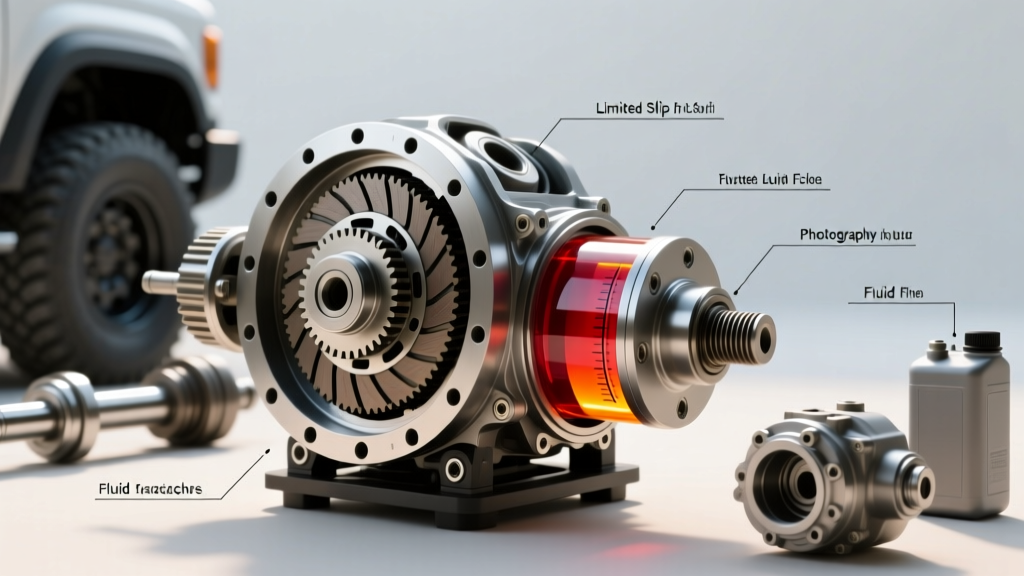
These differentials utilize a stack of friction clutches and steel separator plates to bind the axles together under load. Over time, the factory gear oil loses its friction-modifying properties, leading to the infamous 'chatter' or 'shudder' during low-speed turns. This chatter is the sound of the clutch packs violently grabbing and releasing, which generates immense heat and shreds the friction material. To prevent this, clutch-type LSDs require a dedicated friction modifier additive.
Pro-Tip: Never assume a 'Limited Slip Compatible' gear oil has enough modifier for a high-mileage clutch pack. Always add the manufacturer-specific friction modifier to ensure smooth engagement.
Helical Gear LSDs (Torsen, Detroit Truetrac)
Unlike clutch-based systems, helical gear limited slip differentials operate purely on gear binding and mechanical torque multiplication. They do not contain clutch packs. Therefore, adding a friction modifier to a Detroit Truetrac or Torsen differential is not only a waste of money, but it can also alter the fluid viscosity and reduce the mechanical efficiency of the gear binding process. For these units, a high-quality synthetic 75W-90 or 75W-140 gear oil without friction modifiers is the absolute best choice.
Eaton G80 Locking Differential
Found in millions of GM trucks and SUVs, the Eaton G80 is a mechanical locking differential, not a traditional limited slip. It uses a governor and a locking mechanism that engages only when a specific wheel speed differential is detected. GM explicitly states in their service manuals that the G80 does not require friction modifier. Adding it can actually delay or prevent the locking mechanism from engaging properly.
Friction Modifier Part Numbers and Pricing
If your vehicle requires a clutch-type limited slip additive, you must use the correct formulation. Generic additives often fail to meet the specific friction coefficients required by OEM clutch materials. Here are the industry-standard part numbers and their approximate 2026 retail costs:
- Ford Motorcraft XL-3 Friction Modifier Additive (Est. $14 - $18): The gold standard for Ford 8.8 and 9.75-inch Trac-Lok differentials. Required to prevent clutch chatter in Mustangs, F-150s, and Explorers.
- GM EOS Friction Modifier (Est. $12 - $16): Specifically formulated for older GM clutch-type positraction units. (Note: Modern GM vehicles with clutch-type LSDs often specify GM part number 1052358 or 88900333).
- Lubegard Limited Slip Supplement (Est. $10 - $14): An excellent universal alternative that utilizes liquid wax esters to condition clutch packs and eliminate chatter across most import and domestic applications.
Vehicle-Specific Capacities and Torque Specifications
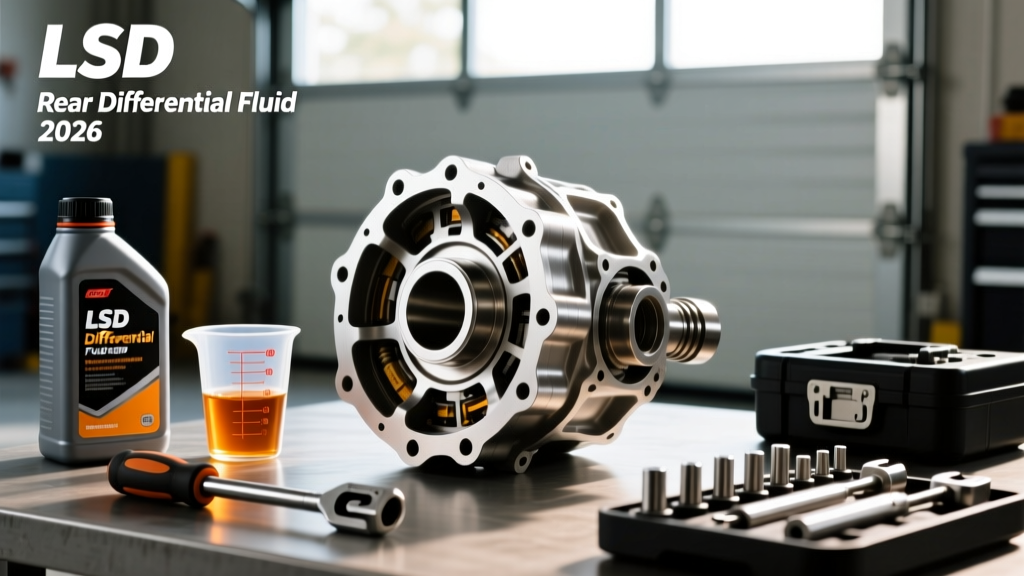
When performing a DIY service on your limited slip rear differential, adhering to exact torque specifications is non-negotiable. Overtightening differential cover bolts will warp the housing, leading to leaks and bearing misalignment. Under-tightening will result in immediate fluid loss and differential destruction. Below is a reference guide for common solid-axle applications. Always consult your specific factory service manual, as variations exist based on the model year and exact gear ratio.
| Axle / Differential Type | Fluid Capacity | Cover Bolt Torque | Fill Plug Torque | Friction Modifier Required? |
|---|---|---|---|---|
| Ford 8.8-inch (Trac-Lok) | 3.75 Pints | 35 lb-ft | 25 lb-ft | Yes (Motorcraft XL-3) |
| GM 8.6-inch / 9.5-inch (Eaton G80) | 4.0 Pints | 25 lb-ft | 25 lb-ft | No |
| Dana 44 (Trac-Lok / Powr-Lok) | 3.5 - 4.0 Pints | 30 lb-ft | 25 lb-ft | Yes (If Clutch-Type) |
| Chrysler 9.25-inch (Trac-Lok) | 4.5 Pints | 35 lb-ft | 30 lb-ft | Yes (Mopar Additive) |
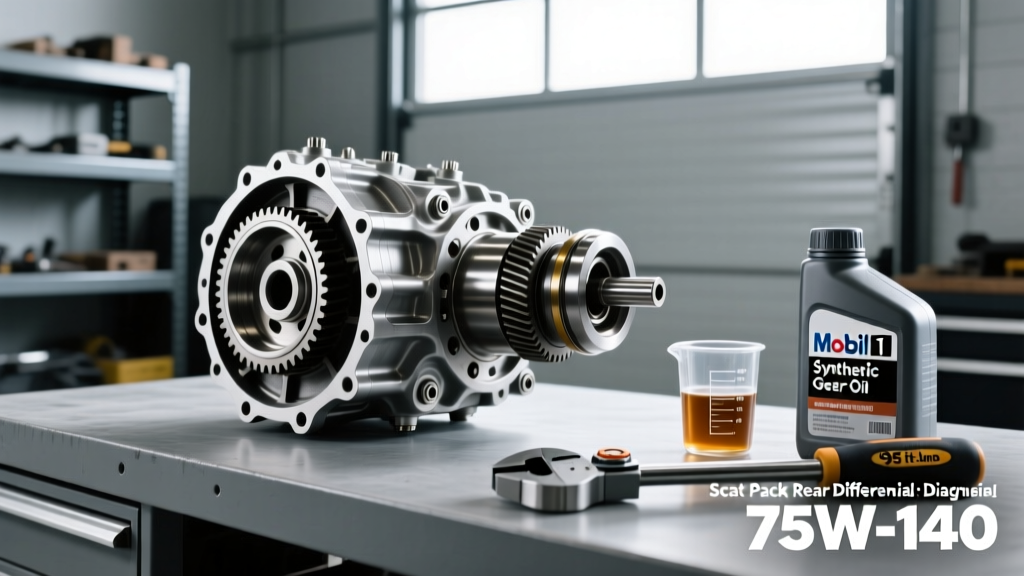
For premium fluid selection, many drivetrain specialists recommend stepping away from conventional mineral oils and utilizing synthetic alternatives. Products like AMSOIL Severe Gear 75W-90 offer superior thermal stability and shear resistance, which is critical for limited slip differentials that generate localized heat at the clutch packs during slip events. For heavy-duty towing or off-road applications, upgrading to a 75W-140 viscosity provides a thicker protective film over the ring and pinion gears under extreme load.
Hidden Costs and Preventive Upgrades
While the base cost of gear oil and a gasket is relatively low, a proper preventive maintenance service often reveals the need for minor, yet crucial, upgrades. If you are paying a shop or doing it yourself, consider the following additions to your service budget:
- Magnetic Drain Plugs ($15 - $30): Many factory differentials only feature a magnetic plug on the cover, or worse, no magnet at all. Upgrading your fill plug to a high-strength neodymium magnetic plug ensures that microscopic metallic shavings are pulled out of suspension, preventing them from embedding into the soft babbit material of the carrier bearings.
- RTV Silicone vs. Gaskets ($8 - $25): While cork and rubber gaskets are available for axles like the Dana 44 or Ford 8.8, most master technicians prefer using a high-temperature, oil-resistant RTV silicone (such as Permatex Black or Ultra Black). RTV fills minor imperfections in stamped steel or cast aluminum covers, providing a superior, leak-free seal. However, it requires a 24-hour cure time before filling with fluid, which may increase shop labor turnaround time.
- Upgraded Cover Bolts ($20 - $40): Factory cover bolts are often cheap, low-grade steel that strips easily after one or two removals. Replacing them with stainless steel or zinc-plated flange bolts from a reputable supplier like Yukon Gear & Axle ensures that future services can be performed without the nightmare of extracting snapped bolt heads from the axle housing.
Diagnostic Red Flags During Service
A limited slip rear differential fluid service is the single best diagnostic tool for your drivetrain. When you remove the differential cover, the condition of the old fluid tells a detailed story about the health of your axle. If you or your mechanic encounter any of the following conditions, expect the service cost to escalate from a simple fluid swap to a full differential rebuild:
- Large Metal Chunks: Fine, glitter-like metallic paste on the magnet is normal wear. However, if you find chunks of metal larger than a grain of rice, or actual teeth fragments, your ring and pinion or spider gears are actively failing.
- Friction Material Debris: If the fluid is dark, thick, and smells severely burnt, and you find dark, fibrous material in the housing, the clutch packs in your limited slip unit have disintegrated. The LSD is now effectively an open differential and requires a complete teardown and clutch pack replacement.
- Water Contamination: If the fluid resembles a chocolate milkshake, water has breached the axle seals or the differential breather tube. This destroys the lubricity of the gear oil and causes rapid rust formation on the bearing races. All seals and the breather must be replaced immediately.
Final Thoughts on Drivetrain Investment
The cost of a limited slip rear differential fluid service is a fraction of the price of a replacement axle assembly or a professional gear setup. In 2026, with the average cost of a complete ring, pinion, and bearing rebuild exceeding $1,800 at a specialized drivetrain shop, spending $200 on preventive maintenance is a mathematical no-brainer. Whether you are crawling rocks in a Dana 44, towing a trailer with a Ford 10.5-inch, or navigating icy roads in a crossover with a clutch-based rear drive unit, respecting the specific fluid, modifier, and torque requirements of your differential is the key to uninterrupted traction and long-term reliability.