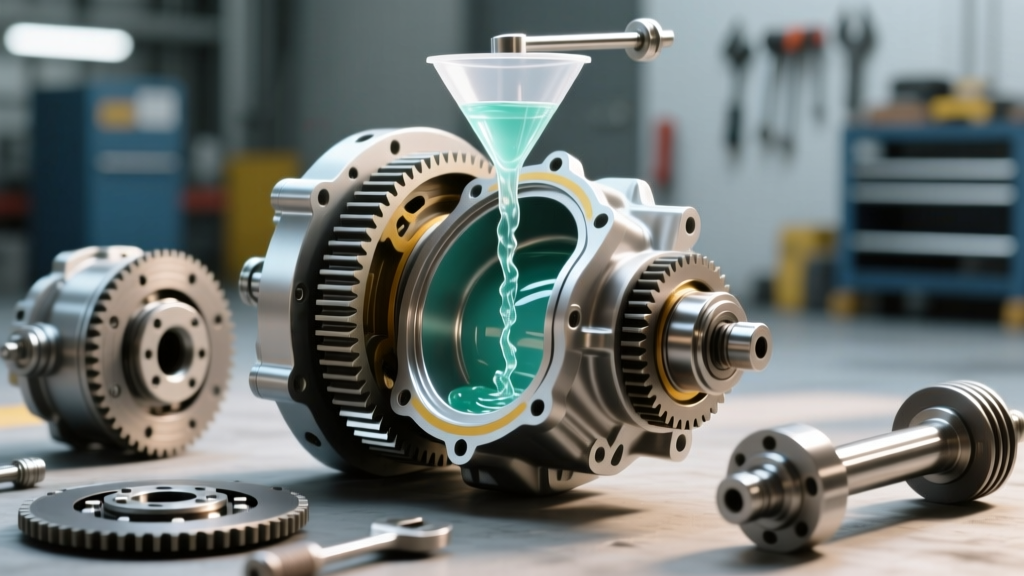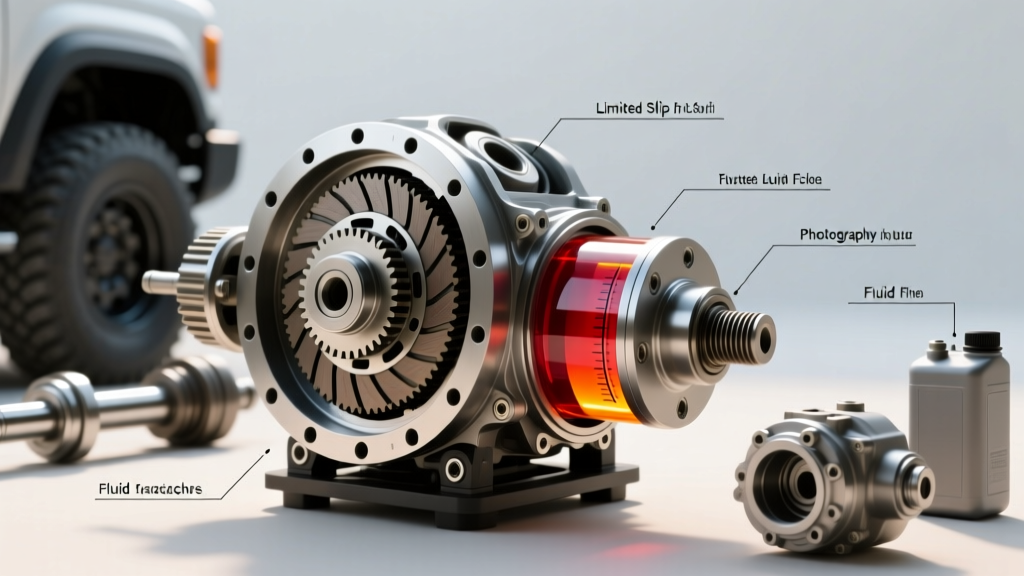
For truck and SUV owners pushing the limits of towing, off-roading, and heavy payload hauling, the rear axle is the ultimate bottleneck for performance. When off-road enthusiasts and tow-rig owners research the limited slip differential meaning, they are often trying to understand how torque biasing works under load compared to a standard open carrier. Unlike an open differential that sends 100% of the power to the wheel with the least resistance (the spinning tire in mud or snow), a limited slip differential (LSD) utilizes internal friction or gear biasing to distribute torque to the wheel that still has traction.
Understanding this concept is only the first step. True axle performance requires pairing the right LSD upgrade with meticulous differential maintenance, precise fluid chemistry, and strict adherence to torque specifications. This guide dives deep into the mechanical realities of upgrading and servicing truck and SUV differentials in 2026.
The True Limited Slip Differential Meaning in Heavy-Duty Applications
In the context of heavy-duty trucks like the Ram 2500 or Ford F-250, the limited slip differential meaning extends beyond simple traction. It represents a compromise between the street-friendly manners of an open diff and the hardcore, bind-inducing nature of a full locking differential (like an ARB Air Locker or Detroit Locker).
Modern LSDs generally fall into two categories:
- Clutch-Pack LSDs (e.g., Eaton Posi, Auburn Gear): These use a stack of friction clutches and pre-load springs to resist the speed difference between the two axle shafts. They require specialized friction modifiers in the gear oil to prevent chatter during low-speed cornering.
- Helical Gear LSDs (e.g., Eaton Truetrac, Torsen): These rely on gear binding and torque multiplication rather than friction clutches. They require no special additives and are virtually maintenance-free regarding clutch wear, making them ideal for front-axle applications in 4x4 SUVs.
Evaluating LSD Upgrades for Truck and SUV Axles
If you are upgrading from a factory open carrier or a worn-out OEM clutch-pack, selecting the right unit is critical. Below is a comparison of the most popular performance LSDs for common truck axles (Dana 44, Dana 60, GM 10.5-inch, and Ford 10.5-inch Sterling).
| LSD Model | Type | Best Application | Est. Price (2026) | Additive Required? |
|---|---|---|---|---|
| Eaton Truetrac | Helical Gear | Front/Rear Axle, Daily Driving, Light Off-Road | $650 - $850 | No |
| Auburn Pro Series | Cone Clutch | Rear Axle, Towing, Drag Racing, Street | $550 - $700 | Yes |
| Eaton Detroit TrueTrac (Heavy Duty) | Helical Gear | Heavy Towing, Snow Plowing, Commercial | $800 - $950 | No |
| Yukon Dura Grip | Clutch Pack | Budget Off-Road, Trail Rig Rear Axle | $450 - $600 | Yes |
Source: Pricing and application data aggregated from Eaton's official differential catalog and aftermarket distributors.
Fluid Chemistry and the Friction Modifier Debate
The most common failure point in truck LSD maintenance is improper fluid selection. The AMSOIL Severe Gear lineup and Red Line Synthetic oils dominate the 2026 market, but choosing the right viscosity and additive package is paramount.
75W-90 vs. 75W-140 Synthetic
For standard half-ton SUVs (like the Chevy Tahoe or Ford Expedition) used for daily driving, a full synthetic 75W-90 GL-5 gear oil provides excellent shear stability and cold-weather flow. However, for 3/4-ton and 1-ton trucks towing 10,000+ lbs, differential sump temperatures can easily exceed 250°F (121°C) on sustained highway grades. In these scenarios, upgrading to a 75W-140 synthetic is mandatory to maintain the hydrodynamic film strength required to protect the ring and pinion gears.
The Friction Modifier Imperative
If your truck utilizes a clutch-type LSD, you must add a friction modifier. Without it, the clutch packs will grab and release abruptly during turns, causing a violent 'chatter' that can shatter axle shafts or destroy the carrier.
- GM EOS (1052271): The gold standard for GM 10-bolt and 14-bolt clutch differentials.
- Ford XL-3 (C8AZ-19B546-A): Specifically formulated for Ford 8.8-inch and 10.5-inch Sterling axles.
Expert Tip: Never use friction modifiers in helical gear differentials like the Eaton Truetrac. The modifier reduces the coefficient of friction inside the carrier, which directly robs the helical gears of their ability to bias torque, effectively turning your expensive LSD into an open differential.
Precision Maintenance: Torque Specs and Clearances
When performing a differential service or installing a new LSD carrier, guessing on torque specifications will lead to catastrophic failure. Ring gear bolts, for instance, are subjected to immense shear forces. Always use a calibrated torque wrench and apply a medium-strength threadlocker (like Loctite 243) to the ring gear bolts.
Critical Torque Specifications for Common Truck Axles
- Dana 44 / Dana 60 Ring Gear Bolts: 70 - 85 lb-ft (Use 1/2-inch drive, verify thread pitch).
- GM 14-Bolt 10.5-inch Cover Bolts: 30 lb-ft (Do not overtighten, or the stamped steel cover will warp and leak).
- Ford 10.5-inch Sterling Cover Bolts: 33 lb-ft.
- Dana 44 Carrier Bearing Cap Bolts: 60 - 70 lb-ft.
- Pinion Nut (Crush Sleeve Axles): Typically 200 - 250 lb-ft to achieve correct bearing preload (measure rotational torque with an inch-pound beam torque wrench; target 15-25 in-lbs of rotational drag for used bearings).
For exact specifications, always consult the Dana Spicer service manuals or your specific OEM axle guide, as variations exist between model years and specific spline counts.
The Figure-8 Break-In Protocol for Clutch LSDs
If you have installed a new clutch-based limited slip differential, the first 50 miles are critical for bedding the friction surfaces. Skipping this step will result in premature chatter and a permanently ruined clutch pack.
- Fill the axle with the correct 75W-90 or 75W-140 synthetic fluid and the exact dosage of friction modifier specified by the manufacturer (usually 2 to 4 ounces).
- Find an empty, dry, paved parking lot.
- Drive the truck in a series of tight 'figure-8' patterns at 5 to 10 mph.
- Perform 10 to 15 full figure-8s. This forces the outer and inner wheels to rotate at different speeds, smoothly burnishing the clutch faces and distributing the friction modifier evenly across the packs.
- After the break-in, take the truck on a 20-mile highway drive to bring the fluid up to full operating temperature, then let it cool completely before checking the fluid level again.
Diagnosing Differential Noise and Wear
Even with perfect maintenance, differentials communicate their health through sound. Understanding these acoustic clues is a vital part of the performance enthusiast's toolkit:
- Coast-side Whine (Deceleration): Usually indicates worn pinion bearings or incorrect pinion depth setting. If you just changed the fluid, the new detergent may have cleaned away sludge that was masking bearing play.
- Drive-side Howl (Acceleration): Points to ring gear wear or insufficient gear backlash. Target backlash for most heavy-duty truck axles is between 0.006 and 0.010 inches.
- Clunk on Engagement: Often a sign of worn spider gears, excessive side-gear clearance, or a heavily worn clutch pack in an LSD that can no longer hold preload.
By mastering the limited slip differential meaning and committing to rigorous, spec-driven maintenance, truck and SUV owners can ensure their drivetrains survive the brutal forces of heavy towing and aggressive off-road use. Upgrading your carrier and adhering to strict fluid and torque protocols transforms a vulnerable factory axle into a bulletproof performance asset.