The Open Differential Meaning vs. Limited Slip Reality
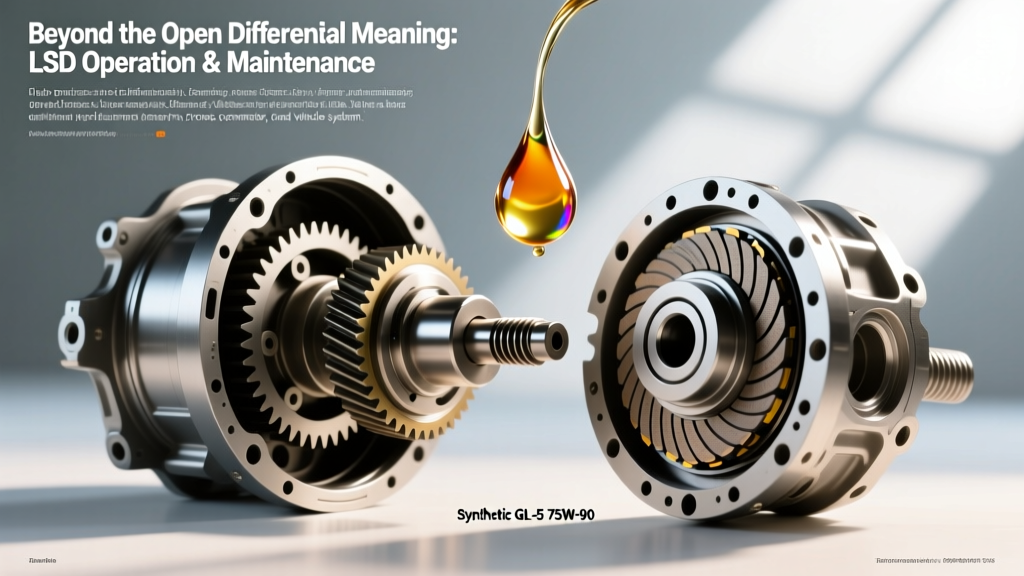
To truly grasp performance and off-road axle dynamics, you must first understand the open differential meaning. In its purest engineering sense, an open differential is a mechanical gearset designed to allow opposing drive wheels to rotate at different speeds (essential for cornering) while dividing torque equally. However, its fundamental limitation is that it routes power to the path of least resistance. If one wheel loses traction, the open diff sends 100% of the available torque to that spinning wheel, leaving the vehicle stranded.
This inherent flaw necessitated the invention of the Limited Slip Differential (LSD). While the open differential meaning revolves around equal torque split regardless of traction, an LSD introduces internal resistance—via clutch packs or helical gear binding—to bias torque toward the wheel that still has grip. But this added mechanical complexity introduces strict maintenance requirements, particularly regarding fluid chemistry and friction modifiers.
How Limited Slip Differentials Actually Work
Before wrenching on an axle, it is critical to identify which type of LSD is housed in your differential cover. Maintenance protocols vary wildly between the two dominant architectures.
Clutch-Pack LSDs (Eaton Posi, Ford Trac-Lok, GM G80)
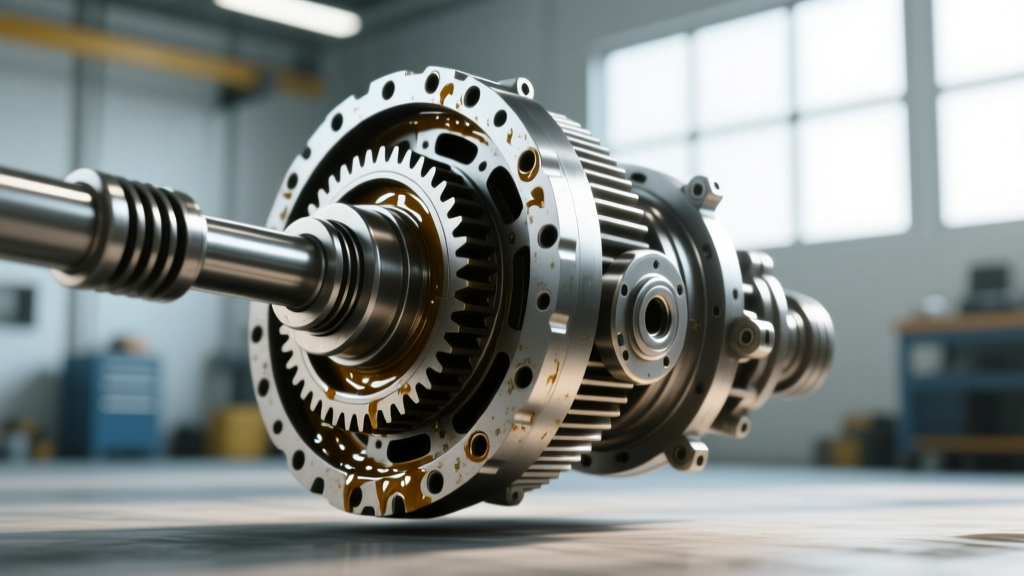
Clutch-pack differentials utilize alternating friction and steel discs located behind the side gears. A preload spring (often an S-shaped spring or a stack of Belleville washers) forces these packs together. When one wheel begins to slip, the internal torque thrust forces the side gears to push outward against the clutch packs, locking the axles together. According to Eaton's automotive differential engineering documentation, the friction material—typically a high-friction paper or carbon composite—relies heavily on specific chemical additives in the gear oil to prevent stick-slip chatter.
Helical Gear LSDs (Torsen, Detroit Truetrac)
Helical gear LSDs operate without clutch packs or friction modifiers. Instead, they use complex planetary gearsets that create internal binding forces when a speed differential occurs. The Detroit Truetrac (part # 911A480 for a Dana 44, per Dana Spicer's catalog) multiplies torque up to 3.5 times to the gripping wheel. Because there are no friction discs, these units require standard GL-5 gear oil and absolutely zero friction modifier.
The Chemistry of LSD Maintenance: Gear Oil and Friction Modifiers
As of 2026, the aftermarket is flooded with 'all-in-one' synthetic gear oils claiming to contain built-in friction modifiers. However, for severe-duty applications, towing, or dedicated track use, separating your base oil from your friction modifier (FM) remains the gold standard for precise tuning.
- Base Oil (GL-5 75W-90 or 75W-140): GL-5 ratings indicate high levels of Sulfur-Phosphorus Extreme Pressure (EP) additives. These EP additives are crucial for protecting the hypoid ring and pinion gears from microscopic welding under heavy load.
- Friction Modifier (FM): Products like Motorcraft XL-3 or GM ACDelco 88900338 alter the coefficient of friction between the clutch discs. They lower the static friction threshold just enough to allow the clutches to slip smoothly during low-speed cornering, eliminating the dreaded 'chatter' or 'clunk' that destroys clutch packs over time.
Expert Warning: Never add friction modifier to a helical gear LSD (like a Truetrac) or an open differential. Doing so will not harm the gears, but it is a waste of money and can slightly reduce the mechanical efficiency of the gearset by making the oil overly slippery for the bearing surfaces.
Precision Service Guide: Torque Specs and Procedures
Servicing a clutch-pack LSD requires meticulous cleanliness and adherence to torque specifications. A warped differential cover will lead to fluid leaks and bearing preload loss.
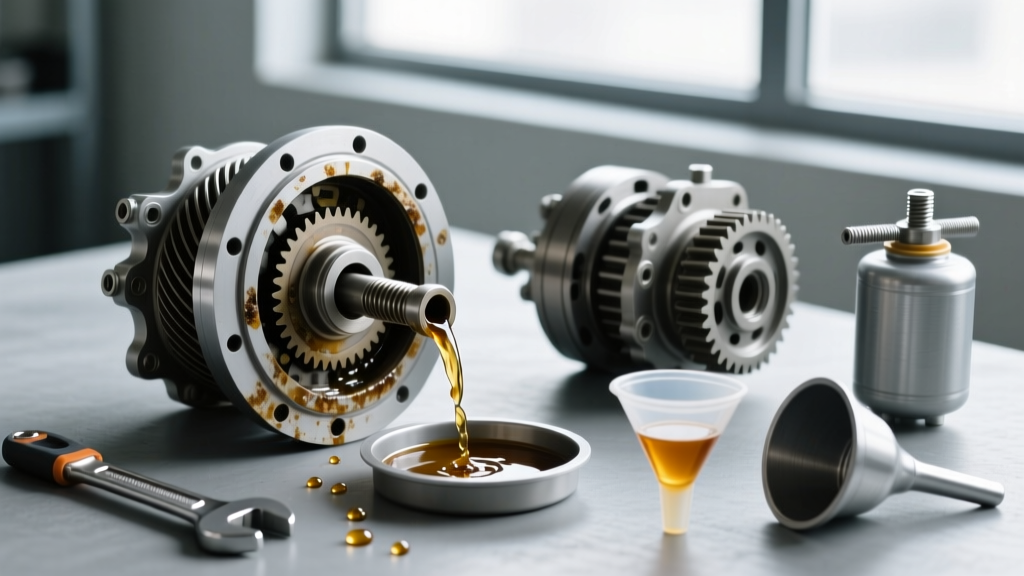
Step 1: Drain and Inspection
Remove the cover bolts. Inspect the drained fluid. A fine metallic paste on the drain plug magnet is normal hypoid gear wear. However, if you find chunks of friction material (which looks like dark, fibrous debris) or brass-colored shavings (indicating worn thrust washers or side gear bearings), the differential requires a complete teardown.
Step 2: Cover Prep and RTV Application
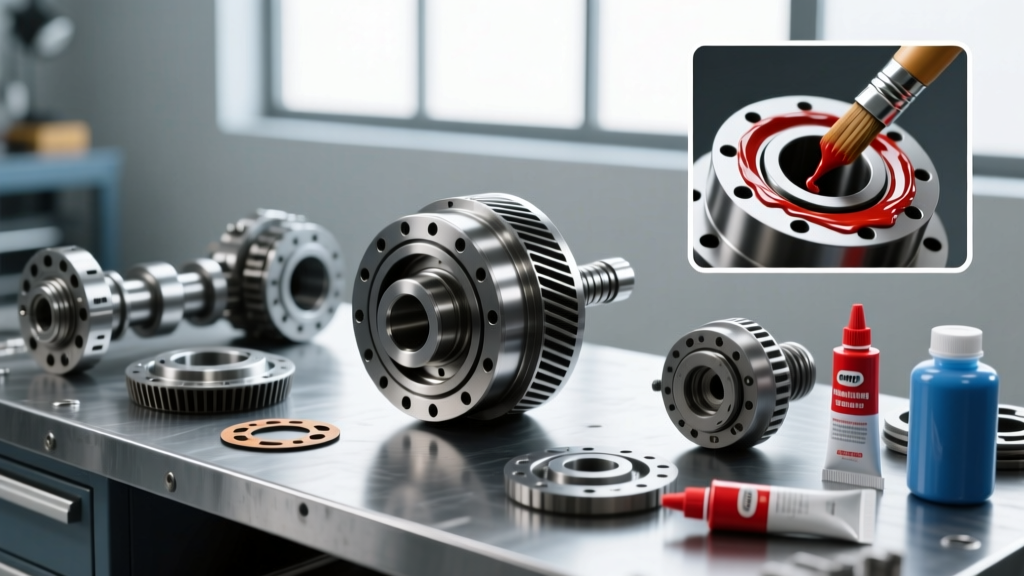
Scrape all old RTV silicone from the axle housing and cover using a plastic scraper to avoid gouging the mating surface. Clean with brake parts cleaner. Apply a continuous 1/8-inch bead of Permatex Ultra Black (sensor-safe) to the cover. Do not use cheap gaskets; RTV provides superior sealing for modern stamped-steel covers.
Step 3: Torque Specifications (Star Pattern)
Always torque cover bolts in a crisscross star pattern to ensure even clamping force. Over-torquing will distort the cover and potentially crush the internal crush sleeve or alter bearing preload.
| Axle Type | Cover Bolt Torque Spec | Fluid Capacity (Approx.) | Recommended Fluid |
|---|---|---|---|
| Ford 8.8-inch (Trac-Lok) | 28 - 38 lb-ft | 2.5 Pints | 75W-140 Synthetic + 4oz FM |
| Dana 44 (Spicer LSD) | 20 - 25 lb-ft | 3.5 Pints | 75W-90 GL-5 + 4oz FM |
| GM 9.5" 14-Bolt (Eaton) | 25 lb-ft | 5.5 Pints | 75W-90 Synthetic + 4oz FM |
| Chrysler 8.75" (Sure Grip) | 30 - 35 lb-ft | 3.25 Pints | 80W-90 GL-5 + 4oz FM |
Step 4: The Critical Bed-In Procedure
If you have installed new clutch packs (such as the Eaton 19586-010 rebuild kit, typically costing $160-$210 in 2026) or completely flushed an older unit, you must bed in the clutches. Find an empty, dry parking lot. Drive the vehicle in 10 to 15 tight 'figure-8' patterns at roughly 10-15 mph. This controlled slip burnishes the friction material, seats the S-springs, and ensures the friction modifier is fully absorbed into the porous clutch discs. Skipping this step is the leading cause of premature LSD chatter.
Troubleshooting LSD Failure Modes
Even with rigorous maintenance, clutch-pack LSDs are wear items. Use the diagnostic matrix below to identify issues before they cascade into catastrophic ring and pinion failure. For further diagnostic testing methodologies, refer to the Red Line Oil Technical Information Library regarding gear oil shear stability and friction coefficients.
| Symptom | Probable Cause | Corrective Action | Est. Cost (2026) |
|---|---|---|---|
| Low-speed cornering chatter/shudder | Depleted friction modifier or glazed clutch discs | Drain, flush, refill with fresh FM. Perform figure-8 bed-in. | $45 (Fluid + FM) |
| LSD acts like an Open Diff (one wheel spins) | Worn clutch packs or broken preload S-spring | Drop cover, inspect S-spring. Rebuild clutch packs if intact. | $180 (Rebuild Kit) |
| Whining noise that changes with load | Ring and pinion wear (unrelated to LSD clutches) | Check gear backlash and pinion bearing preload. Re-gear if necessary. | $400+ (Gears & Setup) |
| Metallic clunk on hard acceleration | Excessive side gear clearance or worn thrust washers | Measure side gear end-play. Replace thrust washers or entire LSD unit. | $50 - $650 |
Final Thoughts on Axle Longevity
Understanding the open differential meaning highlights exactly why the limited slip differential is a masterpiece of traction management, but it is not a 'fill and forget' component. Whether you are maintaining a daily-driven Ford F-150 with an 8.8-inch rear end or a dedicated rock-crawler with a Dana 60, respecting the chemical requirements of the clutch packs and adhering strictly to torque specifications will ensure your drivetrain delivers power to the pavement exactly as engineered.