Understanding the Drivetrain: What's a Limited Slip Differential?
If you have ever found yourself asking, what's a limited slip differential and why it requires such meticulous maintenance compared to an open differential, you are not alone. While an open differential sends power to the wheel with the least amount of traction (which is disastrous in mud, snow, or on a drag strip), a Limited Slip Differential (LSD) utilizes internal clutch packs, cone clutches, or helical gears to bias torque to the wheel that still has grip. Popular variants include the Eaton Posi-Traction, Auburn LSD, and Ford Traction-Lok.
Because clutch-based LSDs rely on physical friction material pressing against steel separator plates, the fluid inside the axle housing is not just a lubricant; it is a vital hydraulic and friction-modifying medium. As we navigate the automotive landscape in 2026, modern synthetic gear oils have vastly improved thermal stability, but the fundamental need for specialized friction modifiers and strict service intervals remains unchanged. Neglecting this service leads to clutch glazing, severe chatter during low-speed cornering, and ultimately, catastrophic differential failure.
Differential Fluid Change Intervals: When Should You Service?
The interval for changing differential fluid in an LSD depends heavily on your driving habits and the specific gear oil formulation. While some modern OEMs claim their synthetic axle fluids are 'lifetime,' most drivetrain experts and aftermarket manufacturers strongly disagree. Heat cycling degrades the friction modifiers long before the base oil loses its viscosity.
| Driving Condition | Service Interval (Miles) | Time Interval | Fluid Recommendation |
|---|---|---|---|
| Normal (Highway/Commuting) | 50,000 - 60,000 | Every 4 Years | Full Synthetic 75W-90 GL-5 |
| Severe (Towing/Off-Road) | 15,000 - 30,000 | Every 2 Years | Synthetic 75W-140 GL-5 + Modifier |
| Track/Racing (Road Course) | 2 - 4 Race Events | End of Season | Heavyweight Racing Gear Oil + Modifier |
| Water Submersion (Trailering) | Immediately | N/A | OEM Spec 75W-90 + Fresh Modifier |
Tools and Materials for the Job
Before sliding under the vehicle, gather the correct materials. Using the wrong sealant or omitting the friction modifier is the leading cause of post-service differential noise.
- Gear Oil: 2 to 3 quarts of high-quality 75W-90 GL-5 Synthetic (e.g., AMSOIL Severe Gear or Valvoline Full Synthetic). Note: GL-5 is mandatory for hypoid ring and pinion gears.
- Friction Modifier: 1 bottle (4 oz). Use OEM-specific modifiers like GM EOS (Part #1052358) or Ford XL-3 (EST-M2C118-A). Aftermarket options like Lubegard Limited Slip Supplement (60030) are also excellent.
- RTV Silicone: Permatex Ultra Black (Part #81173) or The Right Stuff for stamped steel covers.
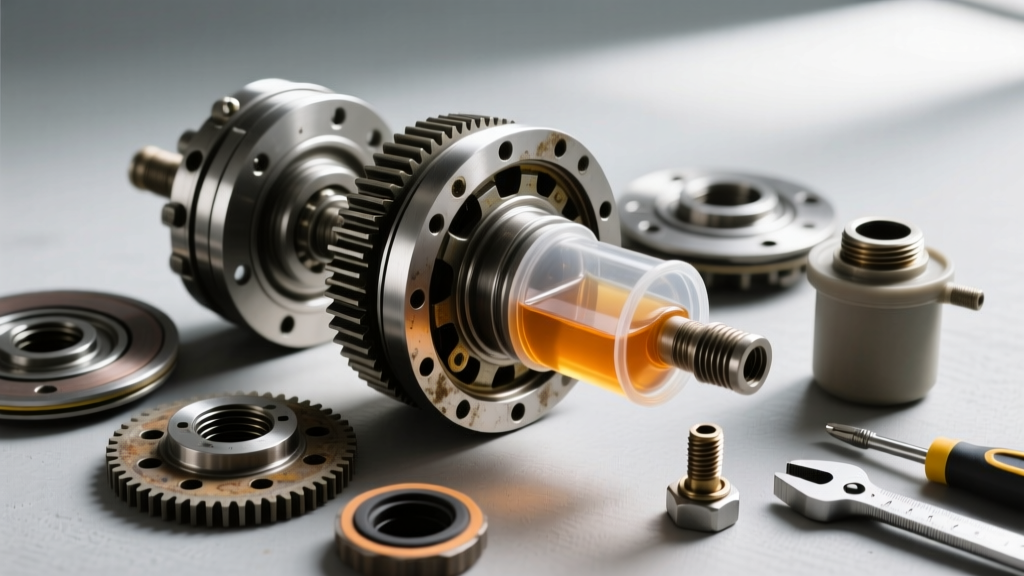
- Tools: 3/8-inch drive torque wrench, 13mm or 15mm sockets (depending on your axle), gasket scraper, brass wire brush, brake cleaner, lint-free shop towels, and a fluid transfer pump.
Step-by-Step LSD Fluid Change Procedure
This guide focuses on the traditional stamped-steel differential cover found on solid axles like the GM 10-bolt (8.5-inch), Ford 8.8-inch, and Dana 44. If your vehicle has a drain plug (common on some aluminum aftermarket covers or independent rear suspension housings), the draining process is simplified, but the cleaning and refilling steps remain identical.
Step 1: Preparation and Draining
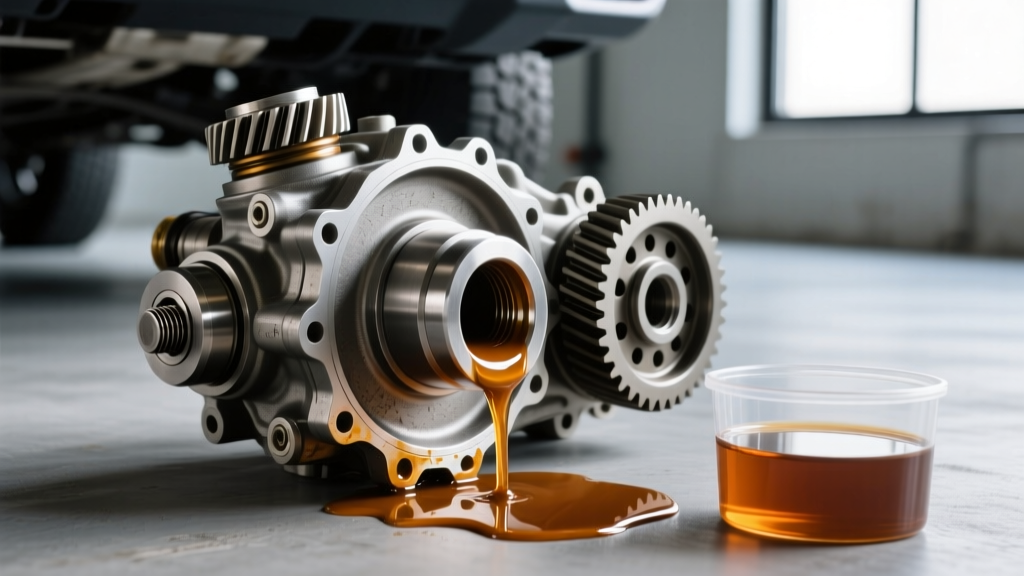
Park the vehicle on a level surface and support it securely on jack stands. Never rely solely on a hydraulic jack. Place a drain pan (capable of holding at least 4 quarts) beneath the differential cover. Using your socket, break loose all the cover bolts. Pro Tip: Leave the top two bolts threaded in by just a few turns, then gently pry the bottom of the cover away from the housing with a flathead screwdriver. This allows the fluid to drain in a controlled stream rather than flooding your floor when the cover suddenly drops.
Step 2: Cleaning and Inspection
Once drained, remove the cover entirely. Inspect the inside of the housing. You will find a magnet either bolted to the cover or sitting loose in the housing. A fine, gray metallic paste on the magnet is normal wear from the clutch packs and gears. However, if you find large metal shards, chunks of steel, or brass-colored flakes (indicating worn side gear thrust washers), a full differential rebuild is required.
Spray the interior with brake cleaner and wipe it down with lint-free towels. Do not use standard paper towels, as they will leave fibers that can clog the tiny oil passages in the LSD clutch packs. Scrape the mating surface of the axle housing and the cover until it is bare, clean metal.
Step 3: RTV Application and Cover Installation
Apply a continuous 3/16-inch bead of Permatex Ultra Black RTV around the differential cover. Ensure you circle the inside of every bolt hole to prevent oil from weeping through the threads. Press the cover into place and thread all bolts in by hand to prevent cross-threading.
Tighten the bolts in a crisscross 'star' pattern to draw the cover down evenly. Refer to your specific axle's torque specifications:
- GM 10-Bolt (8.5-inch): 22 lb-ft
- Ford 8.8-inch: 28 - 38 lb-ft
- Dana 44: 25 - 30 lb-ft
Allow the RTV to cure for at least 2 hours before filling, or 24 hours for a full cure if using standard silicone. For immediate fill-ups, use Permatex 'The Right Stuff' which seals instantly.
Step 4: Refilling and Friction Modifier Integration
Remove the fill plug located on the upper front or side of the axle housing. Always remove the fill plug before draining the fluid in the future—if the fill plug is seized, you do not want to be left with an empty, un-fillable differential. Squeeze the entire 4 oz bottle of friction modifier into the housing first. Follow this with your 75W-90 synthetic gear oil using a transfer pump. Continue pumping until the fluid begins to weep out of the bottom edge of the fill hole. This indicates the differential is at the correct level (typically 2.0 to 2.5 quarts for a standard passenger truck axle). Reinstall and torque the fill plug (usually 25-35 lb-ft).
The Crucial Figure-8 Bedding Procedure
This step is frequently skipped by amateur mechanics, leading to immediate warranty claims for 'differential chatter.' The friction modifier must be physically worked into the porous surfaces of the clutch discs. Drive the vehicle to a large, empty, damp parking lot. Perform 10 to 12 tight 'figure-8' maneuvers at roughly 10 mph. This forces the clutches to slip and engage repeatedly, evenly distributing the modifier and bedding the clutch packs. If you still experience a slight shudder or chatter after this, add an additional 1 oz of friction modifier and repeat the process. Do not exceed the manufacturer's maximum modifier limit, or the LSD will act like an open differential.
Troubleshooting Common Post-Service Issues
Expert Insight: Fluid level and chemistry dictate clutch behavior. According to Eaton's differential engineering guidelines, clutch chatter is almost exclusively a friction-modifier deficiency, while gear whine is a mechanical backlash issue unrelated to the fluid change itself.
- Chatter during tight turns: Add 1 oz of friction modifier. If it persists, the clutch packs may be glazed and require a physical teardown and replacement.
- Whining noise that changes with load: This is not caused by the new fluid. It indicates ring and pinion gear wear or incorrect backlash/preload settings from a previous setup.
- Leaks from the cover: Caused by insufficient cleaning of the mating surfaces, over-torquing the bolts (which warps stamped steel covers), or using low-grade RTV. Always use oil-resistant formulations like Permatex Ultra Black or The Right Stuff.
Final Thoughts on Axle Maintenance
Understanding what's a limited slip differential is only the first step; maintaining it is what ensures your vehicle puts power to the pavement effectively for hundreds of thousands of miles. By adhering to strict service intervals, utilizing high-quality synthetic GL-5 gear oils, and never skipping the friction modifier and bedding procedures, you will protect your drivetrain investment and maintain optimal traction in any 2026 driving condition.