The "Center Differential" Myth in UTV Drivetrains
When automotive enthusiasts and seasoned mechanics transition to diagnosing side-by-side utility vehicles, they often bring traditional 4WD terminology with them. One of the most frequent misdiagnoses in the off-road community involves searching for a "center differential" when experiencing drivetrain binding, hopping, or erratic AWD engagement. If you are troubleshooting a Polaris Ranger rear differential and its interaction with the All-Wheel Drive (AWD) system, you must first discard the traditional center-diff paradigm found in vehicles like the Subaru Outback or Audi Quattro.
The Polaris Ranger lineup does not utilize a center differential. Instead, it relies on a transaxle-style transmission output, a direct rear driveshaft, and an electromagnetic front sprag clutch system. When owners experience binding in tight corners or violent AWD engagement on descents, they often blame a phantom center diff. In reality, these symptoms almost always trace back to rear differential fluid degradation, Active Descent Control (ADC) circuit faults, or front sprag clutch failure. Understanding the true architecture of the Ranger’s AWD system is the first step toward accurate symptom diagnosis.
How Power Actually Routes: Rear Diff vs. Front Sprag
To diagnose AWD binding, you must understand how the Ranger distributes torque. The engine and CVT (Continuously Variable Transmission) are mounted transversely or longitudinally (depending on the generation, such as the XP 1000 vs. older 800 models). The transmission features a primary output shaft that drives the rear differential directly via a prop shaft. The rear wheels are always receiving power when the vehicle is in gear.
The AWD system engages the front wheels via a secondary transmission output. This shaft spins an armature inside the front differential assembly. When the rear wheels lose traction and spin faster than the front wheels, an electromagnetic coil in the front differential energizes. This magnetic field drags a Hillman sprag clutch into engagement, mechanically locking the front axle to the front prop shaft. Therefore, any "center diff" binding you feel is actually the rear differential struggling to manage wheel-speed differentials, or the front sprag clutch failing to overrun properly during turns.
The Role of the Rear Differential in AWD Engagement
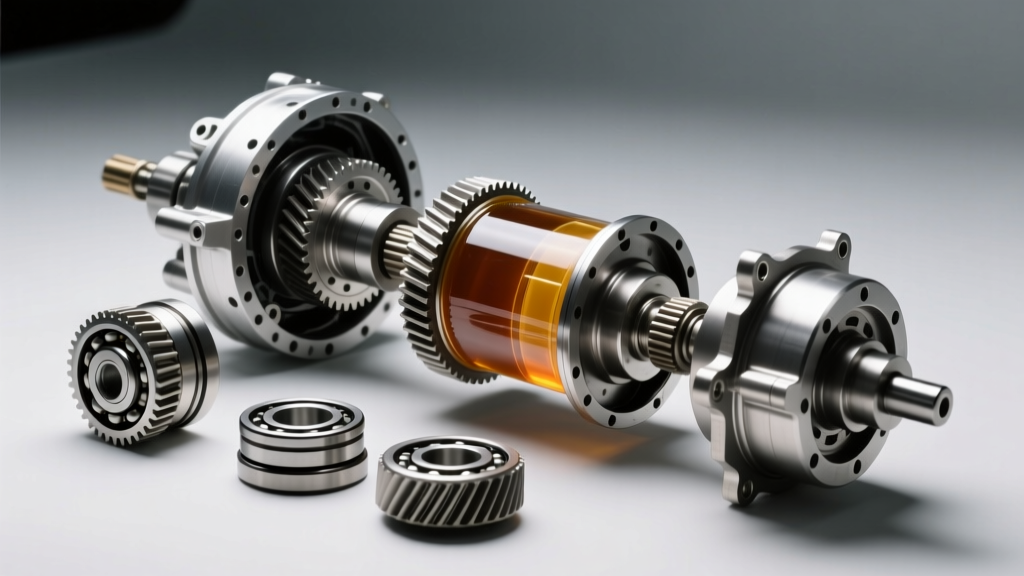
The Polaris Ranger rear differential is a hypoid gear set with internal spider gears. Because UTV tires have a much smaller diameter than full-size truck tires, the ring and pinion gears in the rear differential spin at significantly higher RPMs. This high-speed operation generates immense shear forces on the gear oil. If the fluid loses its viscosity, the internal spider gears cannot properly lubricate and differentiate during tight turns. This causes the rear end to "hop" or bind, which the vehicle’s ECU may misinterpret as rear wheel slip, inadvertently triggering the front AWD electromagnetic coil to engage on dry pavement.
Top Symptoms Mimicking Center Diff Failure
Before tearing into the transmission or front differential, evaluate the rear end. Here are the primary symptoms of rear differential and AWD system misalignment:
- Low-Speed Corner Binding: The rear end hops or chirps on hardpack surfaces. Often caused by sheared rear diff fluid or incorrect friction modifier levels.
- Violent AWD Engagement on Downhills: The front end locks up abruptly when descending. This is a classic Active Descent Control (ADC) failure linked to rear differential fluid shear.
- AWD Chatter at Cruising Speeds: The front drivetrain clunks in and out of engagement. Caused by rear tires of unequal circumference (due to uneven wear or tire pressure) forcing the rear diff to constantly differentiate, tricking the AWD system.
- Whining that Changes with Load: Indicates ring and pinion gear wear inside the rear differential housing, often exacerbated by running standard automotive 75W-90 instead of UTV-specific synthetic fluids.
Factory Specifications: Fluid, Capacity, and Torque
Using the correct fluid is non-negotiable for Polaris AWD systems. Standard automotive GL-5 75W-90 gear oil contains friction modifiers that can cause the Ranger’s internal components to slip or the ADC system to miscalculate wheel slip. Always use the manufacturer-specified lubricants.
| Model Variant | Rear Diff Capacity | Required Fluid Spec | Drain/Fill Plug Torque |
|---|---|---|---|
| Ranger XP 1000 (2018-2026) | 8.5 oz (250 ml) | Polaris AGL Plus Synthetic (PN 2878068) | 14 ft-lbs (19 Nm) |
| Ranger XP 900 (2013-2019) | 8.0 oz (236 ml) | Polaris AGL Plus Synthetic | 14 ft-lbs (19 Nm) |
| Ranger EV (Electric) | 12.0 oz (355 ml) | Polaris AGL Plus Synthetic | 17 ft-lbs (23 Nm) |
| Front Hubs (All Models) | 4.0 oz per hub | Demand Drive Hub Fluid (PN 2877922) | Hand Tight + 1/4 Turn |
Note: Always source OEM or high-quality equivalent fluids from reputable distributors like Partzilla to avoid counterfeit lubricants that lack necessary shear-stable polymers.
Deep Dive: ADC and Fluid Shearing Dynamics
Active Descent Control (ADC) is a hallmark feature of the modern Polaris Ranger. When descending a steep grade, the ECU monitors throttle position and engine RPM. If the vehicle accelerates without throttle input, the ADC system modulates engine braking and selectively applies the AWD system to keep all four wheels turning at the same rate, preventing the rear end from stepping out.
However, ADC relies heavily on the rheological properties of the rear differential fluid. Over 50 to 100 hours of hard use, the polymers in inferior or incorrect gear oils permanently shear down. A fluid that started as a 75W equivalent may degrade to a 50W or 40W viscosity. When the ADC system attempts to modulate rear wheel slip, the sheared fluid fails to provide the necessary hydrodynamic boundary layer between the spider gears. The rear differential essentially "locks up" microscopically, sending erratic wheel-speed data to the ECU. The ECU responds by violently pulsing the front electromagnetic coil, resulting in the terrifying front-end binding and hopping that owners mistakenly attribute to a broken center differential.
Step-by-Step Diagnostic Framework for AWD Binding
If your Ranger is exhibiting AWD binding, follow this exact diagnostic sequence to isolate the fault without unnecessarily replacing expensive drivetrain components.
1. Verify Rear Differential Fluid Condition
Jack up the rear of the vehicle safely on stands. Remove the rear differential fill plug (using an 8mm or 10mm hex, depending on the year). Inspect the fluid. If it smells burnt, appears milky (water intrusion past the axle seals), or contains fine metallic glitter, the internal bearings or ring gear are wearing. Drain the fluid completely. If the fluid is simply dark but free of metal, perform a flush and refill with Polaris AGL Plus. Many "center diff" binding issues are resolved simply by restoring the correct fluid viscosity.
2. The Four-Wheel Jack Test
With all four wheels off the ground, start the Ranger and place it in 4WD/AWD mode. Apply a small amount of throttle. Observe the front and rear wheels. They should spin at the exact same rate. Now, grab one rear tire and apply physical resistance (simulating rear wheel slip). The front wheels should immediately engage and spin faster. If the front wheels chatter or fail to engage, your issue is not the rear differential, but rather the front sprag clutch or the electromagnetic coil.
3. Multimeter Test on the Front Electromagnetic Coil
If the rear diff fluid is pristine and the mechanical jack test fails, test the AWD engagement coil. Locate the two-wire harness leading to the front differential. Disconnect the harness and use a digital multimeter set to Ohms (Ω). Probe the two terminals on the differential side of the coil. A healthy Polaris AWD coil should read between 11.0 and 14.0 ohms at room temperature. If you read infinite resistance (open circuit) or near zero (short), the coil is burnt out and must be replaced. For deeper electrical diagnostics and wiring diagrams, the Polaris ATV Forums technical section is an invaluable community resource for tracing ECU relay faults.
4. Inspect Tire Circumference and Pressure
It sounds trivial, but a 2 PSI difference in tire pressure between the left and right rear tires alters the rolling circumference. This forces the rear differential spider gears to constantly rotate, generating excess heat and shearing the AGL Plus fluid prematurely. Furthermore, if the rear tires are significantly larger than the front tires (due to aftermarket modifications without ECU recalibration), the front drivetrain will perpetually try to "catch up," causing the sprag clutch to drag and bind in corners. Always maintain uniform tire pressures and adhere to factory stagger recommendations.
Preventative Maintenance for Longevity
To keep the Polaris Ranger rear differential and AWD system operating seamlessly, treat the fluid change interval as a critical maintenance milestone, not an afterthought. For utility and farm use, change the rear differential fluid every 100 hours or annually. For aggressive trail riding, mudding, or rock crawling, reduce that interval to 50 hours. Always torque the magnetic drain plug to exactly 14 ft-lbs to prevent stripping the aluminum housing threads, and ensure the vent hose on the rear differential axle tube is routed high and clear of debris to prevent water ingestion during deep crossings. By respecting the unique engineering of the UTV AWD system and abandoning the center-diff myth, you can accurately diagnose binding issues and keep your Ranger traction-ready for any terrain.