The Traction Deficit: Why Open Differentials Fail on Estates
When navigating wet inclines, uneven terrain, or pulling heavy tow-behind aeration equipment, a standard open differential becomes a severe liability. Open differentials route torque to the path of least resistance. On a manicured but slick lawn, this means the moment one drive tire loses grip, the opposing tire receives zero forward momentum, leaving your machine stranded on a mild slope. For estate owners and landscaping professionals, upgrading to a lawn tractor with locking differential hardware is not a luxury; it is a fundamental requirement for consistent traction, reduced turf tearing, and operational efficiency.
While automotive enthusiasts frequently discuss locking differentials in the context of solid axles like the Dana 44 or Ford 8.8, the small-equipment sector relies on specialized transaxles and compact gearboxes. Understanding the mechanical distinctions, fluid requirements, and upgrade paths for these compact drivetrains is critical for maximizing machine longevity.
Anatomy of a Lawn Tractor With Locking Differential
Unlike automotive applications that utilize complex pneumatic or electronic actuators to engage locking mechanisms, lawn and garden tractors typically rely on manual mechanical engagement or simplified electronic solenoids. The primary goal is to force both left and right axle shafts to rotate at an identical 1:1 ratio, effectively eliminating the differential action that causes single-wheel spin.
Mechanical Dog-Clutch vs. Electronic Actuation
The most common and robust locking mechanism found in heavy-duty garden tractors is the mechanical dog-clutch locker. Operated via a manual lever on the dashboard or fender, this system physically slides a splined collar across the axle shaft, locking it directly to the differential carrier or opposing axle shaft. Because it relies on sheer mechanical interference rather than friction clutches, it offers 100% lockup and is immune to the slippage that plagues limited-slip differentials (LSDs) under heavy load.
Conversely, high-end zero-turn mowers and premium estate tractors may feature electronic locking differentials. These utilize a 12V electromagnetic actuator to engage a locking pin. While convenient, the electronic solenoids are susceptible to moisture ingress and vibration-induced wiring failures, making the manual dog-clutch the preferred choice for severe-duty environments.
Transaxle Selection Matrix: Tuff Torq vs. Hydro-Gear
Selecting the correct transaxle is the foundation of your upgrade. The market is dominated by two primary manufacturers: Tuff Torq and Hydro-Gear. Below is a comparison of popular transaxle models that support locking differential configurations or heavy-duty estate applications.
| Transaxle / Axle Model | Locker Actuation | Max Input Torque | Axle Diameter | Est. Upgrade Cost |
|---|---|---|---|---|
| Tuff Torq K58 | Manual Dog-Clutch | 350 lb-ft (Output) | 1.00 inch | $850 - $1,100 |
| Tuff Torq K62 | Manual Dog-Clutch | 420 lb-ft (Output) | 1.125 inch | $1,200 - $1,500 |
| Hydro-Gear GT Series | Electronic Solenoid | 300 lb-ft (Output) | 1.00 inch | $1,400 - $1,800 |
| Dana 44 (Standalone) | Automotive Locker Adapted | 600+ lb-ft | 1.31 inch | $2,500+ (Custom Fab) |
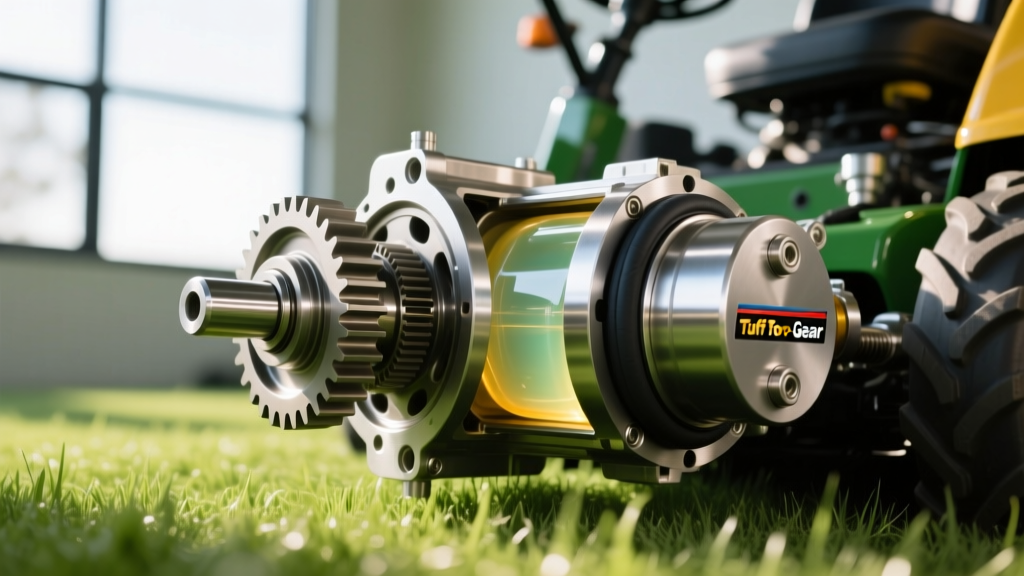
The Tuff Torq K58 is widely considered the gold standard for lawn tractors requiring a locking differential. Frequently found in premium John Deere X300 and X500 series machines, the K58 features a cast-iron housing and an integrated mechanical lock that physically bridges the axle shafts.
The Critical Role of Differential Fluid in Locker Longevity
The most frequent cause of catastrophic transaxle failure during or after a locking differential upgrade is the misuse of lubricants. The fluid dynamics in small-equipment drivetrains are vastly different from automotive differentials, and treating them identically will result in immediate mechanical destruction.
Integrated Hydrostatic Sumps vs. Standalone Gear Axles
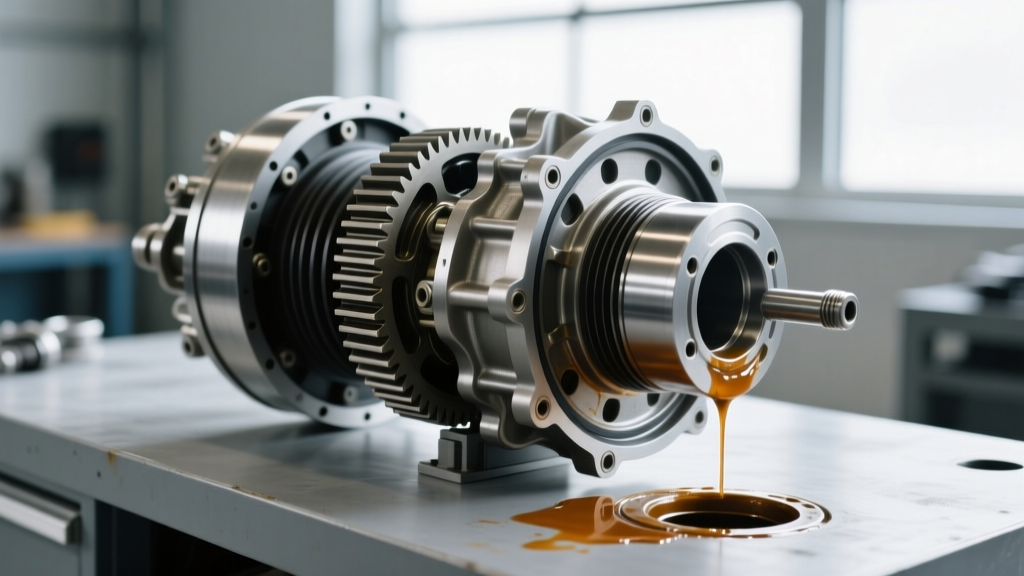
In the vast majority of modern lawn tractors, the differential is not a standalone unit; it is integrated directly into the hydrostatic transaxle housing. This means the differential gears, the hydraulic charge pump, and the variable-displacement motors all share the exact same fluid sump.
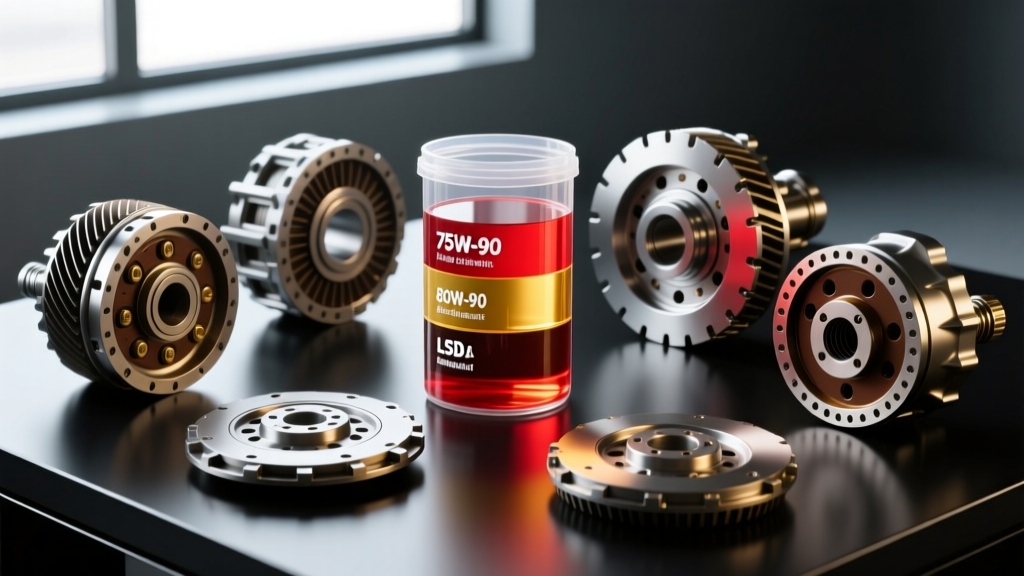
CRITICAL WARNING: You must never put 75W-90 or 80W-90 GL-5 gear oil into an integrated hydrostatic transaxle like the Tuff Torq K58 or Hydro-Gear ZT-2800. Gear oil is far too viscous for the microscopic clearances of the hydraulic piston pumps. Doing so will cause immediate cavitation, pump starvation, and total hydrostatic failure within minutes of operation.
For integrated hydrostatic transaxles with locking differentials, you must use a specialized tractor hydraulic fluid that meets J20D or J20C specifications. As of 2026, the industry standard remains John Deere Low Viscosity Hy-Gard (J20D) or Mobilfluid 424. These fluids possess the necessary anti-wear additives (like zinc dialkyldithiophosphate) to protect the differential gears while maintaining the precise viscosity required for the hydrostatic pumps. The typical fluid capacity for a K58 transaxle is 1.8 to 2.0 quarts.
Standalone Gear-Driven Axles and Yellow Metal Corrosion
If your estate tractor utilizes a standalone, gear-driven rear axle (such as a heavy-duty Spicer or adapted Dana unit driven by a separate transmission or belts), the fluid requirements change entirely. These units require a dedicated gear oil, typically 75W-90 GL-5.
However, extreme caution is required regarding the additive package. Standard GL-5 gear oils contain high levels of sulfur-phosphorus extreme pressure (EP) additives. When subjected to high operating temperatures, these sulfur compounds actively corrode yellow metals (bronze, brass, and copper) commonly used for differential thrust washers and axle bushings in small tractors. To prevent the dissolution of your internal bushings, you must select a yellow-metal-safe synthetic gear oil, such as Red Line 75W90 GL-5, which utilizes a specialized ester base and non-corrosive EP additive chemistry.
Friction Modifiers: Do Lockers Need Them?
A common point of confusion is the use of limited-slip friction modifiers. If your transaxle utilizes a true mechanical dog-clutch locker (like the K58), friction modifiers are entirely unnecessary and should be omitted. The locker relies on physical metal-to-metal interlocking, not clutch-pack friction. However, if you are upgrading to a clutch-type limited-slip differential (LSD) for smoother on-pavement turning, adding an 8oz bottle of friction modifier (such as Ford XL-3 or equivalent) is mandatory to prevent severe clutch chatter and binding during low-speed turns.
Installation Torque Specs and Axle Reinforcement
Engaging a locking differential multiplies the torsional stress applied to the axle shafts and wheel hubs. When both wheels are forced to turn simultaneously on high-grip surfaces, the axle shafts absorb the full twisting force of the engine without the relief of differential slip. To prevent sheared axles and spun hubs, strict adherence to torque specifications and hardware upgrades is mandatory.
- Axle Nuts (1-inch thread): Torque to 110-130 ft-lbs. Always use a new stover (prevailing torque) lock nut. Never reuse an old axle nut.
- Hub Set Screws: Torque to 18-22 ft-lbs. Apply medium-strength blue threadlocker (Loctite 243) to prevent vibration-induced backing out.
- Transaxle Mounting Bolts: Torque to 35-45 ft-lbs. Ensure the rubber isolation bushings are not collapsed, as metal-on-metal contact will transmit severe driveline shock into the chassis.
- Woodruff Keys: Upgrade from standard mild-steel keys to hardened alloy steel keys. A sheared Woodruff key is the most common failure point when using a locked differential on steep, uneven terrain.
Real-World Troubleshooting: Locker Chatter and Binding
Operators new to a lawn tractor with locking differential hardware often report alarming noises or handling quirks. Understanding the difference between normal mechanical feedback and impending failure is crucial.
Tire Chirping and Axle Binding on Hard Surfaces
Symptom: The tractor hops, skips, or chirps its tires when making tight turns on pavement or hard-packed dirt with the locker engaged.
Diagnosis: This is normal mechanical binding. A locked differential forces the outside wheel (which must travel a longer distance in a turn) to rotate at the same speed as the inside wheel. The resulting scrubbing causes the axle to wind up.
Solution: Disengage the locking differential before making tight turns on high-traction surfaces. Only engage the locker when operating on loose soil, wet grass, or steep inclines where wheel slip can naturally relieve the axle bind.
Hydrostatic Whine and Fluid Aeration
Symptom: A loud whining or grinding noise emanating from the transaxle immediately after a fluid change.
Diagnosis: Air is trapped in the hydrostatic charge pump, or the incorrect fluid viscosity is starving the pump.
Solution: Perform the manufacturer's purging procedure. Typically, this involves elevating the rear wheels, starting the engine, and slowly moving the hydrostatic lever through the full forward and reverse ranges for 5-10 minutes to bleed trapped air back into the expansion tank. Verify you are using J20D fluid, not standard 10W-30 motor oil, which lacks the necessary shear stability and anti-foaming agents for continuous hydrostatic operation.
Upgrading your machine's traction capabilities requires more than just flipping a lever. By selecting the correct transaxle architecture, adhering to strict fluid chemistry requirements, and reinforcing the final drive hardware, your estate tractor will conquer any terrain while maintaining decades of reliable service.