The Laboratory vs. The Garage: Clearing Up the Confusion
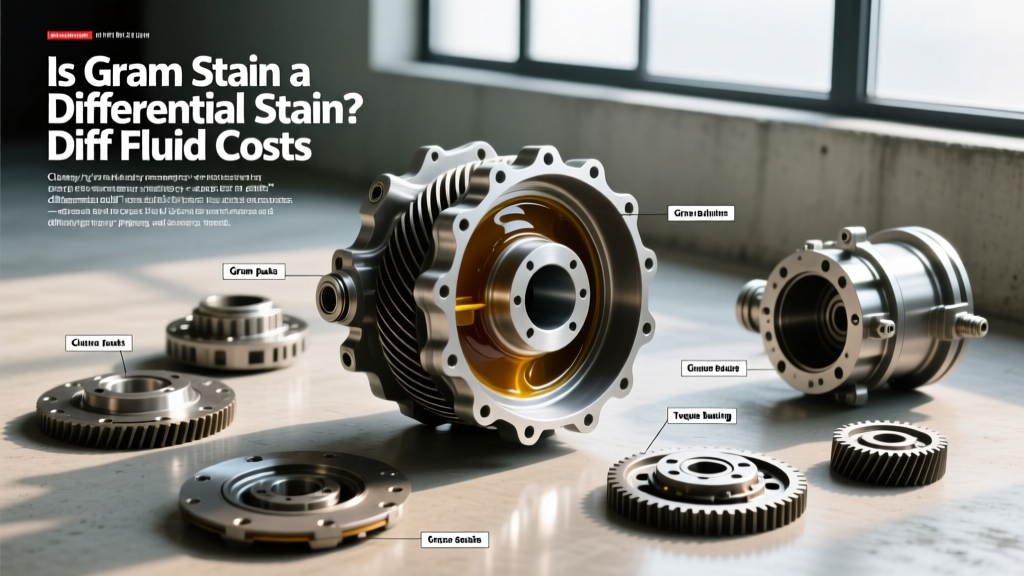
Every so often, our site analytics flag a bizarre search query hitting our automotive drivetrain database: is gram stain a differential stain? For the biology students stumbling onto AutoGearNexus: yes, in microbiology, the Gram stain is a differential staining technique used to classify bacteria based on cell wall properties. But for truck owners, off-roaders, and gearheads, the only "differential stain" you need to worry about is the dark, metallic sludge left on your fingers when you drop a neglected axle pan.
In the automotive world, a differential is the gear reduction unit that splits engine torque to your drive wheels, allowing them to rotate at different speeds during cornering. The "stain" or fluid inside is high-viscosity gear oil. As we navigate the 2026 maintenance landscape, understanding the true cost of differential fluid service—and knowing how to read the physical "stains" left behind in your old gear oil—is critical for preventing catastrophic axle failure. Let us pivot from the laboratory to the garage and break down the real costs, torque specs, and preventive maintenance protocols for your drivetrain.
The Real "Differential Stain": Decoding Gear Oil Degradation
Unlike engine oil, which is exposed to combustion byproducts, differential gear oil operates in a sealed, high-pressure environment. The primary enemies of gear oil are extreme shear forces, thermal breakdown, and moisture intrusion. When ring and pinion gears mesh under heavy loads (such as towing a 7,000-lb trailer or crawling over rocks), the microscopic asperities on the gear teeth can weld together and tear apart if the fluid film fails. This creates metallic "stains" or suspensions in the oil.
According to engineering guidelines from Dana Incorporated, the extreme pressure (EP) additives in 75W-90 and 75W-140 gear oils are designed to sacrifice themselves to protect the gear surface. Once these additives are depleted, the base oil can no longer prevent metal-on-metal contact. Skipping your 30,000 to 50,000-mile service interval doesn't just degrade the fluid; it actively accelerates the wear of your $1,500 ring and pinion set.
2026 Differential Fluid Cost & Service Pricing Breakdown
One of the most common questions we receive is how much a differential fluid change should actually cost. Pricing in 2026 varies wildly based on whether you visit a franchise lube shop, a dealership, an independent drivetrain specialist, or tackle the job in your own driveway. Below is a realistic pricing matrix for standard light-duty trucks and SUVs (e.g., Ford F-150, Chevy Silverado 1500, Jeep Wrangler).
| Service Provider | Typical Cost (Per Axle) | Fluid Type Used | Pros & Cons |
|---|---|---|---|
| DIY (Home Garage) | $45 - $85 | Consumer Synthetic (e.g., Mobil 1, Valvoline) | Pro: Lowest cost, guaranteed quality control. Con: Messy, requires proper disposal and tools. |
| Quick Lube Franchise | $90 - $130 | Bulk Conventional or Synthetic Blend | Pro: Fast, convenient. Con: High risk of over-torqued cover bolts, missed friction modifiers. |
| Independent 4x4 Shop | $140 - $190 | Premium Synthetic (e.g., Amsoil, Red Line) | Pro: Expert inspection, correct additives, RTV application. Con: Higher labor rate. |
| OEM Dealership | $180 - $280+ | OEM Branded Fluid | Pro: Warranty compliant, exact OEM spec. Con: Most expensive, often uses conventional oil unless specified. |
Hidden Costs to Watch Out For
When budgeting for a differential service, be aware of potential hidden costs that can inflate your invoice:
- Limited-Slip Friction Modifier: If your axle features a clutch-type limited-slip differential (LSD), it requires a specialized friction modifier to prevent chatter during tight turns. OEM modifiers like Ford XL-3 (ESTR-M2C118-A) or GM Additive (88900333) cost between $12 and $18 per bottle. Quick lube shops often forget this step.
- Stripped Drain Plugs: Many modern differentials (like the GM 9.5-inch semi-float) use shallow, easily stripped fill plugs. If a previous technician used an impact gun on a soft brass or aluminum plug, you will need to buy a replacement plug or upgrade to an aftermarket magnetic billet plug ($25-$40).
- Gasket vs. RTV Silicone: Stamped steel covers rarely use paper gaskets. They require a bead of high-temp RTV silicone (like Permatex Ultra Black). If a shop charges you for a "gasket kit" on a Dana 44, they are padding the bill.
Preventive Maintenance: Capacities, Part Numbers, and Torque Specs
To execute a proper differential fluid service, you must adhere strictly to the manufacturer's capacity and torque specifications. Overfilling can cause fluid to blow past the axle seals due to thermal expansion, while underfilling will starve the pinion bearings. Furthermore, over-torquing the differential cover bolts is a rookie mistake that warps the stamped steel cover, guaranteeing a slow, persistent leak.
Common Axle Specifications & Fluid Data
Below are the exact specifications for three of the most common axles found in North American trucks and SUVs:
- Dana Spicer 44 (Jeep Wrangler / Ford F-150 Front)
- Capacity: 2.0 - 2.2 Quarts
- Recommended Fluid: 75W-90 Synthetic API GL-5
- Cover Bolt Torque: 25 lb-ft (Do not exceed!)
- Ford Sterling 10.5-Inch (F-250 / F-350 Rear)
- Capacity: 3.5 - 4.0 Quarts
- Recommended Fluid: 75W-140 Synthetic (Required for heavy towing)
- Cover Bolt Torque: 33 lb-ft
- GM 9.5-Inch 14-Bolt Semi-Float (Silverado / Tahoe)
- Capacity: 2.75 Quarts
- Recommended Fluid: 75W-90 Synthetic API GL-5
- Fill Plug Torque: 24 lb-ft (Note: Many lack a drain plug; fluid must be siphoned or cover removed)
Choosing the Right Gear Oil: Synthetic vs. Conventional
As of 2026, the debate between conventional and synthetic gear oil is largely settled for anyone engaging in preventive maintenance. While conventional 80W-90 mineral oil is sufficient for light-duty, unladen highway driving, synthetic 75W-90 or 75W-140 fluids offer vastly superior shear stability and low-temperature flow. According to data published by Amsoil Synthetic Gear Lube engineers, synthetic base stocks maintain their protective film strength up to 50°F higher than conventional oils before thermal breakdown occurs.
For vehicles equipped with factory towing packages, upgrading to a 75W-140 synthetic is highly recommended. The higher viscosity index ensures that the fluid does not thin out excessively when the differential housing temperatures spike past 220°F during long mountain grades.
The "Stain" Test: Diagnosing Internal Axle Damage
When you drain your differential fluid, the color and texture of the outgoing oil act as a diagnostic stain, revealing the internal health of your axle. Here is how to read the signs:
- Dark Brown / Black (Normal Wear): Gear oil naturally darkens due to heat and EP additive depletion. If it smells slightly sulfurous (like rotten eggs) but is smooth to the touch, your axle is healthy. Simply replace the fluid.
- Glitter / Fine Metallic Mica (Break-in or Moderate Wear): A slight shimmer in the light is normal for the first 15,000 miles as the ring and pinion mate. If found at 80,000 miles, it indicates accelerated wear. Consider shortening your next service interval to 15,000 miles to monitor the trend.
- Chunky Metal / Steel Shards (Catastrophic Failure Imminent): If you find chunks of metal larger than a grain of rice, or if the drain plug magnet is covered in a thick, fuzzy layer of steel wool, your pinion bearings or gear teeth are failing. A fluid change will not fix this; a teardown and rebuild are required.
- Yellow / Brass Flakes (Thrust Washer Failure): Brass or copper-colored flakes indicate that the differential spider gear thrust washers are disintegrating. This is common in high-mileage open differentials that have been subjected to heavy wheel spin.
- Milky / Chocolate Milk Appearance (Water Intrusion): If the fluid looks like a latte, water has breached the axle seals or the differential breather tube. This destroys the lubricity of the oil and causes rapid rusting of the bearing races. You must flush the axle, replace the fluid, and locate the source of the water ingress immediately.
Conclusion: The ROI of Drivetrain Maintenance
While a biology student might use a gram stain to differentiate bacteria, an automotive technician uses the condition of drained gear oil to differentiate a healthy axle from a ticking time bomb. Spending $65 and an hour of your weekend to perform a DIY differential fluid service, or paying an independent shop $160 for a premium synthetic swap, is a fraction of the $2,500+ cost of a complete ring, pinion, and bearing rebuild. Stick to the 30,000-mile interval for severe use, respect the torque specs on your axle covers, and your drivetrain will easily outlast the rest of the vehicle.