The Hidden Bottleneck in High-Performance Clutch Systems
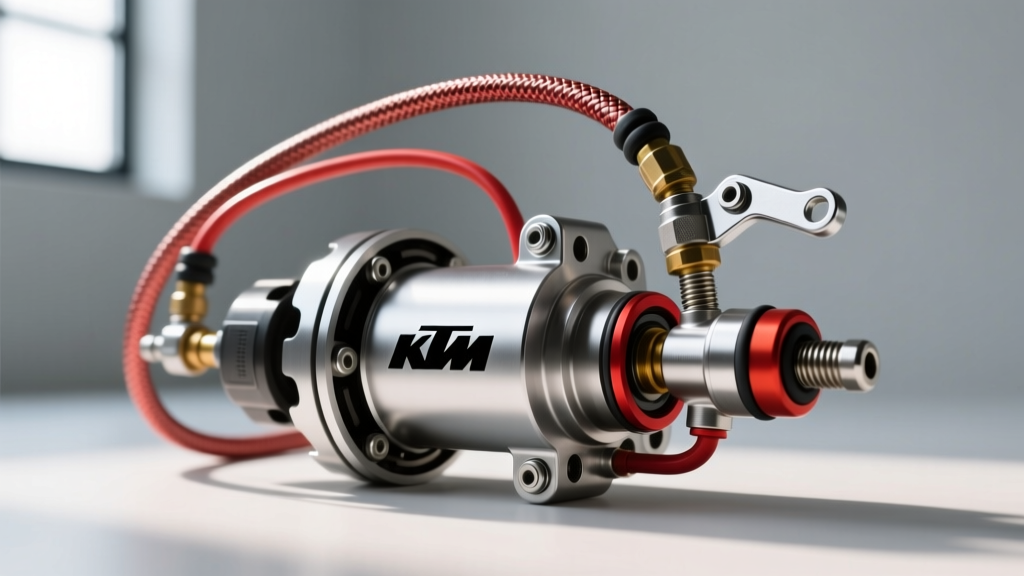
When diagnosing a spongy clutch lever or a delayed disengagement in a manual transmission, enthusiasts and mechanics alike often fixate on the master cylinder bore size or the slave cylinder seal. However, the hydraulic line itself is frequently the true culprit of volumetric inefficiency. Whether you are upgrading the KTM clutch master cylinder on a 450 SX-F, or routing a new hydraulic line to a Tremec T56 Magnum hydraulic throwout bearing in a track car, the conduit carrying your fluid dictates the fidelity of your clutch modulation.
As of 2026, the aftermarket has largely standardized around PTFE (Teflon) lined, stainless steel braided hoses for high-load applications. Yet, improper selection, cross-contamination of fluids, and incorrect banjo bolt torquing remain the leading causes of catastrophic line failure and persistent air ingress. This guide details the exact engineering principles, torque specifications, and bleeding protocols required for a flawless hydraulic line replacement.
The Physics of Volumetric Expansion: Rubber vs. PTFE
Original Equipment Manufacturer (OEM) clutch lines are typically constructed from extruded EPDM (Ethylene Propylene Diene Monomer) rubber. While rubber is cost-effective and highly flexible, it suffers from a critical flaw under high hydraulic pressure: volumetric expansion.
When you pull the clutch lever, the master cylinder generates between 800 and 1,200 PSI of line pressure. Under this load, an OEM rubber line acts like a balloon, expanding outward. This expansion absorbs a percentage of your lever stroke, resulting in a 'spongy' feel and delayed actuation at the clutch fork or hydraulic throwout bearing.
Smooth Bore vs. Convoluted PTFE Lines
Upgrading to a braided stainless steel line eliminates this expansion. The stainless braid acts as a structural constraint, while the inner PTFE core contains the fluid. However, not all PTFE lines are identical:
- Smooth Bore PTFE: Offers the highest flow rate and is easiest to bleed because air bubbles cannot get trapped in the inner wall texture. The trade-off is a larger minimum bend radius; kinking a smooth bore line will permanently restrict fluid flow.
- Convoluted (Corrugated) PTFE: Features a ribbed inner core that allows for extreme flexibility and tight routing around steering stems and chassis brackets. The downside is that the corrugations can trap micro-bubbles, requiring more rigorous bleeding techniques.
The KTM Clutch Master Cylinder Paradigm: Magura vs. Brembo
Replacing a hydraulic line on a KTM motorcycle requires meticulous attention to the specific master cylinder manufacturer, as KTM utilizes two distinct suppliers depending on the model and year. Confusing the two will result in immediate seal degradation and system failure.
Magura Systems (Mineral Oil)
Many KTM off-road and enduro models (such as the 300 XC-W and 350 EXC-F) utilize the Magura HC1 or HC2 clutch master cylinders. These systems are strictly designed for Mineral Oil. Magura's proprietary fluid, Magura Blood (Part #272), has a lower viscosity than DOT fluid, allowing it to flow through the microscopic clearances of the Magura piston seals.
Critical Warning: Never flush a Magura system with DOT 4 or DOT 5.1 fluid. The glycol-based DOT fluid will cause the EPDM seals inside the Magura master cylinder to swell and disintegrate within hours, leading to a complete loss of hydraulic pressure.
Brembo Systems (DOT Fluid)
KTM's street and supermoto lineup, including the 1290 Super Duke R, typically employs Brembo radial or axial master cylinders. These systems require glycol-based DOT 4 or DOT 5.1 fluid (such as Brembo LCF 600 Plus). When replacing the line on a Brembo-equipped KTM, you must ensure the PTFE inner core is rated for the highly corrosive nature of glycol ethers.
For deeper technical specifications on fluid compatibility and seal materials, refer to the Magura Technical Information portal and the Brembo Motorcycle Brake Systems documentation.
Step-by-Step Line Replacement and Torque Specifications
A hydraulic line replacement is only as reliable as its hardware interfaces. The connection points at the master cylinder and the slave cylinder (or hydraulic throwout bearing) rely on banjo fittings. Over-torquing these fittings is a common error that strips the threads on cast aluminum master cylinder bodies.
Preparation and Removal
- Evacuate the System: Use a vacuum bleeder to pull the old fluid out of the reservoir. Do not simply open the slave cylinder bleed nipple, as this will draw air into the master cylinder's internal passages.
- Protect the Paint: DOT fluid is highly corrosive to painted surfaces and polycarbonate plastics (like headlight lenses). Wrap the area beneath the master cylinder in absorbent shop towels.
- Remove the Banjo Bolts: Use a high-quality 12mm or 14mm flare nut wrench to prevent rounding the soft steel of the banjo bolt.
Torque Specs and Crush Washers
Never reuse aluminum or copper crush washers. Once compressed, they lose their ability to create a fluid-tight seal upon re-torquing. For high-heat environments (like routing a line near an exhaust header), use annealed copper washers. For standard applications, aluminum washers are preferred as they require less torque to seal.
| Component Housing Material | Washer Type | Target Torque (Nm) | Target Torque (lb-ft) |
|---|---|---|---|
| Cast Aluminum (Magura/Brembo) | Aluminum | 12 - 14 Nm | 8.8 - 10.3 lb-ft |
| Billet Aluminum (Wilwood) | Copper / Aluminum | 15 - 18 Nm | 11.0 - 13.2 lb-ft |
| Steel (Slave Cylinder / Throwout) | Copper | 20 - 25 Nm | 14.7 - 18.4 lb-ft |
Automotive Crossovers: Tremec and Porsche Applications
The principles governing motorcycle hydraulic lines apply directly to high-performance automotive manual transmissions. In vehicles equipped with a Tremec T56 Magnum or a Ford MT-82, the hydraulic throwout bearing (HTOB) is located deep inside the bellhousing. The hydraulic line must traverse the chassis, pass through the firewall, and route near high-heat exhaust components.
For automotive applications, replacing the OEM rubber line with a braided PTFE line is mandatory for track use. The 2026 pricing for custom-length automotive braided clutch lines (from manufacturers like Earl's or ANL Manufacturing) typically ranges from $85 to $160, depending on the firewall bulkhead fittings required. When routing the line to an HTOB, ensure a minimum of 3 inches of slack to accommodate engine movement under hard acceleration and braking, preventing the line from tearing the banjo fitting from the bearing housing.
Advanced Bleeding: The Reverse-Flow Method
Because clutch hydraulic lines often route *upward* from the slave cylinder to the master cylinder, air bubbles naturally want to travel against the flow of traditional top-down bleeding. This is especially problematic in convoluted PTFE lines and complex automotive firewall routings.
The Expert Solution: Reverse Bleeding.
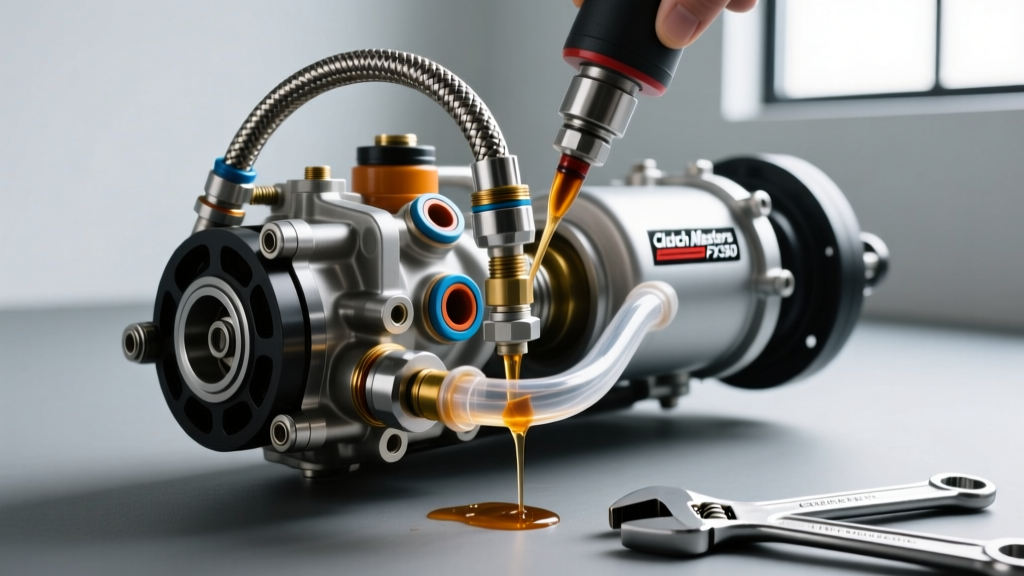
By injecting fluid from the slave cylinder bleed nipple upward toward the master cylinder reservoir, you are pushing the fluid in the same direction that air naturally wants to travel. Using a simple 60ml veterinary syringe and a piece of clear urethane tubing, inject fresh fluid at the slave cylinder while keeping the master cylinder reservoir cap open (and monitored to prevent overflow). This method typically achieves a perfectly firm lever feel in under 3 minutes, eliminating the need to repeatedly pump the lever and crack the bleeder screw.
Final Inspection and Maintenance Intervals
Once the line is installed, torqued, and bled, perform a static pressure test. Zip-tie the clutch lever to the handlebar (or depress the automotive clutch pedal with a broom handle) and leave it under pressure for 12 hours. Inspect the banjo fittings and the PTFE crimp collars for any signs of weeping.
Even with a premium braided line, the fluid inside is subject to hydroscopic degradation (in DOT systems) or particulate contamination (in Mineral Oil systems). Flush the fluid every 24 months to protect the internal bore of your master cylinder and ensure the longevity of your newly installed hydraulic conduit.