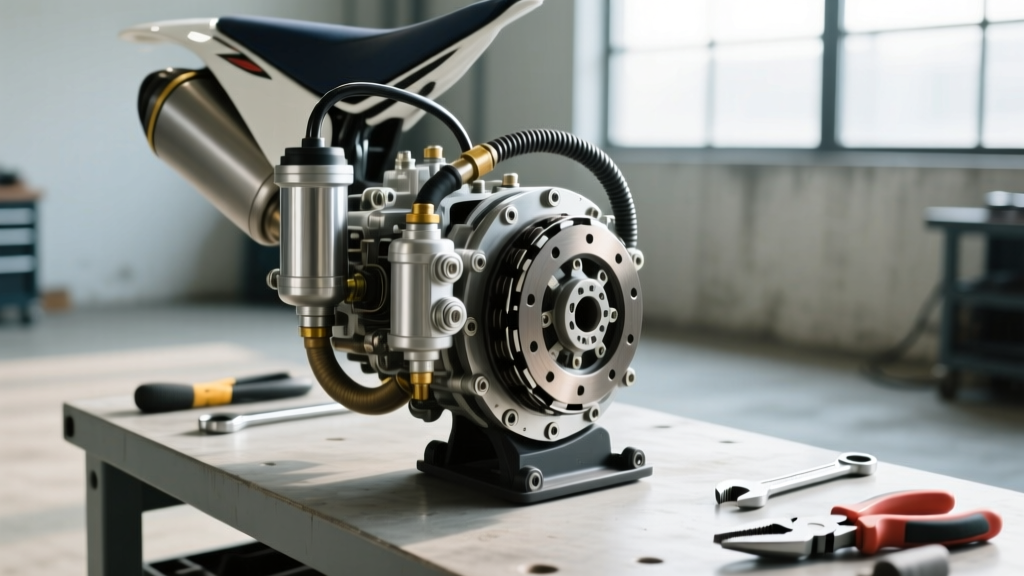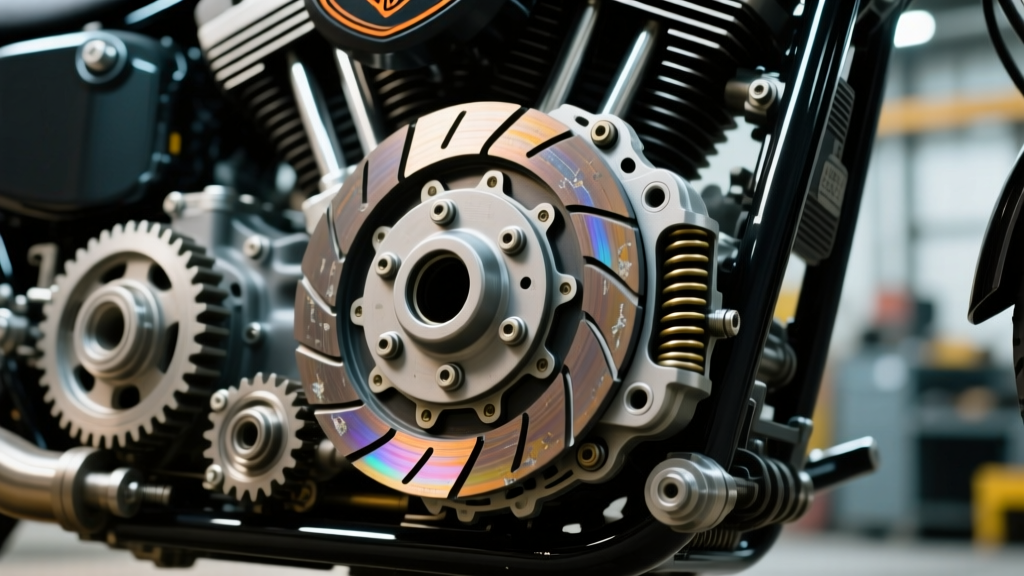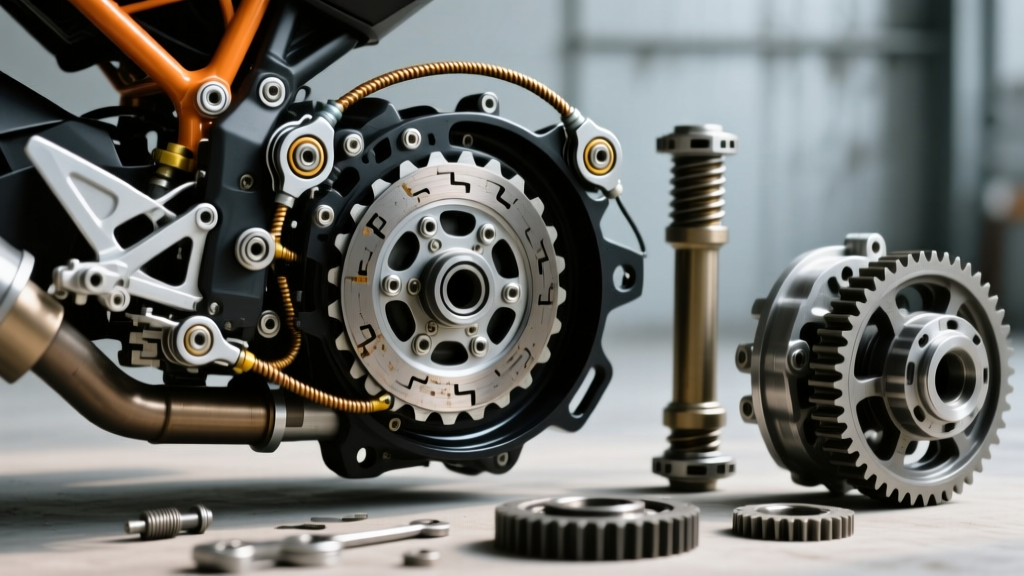
The transition from a hydraulic to a mechanical clutch actuation system is one of the most popular reliability modifications in the off-road and dual-sport community. For models like the KTM 300 XC-W, 500 EXC, and 690 Enduro, the OEM Magura hydraulic slave cylinders are notorious for seal degradation, fluid boiling under extreme heat, and sudden lever failure. Consequently, a KTM cable clutch conversion has become the gold standard for riders seeking fail-proof mechanical engagement. However, altering the actuation method fundamentally changes the geometry, preload, and damping characteristics of the clutch assembly. As of 2026, while aftermarket conversion kits have improved significantly, improper setup frequently introduces a triad of frustrating noises: chirping, squealing, and grinding.
Diagnosing clutch noise post-conversion requires an understanding of how mechanical arc-actuation differs from hydraulic linear-push. This expert guide breaks down the acoustic symptoms of a cable-converted KTM clutch, providing exact measurements, torque specifications, and troubleshooting frameworks to restore silent, factory-smooth operation.
The Physics of Actuation: Hydraulic vs. Cable Geometry
Before diagnosing the noise, you must understand the mechanical shift. A hydraulic slave cylinder pushes the clutch pushrod in a perfectly linear motion. In contrast, a mechanical cable pulls an actuator arm that rotates on a pivot shaft. This rotational sweep creates an arc. If the cable routing is poor or the actuator arm geometry is mismatched, the arm can side-load the pushrod against the clutch cover bushing. This side-loading is the genesis of most post-conversion squealing and premature bushing wear.
Expert Insight: Never use generic universal cables for a KTM conversion. The pivot ratio on KTM 250/300cc 2-strokes requires a specific cable pull length (typically 95mm to 105mm of exposed inner wire travel). Using an incorrect pull ratio will result in either incomplete disengagement or excessive pressure plate preload.
Chirping: The Release Bearing Preload Trap
A high-pitched chirping or metallic tweeting sound that scales directly with engine RPM is almost exclusively caused by the clutch release bearing (throwout bearing) being subjected to continuous rotational friction.
Why It Happens Post-Conversion
Hydraulic systems naturally self-adjust for clutch plate wear. Mechanical cables do not. As your KTM's friction plates wear down, the actuator arm rotates further outward to maintain engagement. If you fail to continuously adjust the cable slack at the lever perch, the actuator arm remains under constant tension from the cable. This tension transfers through the pushrod, forcing the release bearing against the spinning pressure plate diaphragm or actuator cap. The bearing is designed to spin only during lever actuation; continuous contact generates immense heat, degrades the bearing grease, and produces the signature RPM-dependent chirp.
The Diagnostic Fix
- Measure Free Play: You must maintain exactly 3mm to 5mm of free play measured at the very tip of the clutch lever blade.
- Check Actuator Arm Return: With the cable disconnected at the engine case, the internal actuator arm must snap back fully against its hard stop. If it hangs up, the internal return spring is fatigued or the pivot shaft is corroded.
- Inspect the Pushrod: Remove the pushrod. If the ends are blued from heat or show asymmetric wear patterns, the release bearing has been riding the pressure plate. Replace the bearing (OEM KTM part #50332016000) and apply a high-temp molybdenum disulfide grease to the pushrod tips.
Squealing: Cable Routing and Pivot Friction
Unlike chirping, which originates inside the engine cases, a rhythmic squealing or creaking sound is usually external, tied directly to the cable routing and actuator pivot points.
Routing Geometry and PTFE Liners
Modern KTM cable conversion kits utilize PTFE (Teflon) lined housings. If the cable is zip-tied too tightly to the frame, or if it is forced through a bend radius tighter than 4 inches, the inner steel wire binds against the housing liner. Under the heavy load of a KTM clutch spring (often exceeding 400 lbs of clamping force on 300cc models), this binding creates a high-frequency squeal every time the lever is pulled or released.
Actuator Shaft Lubrication
The external actuator shaft that passes through the clutch cover operates in a harsh environment. Dust, water, and chain lube accumulate here. A dry pivot shaft will squeal loudly under load. Best Practice: Disassemble the external actuator arm, clean the shaft with brake cleaner, and lubricate it with a waterproof marine grease or a dedicated PTFE dry lube. Avoid sticky chain lubes, which act as a grinding paste when mixed with trail dust.
Grinding: Basket Notching and Engagement Harshness
A metallic grinding or rattling noise at idle that disappears when the clutch lever is pulled in is a hallmark of clutch basket wear. Interestingly, a KTM cable clutch conversion can make this noise more apparent.
The Damping Effect
Hydraulic fluid acts as a micro-damper, absorbing high-frequency vibrations and masking the acoustic realities of metal-on-metal friction plate movement. A mechanical cable transmits engine harmonics and clutch rattle directly to the lever and the chassis. If your OEM cast aluminum clutch basket has developed notches on the fingers from the steel friction plates, the plates will hang up and grind against those notches at idle.
| Noise Profile | RPM Dependency | Primary Root Cause | Expert Solution & Parts |
|---|---|---|---|
| High-Pitch Chirping | Increases with RPM | Release bearing preload (Zero lever free play) | Adjust lever to 3-5mm free play; inspect bearing. |
| Rhythmic Squealing | Lever Actuation Only | Cable binding or dry external actuator pivot shaft | Re-route cable (>4in radius); grease pivot shaft. |
| Metallic Grinding | Idle / Neutral (Stops when pulled) | Friction plates hanging in notched aluminum basket | Upgrade to CNC Billet Basket (e.g., Rekluse Core Manual). |
| Harsh Clunk / Chatter | Initial Engagement (1st Gear) | Lack of hydraulic dampening; aggressive cable pull | Install a clutch hub dampening spring or softer spring rate. |
Upgrading the Basket: Ending the Grind
If your diagnosis confirms basket notching, simply filing the notches is a temporary and dangerous fix that alters the clutch stack height. The definitive solution is upgrading to a CNC-machined billet aluminum basket, such as the Rekluse Core Manual basket or the Hinson billet basket. These feature hard-anodized coatings and precision-machined fingers that resist notching entirely, eliminating the grinding noise and ensuring smooth cable actuation. Expect to invest between $350 and $450 for a premium billet basket, but it is a lifetime component for the bike.
Expert Setup Protocol: Torque Specs and Assembly
When performing the conversion or re-seating the clutch cover to diagnose internal noise, adhering to exact torque specifications is critical to prevent case warping and oil leaks, which can lead to clutch contamination and subsequent chatter.
- Clutch Cover Bolts (M6 x 1.0): Torque to 10 Nm (7.4 lb-ft). Always use a criss-cross pattern starting from the center. Apply a drop of blue Loctite 243 to the threads.
- Clutch Center Nut (M20 x 1.5): If you remove the inner hub to inspect the basket, the center nut must be torqued to 130 Nm (96 lb-ft) on most 250/300cc KTM 2-strokes. Use a proper clutch holding tool, never an impact wrench, to avoid shattering the brittle cast hub.
- Cable Lock Nut: After setting the 3-5mm free play at the lever, secure the adjuster lock nut. Apply a dab of grease to the threads to prevent them from seizing due to heat cycling from the exhaust header.
Sourcing Reliable Conversion Components
Not all cables are created equal. For a KTM cable clutch conversion, rely on Motion Pro or the OEM KTM mechanical cable kits. Avoid budget unbranded cables found on generic marketplaces; their inner wire stretch ratios are inconsistent, leading to a spongy feel that mimics hydraulic failure and forces you to over-tighten the cable, triggering the release bearing chirp discussed earlier.
Furthermore, consult the Magura technical documentation if you are retaining the OEM hydraulic master cylinder but adapting it to a cable setup via a slave-cylinder-to-cable adapter. These adapters require precise fluid volume management to ensure the cable is pulled fully without over-extending the adapter piston.
Final Diagnostic Checklist
Before hitting the trail after a conversion or noise diagnosis, run through this final checklist:
- Start the bike in neutral. Listen for the RPM-dependent chirp. If present, back off the lever adjuster immediately.
- Pull the lever in and out slowly. Listen for external squealing. If present, trace the cable path and lubricate the external pivot.
- Shift into first gear with the clutch pulled. Release the lever smoothly. If you experience severe chatter or grinding, inspect the friction plate stack height and basket fingers.
A properly executed KTM cable clutch conversion should feel direct, reliable, and virtually silent. By respecting the geometry differences between hydraulic and mechanical systems and maintaining rigorous free-play standards, you can eliminate clutch noise and enjoy a bulletproof actuation system for years to come.