The Anatomy of Off-Road Hydraulic Actuation
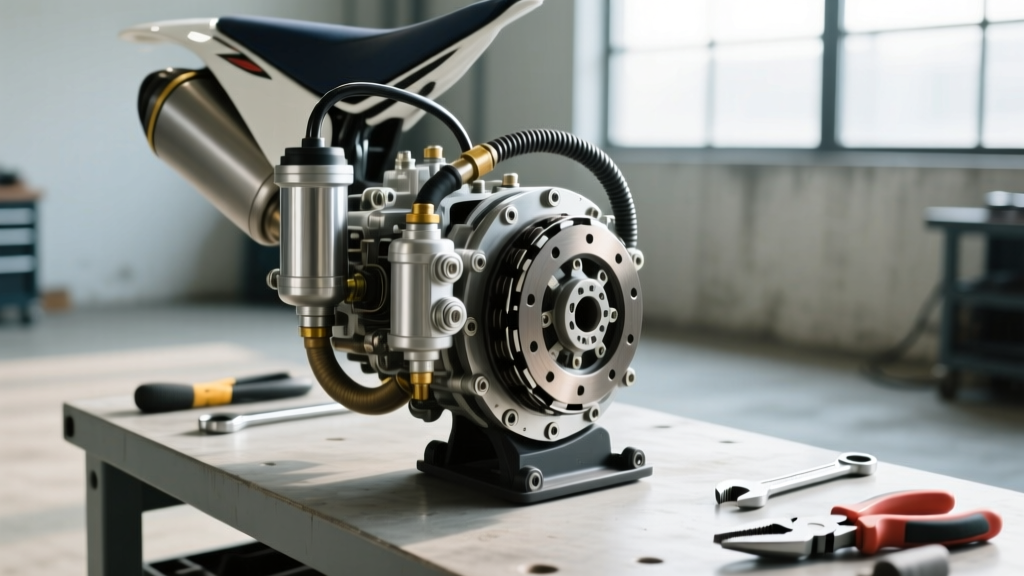
Modern off-road motorcycles rely heavily on precise modulation, making the dirt bike hydraulic clutch a critical interface between rider and machine. Unlike cable-actuated systems that require constant free-play adjustments and suffer from friction degradation, hydraulic setups utilize incompressible fluid to transfer lever input directly to the clutch pushrod. A standard system comprises a master cylinder (typically featuring a 9mm to 10mm piston bore for off-road applications), a reinforced hydraulic line, and a slave cylinder that actuates the clutch release arm.
However, the harsh operating environments of motocross, enduro, and trail riding expose these components to extreme heat, mud, and physical impacts. Preventive maintenance and accurate diagnosis are essential to prevent catastrophic failure on the trail. According to Rekluse Technical Support, over 60% of premature clutch basket wear can be traced back to improper hydraulic actuation, specifically clutch dragging caused by slave cylinder bypass or degraded fluid.
Diagnostic Matrix: Identifying Hydraulic Failure Modes
When diagnosing a dirt bike hydraulic clutch, the symptom presented at the lever is your primary clue to the internal failure point. Below is a structured diagnostic matrix to help you isolate the issue before tearing down the engine cases.
| Symptom at Lever | Probable Failure Point | Diagnostic Verification | Corrective Action |
|---|---|---|---|
| Spongy / Soft Feel | Air ingress or hygroscopic fluid degradation | Lever pulls to the bar with a 'squishy' stop; fluid appears dark or cloudy. | Complete system flush, vacuum bleed, and fluid replacement. |
| Hard / Stiff Lever | Blocked master cylinder compensation port or crushed line | Lever requires immense force; clutch fails to disengage fully. | Clean master cylinder reservoir ports; inspect line for kinks/pinches. |
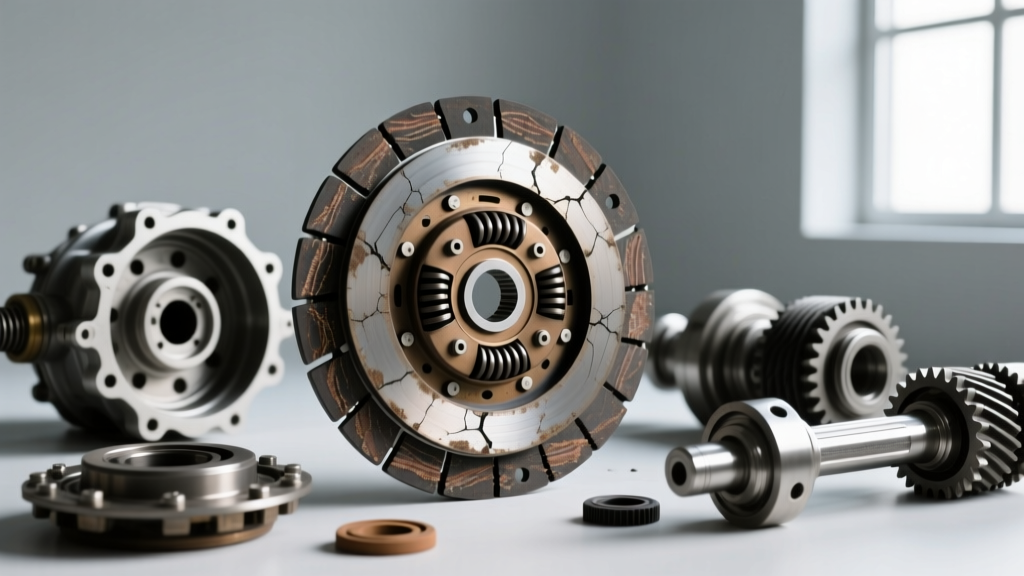
| Clutch Dragging | Slave cylinder seal bypass or warped clutch basket | Bike creeps forward with lever pulled; RPMs drop when shifting into gear. | Rebuild slave cylinder; measure clutch basket fingers for notching. |
| Fluid Weeping at Pushrod | Slave piston O-ring or main seal failure | Visible DOT fluid or mineral oil on the engine case near the slave. | Replace slave cylinder seal kit (e.g., KTM OEM #50312026000). |
| Lever Fails to Return | Contaminated fluid swelling master cylinder seals | Lever stays depressed; return spring on slave cannot overcome seal friction. | Rebuild master cylinder; flush all lines with isopropyl alcohol. |
Fluid Chemistry: DOT vs. Mineral Oil
One of the most common and destructive mistakes in dirt bike hydraulic clutch maintenance is cross-contaminating fluid types. Understanding the chemistry is non-negotiable for preventive care.
Glycol-Based Fluids (DOT 4 and DOT 5.1)
Japanese manufacturers (Honda, Yamaha, Kawasaki, Suzuki) and KTM/Husqvarna/GasGas (using Brembo or DIA-COM components) predominantly specify DOT 4 or DOT 5.1. These fluids are hygroscopic, meaning they absorb moisture from the atmosphere over time. While a fresh bottle of DOT 4 boasts a dry boiling point of roughly 230°C (446°F), its wet boiling point (at 3.7% water content) drops precipitously to 155°C (311°F). In high-heat enduro conditions, boiling fluid creates vapor lock, resulting in a completely dead lever. DOT fluid must be flushed every 6 months or 50 hours of operation.
Mineral Oil (Magura Systems)
Magura hydraulic clutches, often found on older European models or aftermarket conversions, require proprietary Mineral Oil (such as Magura Blood, Part #270100). Mineral oil is non-hygroscopic and does not absorb water, nor does it corrode internal seals or paint. However, introducing DOT fluid into a Magura system will cause the rubber seals to swell and disintegrate within hours. Always verify the cap engraving before topping off. For deeper insights into hydraulic fluid specifications, refer to the Magura Tech Support Documentation.
Preventive Maintenance Schedule
Adhering to a strict maintenance interval prevents trail-side breakdowns and extends the lifespan of your clutch pack and transmission bearings.
- Pre-Ride (Every 1-2 Hours): Visually inspect the hydraulic line routing. Ensure the line is not rubbing against the steering stem or frame, and verify that the master cylinder reservoir diaphragm is seated properly to prevent moisture ingress.
- Minor Service (Every 20 Hours): Check fluid level against the upper sight glass mark. Inspect the slave cylinder pushrod boot for tears; a compromised boot allows grit to score the slave piston, leading to seal failure.
- Major Service (Every 50 Hours / 6 Months): Perform a complete fluid flush and bleed. Lubricate the lever pivot bolt with waterproof marine grease to prevent false 'stiff lever' diagnostics.
- Annual Rebuild (Every 100 Hours): Replace the master cylinder and slave cylinder seal kits. Rubber compounds degrade and lose elasticity, leading to micro-bypasses that cause clutch drag.
Step-by-Step Bleeding and Critical Torque Specifications
Air trapped in the hydraulic line compresses under pressure, robbing the system of mechanical advantage. While traditional 'pump and hold' bleeding works in a pinch, reverse bleeding using a large 60ml syringe and clear tubing is the superior method for dirt bikes. By forcing fluid from the slave cylinder bleeder nipple up to the master cylinder reservoir, you push air bubbles upward, aligning with their natural buoyancy.
Reverse Bleeding Procedure
- Remove the master cylinder reservoir cap and extract old fluid with a syringe, leaving about 10% to prevent the system from sucking air.
- Attach a clear tube to a syringe filled with fresh, specified fluid, and connect it to the slave cylinder bleeder nipple.
- Open the bleeder nipple (usually an 8mm wrench size) and slowly push the syringe plunger until clean, bubble-free fluid enters the master cylinder reservoir.
- Close the bleeder nipple before removing the syringe to prevent vacuum draw.
- Top off the reservoir, install the diaphragm and cap, and verify lever firmness.
Critical Torque Specs and Clearances
Over-torquing hydraulic fittings is a frequent cause of stripped threads and cracked aluminum housings. Use a calibrated 1/4-inch drive torque wrench for the following fasteners:
- Master Cylinder Banjo Bolt (M10x1.0): 10 - 12 Nm (Ensure new copper crush washers are used on both sides).
- Slave Cylinder Mounting Bolts (M6): 10 Nm (Apply blue Loctite 243 due to high engine vibration).
- Slave Cylinder Bleeder Nipple: 2.5 - 3.0 Nm (Extremely fragile; over-torquing will snap the nipple inside the casting).
- Lever Pivot Bolt: 6 - 8 Nm (Ensure the nylon lock nut is in good condition).
- Pushrod Free Play: 0.5mm - 1.0mm measured at the slave cylinder actuator arm. Zero free play will cause the master cylinder compensation port to remain blocked, leading to clutch slip and severe overheating.
When to Rebuild vs. Replace: Cost and Performance Analysis
Deciding between rebuilding an OEM component and upgrading to an aftermarket solution depends on your riding discipline and budget.
OEM Rebuild Kits: A factory slave cylinder seal kit (e.g., KTM #50312026000 or Yamaha OEM equivalent) typically costs between $25 and $45. This is the most cost-effective preventive measure and restores factory tolerances. However, OEM slave cylinders often utilize small-diameter pistons and plastic pushrod boots that are vulnerable to roost damage.
Aftermarket Upgrades: For hard enduro and extreme off-road riders, upgrading to a billet aluminum slave cylinder from brands like Rekluse or Trail Tech ($150 to $220) offers distinct advantages. These units feature larger volume displacement for a lighter lever pull, hard-anodized bores that resist scoring from grit, and integrated billet pushrod shields. If your OEM slave cylinder bore shows visible scoring or pitting when inspected during a seal kit installation, a rebuild will not seal properly; replacement is mandatory.
By treating your dirt bike hydraulic clutch as a precision hydraulic instrument rather than a simple mechanical lever, you ensure consistent engagement, protect your transmission from shock loads, and maintain the modulation required to conquer technical terrain.