Jeep JL & Gladiator M210 Front Axle: Fluid Costs & Gear Ratio Science
Upgrading to larger tires on a Jeep Wrangler JL or Gladiator JT inevitably leads to one of the most significant drivetrain modifications you can perform: regearing the axles. While much of the conversation centers on the rear Dana M220, the front Dana AdvanTEK M210 axle is equally critical to your rig's performance and longevity. When budgeting for a 4x4 build, understanding the exact front differential fluid change cost is critical, especially when factoring in the increased maintenance intervals and specialized lubricants required after a gear ratio swap. This model-specific repair guide breaks down the real-world costs, the physics of differential gear ratio and performance, and the exact procedures required to keep your M210 front axle alive on and off the trail.
Breaking Down the Front Differential Fluid Change Cost
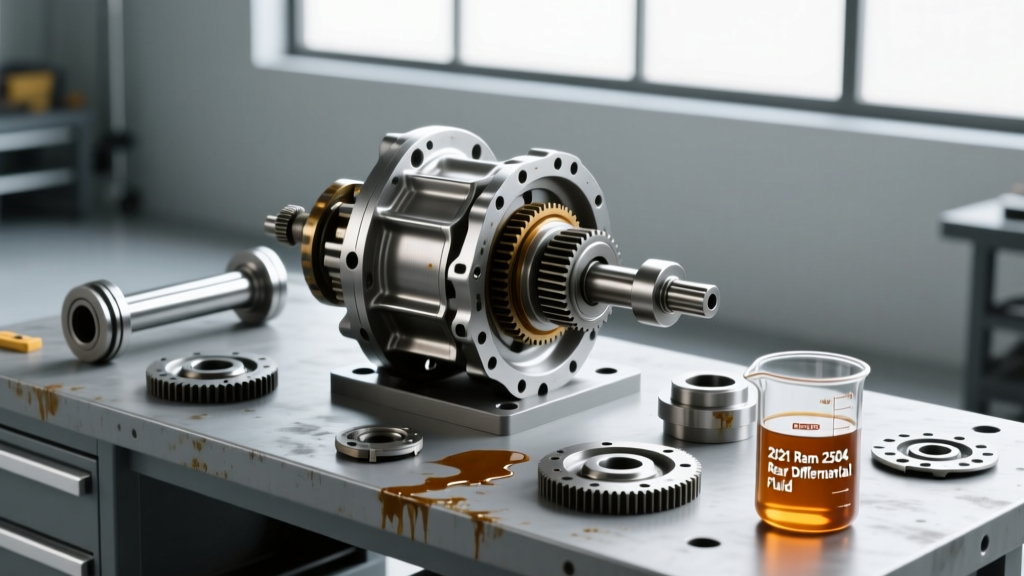
The cost to service the front differential varies wildly depending on whether you are running stock 3.45 gears or have upgraded to a 4.88 ratio for 35-inch or 37-inch tires. The M210 front axle holds approximately 1.4 quarts (1.32 liters) of gear oil. Because the capacity is relatively low, the fluid itself is inexpensive, but labor and specialized additives can shift the final price.
- DIY Service (Stock Gears): $25 - $40. Requires two quarts of Mopar 75W-85 API GL-5 (Part #68218655AB) or a high-quality synthetic equivalent like Amsoil Severe Gear 75W-90. No friction modifier is needed for the standard open differential.
- DIY Service (Regears with Tru-Lok Locker): $45 - $65. If your JL Rubicon is equipped with the front Tru-Lok locking differential, or you have installed an aftermarket Eaton E-Locker, you must add a friction modifier (Mopar Part #4318060AB) to prevent chatter during tight turns when the locker is disengaged.
- Independent 4x4 Shop: $90 - $140. Shops typically charge a half-hour to one hour of labor ($120-$150/hr) plus a premium on synthetic fluids.
- Dealership Service Center: $140 - $190. Dealerships often perform a 'flush' rather than a simple drain-and-fill, which is unnecessary for a solid axle differential and artificially inflates the front differential fluid change cost.
Differential Gear Ratio and Performance: The Physics of Regearing
Changing your differential gear ratio fundamentally alters the mechanical advantage inside the axle housing, but it also dramatically changes the thermodynamic environment of the gear oil. When you swap from a stock 3.45 ratio to a 4.88 ratio, the physical size of the pinion gear decreases to accommodate more teeth on the ring gear while maintaining the same physical ring gear diameter (8.27 inches for the M210).
A smaller pinion gear means the pinion bearings must spin significantly faster to achieve the same wheel speed. This increase in rotational velocity generates higher friction and localized heat at the pinion nose. According to engineering data from Dana Spicer, high-numerical gear sets can increase internal differential temperatures by 15% to 25% under sustained highway loads compared to lower-numerical stock gears. This thermal spike accelerates the oxidation and shear breakdown of conventional gear oils, making the selection of a high-viscosity-index synthetic lubricant non-negotiable for regearred axles.
'When increasing numerical gear ratios, the pinion gear operates at a higher RPM relative to the ring gear. This concentrates shear forces on the lubricant film. We recommend synthetic 75W-110 or 75W-140 gear oils for heavily loaded, high-numerical off-road applications to prevent film rupture.' — AMSOIL Technical Engineering Bulletin
Gear Ratio Performance & Maintenance Matrix
| Gear Ratio | Tire Size Target | RPM @ 70 MPH (ZF 8HP) | Avg. Diff Temp (Highway) | Recommended Fluid Viscosity | Service Interval |
|---|---|---|---|---|---|
| 3.45 (Stock) | 285/70R17 (33') | 1,950 RPM | 145°F (62°C) | 75W-85 GL-5 | 30,000 Miles |
| 4.10 | 295/70R17 (34') | 2,320 RPM | 160°F (71°C) | 75W-90 GL-5 Synthetic | 25,000 Miles |
| 4.88 | 315/70R17 (35') | 2,760 RPM | 185°F (85°C) | 75W-110 GL-5 Synthetic | 15,000 - 20,000 Miles |
| 5.13 | 37x12.50R17 | 2,900 RPM | 200°F+ (93°C+) | 75W-140 GL-5 Synthetic | 15,000 Miles |
The 500-Mile Break-In Protocol: Non-Negotiable for Regears
If you are paying for a gear ratio upgrade, you must factor the break-in fluid service into your initial build budget. When new ring and pinion gears (such as those from Revolution Gear & Axle or Yukon) are installed, the mating surfaces of the teeth are not perfectly polished. During the first 500 miles, these gears undergo a controlled wear process to establish their final contact pattern. This process generates immense heat and sheds microscopic metallic particles into the oil.
- Miles 0-50: Drive primarily in the city. Keep speeds under 45 MPH. Avoid heavy throttle loads and do not use cruise control. The varying loads help the gears lap together evenly.
- Miles 50-500: Introduce highway driving in 10-mile increments. Allow the axle to cool completely between intervals. Use an infrared thermometer to check the differential housing; if it exceeds 225°F, pull over and let it cool.
- The 500-Mile Drain: This is where your second front differential fluid change cost comes into play. You must drain the break-in fluid immediately after the 500-mile mark. Inspect the drain plug magnet. A fine, glitter-like metallic paste is normal; large chips or shards indicate improper pinion depth or bearing preload setup by your installer.
- Refill with Final Synthetic: Fill with your chosen long-term synthetic gear oil (e.g., 75W-110) and resume normal maintenance intervals.
M210 Service Procedure & Torque Specifications
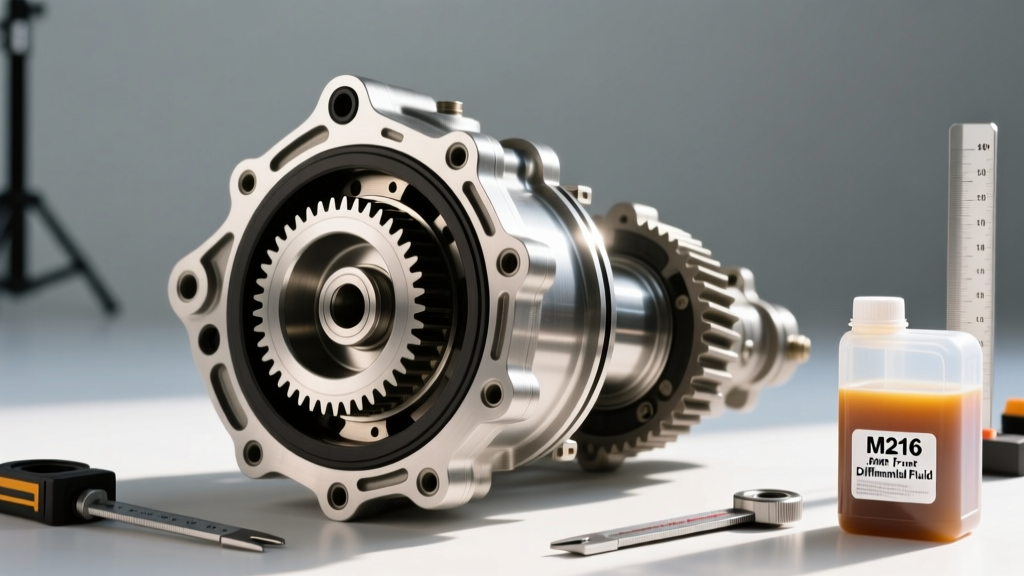
Performing the drain and fill on the Dana M210 front axle requires specific attention to the plug hardware. Unlike older Dana 30 or Dana 44 axles that used standard hex-head bolts, the M210 utilizes low-profile plugs to maintain ground clearance and protect the threads from trail debris.
Required Tools and Parts
- 10mm Allen socket (3/8' drive) or specialized Mopar low-profile plug tool.
- Torque wrench (inch-pounds and foot-pounds capable).
- Replacement crush washers (Mopar Part #6508947AA) - Never reuse the factory aluminum crush washers, as they will leak upon re-torque.
- Fluid pump (essential due to the high clearance of the fill hole on the M210 housing).
Step-by-Step Execution
First, always remove the fill plug before removing the drain plug. If the fill plug is seized or stripped, you do not want to be left with an empty differential and no way to refill it. Once the fill plug is confirmed loose, remove the drain plug and allow the fluid to evacuate completely. Wipe the magnetic tip of the drain plug with a lint-free shop towel. Reinstall the drain plug with a new crush washer and torque it to 25 lb-ft (34 Nm). Using a fluid pump, inject the new gear oil into the fill hole until it begins to weep out of the threads. Reinstall the fill plug with a new washer and torque to 25 lb-ft (34 Nm).
Troubleshooting Post-Regear Noise
It is common for regearred M210 axles to exhibit a slight whine during deceleration. However, if the whine is audible during steady-state cruising or acceleration, the gear setup is flawed. Proper ring and pinion setup requires a pinion bearing preload of 15-25 in-lbs (new bearings) and a ring gear backlash between 0.006 and 0.010 inches. If your post-regear differential howls, do not mask it with heavier gear oil or friction modifiers. Have the installer verify the contact pattern using yellow gear marking compound. A pattern that runs off the toe or heel of the ring gear tooth will destroy the set within 10,000 miles, turning a routine maintenance item into a catastrophic $2,500 axle rebuild.
Understanding the intersection of the front differential fluid change cost and the mechanical realities of differential gear ratio and performance ensures your Jeep JL or Gladiator remains reliable whether you are crawling over Moab slickrock or cruising the interstate. Always prioritize precision setup and strict break-in protocols over cutting corners on fluid quality.