The Intersection of Performance and Price: Why Regear?
When most drivers search for the auto differential repair cost, they are reacting to a catastrophic failure—a whining pinion bearing, a shattered ring gear, or a leaking axle seal. However, in the off-road and overlanding community, opening the differential is often a proactive, performance-driven choice. For owners of the 2018-2026 Jeep Wrangler JL, swapping out factory gear ratios to accommodate larger tires and restore drivetrain performance is one of the most common axle modifications performed today.
As we move through the 2026 off-road season, the JL platform remains the benchmark for factory trail capability. Yet, the moment you bolt on a set of 37-inch or 40-inch mud-terrain tires, the factory gearing becomes a severe bottleneck. This model-specific repair guide breaks down the mechanical realities of regearing the Jeep JL Dana 44 axles, the precise setup specifications required, and how this planned upgrade impacts your overall differential service budget.
Understanding the Jeep JL Dana 44 M210 and M220 Axles
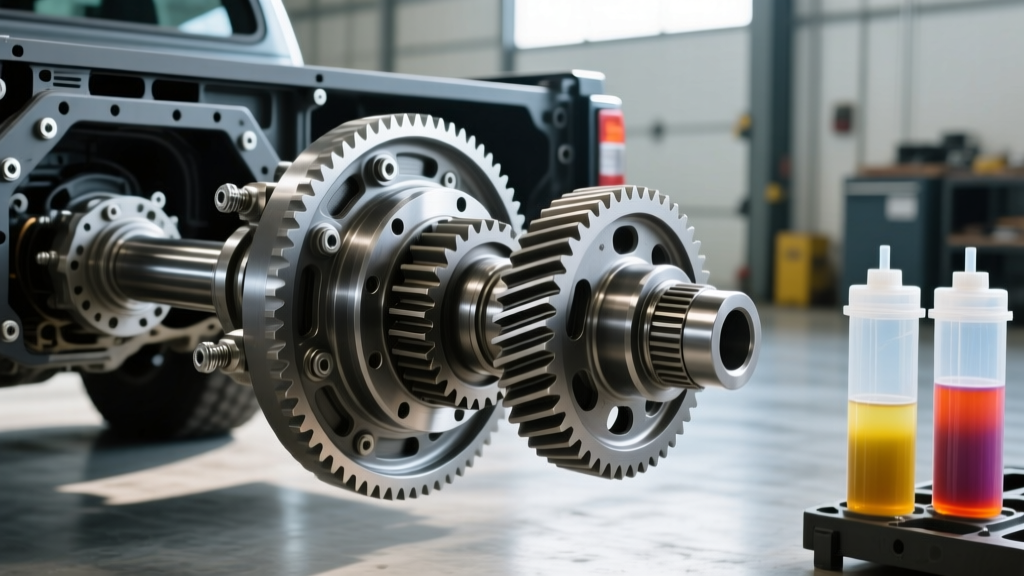
Unlike the previous JK generation, the JL Wrangler utilizes next-generation Dana 44 axles. The front axle is the Dana 44 M210, and the rear is the Dana 44 M220. These axles feature larger ring gears, thicker axle shafts, and improved pinion bearings compared to their predecessors. However, the fundamental physics of gear reduction remain unchanged.
From the factory, Jeep offers JL models with 3.45, 3.73, or 4.10 gear ratios. While a 4.10 ratio is adequate for 33-inch tires, it falls flat when pushing the aerodynamic brick of a four-door JL Unlimited through the wind with 37-inch tires. The transmission's 8-speed ZF 8HP75 (or the 850RE in earlier models) is incredibly smart, but it cannot multiply torque out of thin air. Regearing the differentials restores the mechanical advantage lost to increased tire diameter and rotating mass.
Calculating the Performance Delta
To maintain factory-like RPMs at highway speeds and restore low-speed crawling torque, you must match your gear ratio to your tire size. Below is a performance matrix detailing the effective RPM drop and the recommended ratio upgrades for the JL platform.
| Tire Size | Stock Ratio (3.45) | Upgraded Ratio (4.56) | Upgraded Ratio (4.88) | Upgraded Ratio (5.13) |
|---|---|---|---|---|
| 33-inch (Stock) | 1,850 RPM @ 70 MPH | 2,450 RPM (Over-geared) | 2,620 RPM (Over-geared) | 2,750 RPM (Over-geared) |
| 35-inch | 1,740 RPM (Sluggish) | 2,310 RPM (Optimal) | 2,480 RPM (Aggressive) | 2,600 RPM (Crawl-Biased) |
| 37-inch | 1,640 RPM (Poor) | 2,180 RPM (Good) | 2,340 RPM (Optimal) | 2,460 RPM (Heavy Load) |
| 40-inch | 1,520 RPM (Failing) | 2,010 RPM (Under-geared) | 2,160 RPM (Good) | 2,280 RPM (Optimal) |
Note: RPM calculations are estimates based on the ZF 8-speed transmission's top gear (0.67:1 overdrive) and a final drive target of 2,200-2,400 RPM for optimal 850RE transmission cooling and powerband efficiency.
Breaking Down the Auto Differential Repair Cost for a JL Regear
Because a regear requires the complete teardown and rebuild of the differential carrier and pinion assembly, the labor overlaps significantly with a standard rebuild. When evaluating the auto differential repair cost for a proactive regear, you must account for high-precision parts and specialized labor.
Parts Pricing: Ring, Pinion, and Master Kits
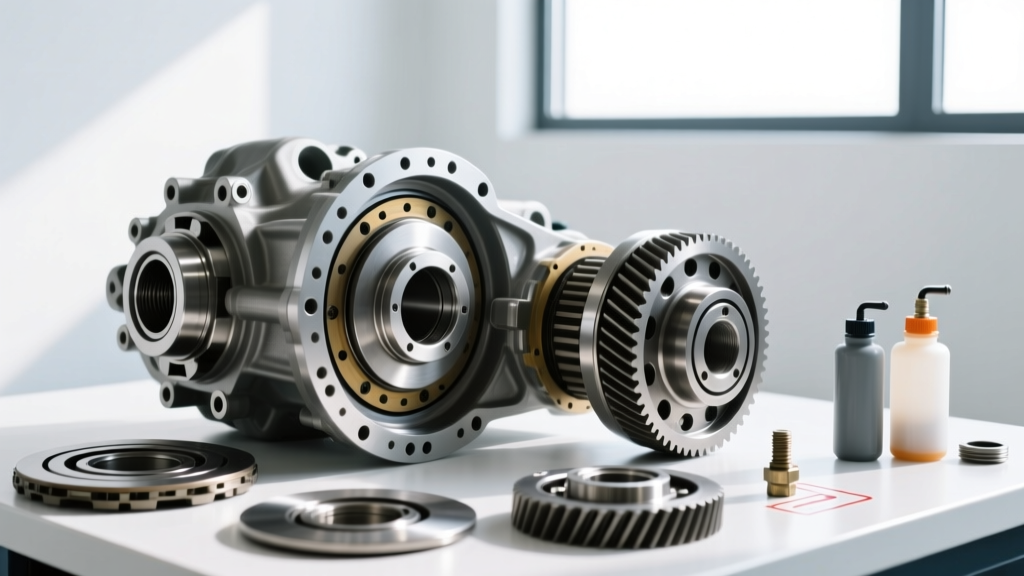
Never reuse factory bearings during a regear. The removal process inherently damages the bearing cages and races. For the Dana 44 M220, you will need a matched ring and pinion set and a master overhaul kit.
- Ring and Pinion Set: A premium Dana Spicer or Yukon Gear & Axle 4.88 ratio set for the M220 typically retails between $280 and $360 per axle.
- Master Overhaul Kit: Includes Timken bearings, pinion shims, carrier shims, ring gear bolts, and seals. Expect to pay $160 to $230 per axle.
- Crush Sleeve Eliminator Kit: Highly recommended for the JL. Replacing the factory crush sleeve with a solid spacer and shims allows for precise pinion bearing preload without the risk of over-crushing. Cost: $45 to $65.
Labor and Machine Shop Variables
As of 2026, specialized drivetrain shops charge between $135 and $185 per hour. A proper regear on a Dana 44 M220 takes a seasoned technician 5 to 7 hours per axle. Therefore, labor alone will range from $1,350 to $2,590 per axle. When combining parts and labor, the total auto differential repair cost for a complete front and rear JL regear typically lands between $3,800 and $6,200, depending on regional shop rates and whether additional upgrades (like air lockers or heavy-duty axle shafts) are installed simultaneously.
Model-Specific Installation Specs: Jeep JL Dana 44 M220
Setting up a Dana 44 M220 requires extreme precision. A deviation of just two-thousandths of an inch in pinion depth or backlash will result in catastrophic gear failure under load. Below are the critical setup specifications for the JL rear axle.
Torque Specs and Tolerances
- Pinion Bearing Preload: 15-25 in-lbs (used bearings) or 25-35 in-lbs (new bearings). Measured with a dial-type inch-pound torque wrench. Do not rely on pinion nut torque alone; rotational preload is the only accurate metric.
- Carrier Bearing Cap Bolts: 70-85 ft-lbs. Always use the factory threadlocker or apply Loctite 243 to prevent backing out under high-torque crawling scenarios.
- Ring Gear Bolts: 75-85 ft-lbs in a crisscross pattern. Apply red Loctite 271 to the threads.
- Backlash Tolerance: 0.006" to 0.010". Target 0.008" measured at three equidistant points around the ring gear using a magnetic dial indicator.
Reading the Gear Pattern
Applying yellow gear marking compound to the ring gear teeth reveals the truth of your setup. A proper pattern on the Dana M220 will show a centered drive-side pattern that slightly favors the toe (the inner edge of the gear tooth) and extends toward the heel. The coast side should be centered. If the pattern is high on the tooth (toward the top land), the pinion is too deep and requires a thinner pinion depth shim. If the pattern is low (toward the root), the pinion is too shallow.
Differential Fluid and Break-In Procedures
The regear process is incomplete without addressing differential fluid dynamics. New ring and pinion gears generate immense friction and heat during the first 500 miles. According to engineering guidelines from Dana Incorporated, the break-in fluid must be a high-quality, conventional mineral-based 80W-90 GL-5 gear oil. Synthetic fluids are too slippery during the initial mating process and can prevent the gears from properly burnishing, leading to premature spalling and whining.
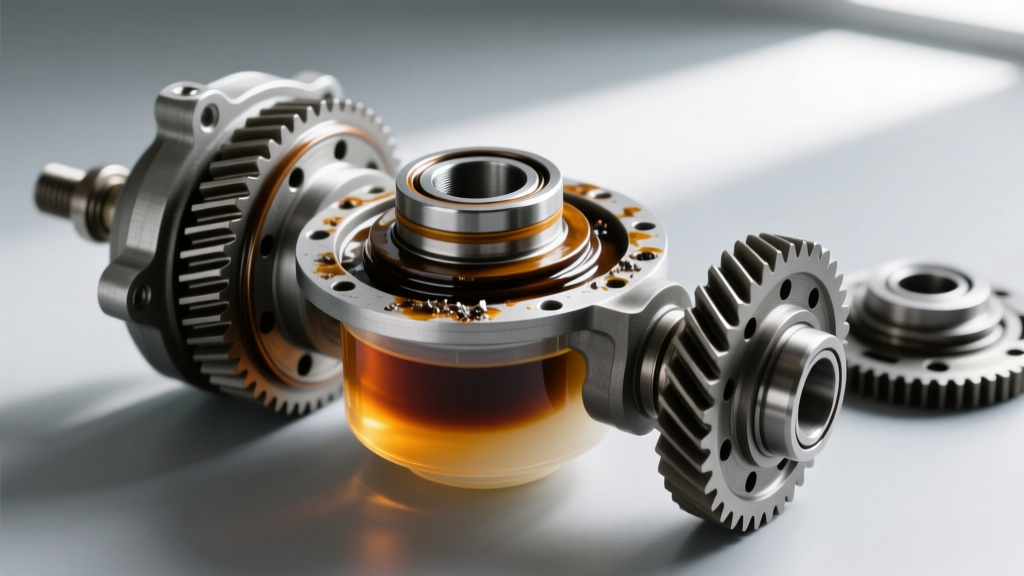
Pro-Tip for JL Owners: After the initial 500-mile break-in, drain the conventional fluid immediately. You will likely see a fine, glittery metallic paste on the drain plug—this is normal manufacturing residue. Refill with a full synthetic 75W-140 GL-5 gear oil to handle the extreme heat generated by the M220 axle during slow-speed rock crawling or heavy highway towing.
If your JL is equipped with the factory Trac-Lok limited-slip differential or an aftermarket clutch-type locker, you must add the manufacturer-specified friction modifier (typically 4 oz) to prevent chatter during low-speed turns. However, if you have upgraded to a Detroit Locker, ARB Air Locker, or the factory JL Rubicon electronic locker, do not use friction modifiers, as they can degrade the performance of the locking mechanisms.
Common Regearing Pitfalls That Inflate Repair Costs
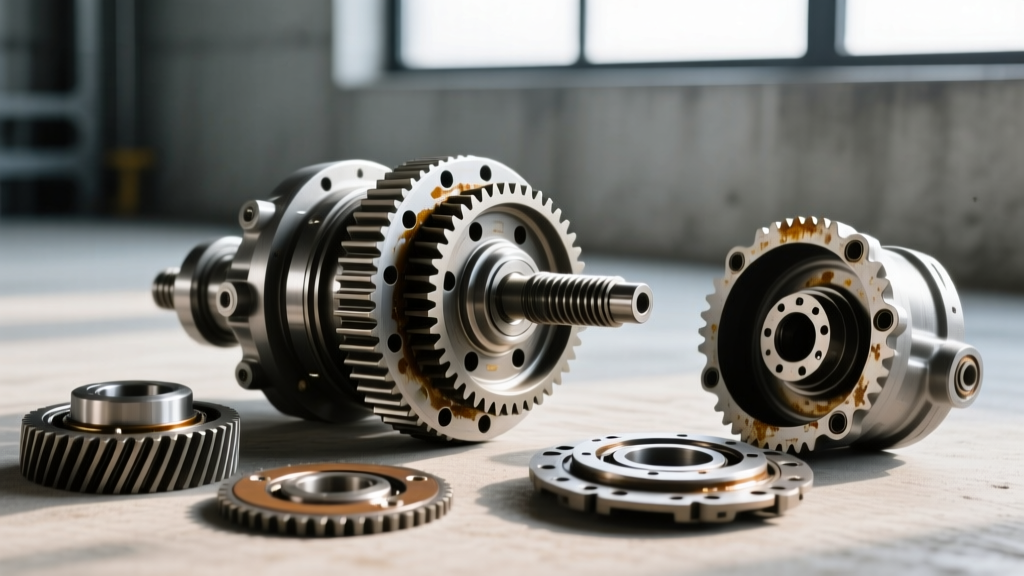
While the initial auto differential repair cost for a regear is substantial, cutting corners during installation will result in a second, far more expensive repair. The most common failure modes we see in JL axles post-regear include:
- Over-Crushing the Pinion Sleeve: If a technician uses an impact wrench to crush the factory pinion sleeve and overshoots the 35 in-lb preload mark, the bearing is permanently over-compressed. The only fix is a new crush sleeve and a complete teardown.
- Ignoring Carrier Bearing Preload: Carrier bearings require a specific amount of side-load (typically 0.004" to 0.008" of shim interference) to prevent the carrier from shifting under load. Neglecting this causes ring gear deflection and tooth shearing.
- Reusing Ring Gear Bolts: Factory ring gear bolts are often torque-to-yield or heavily stressed. Reusing them with standard threadlocker instead of replacing them with high-strength ARP bolts can lead to the ring gear spinning on the carrier hub during a hard launch.
Final Verdict: Is the Performance Worth the Investment?
When you view the auto differential repair cost through the lens of a proactive performance upgrade, the value proposition becomes clear. Spending $4,000 to $6,000 to properly regear your Jeep Wrangler JL's Dana 44 axles not only restores the drivability lost to oversized tires but also significantly reduces the parasitic strain on your ZF 8-speed transmission, transfer case chain, and axle shafts. By adhering to strict Dana M220 setup tolerances, utilizing a crush sleeve eliminator, and following a meticulous fluid break-in protocol, your regear will deliver tens of thousands of miles of whisper-quiet, high-torque performance on the trail and the highway.