The Hidden Warning Signs in Your Differential Fluid
In modern 4WD and AWD platforms, the front differential operates under extreme mechanical and thermal stress. Whether you are navigating rock-crawling trails in a solid-axle Jeep Wrangler or towing heavy loads in an independent front suspension (IFS) Silverado 2500HD, the hypoid gear set relies entirely on the boundary lubrication provided by specialized gear oil. As we move through the 2026 model year, with manufacturers pushing higher torque outputs and tighter packaging, preventive maintenance is no longer optional—it is critical for drivetrain survival.
While many enthusiasts focus strictly on mileage-based drain intervals, the truest indicator of differential health is the fluid's color and condition upon extraction. More importantly, analyzing this fluid is the primary diagnostic step that dictates whether a simple fluid swap is sufficient, or if a front differential pinion seal replacement is immediately required to prevent catastrophic gear spalling and bearing failure.
Fluid Color and Condition Diagnostic Matrix
Before unbolting the differential cover or removing the pinion yoke, you must evaluate the drained fluid. The visual and tactile state of the gear oil reveals the exact failure mode occurring inside the axle housing.
| Fluid Condition | Visual / Tactile Profile | Diagnostic Conclusion | Required Action |
|---|---|---|---|
| Amber / Translucent | Honey-colored, clear, distinct sulfur odor. | Healthy. EP (Extreme Pressure) additives are intact. | Routine refill. Inspect seal for minor weeping. |
| Milky / Emulsified | Chocolate milk appearance, thick, frothy. | Water ingress. Pinion seal failure or submerged axle vent. | Immediate front differential pinion seal replacement and housing flush. |
| Silver / Glitter | Slight metallic sheen, smooth to the touch. | Normal wear. Clutch pack material or minor bearing lapping. | Refill with fresh synthetic fluid and friction modifier if required. |
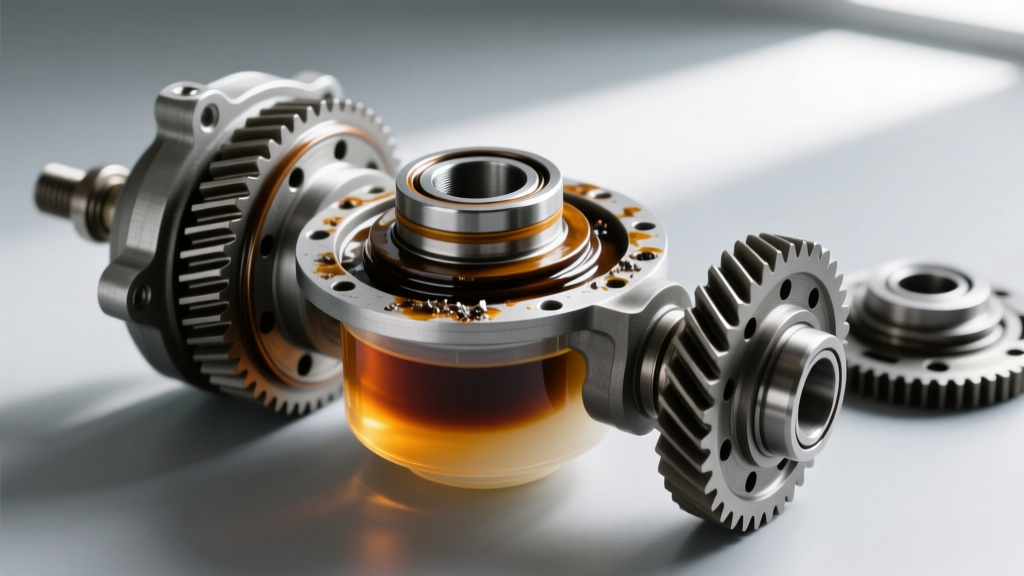
| Chunky / Magnetic Sludge | Visible metal flakes, gritty texture between fingers. | Active spalling. Ring/pinion or pinion bearing destruction. | Complete differential teardown. Seal replacement is secondary to rebuild. |
| Burnt / Opaque Black | Acrid smell, carbon-heavy, severely degraded viscosity. | Thermal breakdown. Low fluid level due to weeping pinion seal. | Pinion seal replacement, yoke inspection, and fluid refill. |
The Link Between Contaminated Fluid and Pinion Seal Failure
Why does fluid condition so heavily correlate with the need for a front differential pinion seal replacement? The pinion seal sits at the exact intersection of the driveshaft yoke and the differential housing. Its job is twofold: retain high-viscosity gear oil under pressure, and exclude water, mud, and debris from the outside environment.
How Water Ingress Destroys Hypoid Gears
When the elastomer lip of the pinion seal hardens, cracks, or wears a groove into the companion flange, water breaches the housing. According to tribology data published by AMSOIL, as little as 1% water contamination in gear oil can reduce the load-carrying capacity of the fluid by up to 90%. The sulfur-phosphorus EP additives react with water to form acidic compounds, which etch the precision-machined surfaces of the ring and pinion gears. If your drain pan reveals milky fluid, a front differential pinion seal replacement is not just a leak fix; it is an emergency intervention to save the hypoid gear set from micropitting and scuffing.
Thermal Degradation from Low Fluid Levels
Conversely, a slow-weeping seal allows gear oil to coat the underside of the vehicle and escape the housing. In IFS front differentials, the fluid capacity is notoriously low—often between 1.2 and 1.8 quarts (e.g., the GM 8.25" IFS or Ford 8.8" IFS). Losing even half a quart drops the fluid level below the pinion bearing's splash-lubrication zone. The resulting friction generates extreme heat, turning the fluid opaque black and burning the seal lip further, creating a vicious cycle of failure.
Preventive Maintenance: Executing a Front Differential Pinion Seal Replacement
If your fluid analysis indicates water contamination or thermal degradation due to a leak, you must proceed with the replacement. This is not a simple 'unbolt and swap' job; it requires precise measurement of bearing preload.
Phase 1: Pre-Teardown Rotational Torque Mapping
Before marking the pinion nut and shaft for realignment, you must measure the existing rotational torque. Using a calibrated inch-pound torque wrench, rotate the pinion yoke and record the peak rotational torque required to turn the assembly (typically 15 to 25 in-lbs for used bearings on a GM 9.25" AAM axle). This baseline is mandatory. If you lose this preload specification, the pinion bearings will either overheat from excessive tightness or chatter from being too loose.
Phase 2: Seal Extraction and Surface Prep
Once the pinion nut is removed (often requiring over 250 lb-ft of breakaway torque, necessitating a heavy-duty impact or a specialized yoke holder like the OTC 4589), the yoke is pulled using a three-jaw puller. Inspect the yoke's sealing surface. If the old seal has worn a deep groove into the steel yoke, simply installing a new seal will result in an immediate leak. In these cases, you must either use a speedi-sleeve (such as SKF 99196) to provide a fresh sealing surface, or replace the yoke entirely. Extract the old seal using a blind-hole puller or a specialized seal removal tool to avoid scoring the aluminum or cast-iron differential housing bore. Clean the bore with brake cleaner and apply a thin bead of RTV silicone to the outer metal casing of the new seal (e.g., Timken 710543 for GM applications) before driving it flush with the housing.
Phase 3: Reassembly and Preload Verification
Reinstall the yoke and thread the pinion nut. Here, the type of spacer dictates your procedure:
- Crush Sleeve Axles: If your differential uses a crush sleeve, it must be replaced every time the pinion nut is removed. You must crush the new sleeve incrementally while checking rotational torque with your inch-pound wrench until you match or slightly exceed your Phase 1 baseline.
- Solid Spacer Axles: Modern heavy-duty axles (like the Dana 60 or AAM 11.5) often use solid spacers with shims. These do not require crushing. Simply torque the pinion nut to the OEM specification (e.g., 350-400 lb-ft) and verify that your rotational torque matches the baseline.
For deeper engineering specifications on axle tolerances and spacer types, refer to the OEM service guidelines available through Dana Incorporated's technical resource library.
2026 Fluid Specifications and Refill Protocols
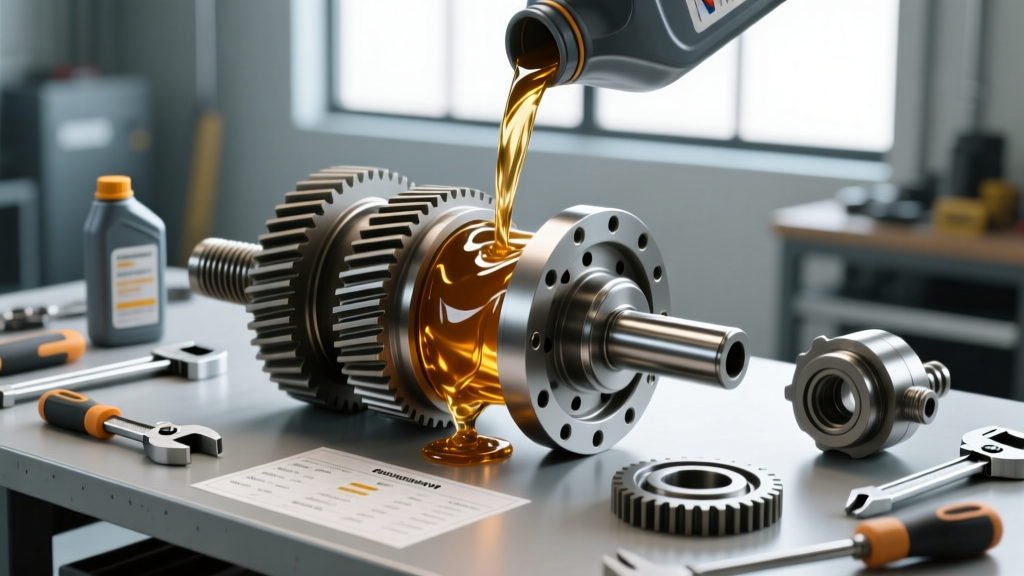
Once the front differential pinion seal replacement is complete and the housing is sealed, refilling with the correct chemistry is paramount. The era of using generic 80W-90 mineral oil in modern drivetrains is over.
Approved Synthetic Gear Oils for Modern AWD/4WD Systems
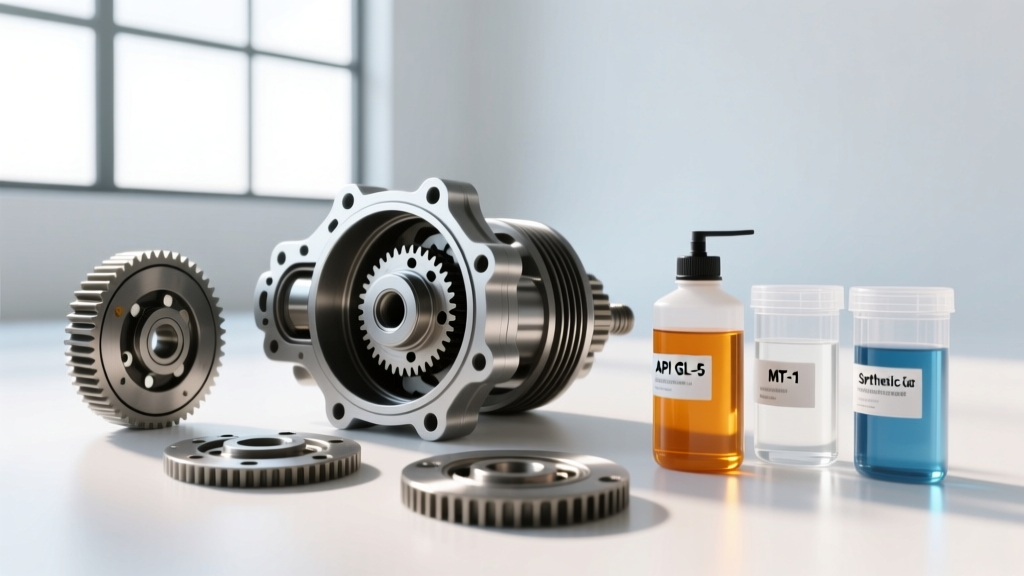
Most 2020-2026 trucks and SUVs require full synthetic 75W-85 or 75W-90 gear oils. These fluids utilize advanced polyalphaolefin (PAO) base stocks that resist shear thinning and maintain viscosity in the extreme cold, ensuring the front pinion bearings receive immediate lubrication upon startup in sub-zero climates.
Crucial Warning on Friction Modifiers: If your front differential houses an active disconnect mechanism or a limited-slip clutch pack (such as the Eaton G80 or BorgWarner eLSD), you must verify whether the OEM fluid requires a friction modifier additive. Adding modifier to an open differential can cause the clutch packs in the transfer case or disconnect collar to slip, while omitting it in an LSD will cause aggressive chatter and premature wear. Always consult the specific axle build code.
Final Verification
Fill the differential until the fluid reaches the bottom of the fill hole threads. Reinstall the plug using a new crush washer or appropriate thread sealant, torquing to 25-30 lb-ft. Wipe down the pinion yoke and lower skid plate. After a 50-mile test drive, re-inspect the pinion seal area with a UV flashlight or visual inspection to confirm the housing remains bone-dry. By tying your maintenance schedule to fluid condition rather than arbitrary mileage, you ensure the longevity of your front drivetrain components for hundreds of thousands of miles.
For further reading on bearing tolerances and seal material compatibility, technical bulletins from The Timken Company provide excellent metallurgical insights into hypoid gear preservation.