The Dual-Threat in the Jeep Wrangler JK: Hydraulics and Harmonics
The Jeep Wrangler JK (2007–2018) equipped with the Mercedes-derived Aisin NSG370 6-speed manual transmission remains a legendary off-road platform. However, as these vehicles age well into 2026, owners are increasingly plagued by severe clutch pedal problems. Symptoms range from spongy and soft pedals that sink to the floor, to hard, notchy engagement, and violent pedal vibrations at idle. While most general mechanics immediately blame the clutch disc, dual-mass flywheel (DMF), or master cylinder, a frequently overlooked culprit is the engine's cooling system. Specifically, evaluating a failing fan clutch automotive component is critical, as a warped or unbalanced electronic viscous fan can introduce severe harmonic vibrations that perfectly mimic a warped flywheel or failing concentric slave cylinder (CSC).
This model-specific repair guide breaks down the exact failure modes of the JK’s clutch pedal system, differentiates between true transmission faults and engine-driven harmonic transfers, and provides the precise torque specs and part numbers required for a permanent fix.
The Spongy & Soft Pedal: Hydraulic Heat Soak and Fluid Boil
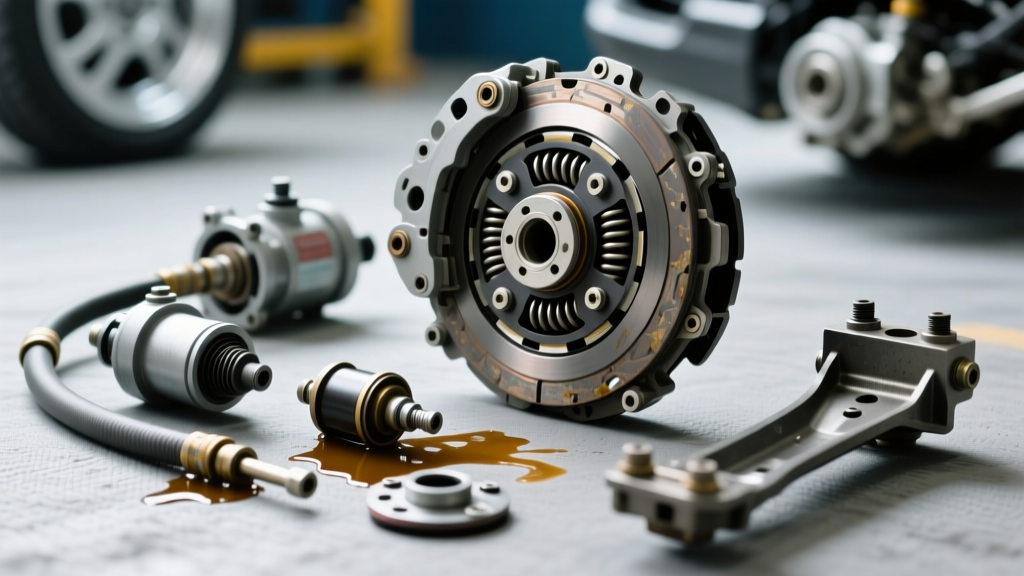
If your JK’s clutch pedal feels soft, spongy, or slowly sinks to the floor while holding it down in gear, you are likely experiencing hydraulic fluid boil or master cylinder bypass. The JK utilizes a plastic Clutch Master Cylinder (CMC) mounted on the firewall, connected via a plastic and rubber hybrid line to an internal Concentric Slave Cylinder (CSC) located inside the bellhousing.
The Exhaust Proximity Flaw
The factory hydraulic line is routed dangerously close to the exhaust manifold and catalytic converter. Under heavy load or slow off-road crawling, radiant heat bakes the line, raising the temperature of the factory DOT 3 brake fluid past its boiling point (typically around 401°F / 205°C). Once the fluid boils, vapor bubbles form in the line. Because vapor is compressible and liquid is not, the pedal feels incredibly spongy and fails to fully disengage the clutch, leading to gear grinding.
- Actionable Fix: Replace the factory plastic line with a braided stainless steel aftermarket line (e.g., from vendors like Genesis Offroad or similar boutique manufacturers).
- Fluid Upgrade: Flush the system with a high-temp DOT 4 racing fluid like Motul RBF 600 (Dry Boiling Point: 593°F / 312°C).
- Banjo Bolt Torque: When reconnecting the hydraulic line to the CSC, torque the banjo bolt to 12–15 lb-ft. Over-torquing will crack the fragile plastic housing of the CSC.
Hard & Notchy Pedals: CSC Collapse vs. DMF Spring Failure
A clutch pedal that feels unusually hard to press, or one that exhibits a distinct 'notch' or 'snap' halfway through its travel, usually points to mechanical binding inside the bellhousing. On the NSG370, the internal CSC rides on a plastic bearing sleeve. Over time, heat and friction cause this sleeve to deform or melt, causing the CSC to bind on the transmission input shaft. This results in a pedal that requires immense foot pressure to operate.
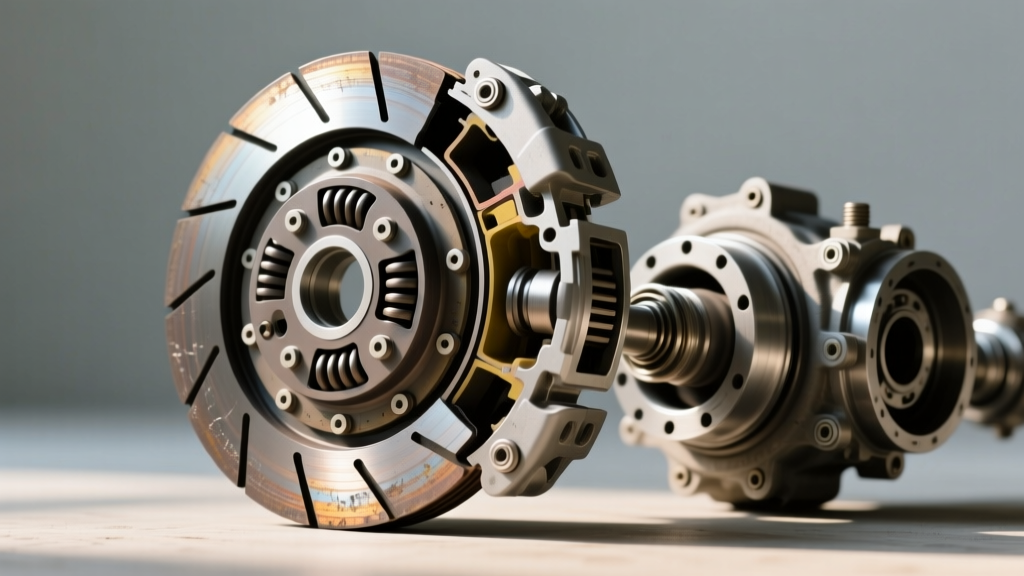
Alternatively, a hard pedal accompanied by a metallic 'clunk' upon engagement often indicates a collapsed Dual-Mass Flywheel (DMF). The NSG370 uses a DMF to absorb the torsional vibrations of the engine. When the internal damping springs break or lose their grease, the flywheel can lock up, transferring harsh mechanical feedback directly into the pedal linkage.
The Vibrating Pedal: Fan Clutch Automotive Harmonics vs. Drivetrain Faults
This is where expert diagnostics separate the pros from the parts-changers. If your clutch pedal vibrates aggressively at idle (especially between 1,200 and 1,800 RPM) but smooths out at higher speeds, do not immediately tear down the transmission. You must first inspect the fan clutch automotive assembly.
The 3.6L Pentastar V6 and the older 3.8L V6 utilize an electronic viscous fan clutch. When the internal bearing begins to fail, or the viscous fluid degrades unevenly, the heavy cooling fan becomes dynamically unbalanced. Because the fan is bolted directly to the engine block via the water pump, this imbalance creates a massive harmonic shake. The engine mounts transfer this vibration through the chassis, into the firewall, and directly down the CMC pushrod into your foot. Thousands of JK owners have prematurely replaced perfectly good clutch kits, only to find the pedal vibration was entirely caused by a wobbling cooling fan.
The Unplug & Stethoscope Diagnostic Test
- The Unplug Test: With the engine cold and idling, unplug the electrical connector to the electronic fan clutch. This forces the fan into a default 'free-wheel' or minimal engagement state. If the pedal vibration instantly disappears, your drivetrain is fine; the fan clutch is the culprit.
- The Stethoscope Test: Use a mechanic's stethoscope (with the probe removed, using just the hose) to listen to the water pump pulley and fan clutch hub while the engine is running. A failing bearing will emit a distinct grinding or rhythmic knocking sound that correlates with the pedal chatter.
Comparative Diagnostics: Pedal Symptom vs. Root Cause
| Pedal Symptom | RPM / Condition | Most Likely Root Cause | Primary Component to Inspect |
|---|---|---|---|
| Soft / Spongy / Sinking | All RPMs, worse when hot | Hydraulic fluid boil or CMC internal seal bypass | CMC, Hydraulic Line routing, Fluid condition |
| Hard / Notchy / Snapping | Depressing the pedal | CSC binding on plastic sleeve or collapsed DMF | Internal CSC, Input shaft sleeve, DMF springs |
| Vibrating / Chatter | 1,200 - 1,800 RPM at idle | Unbalanced fan clutch or warped DMF | Fan clutch automotive bearing, DMF surface |
| Chatter upon Engagement | Releasing pedal in 1st gear | Oil contaminated clutch disc or worn DMF surface | Rear Main Seal, Transmission Input Seal |
Step-by-Step NSG370 Clutch & Fan Clutch Repair Protocol
If diagnostics confirm that both the fan clutch and the internal clutch components require replacement, the engine and transmission must be separated. On the JK, this requires dropping the transmission and transfer case assembly. Below is the critical data required for a 2026-standard repair.
Essential Part Numbers
- Clutch & DMF Kit: Schaeffler LUK RepSet (Part #624307700). Always use LUK for the NSG370; the OEM supplier is Schaeffler, and aftermarket alternatives often cause premature chatter.
- Concentric Slave Cylinder: Mopar OEM (Part #52087653AD). Avoid cheap aftermarket CSCs, as their plastic bearing sleeves fail within 10,000 miles. Sourcing directly from Mopar OEM Parts is highly recommended.
- Electronic Fan Clutch: Hayden Automotive (Part #2947 for 3.6L applications). Verify your specific engine code, but Hayden Automotive provides OEM-equivalent viscous electronics that prevent the harmonic wobble.
Critical Torque Specifications
- Flywheel to Crankshaft Bolts: 65 lb-ft, plus an additional 90-degree turn. (Must use new stretch bolts).
- Pressure Plate to Flywheel: 22 lb-ft, tightened in a crisscross star pattern to ensure even diaphragm spring tension.
- Bellhousing to Engine Block (M10 bolts): 35 lb-ft.
- Transfer Case to Transmission: 25 lb-ft.
- Skid Plate / Crossmember Bolts: 55-75 lb-ft (depending on specific chassis year and bolt grade).
Hydraulic Bleeding: The NSG370 Challenge
The NSG370’s CSC is located at the highest point of the hydraulic system, inside the top of the bellhousing. This makes it notoriously difficult to bleed, as air naturally rises and gets trapped in the CSC cavity. Do not rely on gravity bleeding or simple pedal pumping. You must use a pressure bleeder set to 15-20 PSI. Furthermore, utilize the 'Zip-Tie Method': wedge a zip-tie or wooden block between the firewall and the CMC pushrod to hold the pedal fully depressed while pressure bleeding. This opens the internal bypass port in the master cylinder, allowing trapped air bubbles in the CMC reservoir to escape back into the fluid tank rather than being pushed into the line.
2026 Cost Breakdown & Sourcing Strategy
Repairing the clutch and fan clutch simultaneously saves immense labor costs, as the cooling fan and shroud must be removed from the radiator support anyway to access the top bellhousing bolts. Here is what you should expect to pay in the current market:
- LUK DMF & Clutch Kit: $350 – $450
- Mopar OEM CSC: $130 – $160
- Hayden Electronic Fan Clutch: $180 – $240
- Braided Stainless Hydraulic Line: $80 – $120
- Professional Labor (8-10 Hours): $1,000 – $1,500
Expert Takeaway: Never ignore the cooling system when diagnosing manual transmission pedal feedback. By understanding how a failing fan clutch automotive component transfers harmonic energy through the chassis, and by addressing the inherent heat-soak flaws of the JK's hydraulic routing, you can restore your NSG370 to factory-smooth operation and eliminate the dreaded pedal chatter for good.