The Hidden Link: Why Bearing Failure Ruins Jeep Grand Cherokee Differential Fluid
When owners schedule a routine Jeep Grand Cherokee differential fluid change, they often treat it as a simple drain-and-fill procedure. However, as any seasoned drivetrain specialist knows, the fluid is only as effective as the hardware containing it. On WK (2005–2010) and WK2 (2011–2021) Grand Cherokee models equipped with the Chrysler 9.25-inch rear axle or Dana 44 front axles, pinion seal weeping and carrier bearing degradation are common failure points. Ignoring these mechanical faults while simply topping off your fluid is a recipe for catastrophic ring-and-pinion failure.
In this expert guide, we bridge the gap between fluid maintenance and hard-part rebuilds. We will cover the exact diagnostic procedures, teardown protocols, and refill specifications required when replacing differential bearings and seals on your Jeep's axle assembly.
Diagnosing Axle Seal and Bearing Wear on WK/WK2 Models
Before draining the housing, you must accurately diagnose whether you are dealing with a simple seal leak or a deeper bearing failure. The symptoms often overlap, but the repair pathways are vastly different.
Visual and Auditory Failure Markers
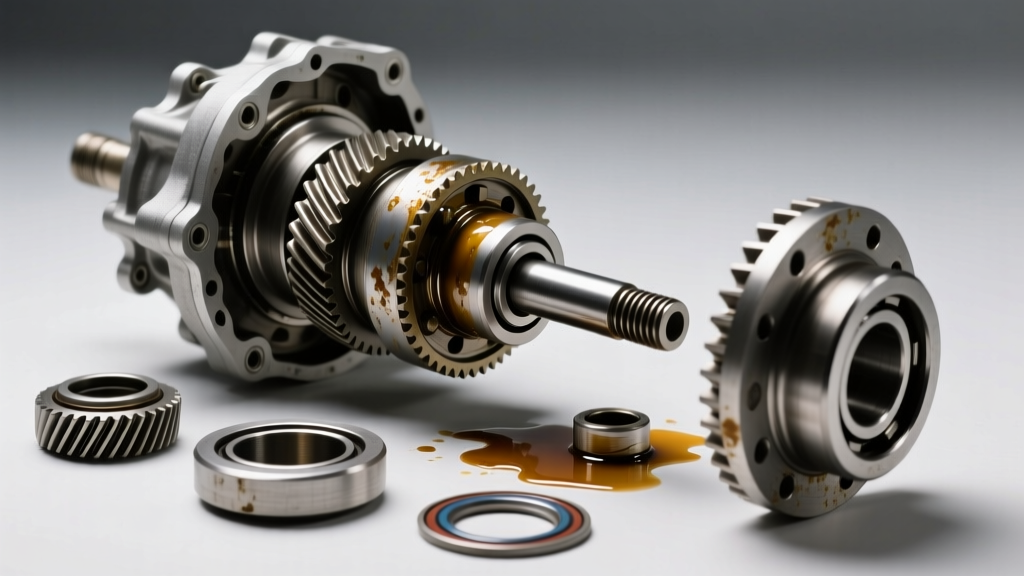
- Pinion Seal Failure: Look for a slinging pattern of gear oil radiating outward from the front yoke onto the undercarriage. This indicates the rubber lip of the seal has hardened or the pinion bearing has developed play, allowing the yoke to wobble and destroy the seal mating surface.
- Axle Tube Seal Failure: Wetness on the inside of the brake rotors or drums. This requires pulling the axle shaft and replacing the press-in axle seal and bearing assembly.
- Bearing Growl vs. Gear Whine: A failing carrier or pinion bearing produces a low-frequency growl that changes pitch during coast-to-drive transitions. Conversely, gear whine (a high-pitched howl) indicates improper backlash or worn ring-and-pinion teeth, requiring a full differential setup with marking compound.
Step-by-Step Pinion Seal and Bearing Replacement Protocol
Replacing a pinion seal on a Chrysler 9.25-inch rear axle is not as simple as unbolting the yoke and swapping the rubber. Because this axle uses a crush sleeve to set pinion bearing preload, improper reassembly will lead to immediate bearing destruction or fluid burnout.
Teardown and Crush Sleeve Management
Step 1: Measure Rotational Drag. Before removing anything, lift the vehicle and support it securely. Remove the differential cover and drain the old fluid. Using a beam-style or dial indicator inch-pound torque wrench, measure the rotational force required to turn the pinion yoke. Record this number (typically 15–25 in-lbs for used bearings). This is your baseline.
Step 2: Mark and Remove. Use a paint pen to mark the driveshaft, yoke, and pinion nut for exact reassembly alignment. Remove the pinion nut using a high-torque impact or a long breaker bar while holding the yoke with a specialized yoke holder.
Step 3: Extract the Yoke and Seal. Use a 3-jaw gear puller to remove the yoke. Never hammer the yoke off, as this will shatter the internal needle bearings of your U-joints and damage the pinion threads. Extract the old seal with a dedicated seal puller.
Expert Note: If you are only replacing the seal and the pinion bearing is tight, you can reuse the existing crush sleeve. However, if you are replacing the pinion bearings (e.g., Timken SET-29), you MUST install a brand-new crush sleeve. Never reuse a collapsed sleeve.
Carrier Bearing and Seal Installation
When installing the new pinion seal (such as the Timken 710489 for the Chrysler 9.25 axle), apply a thin film of RTV silicone to the outer metal casing of the seal before pressing it in. Use a seal driver tool that matches the outer diameter of the seal to drive it perfectly flush with the housing. Hammering it in with a drift punch risks cocking the seal in the bore, guaranteeing an immediate leak.
Reinstall the yoke, aligning your paint marks. Install the pinion nut and tighten it incrementally. You must crush the sleeve slowly, checking the rotational drag with your inch-pound torque wrench every few turns. Your target is the original recorded drag PLUS 3 to 5 in-lbs to account for the friction of the new seal lip. If you overtighten and exceed the target drag, the crush sleeve is over-compressed, and you must tear it down and install a new sleeve.
Setting Carrier Bearing Preload and Backlash
If your diagnosis reveals carrier bearing play, the repair escalates from a simple seal swap to a full differential setup. On the Chrysler 9.25 and Dana 44 axles, carrier bearing preload is adjusted via threaded adjuster rings located on the sides of the differential carrier. Using a dial indicator mounted to the housing, you must measure gear backlash at the ring gear. The target specification is typically between 0.006" and 0.010". Adjust the side rings equally to maintain the total carrier spread while achieving the correct backlash. Once set, lock the adjuster rings with the bearing cap bolts, torqued to 55 ft-lbs. Skipping this step or guessing the backlash will result in rapid gear wear and premature fluid degradation due to excessive friction heat.
The Refill: Selecting the Right Jeep Grand Cherokee Differential Fluid
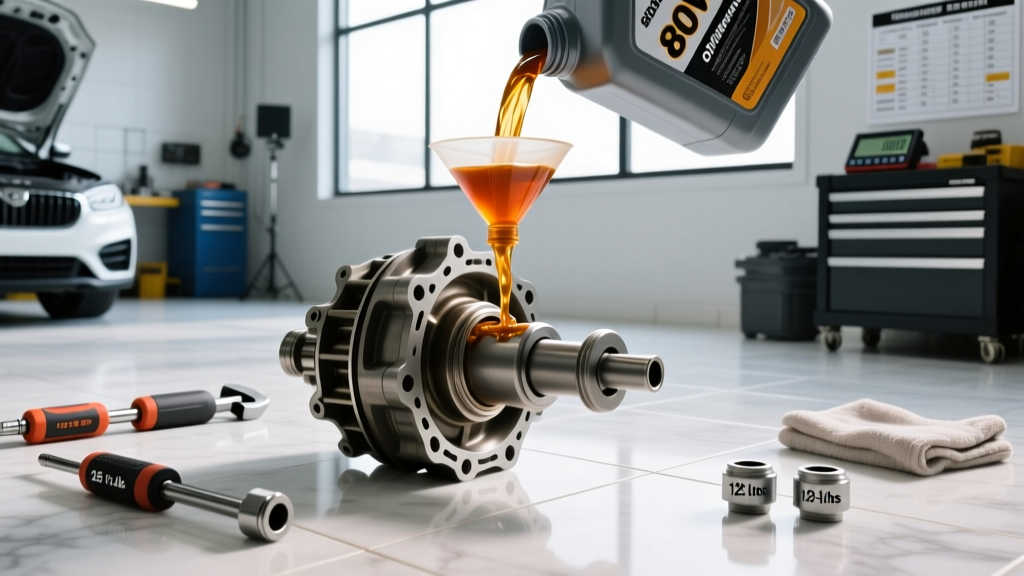
Once the hardware is sealed and torqued, the final critical step is the refill. The Jeep Grand Cherokee differential fluid specification has evolved, and using the wrong viscosity or additive package will trigger traction control faults or chatter in the differentials.
The ELSD Friction Modifier Myth
A common misconception in the off-road community is that all limited-slip differentials require a friction modifier additive. For the WK2 Grand Cherokee equipped with the Quadra-Drive II Electronic Limited Slip Differential (ELSD), this is false. The ELSD utilizes an internal clutch pack actuated by an electric motor and gerotor pump. Mopar explicitly formulates their synthetic gear oils to work with this system without aftermarket modifiers. Adding a friction modifier to an ELSD can cause clutch slippage and trigger the EVIC "Service 4WD" light.
| Component / Spec | Specification / Part Number | Torque / Measurement |
|---|---|---|
| Pinion Seal | Timken 710489 | Drive flush with housing |
| Pinion Bearing Set | Timken SET-29 | Requires new crush sleeve |
| Pinion Nut (Final Drag) | Prevailing Torque Nut | Baseline + 3-5 in-lbs |
| Differential Cover Bolts | M8 x 1.25 | 30 ft-lbs (41 Nm) |
| Fluid Capacity | ~2.2 Quarts (2.08 Liters) | Fill to 1/4" below fill plug |
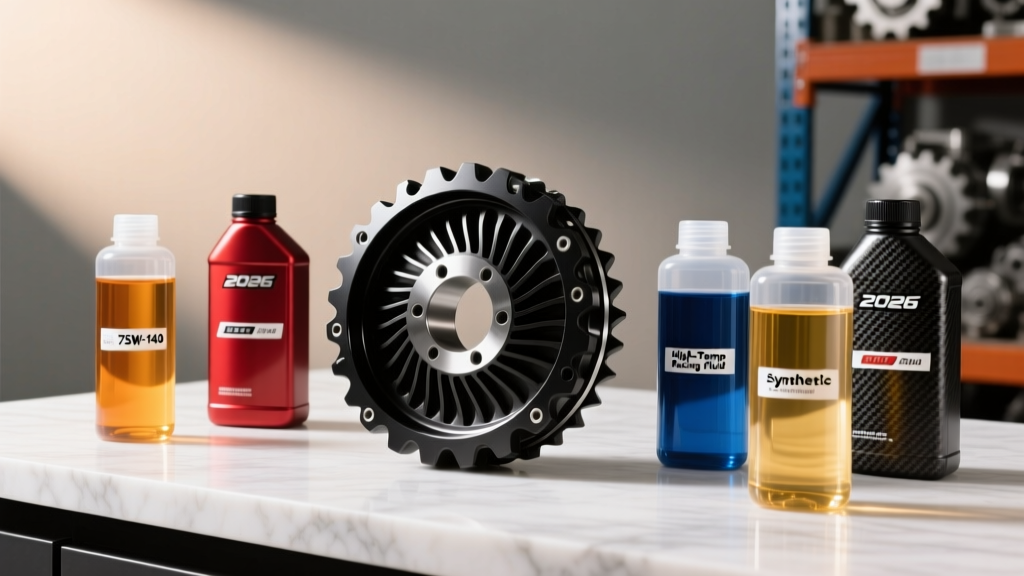
| Recommended Fluid (ELSD) | Mopar 75W-140 Synthetic (68218655AA) | NO Friction Modifier |
Expert Tips for Long-Term Drivetrain Longevity
To maximize the lifespan of your differential bearings and your Jeep Grand Cherokee differential fluid, adopt these professional maintenance habits:
- Vent Tube Verification: The axle housing expands and contracts with temperature. If the rubber vent tube on the top of the axle housing is clogged with mud or debris, internal pressure will build up and force gear oil past the pinion and axle seals. Always clear the vent cap during fluid services.
- Break-In Procedure: If you have replaced the ring and pinion or carrier bearings, the first 500 miles are critical. Tow no trailers, avoid sustained highway speeds over 65 mph, and perform multiple heat cycles (drive 15 miles, let it cool completely). Drain and refill the fluid immediately after this break-in period to remove metallic break-in particulates.
- Water Intrusion Checks: If you ford water deeper than the axle centerline, the sudden temperature drop can suck water past the seals into the housing. Check your fluid for a milky, chocolate-milk appearance. If present, an immediate teardown and seal inspection is required before the water etches the bearing races.
For official service manual torque specifications and updated part revisions, always consult the Mopar Parts catalog or your dealer's tech connect portal. Proper bearing preload and seal seating are the difference between a 200,000-mile axle and a stranded vehicle on the trail.