Understanding the Jeep Gladiator Drivetrain: Open vs. Limited-Slip Differentials
The Jeep Gladiator (JT) represents a unique intersection of daily-drivable comfort and heavy-duty trail capability. At the core of this platform is a robust drivetrain that routes power from the ZF 8HP75 8-speed automatic transmission through the transfer case and into the front and rear axles. However, not all Gladiator axles are created equal. Depending on your trim level—ranging from the base Sport to the Rubicon and Mojave editions—your vehicle will be equipped with either an open differential, a Trac-Lok limited-slip differential (LSD), or an electronic locking differential. For the vast majority of Gladiator owners navigating highway miles, light towing, and mixed-weather conditions, the comparison between an open carrier and a clutch-based limited-slip differential is the most relevant.
Knowing your exact differential type is not just a matter of off-road trivia; it fundamentally dictates your maintenance schedule, your gear oil selection, and the critical Jeep Gladiator differential fluid capacity requirements. As we move through the 2026 ownership cycle, proper axle maintenance remains the single most effective way to prevent catastrophic ring and pinion failure, especially when the vehicle is subjected to the high-torque multiplication of the ZF 8HP75 transmission in low-range or heavy-towing scenarios.
Open Differential vs. Trac-Lok Limited-Slip: Mechanical Differences
The Open Carrier: Predictable but Traction-Limited
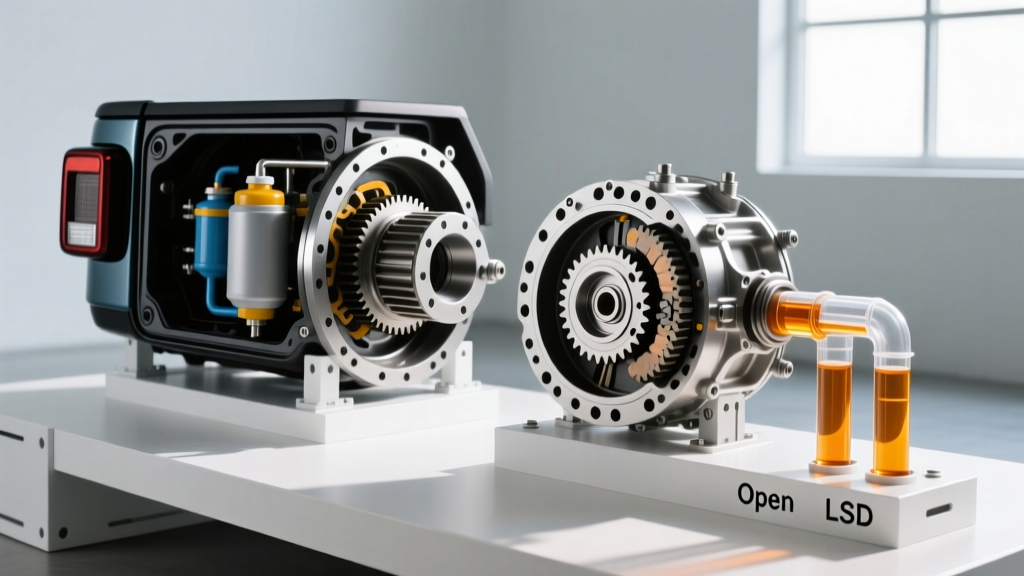
An open differential is the baseline setup for many entry-level Gladiator trims. Its internal spider gears allow the left and right axle shafts to rotate at different speeds, which is essential for smooth cornering on paved roads. However, the open differential's fatal flaw is its torque biasing: it always sends power to the wheel with the least amount of resistance. If your passenger-side rear tire hits a patch of ice or lifts off the ground on a trail, 100% of the engine's torque is routed to that spinning wheel, leaving you stranded. From a maintenance perspective, open differentials are incredibly forgiving. They do not require specialized friction modifiers, and their fluid degradation is primarily a function of time and thermal cycling rather than mechanical clutch wear.
The Trac-Lok Limited-Slip Differential (LSD)
Available on trims like the Sahara and Overland, the Trac-Lok LSD utilizes a clutch-pack design to mitigate the open differential's traction loss. Inside the carrier, a series of friction discs and steel separator plates are pre-loaded with a spring mechanism. When one wheel begins to lose traction and spin faster than the other, the clutch packs bind together, transferring torque to the wheel that still has grip. While highly effective for snow, mud, and light rock crawling, these clutch packs generate immense internal friction and heat. This mechanical action actively breaks down the shear stability of the gear oil over time, making strict adherence to fluid change intervals and the use of specific chemical additives an absolute necessity.
Exact Jeep Gladiator Differential Fluid Capacity Chart
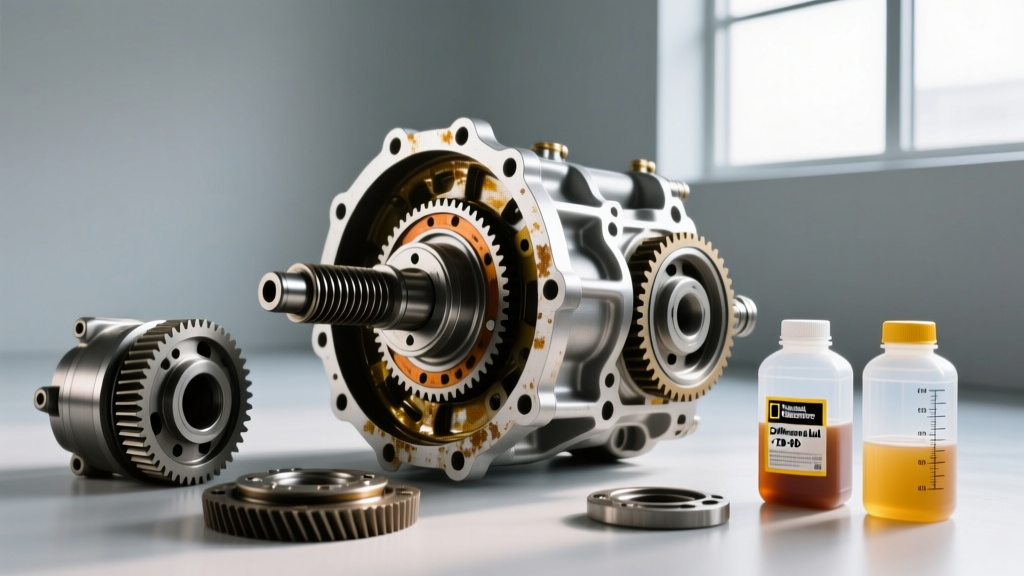
One of the most common mistakes DIY mechanics make is assuming all Dana 44 axles share the same internal volume. The Gladiator utilizes specific Dana 44 variants that dictate exact fluid volumes. Overfilling can lead to blown seals due to thermal expansion, while underfilling will starve the pinion bearings of lubrication, leading to whining and eventual seizure.
| Axle Position & Model | Common Trims / Packages | Fluid Capacity (Pints / Liters) | Factory Gear Oil Specification |
|---|---|---|---|
| Front M210 (Dana 44) | All Gladiator Trims | 2.2 pints / 1.05 L | API GL-5 75W-85 Synthetic |
| Rear M220 (Dana 44) | Sport, Sahara, Overland, Rubicon | 3.4 pints / 1.6 L | API GL-5 75W-85 Synthetic |
| Rear M220 HD (Dana 44 HD) | Max Tow Package Equipped | 4.0 pints / 1.9 L | API GL-5 75W-140 Synthetic |
Note: Always purchase an extra quart of gear oil to account for spillage and the priming of the fluid transfer pump hose. Data verified via the Jeep Owner's Manual Portal and the Quadratec Gladiator JT Drivetrain Database.
The ZF 8HP75 Torque Factor and Thermal Stress
To truly understand why differential fluid maintenance is critical, we must look at the powerplant sending torque to the axles. The Gladiator's ZF 8HP75 transmission is renowned for its smooth shifting and high torque capacity, handling up to 700 Nm (516 lb-ft) of input torque. When this torque is multiplied through the transfer case's 2.72:1 low-range gearing (on Rubicon models) or the 4.10:1 axle ratios found in Max Tow configurations, the ring and pinion gears inside the differential housings are subjected to extreme shearing forces.
Under heavy towing conditions—such as pulling a 7,000 lb trailer up a 6% grade—the rear differential fluid temperatures can easily exceed 220°F (104°C). At these temperatures, standard conventional 80W-90 gear oils experience severe viscosity loss, leading to metal-on-metal contact between the hypoid gear teeth. This is why FCA/Stellantis mandates full synthetic 75W-85 (or 75W-140 for HD towing applications) to maintain a protective hydrodynamic film under extreme thermal stress.
The Friction Modifier Debate: Do You Really Need It?
If your Gladiator is equipped with the Trac-Lok limited-slip rear differential, you must address the friction modifier requirement. The clutch packs inside the Trac-Lok carrier are designed to slip slightly during tight, low-speed cornering (like navigating a parking lot) to prevent drivetrain binding and tire chirping. Standard API GL-5 gear oil contains high levels of sulfur-phosphorus extreme pressure (EP) additives, which make the fluid inherently 'slippery'.
If you fill a Trac-Lok differential with standard GL-5 gear oil without adding a friction modifier, the clutch packs will grab aggressively instead of slipping smoothly. This results in a phenomenon known as 'stick-slip chatter'—a violent shuddering sensation accompanied by a loud groaning noise from the rear axle during turns. Over time, this chatter will glaze and destroy the friction discs, effectively turning your expensive LSD into a completely open differential.
The Solution: You must add exactly 4 ounces (one bottle) of Mopar Friction Modifier (Part # 04318060AD) to the rear differential before filling it with your synthetic gear oil. While some premium aftermarket gear oils claim to be 'LSD Compatible' out of the bottle, experienced drivetrain builders universally recommend adding the dedicated Mopar modifier to guarantee the clutch packs behave correctly. According to the Mopar Official Parts Catalog, this additive is specifically formulated for the metallurgy of Chrysler/Dana clutch packs.
Step-by-Step Fluid Change & Torque Specifications
Servicing the Gladiator's differentials requires precision. The M210 and M220 axles feature aluminum center sections with stamped steel or cast aluminum covers. Stripping a cover bolt thread in an aluminum housing is a costly mistake that requires Heli-Coil inserts or a complete axle replacement. Follow these exact torque specifications during your 2026 maintenance cycle:
- Preparation: Safely support the vehicle on jack stands. Ensure the axles are level; an uneven vehicle will result in inaccurate fluid fill levels.
- Removal: Remove the 10 cover bolts using an 8mm or 10mm socket (depending on aftermarket vs. factory hardware). Allow the fluid to drain completely into a catch pan. Inspect the magnetic drain plug (if equipped on your specific diff cover) for excessive metallic shavings. A fine grey paste is normal; chunks of metal indicate bearing or gear failure.
- Cleaning: Scrape the old RTV silicone or rubber gasket material from both the housing and the cover using a plastic gasket scraper. Never use a metal razor blade on the aluminum mating surface, as gouges will cause permanent leaks.
- Sealing: Apply a continuous 3mm bead of high-temperature RTV silicone (such as Permatex Ultra Black) to the cover, or use a pre-cut Lube-Locker reusable elastomer gasket. Allow RTV to tack up for 10 minutes before installation.
- Cover Bolt Torque: Install the cover bolts and tighten in a crisscross pattern to 30 ft-lbs (41 Nm). Do not overtighten.
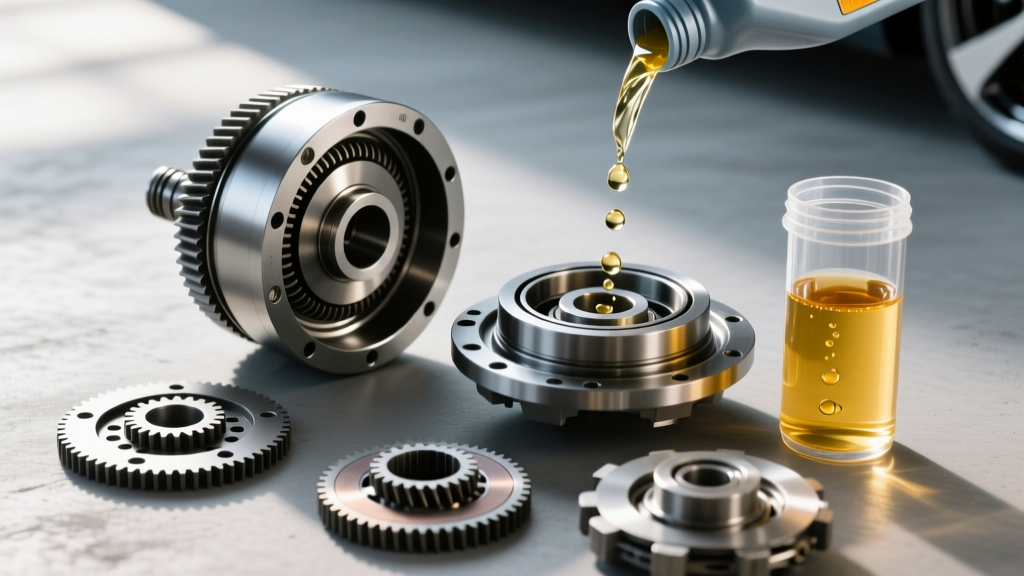
- Filling: Remove the fill plug on the side of the differential housing. Insert your transfer pump hose and fill with the correct API GL-5 synthetic gear oil (and friction modifier for LSDs) until the fluid reaches the exact bottom edge of the fill hole.
- Fill Plug Torque: Reinstall the fill plug and torque to 25 ft-lbs (34 Nm).
Cost Breakdown: DIY vs. Dealer Service in 2026
Understanding the financial aspect of drivetrain maintenance helps owners budget for the life of their Gladiator. A complete front and rear differential service involves purchasing approximately 4 to 5 quarts of full synthetic 75W-85 gear oil, a bottle of friction modifier, RTV sealant, and brake cleaner.
DIY Cost Estimate
- Premium Synthetic Gear Oil (e.g., AMSOIL Severe Gear or Royal Purple): $60 - $85
- Mopar Friction Modifier (04318060AD): $12 - $15
- Consumables (RTV, Brake Cleaner, Shop Towels): $15 - $20
- Total DIY Cost: $87 - $120
Dealership Service Center Cost
Dealerships typically charge between 1.5 to 2.0 hours of labor for a dual-axle service, plus a premium markup on OEM Mopar fluids and shop supplies. Expect to pay between $280 and $375 for a dealer-performed differential fluid exchange. While the dealer route offers convenience and warranty compliance documentation, the DIY route is highly accessible for anyone with basic hand tools and a fluid transfer pump, offering significant savings that can be redirected toward other Gladiator upgrades like skid plates or heavy-duty steering components.
Final Thoughts on Axle Longevity
Whether your Jeep Gladiator is equipped with a basic open carrier or a Trac-Lok limited-slip differential, respecting the exact fluid capacities and chemical requirements of the M210 and M220 axles is non-negotiable. The immense torque generated by the ZF 8HP75 transmission demands high-quality synthetic lubrication to protect your ring and pinion gears. By adhering to the torque specs, utilizing the correct friction modifiers, and monitoring your fluid levels based on your specific axle variant, you ensure that your Gladiator remains capable, quiet, and reliable on both the highway and the trail for hundreds of thousands of miles.