The Missing Transfer Case: How VTM-4 Rewrites the Drivetrain Rules
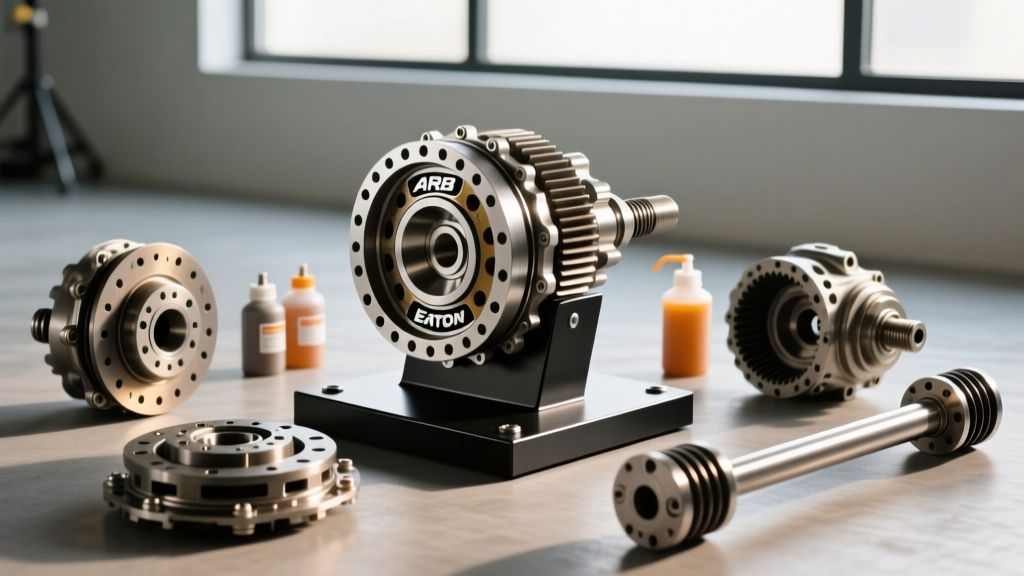
When most drivers think of a four-wheel-drive or all-wheel-drive system, they picture a traditional layout: a transmission, a heavy cast-iron transfer case bolted directly behind it, and front and rear differentials connected by driveshafts. But if you own a Honda Pilot, Ridgeline, Passport, or an Acura MDX equipped with the Variable Torque Management (VTM-4) system, you might be surprised to learn that your vehicle does not have a traditional transfer case at all. Instead, the torque-transfer duties are split between a front-mounted Power Transfer Unit (PTU) and a highly sophisticated rear differential.
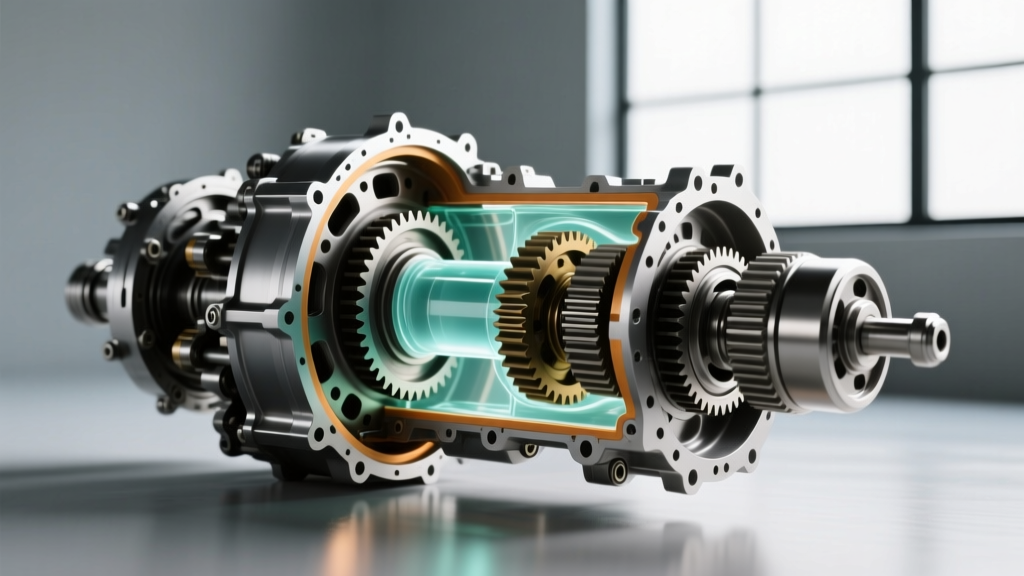
For beginners and DIY mechanics alike, understanding the relationship between the transfer case function and the rear differential is crucial. In the VTM-4 architecture, the rear axle assembly is a dual-personality component. It houses a traditional hypoid ring and pinion gear set for open-differential cornering, but it also contains a pair of electromagnetic clutch packs. These clutch packs act as the "transfer case," actively routing up to 70% of the engine's torque to the rear wheels when slip is detected. Because the gears and the clutch packs share the same internal cavity, the VTM-4 differential fluid must perform two entirely different engineering tasks simultaneously.
Why VTM-4 Differential Fluid is the Lifeblood of the System
In a conventional 4WD truck utilizing an NV246 or NV271 transfer case, the transfer case is typically lubricated by Automatic Transmission Fluid (ATF) like Dexron VI, while the rear differential uses a thick 75W-90 GL-5 gear oil. The VTM-4 system merges these environments, requiring a highly specialized lubricant.
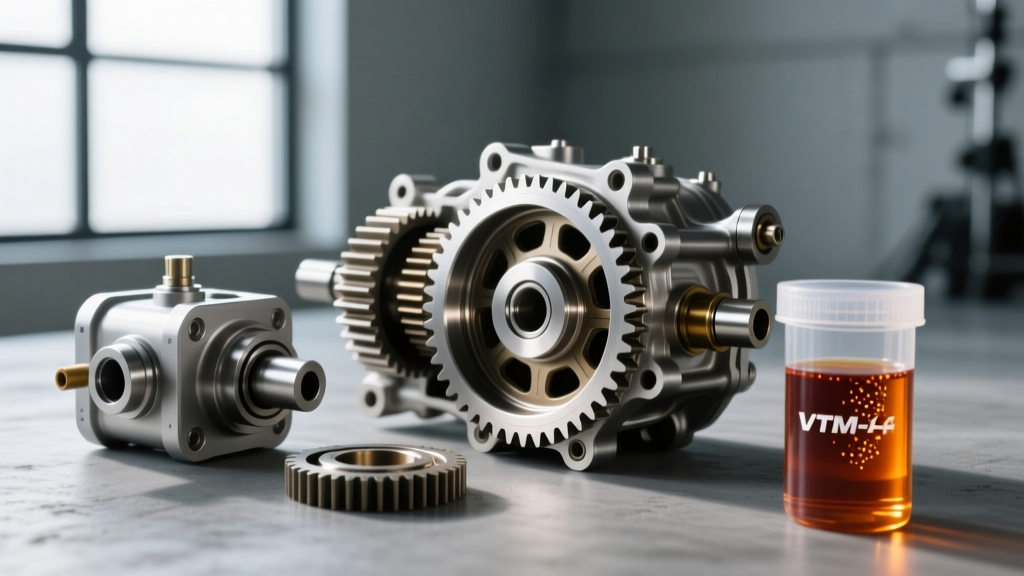
Honda engineered a proprietary fluid (Part Number 08200-9003) specifically for this application. This fluid must possess the extreme pressure (EP) additives required to protect the hypoid ring and pinion gears under heavy towing loads, while simultaneously containing precise friction modifiers that allow the electromagnetic clutch packs to engage smoothly without shuddering or glazing.
Expert Warning: Never substitute standard 75W-90 GL-5 gear oil or generic limited-slip differential (LSD) fluid in a VTM-4 unit. The friction modifiers in standard gear oils will cause the VTM-4 clutch packs to grab aggressively, resulting in severe rear-end judder during tight turns and premature clutch burnout.
Fluid Chemistry Comparison Chart
To understand why fluid selection is non-negotiable, let us compare VTM-4 fluid against traditional drivetrain lubricants.
| Fluid Type | Primary Application | Viscosity Profile | Friction Modifier Package | VTM-4 Compatibility |
|---|---|---|---|---|
| Honda VTM-4 Fluid (08200-9003) | VTM-4 Rear Differential / Clutch Packs | Specialized Synthetic Blend (~75W-85 equivalent) | Proprietary anti-shudder agents for electromagnetic clutches | Mandatory / OEM Spec |
| Standard 75W-90 GL-5 Gear Oil | Open & LSD Rear Axles (Solid Axle Trucks) | High Shear Stability, Thick Film | Sulfur-Phosphorus EP additives (High slip-friction) | Destructive (Causes clutch judder) |
| Dexron VI ATF | Traditional Chain-Drive Transfer Cases | Low Viscosity, High Detergency | Designed for torque converter clutches, not hypoid gears | Destructive (Fails to protect ring/pinion) |
Inside the VTM-4 Unit: How the "Transfer Case" Function Operates
When the vehicle's ECU detects front-wheel slip, or when the driver presses the "VTM-4 Lock" button on the dashboard (available at speeds under 18 mph), the system sends an electrical current to the electromagnetic coils inside the rear differential housing. According to Honda TechLine service documentation, this magnetic field actuates a ball-cam mechanism that compresses the wet clutch packs.
These clutch packs are bathed entirely in the VTM-4 differential fluid. The fluid must rapidly dissipate the immense heat generated during clutch engagement while maintaining a microscopic film between the friction plates. If the fluid degrades due to sheer stress, thermal breakdown, or moisture ingress, the clutch packs will slip. The ECU will detect this slip discrepancy via the rear wheel speed sensors, trigger an "AWD System Problem" warning on the dash, and default the vehicle to front-wheel drive to protect the hardware.
Maintenance Realities: Draining, Filling, and Torque Specs
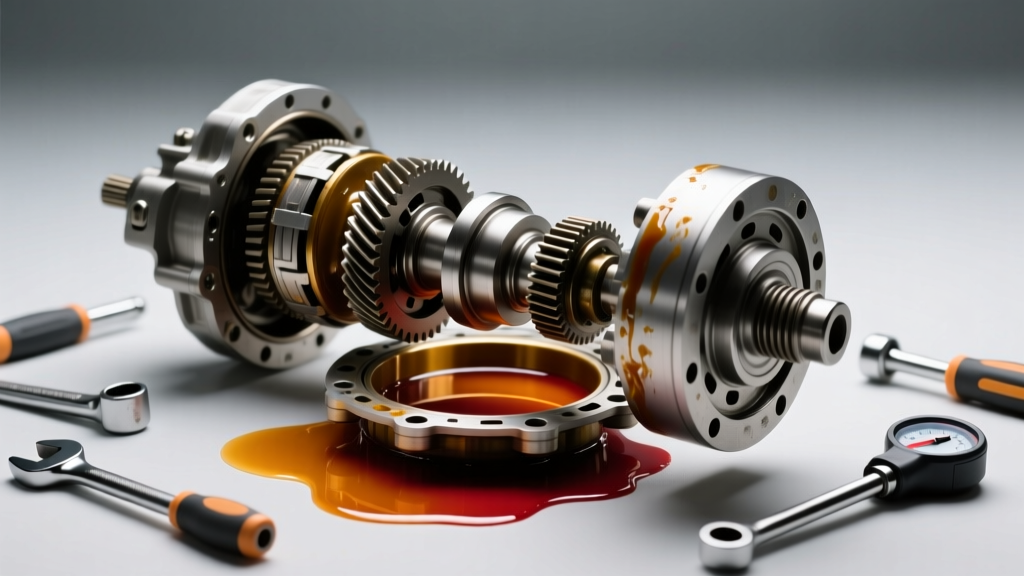
Because the VTM-4 rear differential acts as the primary torque-transfer device, fluid degradation happens faster than in a standard rear-wheel-drive car. Honda officially labels the VTM-4 fluid as a "lifetime" fill under normal driving conditions, but automotive tribologists and drivetrain experts universally recommend changing it every 30,000 to 60,000 miles, or every 15,000 miles if you frequently tow, drive in deep snow, or utilize the VTM-4 Lock button off-road.
Step-by-Step Service Specifications
Servicing the VTM-4 rear differential is a straightforward DIY task, provided you adhere to exact torque specifications and use the correct hardware.
- Fluid Capacity: 3.0 US Quarts (2.8 Liters). Purchase 4 quarts to ensure a complete fill.
- Fluid Cost: Approximately $12.00 - $15.00 per quart from dealerships or authorized online Honda parts distributors.
- Crush Washers: You must replace both the drain and fill plug crush washers (Honda P/N 90471-PX4-000). Reusing old copper/aluminum washers guarantees a slow weep that will eventually drain the differential and destroy the clutch packs.
- Drain Plug Torque: 33 lb-ft (45 Nm).
- Fill Plug Torque: 33 lb-ft (45 Nm).
Pro-Tip: Always remove the Fill Plug before removing the Drain Plug. If the fill plug is seized or stripped, you do not want to be left with a drained differential and no way to refill it. Use a 1/2-inch drive breaker bar and a high-quality 3/8-inch hex (Allen) socket. Apply penetrating fluid to the plugs 24 hours before the service if the vehicle has seen heavy road salt exposure.
Symptoms of Degraded VTM-4 Fluid (And Misdiagnosed Failures)
Because the VTM-4 unit handles both differential and transfer case duties, fluid failure mimics a wide variety of catastrophic drivetrain problems. Beginners often misdiagnose these symptoms, leading to unnecessary parts replacement. Here is a diagnostic framework for common VTM-4 complaints:
1. Rear-End Judder on Tight Turns
The Symptom: When turning sharply in a parking lot, the rear of the vehicle feels like it is skipping, hopping, or binding. The Reality: The friction modifiers in the VTM-4 fluid have sheared and degraded. The clutch packs are failing to modulate smoothly, locking and unlocking rapidly. The Fix: Perform a drain and fill. In severe cases where the fluid has been neglected for over 80,000 miles, a double drain-and-fill (drive for 50 miles between services) is required to flush out the old friction material suspended in the oil.
2. Low-Speed Groaning or Whining
The Symptom: A distinct groan emanating from the rear axle during slow acceleration or low-speed cornering. The Reality: While this can indicate a failing wheel bearing or a worn pinion bearing, in the VTM-4 system, it is most frequently the sound of the wet clutch packs chattering due to contaminated fluid. The Fix: Check the fluid condition. If it smells burnt or contains a high volume of metallic glitter (beyond normal fine magnetic paste), the clutch packs may be permanently glazed, requiring a rear differential rebuild or replacement.
3. "AWD System Problem" Dashboard Warning
The Symptom: The dash illuminates a warning light, and the vehicle refuses to send power to the rear wheels. The Reality: The VTM-4 ECU monitors the current draw on the electromagnetic coils and compares wheel speed sensor data. If the degraded fluid causes excessive clutch slip, the ECU assumes a mechanical failure and disables the rear axle to prevent a fire or total lockup. The Fix: Pull OBD2 codes. If you see codes related to rear axle clutch engagement or slip, start with a fluid change and a system reset via a bidirectional scan tool before condemning the electromagnetic coil assembly.
Summary: Respecting the Dual-Duty Drivetrain
The relationship between the transfer case and the differential in a Honda or Acura VTM-4 system is one of complete integration. By eliminating the heavy, parasitic chain-drive transfer case found in traditional trucks, Honda created a lighter, more responsive, and highly efficient AWD system. However, this engineering elegance places immense chemical demands on the VTM-4 differential fluid. By understanding that your rear differential is secretly doing the job of a transfer case, you can prioritize the strict maintenance intervals and precise fluid specifications required to keep your AWD system operational for the life of the vehicle. For further reading on Acura-specific AWD maintenance intervals, consult the official Acura Owner's Portal and cross-reference your specific model year's service schedule.