The Core Divide: Open vs. Limited Slip Differentials
When servicing your axle, choosing the correct synthetic rear differential fluid is not a one-size-fits-all decision. The internal architecture of your differential—specifically whether it is an open unit or a limited slip differential (LSD)—dictates the exact chemical formulation required to prevent catastrophic wear, chatter, and loss of traction. As we navigate the 2026 automotive landscape, where modern trucks and SUVs are towing heavier loads and generating immense low-end torque (especially in hybrid and turbo-diesel platforms), understanding the tribology of your gear oil is critical.
Open Differentials: The Baseline
An open differential is the most common and mechanically simple axle design. It utilizes a set of spider and side gears to allow the left and right wheels to rotate at different speeds during cornering. Under normal conditions, torque is distributed equally. However, if one wheel loses traction, the open differential will route all available power to the path of least resistance (the spinning wheel), leaving the vehicle stranded. From a lubrication standpoint, open differentials require a high-quality API GL-5 gear oil with robust Extreme Pressure (EP) additives to protect the hypoid gear set, but they do not require friction modifiers.
Limited Slip Differentials (LSD): Traction and Complexity
Limited slip differentials solve the traction deficit of open diffs by incorporating mechanisms that limit the speed difference between the two wheels. According to Eaton's differential engineering catalogs, LSDs generally fall into two categories:
- Clutch-Type LSDs: (e.g., Ford Trac-Lok, Auburn Gear, GM G80/Eaton Posi). These use a stack of friction clutches and cone plates to bind the axles together under load.
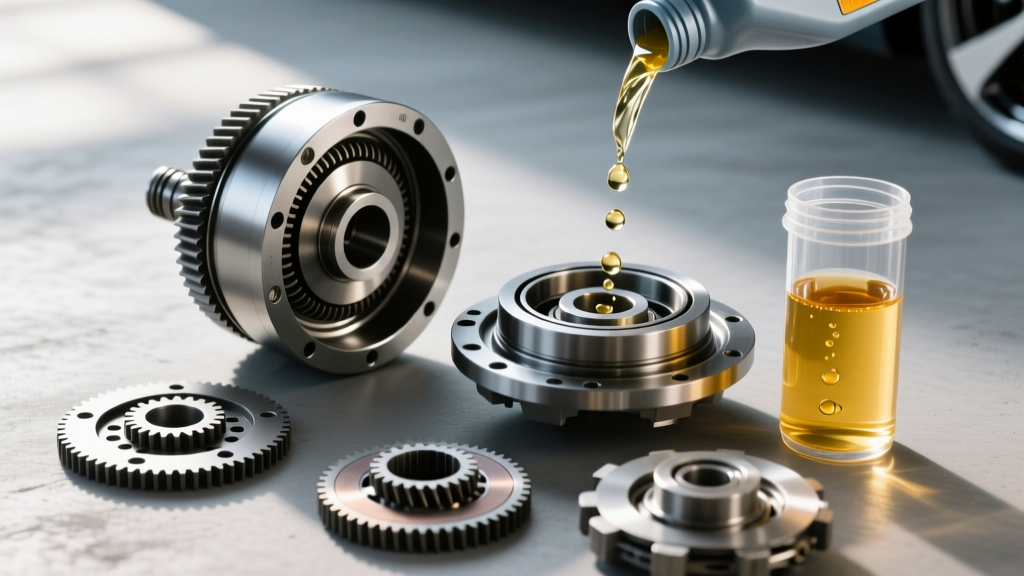
- Helical Gear LSDs: (e.g., Torsen, Eaton Truetrac). These use complex worm and spur gear sets to multiply torque to the wheel with traction, without relying on friction clutches.
The presence or absence of clutch packs fundamentally changes the chemical requirements of your synthetic rear differential fluid.
Fluid Formulation: GL-5, Viscosity, and the Friction Modifier Dilemma
All modern hypoid ring and pinion gears require an API GL-5 rated fluid. The extreme sliding forces of hypoid gears will instantly wipe out standard GL-4 transmission fluids, leading to galling and catastrophic tooth failure. However, the additive package is where the open vs. LSD comparison diverges sharply.
The Stick-Slip Phenomenon in Clutch LSDs
If you pour a standard, non-modified synthetic GL-5 gear oil into a clutch-type LSD, the clutches will bind aggressively during low-speed cornering. This causes a violent 'stick-slip' effect, resulting in axle hop, chatter, and rapid degradation of the clutch material. To prevent this, clutch-type LSDs require a Friction Modifier (FM) additive (such as Ford XL-3 or GM 88900338). The FM alters the coefficient of friction on the clutch plates, allowing them to slip smoothly before fully locking.
The Torsen and Helical Gear Exception
Conversely, helical gear LSDs like the Torsen Type 1/2 or Eaton Truetrac rely entirely on gear mesh friction to generate their torque bias ratio (TBR). If you introduce a friction modifier into a Torsen differential, the fluid becomes too 'slippery.' The gears will fail to bind properly, effectively reducing the torque bias ratio and turning your expensive LSD into an expensive open differential. Helical LSDs require a standard, non-modified synthetic GL-5 fluid.
| Differential Type | Internal Mechanism | Friction Modifier Required? | Ideal Synthetic Fluid Profile |
|---|---|---|---|
| Open Differential | Spider & Side Gears | No | Standard PAO/Ester GL-5 |
| Clutch-Type LSD | Friction Plates & Cones | Yes (Pre-mixed or Added) | GL-5 LS (Limited Slip) Formulation |
| Helical LSD (Torsen) | Worm & Spur Gears | No (Reduces Bias Ratio) | Standard PAO/Ester GL-5 |
| Electronic Locker (eLocker) | Electromagnetic Clutch | Varies by OEM | Consult OEM Spec (Often Non-LS) |
2026 Buyer's Guide: Top Synthetic Rear Differential Fluids
With modern axle assemblies running significantly hotter due to aggressive aerodynamic bodywork and reduced cooling airflow, Group II/III hydrocracked mineral oils are no longer sufficient for severe duty. True Polyalphaolefin (PAO) and Ester-based synthetics are mandatory. Below are the top-tier synthetic rear differential fluids for open and limited slip applications.
1. Amsoil Severe Gear 75W-90 (Best Overall)
Part Number: SVGPK (Quart) / SVGQT
Approximate Price: $16.95 / qt.
Best For: Open differentials and Helical LSDs (Truetrac/Torsen).
Amsoil Severe Gear is a true PAO-based synthetic with an exceptionally high viscosity index. It maintains its shear stability even when towing 10,000+ lb trailers in mountainous terrain. Because it does not contain clutch-specific friction modifiers out of the bottle, it is the ultimate choice for open diffs and gear-driven LSDs, ensuring maximum gear protection without compromising helical gear bias ratios.
2. Red Line 75W90 Gear Oil (Best for Track & Heavy Towing)
Part Number: 50104 (Quart)
Approximate Price: $20.50 / qt.
Best For: High-shock load applications, Open Diffs, and Helical LSDs.
As detailed in Red Line Oil's technical documentation, their standard 75W90 is formulated with polyol ester basestocks. Esters naturally cling to metal surfaces via electrostatic attraction, providing boundary lubrication during the high-shock loading of drag racing or rock crawling. Like Amsoil, the standard version lacks FM additives, making it perfect for open and Torsen units. (Note: For clutch LSDs, Red Line offers a separate '75W90 NS' or you must add their ShockProof FM).
3. Mobil 1 Synthetic Gear Lube LS 75W-90 (Best OEM Replacement)
Part Number: 104361 (Quart)
Approximate Price: $12.50 / qt.
Best For: Clutch-Type Limited Slip Differentials (Ford Trac-Lok, GM G80).
The 'LS' in the name stands for Limited Slip. Mobil 1 pre-blends the necessary friction modifiers into this synthetic formula, making it a pour-in-and-go solution for clutch-type axles. It eliminates the guesswork of measuring and adding aftermarket FM additives, preventing the dreaded low-speed parking lot chatter common in Ford 8.8 and Chrysler 8.25 axles.
Application & Torque Specifications (Real-World Data)
Proper installation and sealing are just as critical as fluid selection. Over-torquing differential cover bolts will warp thin stamped-steel covers, leading to chronic leaks. Under-torquing fill plugs will result in fluid loss and dry-axle failure. Always use a calibrated inch-pound or low-range foot-pound torque wrench.
Common Axle Torque Specifications
- Ford 8.8-inch (10-bolt cover): Cover bolts (10mm) to 28-38 lb-ft. Fill plug (3/8" NPT) to 15-25 lb-ft.
- GM 8.5 / 8.6-inch (10-bolt cover): Cover bolts (M8) to 25 lb-ft. Fill plug to 15-20 lb-ft.
- Dana 44 / Dana 60: Cover bolts (3/8") to 30-35 lb-ft. Fill plug (1/2" NPT) to 25-30 lb-ft.
- Toyota 8-inch (Solid Axle): Cover/Third Member nuts to 50-60 lb-ft. Fill plug to 29 lb-ft.
Sealing Best Practices
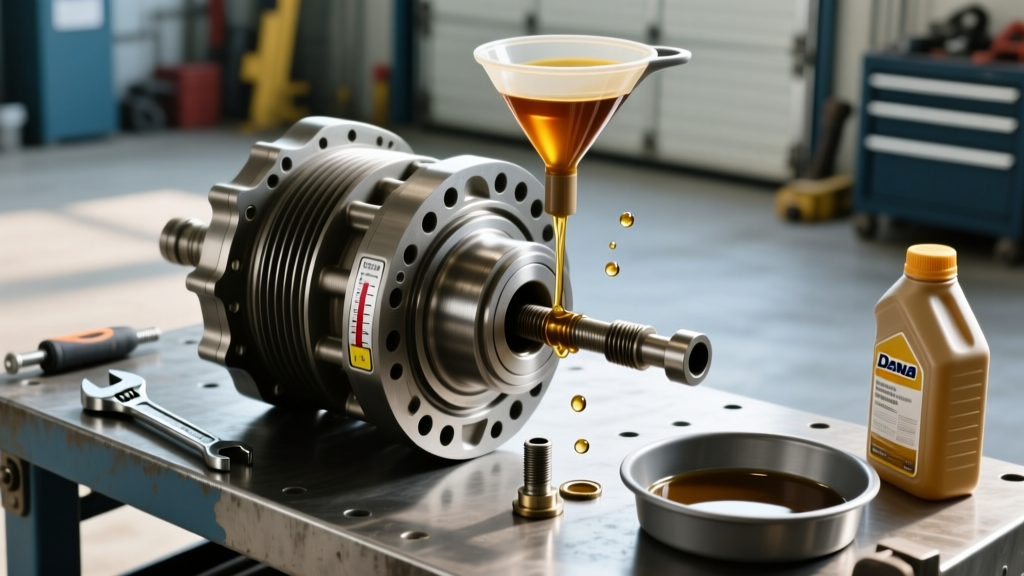
For axles utilizing RTV silicone rather than pre-cut gaskets (like the Ford 8.8 and most Dana applications), surface preparation is non-negotiable. Scrape all old RTV, clean both mating surfaces with brake parts cleaner, and apply a continuous 1/8-inch bead of high-temp sensor-safe RTV (e.g., Permatex Ultra Black). Allow the RTV to skin over for 10-15 minutes before mating the cover, and wait a minimum of 2 hours before filling with your chosen synthetic rear differential fluid to prevent the oil from washing out the uncured silicone.
Conclusion
Selecting the right synthetic rear differential fluid requires matching the fluid's additive package to your specific differential architecture. Open and helical gear LSDs demand pure, unmodified GL-5 synthetics for maximum gear protection and torque biasing, while clutch-type LSDs require specialized LS formulations to maintain smooth operation. By adhering to precise torque specifications and utilizing high-quality PAO/Ester synthetics, you ensure your drivetrain survives the rigorous demands of modern towing, off-roading, and daily driving.